Mobile Stroke Unit Staffing: Coordinating Nurses, Techs, and EMS
You have secured the budget, reviewed the clinical data, and set the goals for your new Mobile Stroke Unit (MSU) program. Now it is time to turn that plan into a working program. That often brings up an important question from local EMS partners: “Are our medics expected to run the CT scanner?”
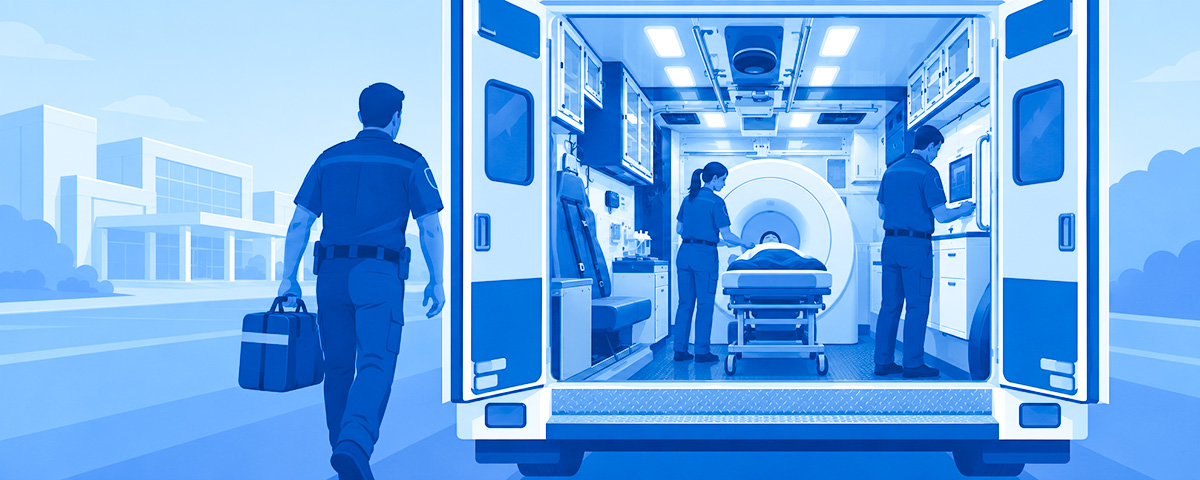
It is a fair question. A Mobile Stroke Unit brings a specialized medical team and hospital imaging equipment into a moving vehicle. That changes the workspace and can raise questions about responsibilities, scope of practice, safety, and how everyone will work together.
The good news is that your paramedics do not have to become CT experts. With clearly defined roles and a purpose-built workspace, each member of the MSU team can focus on the job they are trained to do. Here is how a common MSU staffing model works and what it can mean for your EMS partners.
Why Paramedics May Have Questions About Mobile Stroke Units
When an EMS chief or frontline paramedic first hears about a Mobile Stroke Unit, questions are natural. Most emergency vehicles are designed around smaller crews. Add a CT scanner and several clinical specialists, and the normal workflow changes.
One concern may be “scope creep.” Paramedics are trained to manage emergency scenes, provide patient care, and support safe transport. They may wonder whether adding a mobile CT scanner means they will also be expected to operate unfamiliar hospital equipment, troubleshoot the scanner, or take on new clinical responsibilities.
Clear roles can help address those concerns before the unit ever goes into service. In a purpose-built MSU, the paramedic can remain focused on EMS responsibilities while other members of the clinical team manage imaging, advanced treatment, and neurological evaluation according to the program’s protocols.
What Does a Mobile Stroke Unit Staffing Model Look Like?
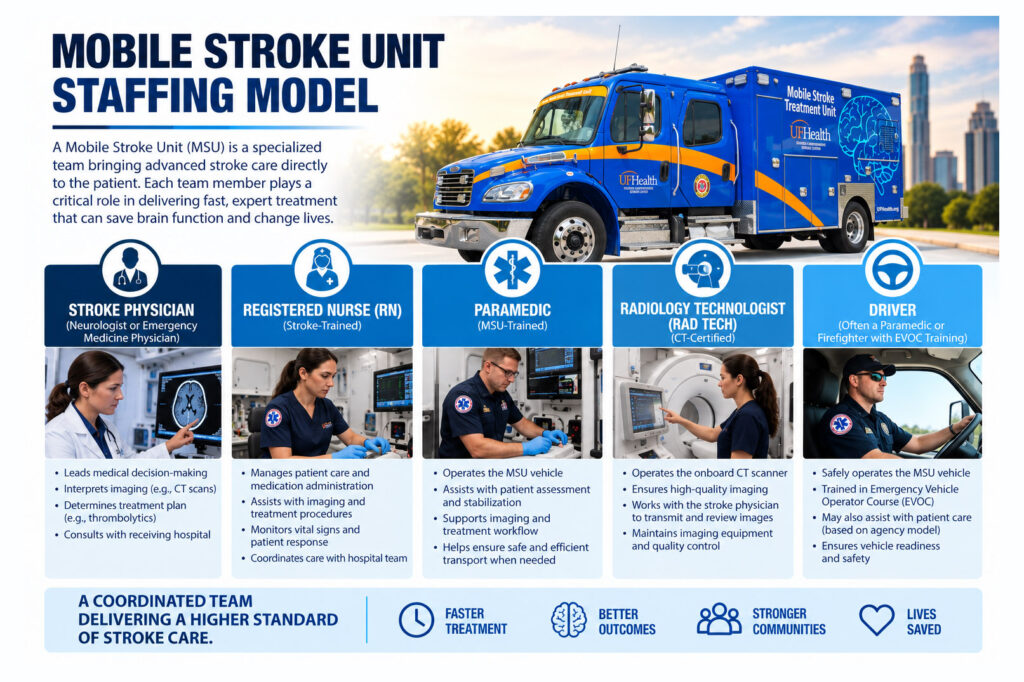
A Mobile Stroke Unit may include a certified CT Technologist, a Critical Care or Neuro Nurse, a Paramedic or EMT, and a Vascular Neurologist who can connect remotely through telemedicine. Exact staffing varies by program, local requirements, and clinical protocols, but the goal is the same: give each specialist a clear role and create a team that can work together efficiently.
Clear responsibilities matter because an MSU is not simply an emergency vehicle with a CT scanner added to it. It is a mobile clinical environment. The people, technology, power systems, communications, and workspace all need to support the program’s care model.
The Certified CT Technologist: Imaging Expert
The CT Technologist handles the imaging side of the operation. This can include positioning the patient, operating the CT scanner, acquiring the required scans, and supporting secure transmission of those images to the hospital network based on the program’s procedures.
This role keeps specialized imaging equipment in the hands of a trained imaging professional instead of shifting that responsibility to the EMS crew.
The Critical Care or Neuro Nurse: Treatment Expert
The Critical Care or Neuro Nurse focuses on advanced patient care inside the module. Depending on the program’s protocols and applicable scope-of-practice requirements, this may include patient assessment, IV access, and administering medications ordered by the neurologist, including thrombolytics such as tPA or TNK and medications used to manage blood pressure.
The Paramedic or EMT: Scene and Transport Expert
The Paramedic or EMT remains an important part of the MSU team. Often provided by the partner EMS agency, this role can include communication with 911 dispatch, scene safety, EMS patient care, assistance with patient loading, and operation of the vehicle.
In this model, the EMS professional does not need to become the CT expert. The paramedic or EMT can stay focused on the emergency response and transport responsibilities defined by the program.
The Vascular Neurologist: Diagnostic Expert
Some programs may have a neurologist onboard during launch and later move to remote support. With the MSU’s telemedicine system, the neurologist can assess the patient, review available imaging, and make diagnostic and treatment decisions based on the program’s clinical protocols.
Who Operates the CT Scanner on a Mobile Stroke Unit?
In the staffing model described here, a certified CT Technologist operates the CT scanner. The paramedic or EMT can stay focused on EMS patient care, scene safety, and transport instead of taking responsibility for specialized hospital imaging equipment.
Putting that distinction into your standard operating procedures can also help answer questions from agency leaders, unions, and frontline crews before the program launches. Everyone should know who is responsible for the scanner, who provides treatment, who manages the scene, and who makes clinical decisions. Clear expectations make it easier for the team to work together.
Is There Enough Room for the MSU Team?
Space matters. An MSU needs room for the CT Technologist, nurse, and EMS professional to perform their jobs without constantly working around one another. That is why the interior layout should be considered early in the program design process rather than after the clinical equipment has already been selected.
Designing Around Space and Workflow
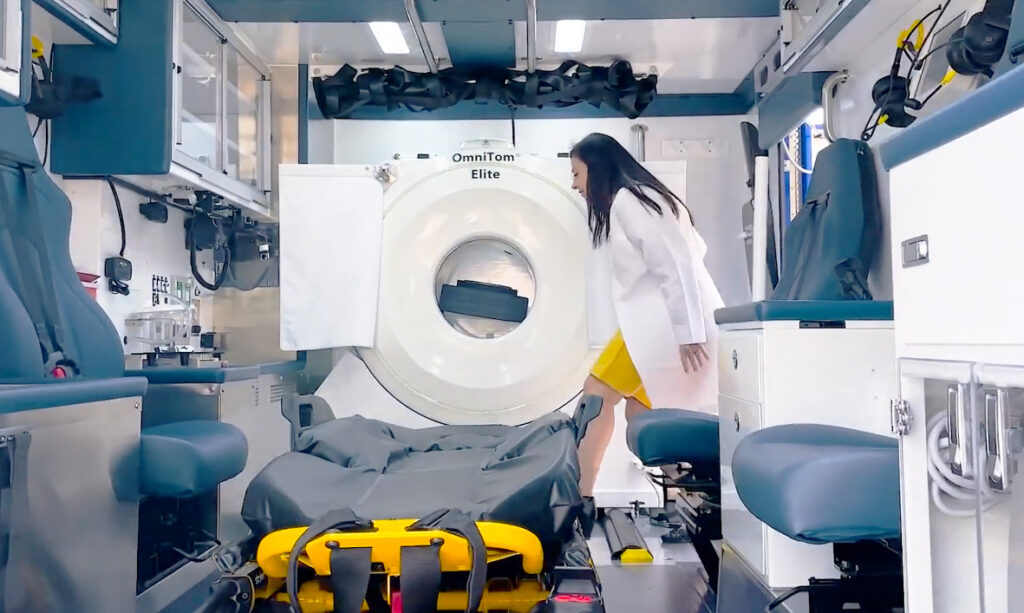
A conventional emergency vehicle layout may not provide the space needed for a mobile stroke team and its specialized equipment. Frazer designs MSUs with wide aisle space to support movement through the patient compartment and give team members practical working areas.
The CT scanner itself also affects the layout. For example, the Siemens SOMATOM On.site uses a telescopic gantry. During a scan, the gantry moves over the patient while the external base remains stationary.
Frazer’s fixed mounting approach eliminates the need for floor rails. That can remove potential trip points and areas where dirt can collect while keeping more of the floor clear for the clinical team. The goal is simple: design the workspace around the people who will use it every day.
How Is the CT Scanner Secured?
A CT scanner is a large, heavy piece of medical equipment. Putting one inside a moving vehicle makes equipment retention an important part of the MSU design. Hospital risk teams, EMS leaders, and fleet managers should understand how the scanner is mounted and what testing supports that design.
Frazer engineers its CT mounting system for the loads found in a mobile environment. The system is designed to keep the scanner secured during events such as hard stops, evasive maneuvers, or a collision.
Frazer has also tested its CT scanner retention system beyond 50,000 pounds of force with no damage to the mount. Engineering and test documentation can give clinical, EMS, risk management, and fleet teams useful information to review as they evaluate the vehicle and their program requirements.
How Do You Keep the CT Scanner and Clinical Technology Running?
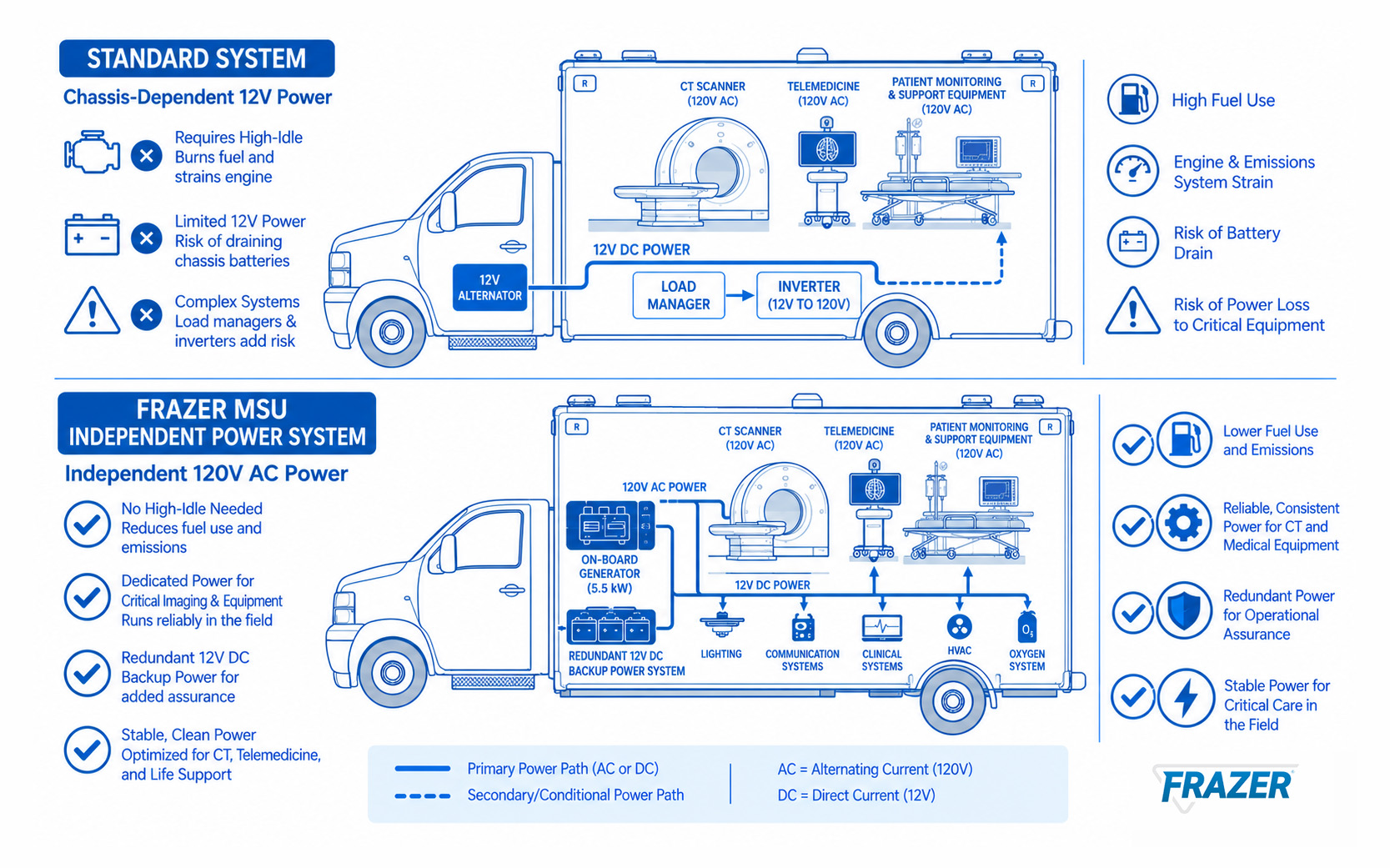
An MSU needs more than physical space. CT scanners, telemedicine equipment, computers, and other clinical systems need dependable electrical power, and some of that equipment can produce a lot of heat.
Frazer Mobile Stroke Units can use independent 120V AC power systems, including generator options from Cummins Onan or hPower. Because the system operates independently from the truck chassis, it can support the medical and communications equipment needed by the MSU program without relying on the chassis for the unit’s primary 120V AC power.
That power system also supports dedicated 120V AC air conditioning. Frazer’s climate-control approach is designed to maintain up to a 35-degree temperature difference from outside conditions, helping support both the equipment environment and crew comfort during hot-weather operations.
Building the Program, Not Just the Vehicle
A Mobile Stroke Unit program is bigger than the vehicle itself. Hospitals may need to coordinate clinical care, imaging, IT, telemedicine, risk management, fleet operations, and local 911 agencies. Decisions in one area can affect several others, which is why those conversations should happen early.
Frazer approaches an MSU as a complete program-development project. Our team works with clients to understand how the vehicle will be used, how the clinical team will move through the space, what equipment needs to be integrated, and what information partner agencies need before launch.
That support continues from Concept to Go-Live. Frazer can help teams work through ergonomic layouts, coordinate requirements with Radiology and IT, and provide engineering documentation for EMS, fleet, and risk-management partners to review.
Bringing mobile stroke care into the field takes coordination between people who may come from very different worlds. Clinicians understand patient care. EMS teams understand emergency response. IT teams understand connectivity. Engineers understand the vehicle and its systems. A successful MSU brings those pieces together in one working environment.
If your EMS partners are asking questions about staffing, CT responsibilities, space, power, or workflow, those conversations are worth having. Frazer can help your team work through those questions and design an MSU around the people who will use it.
Contact our MSU specialists today to discuss your program’s operational needs.
Who operates the CT scanner on a Mobile Stroke Unit?
In the staffing model described here, a certified CT Technologist operates the CT scanner. This allows Paramedics and EMTs to stay focused on their EMS responsibilities, including patient care, scene safety, and transport, rather than taking responsibility for specialized hospital imaging equipment.