
The Complete Guide to Evaluating EMS Mobile Health Vehicles

The Complete Guide to Evaluating EMS Mobile Health Vehicles A mobile healthcare vehicle is more than a way to get from one place to another. It is a workspace for your team, a place to care for patients, and a major investment in your program. The right vehicle needs to work reliably on day one and remain useful for years to come. Whether you’re starting a community paramedicine program, building a mobile clinic, or adding a specialty response unit, it’s easy to focus on the purchase price. But the real cost also includes maintenance, downtime, equipment needs, and how long the vehicle can stay in service. This guide walks through five areas worth discussing with any vehicle builder: power, climate control, long-term value, equipment safety, and support after the sale. Use these questions to compare options and build a business case your team can stand behind. Why a Purpose-Built Mobile Healthcare Vehicle Matters A fair question often comes up during planning: “Why not buy a commercial van and add the medical equipment we need?” A van may cost less upfront, and it may be the right fit for some programs. The key is understanding what your team will ask the vehicle to do every day. A mobile clinic may need to power medical equipment for hours, maintain comfortable interior temperatures, and carry heavy devices safely. Those demands can be different from the work a standard commercial van was built to handle. Before choosing a platform, compare how each option will meet your clinical needs, not just what it costs to purchase. Have a question for the team? Ask a Question 1. Power: Can the Vehicle Run Your Equipment Without the Truck Engine? Power is one of the first things to review, especially if your program uses equipment with high electrical demand. A CT scanner, telemedicine system, medical devices, lighting, and air conditioning can place very different demands on a vehicle’s electrical system. Some designs depend heavily on the truck’s battery, alternator, or engine. That may create problems if the engine must be shut off, overheats, or needs repair. Ask each builder what keeps the patient compartment powered when the chassis is not running, and which systems can continue operating. Frazer offers chassis-independent power options, including dedicated generator systems such as MEPS, Cummins Onan, and hPower. Depending on the configuration, fuel supply, and operating conditions, these systems can power the module and its equipment without relying on the truck engine. The benefit is flexibility. Your team can plan around the needs of the clinical space instead of assuming the truck must always be running. Be sure to ask for a load assessment that covers every piece of equipment you expect to use at the same time. 2. Climate: Will the Patient Compartment Stay Comfortable During Long Deployments? A mobile healthcare unit may spend hours parked in a neighborhood, at an event, or outside a hospital. During that time, the team needs a dependable way to manage interior temperature, especially when caring for patients or using temperature-sensitive supplies and electronics. Ask how the air conditioning works when the truck engine is off, how the system handles hot weather, and whether the patient compartment has its own airflow path. The answers matter more than a cooling number printed on a brochure. Frazer uses independent 115VAC air conditioning systems with ducting separate from the truck cab. Its dedicated systems are engineered for a minimum 25-to-30-degree cooling differential under specified conditions. Actual results depend on the outside temperature, vehicle setup, occupancy, insulation, and other operating factors. Air quality also deserves a closer look. Frazer offers active air purification options, including the Dometic BreatheEasy Ionizer, alongside conventional filtration. Ask what contaminants a system is designed to address, what testing supports those claims, and what maintenance it requires. No filtration or purification system should be treated as a substitute for appropriate clinical infection-control practices. 3. Long-Term Value: What Will the Vehicle Cost Over Its Working Life? The lowest purchase price is not always the lowest cost over time. A useful comparison includes repairs, maintenance, replacement schedules, downtime, and the possibility of reusing the patient module when the truck chassis reaches the end of its service life. Frazer builds wood-free, all-aluminum modules designed for long-term use. Depending on service conditions and upkeep, a heavy-duty custom module may serve for 15 to 20 years. It may also be possible to remount the module onto a compatible replacement chassis, with needed updates or refurbishment completed along the way. That is the idea behind Lowest Overall Cost of Ownership, or LOCO. Instead of comparing two price tags, compare what each option is likely to cost throughout the years your program plans to operate it. For example, the Houston Fire Department operates 129 Frazer units and has remounted some modules as many as four times. Some modules are approaching 20 years in service and have passed one million total service miles. These are examples of what can be possible, not a guarantee of how every module will perform. When building your budget, request estimated remount costs, expected maintenance needs, and a realistic replacement plan. Use your own fleet history and operating conditions to test whether remounting makes financial sense for your organization. 4. Equipment Safety: How Is Heavy Medical Technology Secured? A mobile stroke unit or specialty care vehicle may carry equipment that weighs hundreds of pounds. A CT scanner weighing around 1,000 pounds is not something a builder can simply place inside the module. Its weight, location, mounting system, and effect on vehicle handling all need careful engineering. Ask the builder for documentation showing how the equipment is secured, which standards apply, and how the mounting system was tested. Also confirm that the proposed installation meets the equipment manufacturer’s requirements. Frazer has worked on Mobile Stroke Unit development since 2014. As part of that work, the company developed an SAE J3043-compliant CT scanner mounting system. In independent testing, the fixed-mount system was subjected to more than 50,000 pounds of force,
How to Evaluate Mobile Clinic Manufacturers: A 5-Point Procurement Checklist

How to Evaluate Mobile Clinic Manufacturers: A 5-Point Procurement Checklist Buying a mobile clinic is a major investment. You need a vehicle that supports your medical team, protects expensive equipment, and stays ready to serve your community. Your Request for Proposal (RFP) is where those expectations should begin. A well-written RFP gives manufacturers clear requirements and helps your team compare their proposals. This matters even more when purchasing rules require you to select the lowest qualified bidder. If your specifications leave out important details, you may end up comparing vehicles that are built for very different demands. Mobile clinics and Mobile Stroke Units (MSUs) have needs that go beyond those of a standard work truck or emergency vehicle. Medical equipment can place heavy demands on electrical systems, climate control, and structural design. Your specifications should reflect how the vehicle will actually be used. Whether you’re planning a community health program or expanding a specialized medical fleet, the goal is the same: get a vehicle that meets your needs today and continues to deliver value over time. This checklist will help you evaluate manufacturers, request useful documentation, and compare options such as Frazer’s 18ft Mobile Clinic. Why the Lowest Bid Doesn’t Tell the Whole Story Price matters. But the lowest purchase price doesn’t always mean the lowest cost over the life of a vehicle. When an RFP uses broad language or standard vehicle specifications, manufacturers may propose very different construction materials, electrical systems, and equipment installations. Those differences can affect how the vehicle performs in the field and how much it costs to maintain. Consider the electrical system. A mobile clinic may need to power medical equipment, lighting, and air conditioning for extended periods. A system that works well for basic vehicle accessories may not be the best fit for that workload. The same applies to interior materials, equipment mounts, and climate-control systems. These are questions worth answering before you award a contract. By setting clear, measurable requirements, you give every manufacturer a better understanding of what your organization needs. You also give your procurement team a stronger way to compare proposals. Have a question for the team? Ask a Question The 5-Point Checklist for Evaluating Mobile Clinic Manufacturers Use these five areas to guide your RFP and your conversations with potential manufacturers. Each one addresses a part of the vehicle that can affect performance, maintenance, or long-term value. 1. Ask for Structural Testing Documentation Mobile clinics can carry heavy, expensive medical equipment. A portable CT scanner is one example. Keeping that equipment securely mounted takes careful engineering, and your procurement team should understand how the manufacturer has tested its solution. SAE J3043 is a standard used to evaluate the retention of certain equipment and payloads under defined test conditions. When this standard applies to your project, ask manufacturers for documentation showing what was tested, how it was tested, and which equipment configurations the results cover. Frazer developed an SAE J3043-compliant CT scanner mount in the United States. During testing, the retention system withstood more than 50,000 pounds of force with zero damage. The mount was developed to support advanced imaging equipment, including the Siemens SOMATOM On.site. Results like these give procurement teams something more useful than a general claim about strength. They provide documented information that can be reviewed alongside your equipment and vehicle requirements. What to ask: Can the manufacturer provide testing records for the equipment mounts proposed for your vehicle? Do those records apply to the equipment and configuration you’re purchasing? 2. Understand How the Clinic Gets Its Power Your mobile clinic is a working medical space. That means its power system needs to support more than vehicle accessories. Depending on your equipment, you may need stable, continuous 120V AC power for medical devices, air conditioning, and other clinical systems. Some vehicle designs use the truck’s alternator and an inverter to supply electricity. Other designs use an independent power system. Options such as MEPS, Cummins Onan, and hPower offer different ways to supply power to the clinical module. An independent power system can separate the clinic’s electrical supply from the chassis alternator. Depending on the design, that separation may give your team more flexibility when the truck’s electrical components need service. It can also help you plan around the demands of medical equipment and climate control. No single power system is the right answer for every application. The best choice depends on what you’re powering, how long the equipment needs to run, and where the vehicle will operate. Fuel use, maintenance requirements, available capacity, and equipment compatibility all belong in the discussion. What to ask: What equipment can the proposed power system support at the same time? How is that capacity documented, and what happens to clinical power when chassis-related electrical components need service? 3. Look Closely at Construction Materials A mobile clinic’s interior has to stand up to regular use, cleaning, and life on the road. That’s why the materials behind the finished surfaces deserve as much attention as the layout and appearance. Wood-core cabinetry can be affected by moisture. Water intrusion or repeated spills may cause swelling, warping, or other damage over time. Those risks are worth considering in a space where cleaning and maintenance are part of everyday operations. Formed aluminum cabinetry offers a wood-free alternative. It can help reduce concerns tied to moisture-related deterioration while supporting a durable, serviceable interior. The module’s structural design, joining methods, and construction quality also matter. Frazer builds its primary module structure using welded 6061-T6 aluminum tubing and reinforced laminated corner construction. Since 1984, Frazer has built more than 4,500 EMS modules, with zero recorded module detachments in collisions. Construction claims should be backed by details you can review. Ask manufacturers to explain the materials they use, how major components are joined, and what maintenance those materials may require over the vehicle’s life. What to ask: Does the proposed module use wood-core materials? What are the primary structural materials, and what documentation is available to support the manufacturer’s
Maximizing Fleet ROI: Remounting vs. Replacing Medical Vehicles
Maximizing Fleet ROI: Remounting vs. Replacing Medical Vehicles Every fleet replacement comes with a big question: How do you get the most value from your budget without compromising the vehicles your crews depend on? Rising chassis costs, tight budgets, and long procurement timelines make that question even harder for fleet directors and financial decision-makers. Replacing an entire medical vehicle every five to seven years may seem like the simplest approach, but it is not always the most cost-effective one. If the patient care module is still in good condition, remounting it onto a new chassis may help your department get more years of service from its original investment. Here is what to consider when comparing the cost of remounting with the cost of buying new. Is It Cheaper to Remount a Medical Vehicle or Buy New? In many cases, remounting an existing medical module onto a new chassis costs less upfront than purchasing a completely new vehicle. It may also lower your total cost of ownership over 15 years or more. The actual savings depend on the condition of your module, the price of the replacement chassis, the refurbishment work needed, and how the original vehicle was built. That last factor matters. A durable module built with long-term service in mind gives your department more options when the chassis reaches the end of its planned service life. Instead of automatically replacing the entire unit, you can evaluate whether the patient care module is ready for another round of service. Have a question for the team? Ask a Question Why the Traditional Replacement Cycle Can Get Expensive Many departments operate a medical vehicle for five to seven years before replacing it. That schedule can make sense for the chassis, especially in demanding EMS operations. But the chassis and patient care module do not always wear out at the same rate. When you replace the entire vehicle because the chassis has reached its service limit, you may also retire a module that still has years of useful life. That means spending capital dollars on another patient compartment when your existing one may still be a good investment. Those dollars could otherwise support staffing, training, equipment, community paramedicine initiatives, or other department priorities. Remounting offers another path. By moving a serviceable module to a replacement chassis, your department can continue using an asset it has already paid for while keeping its fleet aligned with operational needs. Look Beyond the Purchase Price When departments compare bids, the initial purchase price naturally gets a lot of attention. A standard vehicle may look like the more affordable choice when the decision is based on what it costs today. But a lower purchase price does not always mean a lower cost over the vehicle’s working life. Frazer encourages departments to consider the Lowest Overall Cost of Ownership, or LOCO. This approach looks at the bigger financial picture, including the original purchase, maintenance, refurbishment, chassis replacement, and expected years of service. It helps answer a more useful question: What will this fleet investment cost your department over time? Consider a 15-to-20-year planning period. One department might purchase three complete vehicles as each chassis reaches its replacement date. Another might purchase a custom module once, then remount it onto new chassis as needed. If that module remains in good condition and each remount makes financial sense, the second approach may reduce how often the department pays for a new patient compartment. Across a large fleet, those avoided purchases can add up. Depending on fleet size, replacement schedules, remount costs, and actual operating expenses, the cumulative savings could reach millions of dollars. The key is to compare realistic lifecycle costs rather than assume either approach is always cheaper. Is Your Existing Module a Good Candidate for Remounting? Not every medical module should be remounted. Before making that decision, your department needs to understand how the module was built, how it has been maintained, and what condition it is in today. Structural wear, damaged flooring, loose components, and moisture-related deterioration can all affect the cost and practicality of a remount. Construction materials play an important role. Some wood-based materials can absorb moisture after repeated exposure to fluids or environmental conditions. Depending on the material and how it is protected, that moisture can contribute to swelling, deterioration, or other problems. If the damage affects critical components, repairs may become expensive enough to change the financial case for remounting. This is why remount planning should start when you purchase the original vehicle, not when the chassis is ready to be replaced. Choosing materials and construction methods intended for long service can help preserve your options years down the road. How Frazer’s Wood-Free Construction Supports Long-Term Value Frazer builds its medical modules with long-term service and future remounts in mind. Our structural, cabinetry, and subfloor designs do not rely on wood-based construction materials. The base frame uses 6061-T6 aluminum structural members, while the subfloor features a polycarbonate core. These material choices help reduce concerns associated with moisture damage to wood, including rot, warping, and splintering. They do not eliminate the need for maintenance or inspections, but they give departments a durable foundation for evaluating future remounts. When the module remains structurally sound and compatible with a replacement chassis, keeping it in service may be a practical choice. How Many Times Can a Medical Vehicle Be Remounted? There is no single number that applies to every vehicle. The answer depends on the module’s construction, maintenance history, structural condition, and compatibility with future chassis. Wood-free, all-aluminum modules are often designed with three to four remount cycles in mind, although every remount should be evaluated on its own merits. With proper care and refurbishment, some custom medical modules built for extended service have accumulated more than 1 million miles across multiple chassis lifecycles. That kind of service life can make a meaningful difference in a department’s long-term fleet budget, provided the ongoing maintenance and remount costs remain reasonable. What About Maintenance Costs on an Older Module?
Expanding Access: Mobile Healthcare Vehicles in Community Paramedicine

Expanding Access: Mobile Healthcare Vehicles in Community Paramedicine You have the funding, the clinical team, and a plan to bring care closer to your community. Now you need a vehicle that can support that work, whether your team is conducting wellness visits, managing chronic conditions, or following up with patients after a hospital stay. A delivery van or converted RV may look like a practical starting point. But a mobile healthcare program has different demands than a typical transportation operation. Your team may spend an entire shift parked at a community center, running clinical equipment and keeping the treatment space comfortable without driving anywhere. That makes the vehicle’s power system, climate control, layout, and long-term service needs worth discussing before you buy. Here’s what to consider when planning a mobile healthcare vehicle for community paramedicine. Community Paramedicine Needs More Than Transportation Community paramedicine can bring chronic disease management, post-discharge follow-ups, vaccinations, behavioral health services, and other care into the neighborhoods where people live. The right vehicle helps make those services possible, but the space needs to work as a clinic, not just a way to get from one appointment to the next. Think about a team parked for eight to twelve hours. They need dependable power for equipment, effective cooling, room to work, and a comfortable environment for patients and staff. A standard vehicle may not be equipped to handle all of those needs without modifications. Frazer has experience building specialized mobile healthcare platforms. In 2014, we built a Mobile Stroke Unit with a power-intensive CT scanner on board. That project helped support stroke assessment and treatment closer to the patient, including opportunities to begin appropriate care before reaching the hospital. It also reinforced a practical lesson: Start with the care your team needs to provide, then design the vehicle around it. Have a question for the team? Ask a Question How Can You Power a Mobile Healthcare Vehicle Without Idling? An independent 120V AC power system can keep clinical equipment and climate control running while the chassis engine is off. Depending on your vehicle’s configuration and electrical load, generator options such as MEPS or Cummins Onan can support long periods of stationary operation. That’s important for both your care team and your fleet manager. Leaving a diesel engine idling for extended periods can create operating conditions that contribute to soot buildup in diesel particulate filters and may increase maintenance needs. The actual impact depends on the engine, duty cycle, and manufacturer guidance. With an appropriately sized independent power system, your team can park, shut down the truck engine, and continue using interior lights, diagnostic equipment, and air conditioning. Separating those loads from the chassis can also help limit demands on the vehicle’s batteries and make maintenance planning more predictable. Power systems are not one-size-fits-all. Some generator configurations, including certain Cummins Onan arrangements, may provide backup options that use the 12V DC chassis system. The equipment you install, its combined electrical demand, and the vehicle’s design determine what is possible. Before selecting a system, make a list of everything your team needs to run at the same time and review it with your vehicle builder. What HVAC Features Matter in a Mobile Clinic? A dedicated HVAC system helps maintain a comfortable patient care space without depending on the truck cab’s air conditioning. For programs involving respiratory care or patients with potentially infectious conditions, it’s also important to consider how the vehicle manages airflow and how its systems fit into your clinical infection-control plan. A regular vehicle air conditioner is designed primarily for driving comfort. A mobile clinic may need to cool a separate treatment area for hours while the truck is parked. Filtration, air circulation, and the separation between cab and patient compartments can vary widely across vehicles. Frazer offers a dedicated 15,000 BTU, self-contained 115VAC HVAC system with the Dometic BreatheEasy Ionizer. The system uses UV light and nano-filter components as part of a photocatalytic air-treatment process designed to help address certain airborne contaminants and odors. Its performance depends on the conditions, contaminants, and system configuration, so it should be considered one part of a broader infection-control approach rather than a replacement for clinical procedures. Under specified operating conditions, the HVAC system is designed to provide a minimum cooling differential of 25 to 30 degrees. It also allows for separate climate-control arrangements in the patient compartment and driver’s cab, depending on the vehicle design. Keep in mind that a comfortable treatment space is not the same as validated medication storage. Vaccines and other temperature-sensitive supplies may still need dedicated refrigeration, monitoring, and handling procedures. Work with your clinical team to define those requirements before finalizing the build. How Long Can a Mobile Healthcare Vehicle Last? A well-maintained, all-aluminum, wood-free module may serve through more than one truck chassis. That opens the door to remounting the same clinical space on a replacement chassis instead of buying an entirely new vehicle every time the truck reaches the end of its service life. Some fleets plan around a five- to seven-year chassis replacement cycle. A module built for long-term use can be evaluated separately from the chassis, allowing you to think beyond the first purchase when you set your budget. Frazer modules use welded 6061-T6 aluminum structural frameworks and wood-free construction. Avoiding wood subfloors and MDF cabinetry reduces reliance on materials that can deteriorate when exposed to moisture. Depending on structural condition, maintenance history, chassis compatibility, and refurbishment requirements, a module may be remounted up to four times and potentially remain in service for more than twenty years. This is where Lowest Overall Cost of Ownership (LOCO) matters. The question isn’t simply what the vehicle costs today. It’s what your program will spend over time on chassis replacement, module refurbishment, maintenance, and service interruptions. For perspective, the Houston Fire Department operates 129 Frazer units, and some modules are approaching twenty years in service. With multiple remounts, certain modules may exceed 1,000,000 cumulative miles. Those examples show what’s possible with long-term planning,
Customizing an Emergency Medical Vehicle for Mobile Integrated Healthcare
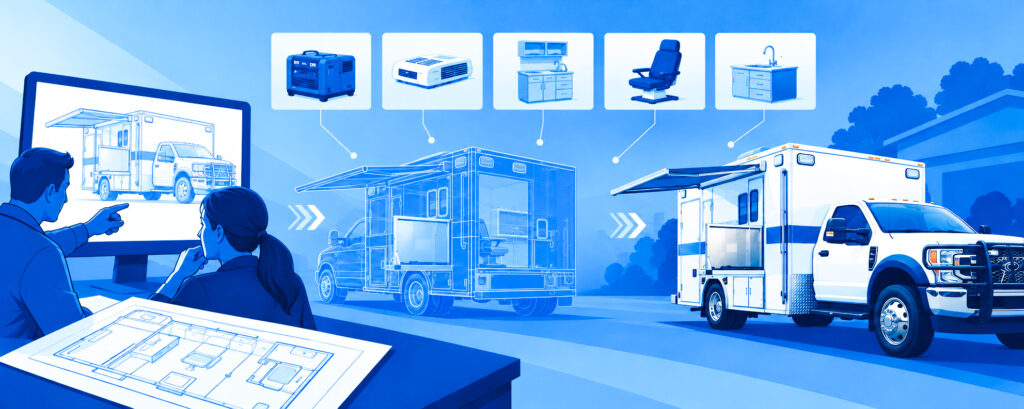
Customizing an Emergency Medical Vehicle for Mobile Integrated Healthcare Mobile Integrated Healthcare (MIH) brings care closer to the people who need it. But a strong clinical plan also needs a vehicle that works for your crew, your equipment, and your maintenance team. Community paramedicine visits can keep a vehicle parked outside a home for 45 to 90 minutes. During that time, crews may need power for telehealth devices, reliable cooling for the patient compartment, and room to provide care. If those systems depend on a running truck engine, the extra idle time can become a fleet maintenance concern. So, what should you look for when planning an MIH vehicle? Start with the power system, heating and cooling, electrical serviceability, interior layout, and long-term cost. Each choice can affect how well your program works today and how easily your fleet can support it in the years ahead. How Do You Power Telehealth Equipment Without Running the Truck Engine? Telehealth screens, diagnostic devices, and other clinical tools need dependable electricity. One option is a chassis-based inverter, which may require the truck engine to run for extended periods. Another is an independent power system that supplies 120V AC power without relying on continuous chassis engine operation. For MIH teams making longer visits, independent power can help manage engine hours while keeping essential equipment available. The right setup depends on the equipment you plan to use, its power requirements, and how your crews work in the field. Have a question for the team? Ask a Question Consider the Cost of Extended Idle Time It is fair to ask whether adding a generator means adding another item to your maintenance schedule. Generators need service, and fleet teams should account for that when comparing vehicle configurations. But there is another cost to consider: keeping a heavy-duty diesel engine running while a crew provides care. Extended idling can add engine hours and may contribute to wear on engine components and the diesel particulate filter (DPF). The effect depends on how the vehicle is used and maintained. Frazer offers several chassis-independent power options, including Mobile Electric Power Solutions (MEPS), Cummins Onan gas or diesel generators, and Harrison hPower systems. Depending on the configuration, these systems can supply 120V AC power to telehealth and diagnostic equipment while the truck engine is off. Certain medical devices may also remain powered if the chassis engine is unavailable, as long as the independent power system is operating. There is no one-size-fits-all answer. Compare routine generator service with the cost of added chassis engine hours, then choose a system based on your equipment load, typical time on scene, and maintenance plan. Why Does Separate Climate Control Matter for MIH Vehicles? An MIH crew may spend much more time parked than a crew responding to a typical transport call. That makes patient compartment cooling an important part of the vehicle design, especially in hot weather. Some diagnostic devices, mobile lab equipment, and medications have specific storage or operating temperature requirements. A separate HVAC system can help maintain a more controlled patient compartment without depending on continuous operation of the truck engine. Actual performance depends on the power system, outside temperature, and vehicle configuration. Understand the Cooling Performance Chassis-driven air conditioning may struggle to cool a large patient compartment during a long stop, especially when the truck is parked in the heat. Before choosing an HVAC system, ask how it performs in the conditions your crew will face. Frazer’s decoupled 115V AC HVAC system has air handling and ductwork separate from the truck cab. It is engineered to deliver a cooling differential of at least 25 to 30 degrees and can maintain a differential of 35°F or more under applicable operating conditions. That gives departments an option designed around patient compartment cooling and crew comfort during longer visits. Always compare the system’s published performance with the actual temperature limits for your equipment and supplies. Cooling capability is one part of a complete plan for safe storage and clinical operations. Plan for Air Filtration and Treatment Air management matters when a vehicle serves as a mobile treatment space. Along with ventilation and regular cleaning, departments may want to consider filtration and active air treatment for the patient compartment. Frazer offers the Dometic BreatheEasy Ionizer package, which uses UV light and nano-filters designed to help reduce certain airborne contaminants, odors, and particles. Frazer’s separate patient compartment air handling also allows departments to evaluate airflow in the treatment area apart from the truck cab. No air treatment system replaces cleaning, ventilation, or your agency’s infection-control practices. Results depend on the equipment specifications, how the system is used, and your department’s procedures. How Can Simple Wiring Help Keep an MIH Vehicle in Service? Adding telehealth devices and medical equipment can make a vehicle more useful, but it can also add electrical complexity. When something stops working, your fleet team needs to find the issue and get the vehicle back on the road. That is why serviceability should be part of your purchase decision. Ask whether technicians can troubleshoot the system with familiar tools, whether replacement parts are readily available, and whether repairs require specialized software or proprietary electronic modules. The KISS Approach to Electrical Design Frazer uses the KISS principle: Keep It Super Simple. Its point-to-point wiring design uses common terminal strips and standard automotive relays, with service and repair in mind. For example, if a switch or relay in an MIH equipment circuit fails, a mechanic may be able to trace the problem using familiar troubleshooting steps. Depending on the part and installation, a replacement may be available from a local automotive supplier. That can make some repairs easier to plan without requiring a specialized electronic control node. Service time matters, and it is worth asking other departments about their experience. In a 2020 double-blind survey of 100 EMS and fire professionals, respondents were asked which brand spent the least time in the shop. Frazer received 39% of the mentions. This finding is one reference point, not
The Cost of a Type I Ambulance: Pricing Tiers for Value-Conscious Fleets

The Cost of a Type I Ambulance: Pricing Tiers for Value-Conscious Fleets For municipal fire and EMS departments planning their 2026 capital budgets, the rising cost of new heavy-duty apparatus can make budgeting difficult. Public pricing can also be hard to find, leaving chiefs and finance directors trying to account for the initial purchase, possible changes during the build, and the long-term cost of keeping a vehicle in service. A purchase price tells only part of the story. Departments also have to think about maintenance, downtime, serviceability, and how long the vehicle can remain useful. This guide breaks down 2026 pricing tiers for custom Type I mobile healthcare vehicles and explains how Frazer’s Lowest Overall Cost of Ownership (LOCO) approach looks beyond the initial price. How much does a new Type 1 custom ambulance cost in 2026? In 2026, a new Type I custom ambulance typically ranges from $200,000 to more than $450,000, depending heavily on the build. Base custom modules cost about $200,000 to $250,000. The focused Foundation™ Series starts at $252,000. Common custom builds generally range from $250,000 to $300,000, while highly customized specialty units can range from $350,000 to $450,000. Have a question for the team? Ask a Question 2026 Type I Ambulance Pricing Tiers: What to Expect When building a Capital Improvement Plan (CIP), municipal buyers need a realistic starting point. Limited public pricing and “Request a Quote” processes can make that difficult. Understanding the general pricing tiers can help your department establish a budget before getting deep into specifications and options. Base Custom Modules ($200k – $250k) This entry-level tier typically includes standard custom builds on lighter chassis platforms. Depending on the manufacturer and configuration, these vehicles may include basic interior cabinetry packages, standard suspensions, and traditional chassis-tied electrical systems. The Foundation™ Series (Starting at $252,000) If your department is focused on keeping the initial purchase price down, it is still important to look closely at construction, configuration, and crew needs. Frazer designed the Foundation™ Series as a clearly defined 12-foot Type I mobile healthcare vehicle for value-conscious fleets. Instead of simply removing features to reach a price point, the Foundation™ Series uses a focused set of features and options to simplify the build. The Foundation™ Series features welded 6061-T6 aluminum framing, zero-wood composite subfloors, and an independent 115VAC HVAC system consistent with core construction and system features available in Frazer custom units. Its standardized layout provides nearly 50 inches of center aisle walk-around space and seating for four caregivers. By limiting the amount of custom engineering required, Frazer can offer the Foundation™ Series starting at $252,000. Departments can compare the standard configuration with their operational requirements to determine whether it is the right fit. Common Custom Configurations ($250k – $300k) Many busy 911 operations may find their needs fall within this range. Vehicles in this tier typically feature 12-foot to 14-foot modules on heavy-duty chassis such as the Chevy 3500/4500 or Ford F-450/550. The final price can reflect options such as 4×4 drivetrains, LiquidSpring suspension upgrades, independent generator power, and interior storage designed around a department’s protocols and equipment. Highly Customized Specialty Units ($350k – $450k) Agencies with complex interfacility or specialty transport requirements may need a larger, more specialized configuration. This tier can include 14-foot-plus modules with features such as bariatric winch systems, dual-cot configurations, and Critical Care Transport (CCT) equipment. These builds may also require greater payload capacity or redundant high-output power systems. What is the most important factor when buying an emergency vehicle? According to a double-blind Smart Advantage study of 100 EMS and fire leaders, respondents identified post-sale support, custom design flexibility, and defect-free delivery among the most important factors when evaluating an emergency vehicle. After rating operational attributes, just 9% of buyers prioritized initial purchase price. Looking Beyond the “Low Bid” Fire chiefs and EMS directors often work within municipal purchasing rules that place significant weight on the lowest initial bid. That makes the purchase price important, but it can also make it harder to account for what happens after the vehicle enters service. Maintenance, downtime, parts availability, and ease of repair can all affect what a vehicle costs over its working life. Frazer uses point-to-point electrical wiring and standard automotive relays. The goal is straightforward serviceability, including giving local fleet mechanics a system they can work with. In the same double-blind survey, 39% of respondents identified Frazer when asked which manufacturer spent the least time in the repair shop, compared with 7% for leading competitors. Survey results reflect respondent perceptions and experiences, but they point to an important question for any department: What will this vehicle cost us to keep on the road? How much does remounting an ambulance save compared to buying new? Remounting a structurally sound, wood-free ambulance module can save a department 30% to 50% compared with purchasing a completely new vehicle. Instead of replacing both the chassis and module, a remount allows an eligible module to continue serving across multiple chassis lifecycles. That can reduce long-term capital replacement costs while extending the value of the department’s original investment. The LOCO Math: Remounting and the 15-Year Lifecycle For finance directors and CFOs, replacing a $275,000 vehicle every five to seven years can put significant pressure on capital reserves. The construction of the module can play an important role in determining what options a department has when the chassis reaches replacement age. Some ambulance modules use wood or particle board in subfloors or cabinets. Over time, repeated washdowns and exposure to biological fluids can contribute to the degradation of these materials. That may affect whether a module remains a practical candidate for continued service when it is time to replace the chassis. Frazer’s Lowest Overall Cost of Ownership (LOCO) approach considers that longer lifecycle from the beginning. Frazer cabinets use aluminum, while the subfloors use composite materials. These materials are designed to resist problems such as rotting, swelling, and odor retention associated with repeated washdowns. When the chassis reaches the end of its planned service
Type I vs. Type III Ambulances: A Practical Guide to Fleet Planning
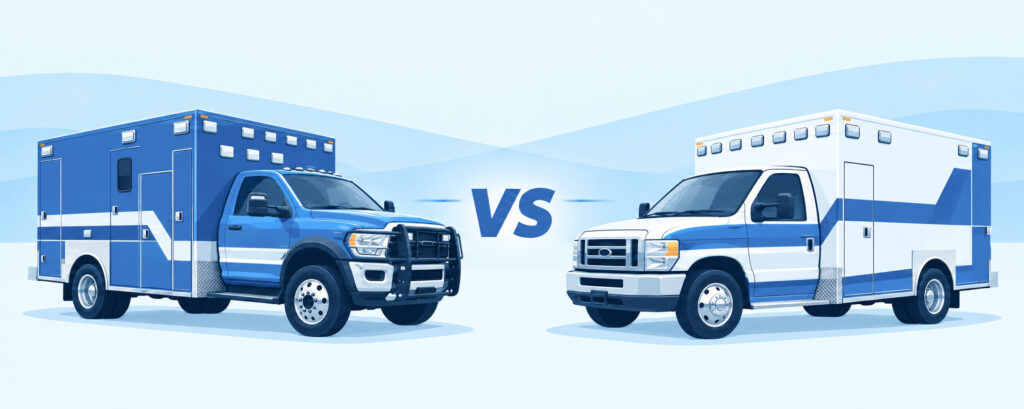
Type I vs. Type III Ambulances: A Practical Guide to Fleet Planning Choosing a new EMS vehicle takes more than comparing purchase prices. Your department also needs a vehicle that fits your response area, carries the right equipment, and makes sense to maintain over time. When you compare Type I and Type III platforms, the chassis can have a major impact on those decisions. Whether you’re preparing a proposal for a budget committee or working with your maintenance team on replacement plans, it’s worth looking beyond the day the vehicle arrives. This guide breaks down the differences in chassis design, remount potential, service access, payload, and power systems so you can make an informed decision for your fleet. Type I vs. Type III: What’s the Difference? The biggest difference is the chassis. A Type I EMS vehicle is built on a truck chassis with a patient module mounted behind the factory cab. A Type III vehicle uses a van cutaway chassis, with the patient module connected to the cab. That structural difference affects everything from engine access to interior layout. Type I platforms commonly use truck chassis such as the Chevrolet 3500 or Ford F-450. Departments often consider them for available chassis choices, payload capacity, and long-term remount plans. Type III platforms are built on van-based cutaways and may offer advantages in maneuverability or access between the cab and patient compartment, depending on the specific design. Neither configuration is automatically the right choice. Start with how your crews use the vehicle, where they drive, what they carry, and how your department plans to service it. Look Beyond the Purchase Price A purchase price matters, especially when every fleet investment needs approval. But the lowest upfront cost isn’t always the lowest long-term cost. Maintenance, time out of service, chassis replacement, and the ability to reuse a patient module can all affect what your department spends over the next 10 to 15 years. Some Type I configurations cost more initially than certain Type III configurations. That makes it important to compare complete vehicle specifications rather than assume one category is always more affordable. A realistic total cost of ownership review should include the original purchase, expected repairs, maintenance schedules, replacement plans, and reserve fleet needs. Can You Remount a Type I or Type III Module? Remounting means removing an existing patient module and installing it on a compatible replacement chassis. It can help a department keep a serviceable module in operation after the original chassis reaches the end of its useful life. The separate module design of a Type I vehicle can make it easier to plan for this process. Type III modules can also be evaluated for remounting, but the connection to the van cab may introduce additional work involving attachment points, cab dimensions, and chassis compatibility. In either case, the module’s condition and the replacement chassis specifications determine what’s practical. Frazer builds Type I modules with wood-free aluminum construction and long-term service in mind. When a chassis is due for replacement, an eligible module can be inspected and evaluated for installation on a compatible new chassis. Departments that plan for module remounting may be able to avoid purchasing a complete new vehicle at every chassis replacement. Actual savings depend on the module, the work required, and current chassis costs. What does this look like in a working fleet? Houston Fire Department operates a fleet that includes 129 Frazer units. Depending on module condition, compatibility, and operating requirements, Frazer modules may be remounted as many as four times. Frazer has reported modules exceeding one million cumulative service miles, with some approaching 20 years in service. These are examples of long-term potential, not guaranteed results for every unit. Have a question for the team? Ask a Question Maintenance Access Matters Every hour a vehicle spends in the shop is an hour your fleet has to cover another way. Chassis choice can affect how easily technicians reach components, perform inspections, and complete certain repairs. That’s worth discussing with your maintenance team before finalizing a specification. Some Type III van cutaway designs have tighter engine compartments and require technicians to access certain components through interior panels. A Type I truck chassis generally has a conventional hood, which may provide more direct access to many components from outside the vehicle. The time saved, if any, depends on the chassis, the repair, and the technician. Ask your mechanics which engines and chassis they already know, which repairs they perform most often, and whether the proposed vehicle will create new service requirements. Those answers may be more useful than a broad claim that one platform is always easier to maintain. How Frazer Makes Electrical Service More Straightforward Chassis access isn’t the only maintenance consideration. Frazer follows the KISS Principle, Keep It Super Simple, in its electrical design. Point-to-point wiring, common terminal strips, and standard automotive relays help make circuits easier to trace and components more familiar to technicians. For a department that services its own vehicles, this approach can make troubleshooting more manageable. Depending on the issue, a technician may be able to identify a fault and replace a commonly available part without specialized proprietary diagnostic equipment. The goal is practical serviceability, both when the unit is new and years down the road. What have operators reported? In a 2020 double-blind survey of 100 EMS and fire professionals, respondents were asked which ambulance brand they associated with spending the least time in the shop. Frazer received 39% of mentions, while the next-highest brands received 7% each. This was a survey of perceptions, not a measurement of actual repair hours, but it provides context for how respondents viewed maintenance experience at the time. Payload, Terrain, and Chassis Capacity Your crews carry more than a cot. Patient-handling equipment, monitors, rescue gear, supplies, and personnel all contribute to the vehicle’s loaded weight. That makes Gross Vehicle Weight Rating, or GVWR, an important part of the specification process. Some medium-duty Type I truck chassis offer higher weight ratings than lighter
How Your Type I Ambulance Truck Chassis Impacts Fleet Longevity
How Your Type I Ambulance Truck Chassis Impacts Fleet Longevity Choosing the right Type I ambulance truck chassis is about more than finding a truck that can carry your patient module. It’s about keeping your emergency vehicle in service, making maintenance easier, and getting the most value from your fleet investment. The chassis you choose, how the module attaches to it, and how you power your equipment can all affect long-term operating costs. For EMS fleet managers, downtime is more than an inconvenience. When a vehicle is in the shop, crews may have fewer units available to serve their communities. Diesel emissions problems, suspension wear, and electrical repairs can all affect vehicle availability. While no vehicle is maintenance-free, thoughtful decisions during the specification process can help your team prepare for these challenges. This guide covers the chassis, mounting, electrical, and maintenance considerations that matter when planning for long-term service. We’ll also explain how a durable, wood-free patient module and an independent power system can support future remount opportunities. How Chassis Selection Affects Long-Term Costs It’s easy to focus on whether a truck can handle the weight of a patient module. But meeting the minimum weight requirements is only part of the decision. The right chassis should also fit your equipment needs, crew requirements, driving conditions, and maintenance resources. Start with the Gross Axle Weight Rating (GAWR) and available payload capacity. These ratings help determine how much weight the vehicle can safely carry. Operating near a chassis’s rated capacity can place additional demands on the brakes, tires, and suspension, especially in severe-duty EMS applications. Depending on the configuration and operating conditions, some fleets may see brake replacement intervals as short as 15,000 miles, along with uneven tire wear or more frequent suspension repairs. Choosing a chassis with enough payload margin gives your department room to account for medical equipment, crew members, supplies, and other operational needs. It also helps reduce the likelihood of regularly operating near the vehicle’s rated capacity. Your chassis selection should reflect how your team actually uses its vehicles, not just how the specifications look on paper. Have a question for the team? Ask a Question Why Chassis Flex and Module Mounting Matter Truck frames are designed to move. When a vehicle crosses an uneven driveway, hits a pothole, or travels across rough terrain, the frame rails can twist slightly. This movement is called torsional flex, and it’s a normal part of how commercial truck frames respond to the road. The challenge comes when those twisting forces transfer into the patient module. Over time, repeated stress may contribute to loose fasteners, cabinet movement, or changes in exterior door alignment. The way a module attaches to the chassis can make a difference in how those forces are managed. Frazer uses engineered mounting brackets designed to accommodate chassis frame deflection during demanding operating conditions. These mounts help manage the transfer of torsional forces between the truck chassis and Frazer’s 3” x 1.5” x 3/16” 6061-T6 aluminum module structure. It’s one part of designing an emergency vehicle with long-term service in mind. Comparing Truck Chassis Options for Type I Emergency Vehicles There isn’t one chassis that’s right for every EMS department. Your decision depends on factors such as payload, powertrain preferences, cab space, local service availability, and the conditions your crews face every day. Several commercial truck platforms offer configurations worth considering for Type I applications. Ford Super Duty: F-450 and F-550 Ford’s F-450 and F-550 commercial platforms give departments access to an established parts and service network. Depending on the model year and configuration, gas and Power Stroke diesel powertrains may be available. That gives fleet managers options when balancing performance requirements, maintenance preferences, and local service support. Chevrolet Silverado: 3500 HD, 4500 HD, and 5500 HD Chevrolet offers several commercial chassis configurations for different vehicle applications. The 4500 HD and 5500 HD platforms include Duramax diesel powertrain options and a forward-tilting commercial hood. That hood design can improve access to certain engine components during maintenance, which is worth considering when your team evaluates serviceability. Ram: 4500 and 5500 Ram’s commercial chassis lineup includes available Cummins turbo-diesel powertrains and solid front axle configurations. Different cab layouts also give departments options for crew space and equipment needs. As with any chassis, the right fit depends on the specific configuration and how your department plans to use the vehicle. International CV515 The International CV515 is another platform to consider for demanding applications. Depending on its configuration, it can accommodate substantial payload requirements. Departments operating in severe-duty conditions or planning specialized medical vehicles, such as Mobile Stroke Units, may find its chassis specifications worth evaluating. Before making a decision, compare the available configurations against your department’s actual needs. A chassis that works well for one fleet may not be the right choice for another. Local service access, expected mileage, road conditions, and equipment weight should all be part of the conversation. How Extended Idling Can Affect Diesel Engine Maintenance Can Prolonged Idling Affect an Emergency Vehicle’s Diesel Engine? Yes. Extended low-load idling can contribute to diesel emissions system maintenance concerns under certain operating conditions. Modern diesel engines use emissions equipment that performs within specific temperature ranges. When an engine idles for long periods at lower exhaust temperatures, diesel particulate filter (DPF) regeneration may become less effective, potentially contributing to soot buildup and additional maintenance needs. Depending on the engine design, extended idling may also contribute to conditions such as wet stacking. These issues don’t affect every vehicle in the same way, but they’re important considerations for departments that regularly keep chassis engines running to power equipment at emergency scenes. That’s where independent power can make a difference. Rather than relying exclusively on the truck engine for auxiliary electricity, an independent power system provides another way to operate equipment while the vehicle is parked. When conditions and equipment requirements allow, crews may be able to shut down the chassis engine without shutting down the equipment they need. How Independent Power Supports Fleet Operations
Beyond the Spec Sheet: The Practical Advantages of a Type I Ambulance

Beyond the Spec Sheet: The Practical Advantages of a Type I Ambulance Choosing an emergency vehicle takes more than comparing specifications. Your crew needs a dependable workspace, your maintenance team needs equipment it can support, and your agency needs a vehicle that makes financial sense over time. Those needs become especially important during long shifts, frequent 911 calls, and hot weather. For EMS leaders planning their next purchase, a heavy-duty Type I vehicle offers several features worth a closer look. Here is how patient module construction, independent climate control, caregiver-focused layouts, and remounting can affect daily operations and long-term fleet costs. What Structural Features Matter in a Type I EMS Vehicle? Start with the patient module. How it is built matters because crews spend much of their workday inside it. Frazer uses welded 6061-T6 aluminum tube framing and laminated corners to reinforce the structure around the patient compartment. This design is intended to help the module maintain its integrity under demanding conditions, including certain types of collisions. Frazer reports no recorded patient module detachments in its documented collision history dating back to 1984. That record offers useful context, but it is not a guarantee of how any vehicle will perform in a future crash. Speed, impact direction, collision severity, and other conditions all affect the outcome. Have a question for the team? Ask a Question What Can We Learn From Real-World Collisions? Frazer has built more than 4,500 EMS modules, and customer-reported incidents offer examples of how the construction has performed. In a CareFlite collision, a unit experienced a reported 52 mph driver-side impact and rolled 90 degrees. The chassis sustained extensive damage, but the module remained intact. The crew was reported uninjured, and the module was later repaired and remounted on a new chassis. Jackson County Fire Rescue reported a near head-on highway collision involving a driver-side impact and rollover. The crew reportedly sustained minor injuries, and the Fire Marshal said the safety features had “performed above and beyond” in that incident. In another severe crash, a Gadsden County vehicle reportedly rolled at least two or three times, yet its patient module was considered salvageable. These examples are worth reviewing alongside available crash records, applicable standards, and your agency’s safety requirements. They show what happened in specific incidents, not what will happen in every collision. How Does Independent Climate Control Help During Long, Hot Shifts? Think about a unit waiting outside a hospital for two hours in 100-degree heat. Keeping the patient compartment comfortable can be difficult, especially when a cooling system depends on the chassis engine. For agencies with long idle times, climate control deserves as much attention as engine and chassis specifications. Frazer offers chassis-independent power configurations, including generator-based systems and the Mobile Electric Power Solution. These systems can operate a dedicated 15,000 BTU patient compartment air conditioner without relying directly on the truck’s engine-driven air conditioning. That means the cooling system can continue operating when the chassis engine is off, provided its independent power source is running. Frazer reports a typical cooling differential of 25 to 30 degrees, with up to a 35-degree difference between outdoor and indoor temperatures under applicable conditions. Actual results depend on the weather, vehicle configuration, operating conditions, and other factors. For fleet managers, the important question is whether a vehicle’s cooling setup matches the demands of their service area. What About Air Filtration? Cooling is only part of the conversation. In an independent double-blind market research study of EMS leaders, 76% identified HVAC and air filtration as their most important safety feature. Frazer offers the Dometic BreatheEasy photocatalytic UV/ionization system integrated into the HVAC plenum to help address certain airborne contaminants and odors. The system is configured to circulate the patient compartment’s air volume approximately every two minutes. Its effectiveness can vary with airflow, contaminant type, maintenance, and operating conditions. It should be considered alongside, not as a replacement for, routine cleaning, ventilation, and infection prevention practices. For a closer look at this technology, explore our guide on active EMS air filtration. How Can the Patient Compartment Support Safer, Easier Care? Payload and truck performance matter, but so does the space where your clinicians work. During a 12- or 24-hour shift, medics need to reach supplies, move around the cot, and care for patients without unnecessary obstacles. A well-planned interior can help crews work more comfortably and reduce the need to leave a designated seat during transport. Room to Work and Equipment Within Reach Frazer’s 96.25-inch-wide module allows flexibility in patient compartment layouts. Pre-engineered options, including the Foundation™ Series, offer nearly 50 inches of open aisle space. A center-mounted cot gives caregivers access to both sides of the patient, while carefully placed cabinets and work areas can keep frequently used equipment close to designated seating positions. The goal is to support care while clinicians remain seated and belted whenever the procedure and circumstances allow. Every agency should evaluate its preferred layout against its equipment, clinical practices, and crew needs. Frazer also builds its interiors without wood, using formed aluminum cabinetry and stainless steel work surfaces. These materials avoid some moisture-related concerns associated with wood-based components and provide nonporous surfaces that can support routine cleaning when proper products and methods are used. Can Remounting Lower Long-Term Fleet Costs? A new heavy-duty Type I vehicle may cost more upfront than some light-duty alternatives. But the purchase price is only one part of the budget. Maintenance, chassis replacement, vehicle downtime, and how long the patient module can remain in service all affect the overall cost of ownership. Remounting gives agencies another option. If a patient module is in suitable condition and compatible with a replacement chassis, it may be possible to keep the module in service instead of buying an entirely new vehicle. Frazer’s welded, wood-free aluminum modules are designed with long-term service and potential remounting in mind. What Does a Million-Mile Module Look Like? The Houston Fire Department offers a practical example. Its fleet includes 129 Frazer units, and reported fleet history
What Defines a Heavy-Duty Type I Ambulance? A Guide to Construction, Reliability, and Fleet Lifecycle
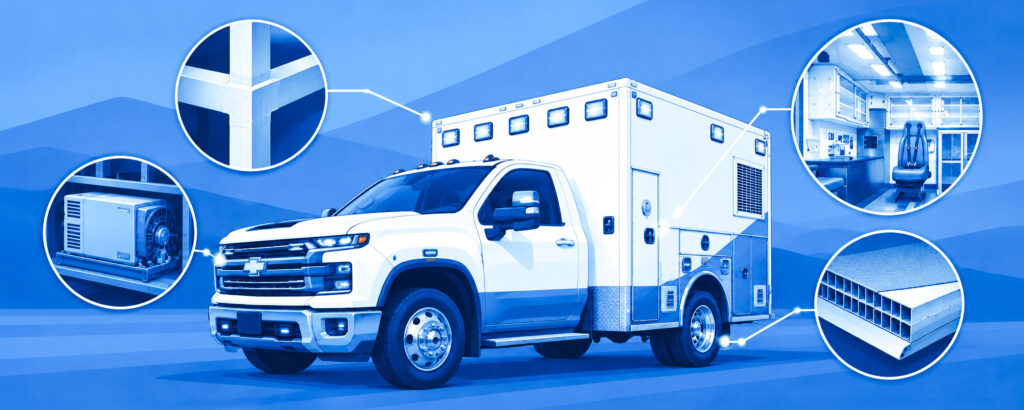
What Defines a Heavy-Duty Type I Ambulance? A Guide to Construction, Reliability, and Fleet Lifecycle A spec sheet is a starting point, not the whole story, when choosing a Type I EMS vehicle. Fleet managers also need to know how construction, electrical design, and service access will affect the vehicle throughout its working life. When a crew needs help with an electrical issue at 2:00 AM or patient compartment cooling on a hot summer day, those choices matter. Fleet managers and Emergency Vehicle Technicians (EVTs) are managing tight maintenance budgets, complex electrical systems, and the wear that comes with daily service. As municipal budgets face pressure and emergency response demands evolve, evaluating a heavy-duty Type I ambulance involves more than selecting a commercial truck chassis. It also means considering how the patient module is built, maintained, and potentially reused throughout its service life. This guide explains what to look for in a heavy-duty Type I EMS vehicle, from the patient module’s structure and electrical system to long-term service and remount planning. The Structural Anatomy of a Protective Patient Module Start with the patient module’s structure. A well-designed module can help protect occupants during certain collision conditions while supporting the structural demands of regular emergency response operations. Material selection, structural connections, and overall construction methods can influence how a patient module responds to road vibration, twisting forces, and repeated service demands. What Defines a Type I EMS Vehicle? A Type I EMS vehicle pairs a commercial truck cab-chassis with a separate patient-care module. This configuration provides departments with options for payload capacity, chassis selection, patient compartment design, and equipment integration. Depending on the chassis, module, and application, Type I EMS vehicles can serve a range of emergency response needs, including high-volume service environments and operations involving demanding road conditions. Have a question for the team? Ask a Question Welded vs. Bonded Joints: Why Structural Rigidity Matters EMS vehicle builders use different methods to join structural components and exterior panels. Adhesive products, including 3M Very High Bond (VHB) tape, can serve important purposes in vehicle construction, particularly in applications involving exterior skin panels and other components designed for adhesive attachment. Structural welding offers another approach. When properly engineered and applied, welded connections can provide a rigid framework designed to withstand the twisting and vibration associated with emergency vehicle operation. Frazer builds its patient modules with 100% welded structural joints. The framework incorporates robust 1.5″ x 1.5″ x 1/8″ 6061-T6 aluminum structural members, creating a welded structure designed to handle the mechanical demands associated with emergency response and extended vehicle use. What this means in the field: When an ambulance encounters potholes, uneven road surfaces, or the stresses associated with extended service, its structural connections play an important role in module durability. A welded framework can also support the structural requirements involved in removing a patient module from an existing chassis and installing it on a replacement chassis, subject to inspection and compatibility. Frazer’s track record: Frazer engineers its module-to-chassis attachment system with long-term structural durability in mind. Across more than 4,500 custom EMS modules built since 1984, Frazer has zero recorded module detachments. This historical record reflects Frazer’s documented experience and does not constitute a guarantee of future performance or collision outcomes. What Are the Benefits of a Welded Aluminum Module? A 100% welded aluminum structure provides a continuous framework designed to support module rigidity and distribute operational stresses through the patient compartment structure. Welded connections can help support resistance to road vibration and repeated loading. Structural performance during a collision depends on several factors, including the nature of the impact, vehicle configuration, and the forces involved. A durable welded framework can also support long-term remount planning. With appropriate inspections, maintenance, and chassis compatibility, some departments may remount a patient module three to four times over a 20-year lifecycle. The Wood-Free Interior Advantage Interior materials deserve the same close look as the frame. Different manufacturers use materials such as wood, MDF, particle board, aluminum, and composite products in cabinetry, flooring, and other interior components. Emergency medical environments routinely encounter moisture from cleaning procedures, changing weather conditions, and patient-care activities. Depending on the material and its protective treatment, repeated moisture exposure can contribute to swelling, deterioration, or unwanted odors over time. Frazer uses a wood-free interior design that incorporates formed, powder-coated aluminum cabinetry mechanically secured to the welded frame. The floor features a heavy-duty polycarbonate-core laminated subfloor. What this means in the field: Aluminum cabinetry and polycarbonate-core flooring are designed to resist moisture absorption and reduce concerns associated with wood deterioration. These materials can also support routine cleaning and long-term interior maintenance. For departments considering future remounts, a wood-free interior provides an additional design feature that may help preserve the condition and serviceability of the patient module over time. Managing the Costs of Chassis-Dependent Power Power generation and climate control are important considerations in ambulance fleet management. Many EMS vehicle configurations rely on chassis-powered systems for patient compartment electrical functions and air conditioning. These systems can serve departments effectively, but their operating characteristics and maintenance requirements may vary depending on vehicle configuration, climate, duty cycle, and equipment demands. For agencies evaluating long-term operating costs, independent power systems offer an alternative worth considering. How Can Independent Power Help Your Crew? Independent 120V AC power allows certain patient module functions to operate without relying directly on the truck engine. Depending on the system configuration, this approach can reduce the amount of chassis engine idling needed to support patient compartment equipment and climate control. Reducing unnecessary chassis idle time may help limit engine operating hours and associated maintenance demands, including those involving diesel emissions equipment such as the Diesel Particulate Filter (DPF). An independent power system can also support a self-contained 15,000 BTU HVAC system designed to cool the patient compartment while operating separately from the chassis engine. How Chassis-Dependent Air Conditioning Can Affect Curb-Idle Performance Air conditioning performance depends on factors such as system capacity, ambient temperature, vehicle insulation, airflow, and engine operating conditions.
Ambulance Remount Services vs. Buying New: Finding Fleet Value
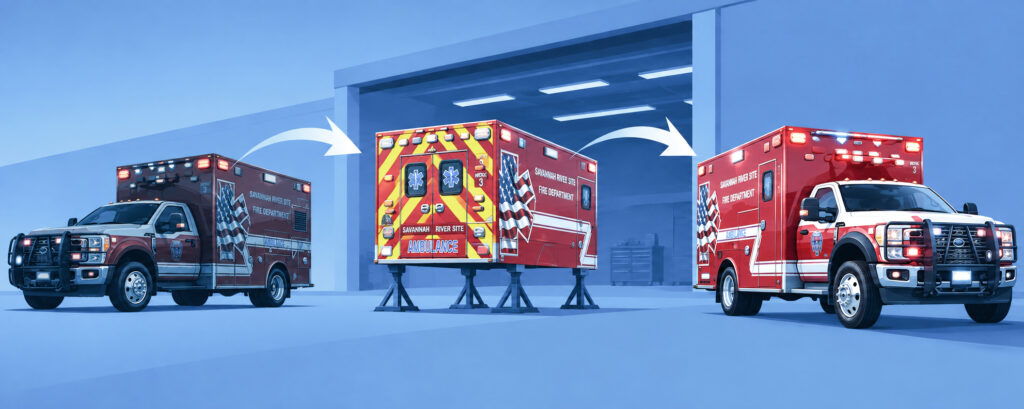
Ambulance Remount Services vs. Buying New: Finding Fleet Value Budget season is approaching. Chassis lead times can change, and your department may need to replace aging, high-mileage vehicles while making the most of its capital budget. Remounting can lower the upfront cost, but price is only part of the decision. Fleet managers and department leaders also need to think about uptime, electrical systems, mechanical condition, service needs, and how long the vehicle needs to stay in service. This guide gives you a practical framework for deciding when factory-direct ambulance remount services may make sense and when buying new may be the better fit. By looking at the condition of your module, your fleet needs, and the long-term costs, you can make a more informed decision while keeping crew safety and infection control in mind. When to Remount: How to Evaluate Your EMS Module Age and chassis mileage do not tell the whole story. The condition of the module matters, too. Before choosing a remount, your department should determine whether the existing module is in good enough condition to be installed on a new chassis. Look for structural damage, damaged or compromised welds, moisture intrusion, and other signs of wear. These issues can affect whether keeping the existing module makes sense. Have a question for the team? Ask a Question The Structural Integrity Check: Aluminum vs. Wood Construction One important factor is how the module was built. Some traditional modules use wood in their subfloors or cabinetry. Over five to ten years of service, wood can be exposed to moisture, biohazards, and other conditions that may cause it to break down. A wood-based module should be carefully inspected before it is considered for a remount. Frazer builds its patient modules with a 6061-T6 aluminum base frame and a wood-free subfloor. The floor uses a laminated construction with aluminum sheets over a polycarbonate core. For fleet mechanics, this construction is designed to resist rot, rust, and problems associated with moisture intrusion. It is also designed to handle the vibration and twisting that come with EMS service. If your existing module has this all-aluminum, wood-free construction, it may be a good candidate for a remount, depending on its current condition and inspection results. The Financial Math: Looking Beyond the Purchase Price Is it more cost-effective to remount an EMS vehicle or buy new? There is no single answer for every fleet. Buying new requires a larger initial investment. A remount can lower that upfront cost by keeping the existing custom module and placing it on a new chassis. The better long-term choice depends on the module’s condition, maintenance needs, chassis replacement cycle, configuration, and expected service life. For municipal procurement teams and hospital leaders, that difference can have a major impact on capital planning. Instead of looking only at the initial invoice, Frazer encourages customers to consider the Lower Overall Cost of Ownership, or LOCO. LOCO looks at what a vehicle costs over its useful life, not just what it costs on day one. A module designed to support multiple chassis cycles may allow a department to spread its original investment over many more years of service. The Houston Fire Department has used Frazer remount services as part of its fleet strategy. In these applications, modules may be remounted three or four times. Some modules can see more than 260,000 miles on each chassis, allowing the module itself to surpass 1,000,000 miles and approach 20 years of service. Why Experienced Buyers Look Beyond Initial Price Purchase price matters, especially when a city council, board, or procurement team is working within a set budget. But Frazer’s research suggests that experienced EMS leaders consider much more than the initial bid. According to Frazer’s independent, double-blind market research study, the Survey Results Presentation 10-30-20, fewer than 25% of respondents initially named price as an important reason for choosing a builder. When respondents were later asked to rate specific attributes, price accounted for 9% of importance. That finding gives procurement teams another way to look at value. Initial price can be considered alongside uptime, structural life, service, reliability, and the total cost of keeping a vehicle in service. Upgrading Technology During an EMS Vehicle Remount Can I upgrade my EMS vehicle’s HVAC and air filtration during a remount? Yes, depending on the module and configuration. A factory-direct remount gives your department an opportunity to evaluate systems that may need to be updated while keeping the existing module structure when its condition supports reuse. That can include evaluating independent HVAC systems, physical air filters, and active UV purification components where applicable. It is also an opportunity to look at the patient compartment as a whole and determine whether technology, infection control features, or climate-management systems should change with your department’s needs. Modernizing HVAC and Active Air Filtration Frazer’s Survey Results Presentation 10-30-20 found that 76% of respondents identified HVAC and air filtration as the number one safety feature influencing vehicle selection. During a factory-direct remount, the environmental systems can be evaluated along with the rest of the module. Frazer’s independent 115V AC system is designed to manage patient-compartment climate in demanding conditions. Depending on the vehicle’s configuration and available power system, it can provide cooling without relying on the chassis engine to remain running. Departments can also evaluate infection control systems during the remount process. Frazer uses the Dometic BreatheEasy active photocatalytic purification system, which combines UV light and filtration technology and is designed to help address airborne contaminants in the patient compartment. The physical air filters, Part No. 35901, and active UV bulbs are field-replaceable so departments can include them in their regular maintenance program. Factory-Direct Quality and Support After the Sale Can third-party remount work affect warranty coverage? It can. Warranty coverage depends on the manufacturer, the work performed, and the terms of the applicable warranty. Certain work performed outside the original builder’s process may affect coverage, so departments should review their warranty terms before authorizing a remount or major modification. A Frazer factory-direct remount
The Fleet Manager’s Guide to Ambulance Remounting: Warranties, Engineering, and Longevity
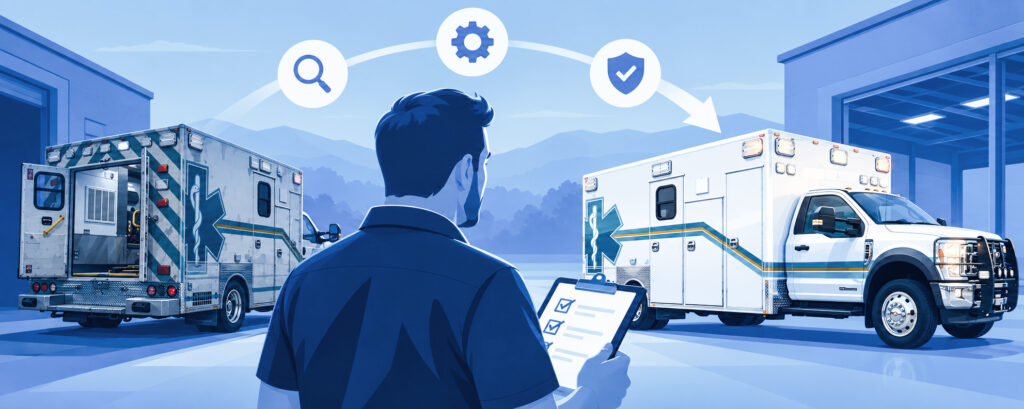
The Fleet Manager’s Guide to Ambulance Remounting: Warranties, Engineering, and Longevity For Fire Chiefs, EMS Directors, and Fleet Managers, every budget cycle comes with the same challenge: keep emergency vehicles ready for service while making responsible capital decisions. Chassis costs and procurement timelines can make that job even harder. Replacing an entire vehicle every three to five years can put significant pressure on municipal budgets and private operations alike. Remounting can give departments another option. But not every module is ready for another chassis. During inspection, fleet managers may discover hidden moisture damage, rot, or structural deterioration that affects whether an existing module is a good candidate for a chassis transfer. That is why the way a module is built matters long before its first remount. In this guide, we look at the financial case for ambulance remounting, the wood-free engineering that can help a module serve through additional chassis lifecycles, and the post-remount warranty Frazer offers to help departments manage long-term financial risk. The Financial Reality of Ambulance Remounting: Managing LOCO When a chassis reaches the end of its reliable service life, leadership typically has two choices: purchase an entirely new vehicle or evaluate the existing module for a remount. Buyers may also compare remounting with purchasing a lower-cost replacement unit. Looking only at the initial price, however, does not tell the whole story. A better comparison considers fleet costs over a 15-to-20-year horizon. Frazer refers to this as the Lower Overall Cost of Ownership, or LOCO. Instead of asking only what a vehicle costs today, LOCO asks what the fleet will cost to own and operate across multiple replacement cycles. Remounting can be a practical way to reduce those lifecycle costs. Rather than treating an EMS vehicle as a single-use asset, departments can treat a well-engineered module as a longer-term capital asset when its condition supports continued use. Transferring a structurally sound patient module to a new chassis may require less capital than purchasing a completely new build. Over a 15-year period, reusing a high-quality custom module across three chassis can result in a significantly lower average annual cost than replacing a lower-cost vehicle entirely every five years. The Example: Houston Fire Department (HFD) Houston Fire Department offers a real-world example of how this strategy can work at scale. HFD operates a large, high-volume fleet that includes 129 Frazer units. Frazer modules are engineered to be remounted up to four times and are designed with multiple chassis lifecycles in mind. Based on customer reporting from HFD, it is not uncommon for these specific units to surpass 1,000,000 miles of total service over their lifespan. Reusing a qualifying module across multiple chassis can help HFD extend the value of its capital assets, manage overall expenditures, and maintain greater layout consistency for frontline crews. Instead of starting over with every chassis replacement, the department can continue using a module that has already been configured around its operational needs. Engineered for the Next Chassis: What Makes a Module Remountable? Fleet maintenance teams sometimes face a difficult surprise during a remount evaluation. An agency plans to reuse its module, but inspection reveals significant wear, water damage, or structural deterioration. Depending on the severity, the module may no longer be a good candidate to move from its existing chassis to a new one. Whether a module can support another chassis lifecycle depends on its design, materials, maintenance history, current condition, and the results of its remount evaluation. There is no substitute for inspecting the individual module, but the materials used during the original build can have a major effect on its long-term condition. Have a question for the team? Ask a Question Why Do Some Ambulance Modules Fail Remount Inspections? Hidden wood rot, moisture damage, and deterioration in the subfloor, cabinetry, or structure can affect whether an EMS module qualifies for another chassis. Modules built with 6061-T6 aluminum and wood-free polycarbonate subfloors are designed to resist certain forms of moisture-related degradation, helping support the module’s structural condition for future remount evaluations. The Engineering Translation: Wood-Free Construction Frazer takes a wood-free approach to key areas of EMS module construction because the materials inside a module matter over its entire service life. Our primary module structure uses 6061-T6 aluminum tube and channel, including 3″ x 1.5″ x 3/16″ base frame components. That framework is paired with a laminated subfloor made with aluminum sheets over a polycarbonate core, while the cabinetry is formed from powder-coated aluminum. What This Means in the Field Put simply, Frazer does not use wood in the primary module framing, cabinetry, or subfloor. That matters because EMS vehicles work in environments where moisture is part of everyday life. Interior wash-downs, spilled bio-fluids, cleaning chemicals, and extreme weather can all introduce moisture into the patient compartment. When wood components are present, repeated moisture exposure can contribute to deterioration or hidden rot over time. By keeping wood out of the primary structure, Frazer reduces exposure to the types of moisture-related deterioration that can affect module longevity. It does not eliminate the need for maintenance or future inspection, but it can help a properly maintained module remain a candidate for another chassis when remount time arrives. How Many Times Can You Remount an Ambulance? A well-engineered EMS module can often be remounted up to four times, depending on its condition, maintenance history, configuration, and the results of each remount evaluation. Frazer modules are designed around multiple chassis lifecycles, using a 6061-T6 aluminum structure and eliminating wood from key structural areas. Houston Fire Department provides one example of this long-term approach, with customer reporting indicating that its Frazer modules frequently surpass 1,000,000 miles of total service. Warranty Renewal: Managing Post-Remount Liability Even when remounting makes financial sense and a module qualifies for another chassis lifecycle, leadership still needs to consider risk. Procurement Officers, Grant Administrators, and Fire Chiefs need to understand what happens if a structural problem develops after an older patient module is installed on a new chassis. That concern is understandable. Departments may