Ambulance Remounts – A Discussion

Ambulance Remount

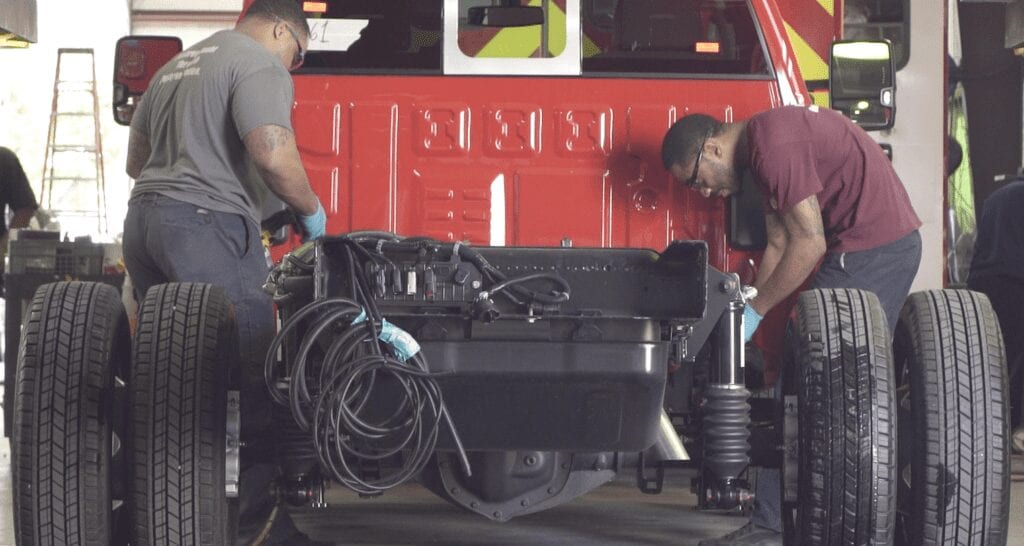
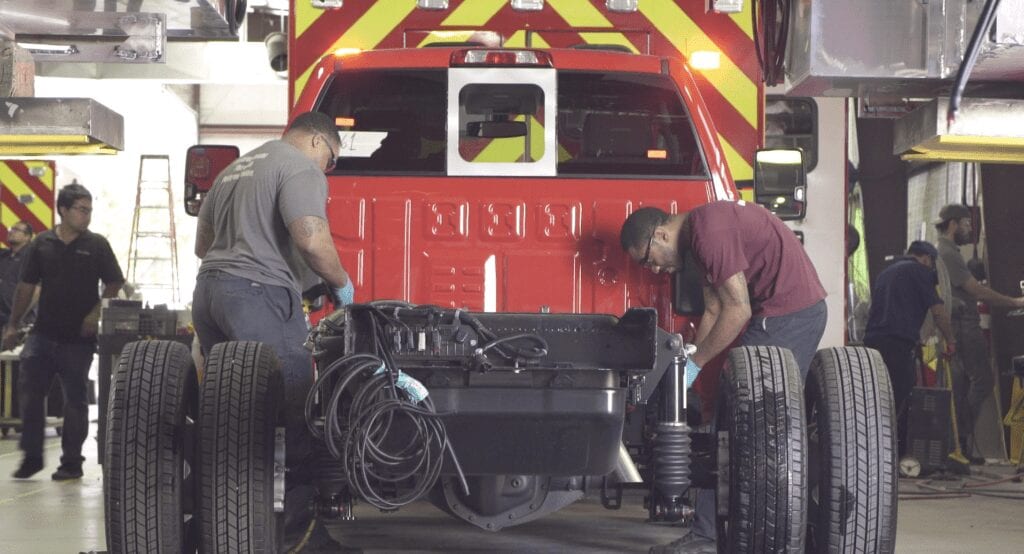
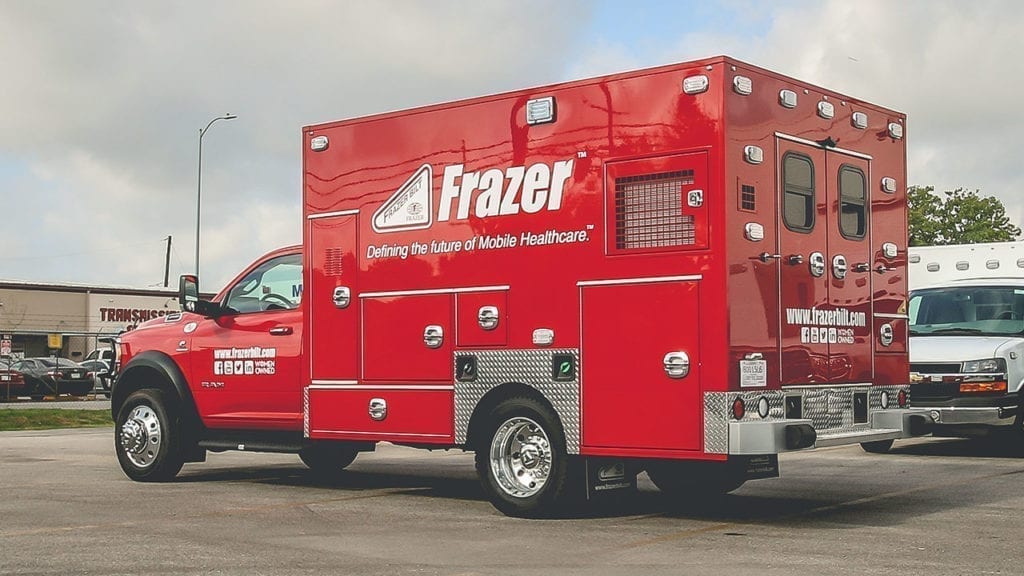
As Shakespeare once wrote, to remount, or not to remount, that is the question. Actually his version was far more existential, but the question still stands for many EMS and Fire services. The answer, as it is for so many other questions is, it depends. Which One Are You?! Generally speaking, people fall into one of three camps regarding remounts.  Why So Negative? We know why so many departments shy away from remounting. Decision makers have been burned over the years by shoddy workmanship, ridiculous delivery times, questionable sales tactics, and more. Experiences like that would make it difficult for anyone to get super excited about the possibility of adding remounts to an overall fleet strategy. But it doesn’t have to be that way. Let’s look at some of the arguments FOR remounting. Moneyball First and foremost among the elements to consider is budget. Many Frazer customers have saved meaningful dollars over the year as a result of a consistent remount program. Dollars spent on the chassis will be identical for a new or remounted module. Depending on the age and condition of your existing module, a remounted module can run as little as half the cost of a new module. Plus, at Frazer, our remounts travel down the same production line as our new units, so you get craftsmanship from experienced installers who know the module construction inside and out. We have been remounting our own Frazer modules for over 30 years, so we definitely know what we’re doing. Our design approach makes this particularly easy as the separate source of power means we don’t have to disentangle the module from the chassis and then redo that process. And unless there’s been some sort of serious damage to the module, our tough, durable materials last for years. It’s Green! That durability also means you get to reuse the vast majority of the components on your module. There’s nothing greener than reusing something that’s perfectly good!  And when we’re done it’s virtually impossible to tell a remount from a new unit. There are always some tell-tale signs, but you really have to know what you’re looking for. In fact, we’ve had potential customers find themselves shocked upon finding out a vehicle they thought was brand new was actually a remounted module built 5 to 10 years ago or more.  While many departments have found themselves dissatisfied with a remount that just perpetuates the problems they were already experiencing, Frazer customers get the same reliability and performance they were already enjoying. And for less money. We also see numerous municipalites take the old chassis and repurpose it for use in a department that may have a specific need for a solid chassis that may simply be high mileage.  But What About All The New Stuff? From time to time improved components become available and lots of our customers will invest in upgrading those during the remount process (think strobes to LEDs, or new cot systems). However, if the rest of your rig just needs a little cosmetic TLC, there’s absolutely no reason to not continue using a perfectly good, well constructed module through another purchase cycle. We’ve worked out the engineering to incorporate all the cool new stuff. It’s just a matter of pricing. So Yeah, It Depends Maybe your department operates in a community with sufficient resources that allow for buying new through every purchase cycle. We have plenty of customers where that’s the case. If so, it’s quite likely that trading in or selling your used vehicle is the preferred course of action.  If, however, your budgets are a little tighter and you’re trying to maximize every dollar, we can confidently recommend the remount process as an excellent tool at your disposal. If you’re sort of on the fence about the whole process and want to get some more information, please call one of our Sales Team at 888-372-9371. They can walk you through the steps and get you in contact with many of our existing customers who have taken advantage of remounts over the years. Or you can click here to read more.

Ambulance Graphics Are Neato!

Sure, you’ve done all the hard stuff, figured out all the cool (and necessary) things you need for your new ambulance. But everyone knows that designing your graphics and color scheme is the best part of the build process. Let’s take a look at what goes into making your unit sing. Thank You, Technology! One upon a time you were pretty much limited to a few different typefaces or fonts and a handful of colors to choose from. Anything beyond a simple beltline stripe usually had to be painted, and even then the ability to work out precise masking for special designs was laborious. Omaha Orange and Highway Gothic C, how exciting! Thanks to the advent of desktop computing and automation, a new breed of software programs and plotting cutters opened the doors to more imaginative design. Frazer started handling graphics in-house about 15 years ago as a way to provide our customers a turnkey product. Plus we knew if we were in charge of the process it would be handled with the same care and quality as the overall vehicle. Moving On Up A few years in to our graphical journey, we added a printer to our arsenal and allowing our customers to do things with graphics they hadn’t had the chance to in the past. And if you’ve noticed the changes in graphics packages over time, you’ll see the effect increased capabilities have in unlocking imagination. We’re currently working with some companies that have advanced printing capabilities as well as looking into some new equipment that will let us take advantage of those things in-house. Nothing But Professional Graphics If you choose to have Frazer complete the graphics on your new rig, rest assured you will be getting advanced professional materials. We use 3M 680 reflective roll material for beltline striping, and we use the same 680 reflective sheet material for all of our cut graphics. And it comes with a 5 year warranty! We also have access to a wide variety of non-reflective sheeting for any custom designs you might want. Many of our customers utilize 3M Diamond Grade consipcuity sheeting on the rear wall of their modules. We offer that upgrade in a number of different color combinations to maintain consistency with the rest of your design. Our thermal printer/cutter is perfect for custom stars of life, department shields, station logos, and more. Teamwork 10 year Frazer veteran, Darren Mayo, can take almost any image you want and convert it into a printable version suitable for your vehicle. And, as he likes to note, we always put it on Sticky Side Down.  Melissa Boyce has been with us for over a year and will be the point person to work with if you’re looking for some ideas on how to update your look. She has been in the graphic design industry for many years and does a great job taking your ideas from imagination to reality. Once completed, if you want the design files, no problem, and no charge. We understand that many of our customers like to work with graphics pros in their area and we’re happy to help. Before you contract with someone, it’s a good idea to find out if they’ll give you your files or if you’ll have to pay to get them.  Our experienced team of in-house installers, led by 14 year vet Elton D’Agrella, will apply the completed graphics with care and quality. They know that’s the first thing you’ll see on delivery day and they do not want to disappoint. Interested in finding out more about our graphics services? Feel free to give Melissa Boyce a call at 888-372-9371. Or click here for more info. 

Air Conditioning in Your Ambulance – A Discussion

ambulance manufacturer

Air conditioning is essential to a safe environment for you and especially your patients. Along with fancy electrical systems, ambulance air conditioning usually sounds great during the sales pitch, but frequently doesn’t perform as advertised. Here’s how you can avoid “drip air.” Automotive vs. Self-Contained Applications The mechanical process of air conditioning works the same for self-contained and automotive applications. But the similarities pretty much end there.  Automotive Air Conditioning The AC in your car or truck is sized to try and cool an area that can easily reach temperatures over 150 degrees on a hot and humid summer day. There’s a reason why we don’t leave kids and pets in hot cars; cars and trucks basically become hot houses in a very short span of time. Cooling a small passenger space down quickly from temperatures that extreme is a priority for the driver and occupants, and most vehicles can handle that job sufficiently. But that cooling capacity comes at a cost. Per the U.S. Department of Energy: Running your car’s air conditioning is the main contributor to reduced fuel economy in hot weather. Its effect depends on a number of factors, such as the outside temperature, humidity, and intensity of the sun. Under very hot conditions, AC use can reduce a conventional vehicle’s fuel economy by more than 25%, particularly on short trips.[1,2,3] The AC’s effect on hybrids, plug-in hybrids, and electric vehicles (EVs) can be even larger on a percentage basis.[2] U.S Department of Energy – Office of Energy Efficiency and Renewable Energy If it feels like your ambulance is burning through fuel at a higher than normal rate during the summer, that’s because it is. An Ambulance is Not a Car It’s MUCH bigger! Automotive AC relies on the engine and electrical system of the vehicle to provide all required power. A conventional ambulance takes that same system, adds the massive volume of a patient compartment to the equation, and expects everything to stay cool.  Since many ambulance manufacturers add an additional condensing unit to the system in an attempt to cool a much larger space, the power requirements and resulting fuel consumption start to rapidly increase. These automotive-based systems also rely upon a large amount of air to blow over the condenser as the truck moves down the road. If you have to keep your unit at high idle to provide power for the module, the extra heat generated underneath the hood impacts the AC system as well. Bottom line, it is an expensive, power hungry, inefficient, and ineffective alternative the industry has lived with for decades. The Frazer A/C Solution If you have an 1800 square foot house in the South, you generally have 3 ton air conditioner. Frazer provides a 1 ¼ ton AC for your 112 square foot patient module. That’s enough to cool a 900 square foot apartment in Houston! You win! Our air conditioner runs off 120V provided by our on-board or under hood generator. Oh, and the drivers get that truck AC all to themselves. A massive 518CFM fan cools the condenser. Humidity is extracted from the air and pours out in buckets. You set your thermostat to a comfortable temperature and forget it. Recirculated air quickly cools the interior, and recovery time from working at a scene is fast. Forward facing supply vents put the air onto the things that matter — you and your patient.  When you’re done with a call, plug in at the station for year round temperature control. It works just like it would at home – set the thermostat and walk away.  You’ll come back to an already cooled (or heated) module. Idling on scene (or even turning off your vehicle with the Onan application) will have no impact on the cooling capacity of a self-contained AC unit. The Numbers That Matter Delta. Like the Airline, But Different. Our self-contained units produce a 34 degree differential from outside to inside air temperature. On a hot and humid 104 degree day, that means it will be a cool and comfortable 70 degrees inside our modules. That 34 degree number, sometimes referred to as the delta, is a critical one. Of course that’s with the doors closed. What happens if someone leaves the doors open? Glad you asked! Our air conditioner can maintain a consistent 22 degree delta even with the doors wide open. Recovery Time Since you have no idea how long you’ll end up on scene, or how long someone might leave the doors open in the patient compartment, recovery time matters. And once again, the massive airflow and cooling capacity of our self contained AC system sets us apart. After the doors were closed, recovery time was 5 minutes. No “drip air” here. So we get your module cold. We keep your module cool on scene. And when you’re ready to go we’re ready to get it cold again. Warranty Our self-contained units feature our legendary 4 year warranty. Most automotive systems come with 3 yr/36,000 mile coverage. You’re likely to blow through 36,000 miles in 12-18 months at most services so forget the three years. Also, if there is an issue to contend with, troubleshooting is far easier on a self-contained unit. And, if necessary, our whole AC can be completely swapped out in about 45 minutes. Try that with a truck-based system. A Little History We did automotive based AC long ago in our oilfield equipment because that’s what our customers knew. When big 120V generators became available they wanted 120V air conditioners. It was an amazing change in efficiency and reliability! It’s been almost 40 years since Frazer first prototyped the self-contained air conditioning system in our EMS vehicles and close to 50 since the first time we used it in our oilfield equipment. So we’ve known almost a half century that automotive AC doesn’t provide the performance our customers have grown to expect from our products.  That is what we want to do for you. Please let us

Ambulance Options: Gas vs. Diesel

Coke or Pepsi? Coke. Tea or Coffee? Coffee, duh. Whataburger or In-N-Out? Whataburger. Not close. Gas or diesel? Well, that depends… All of those other choices have clear, totally objective answers. But when it comes to picking the fuel type for your new ambulance, there are a few other considerations beyond just taste. Please note, this particular post covers offerings from Ford, Chevy and Ram, as they are they only ones offering both diesel and gasoline options on ambulance prep package models. What Vehicle Do Our Customers Choose? By more than a two to one margin, Frazer customers opt for diesel power for their EMS vehicles. The splits are roughly 70% diesel to 30% gasoline.  Drilling down further, for those choosing diesel, Ram leads the way by nearly 2 to 1. According to the Ambulance Manufacturer’s Division (AMD) of the National Truck Equipment Association (NTEA), those numbers flip around to Ford at a 2 to 1 pace nationwide.  Diesel Options Ram, Ford, and Chevrolet all offer diesel options powerful enough to make Tim Allen happy. However, from a pure performance perspective, Ram carries the day with a whopping 1000 ft. – lb. of torque from their new Inline 6 cylinder Cummins engine. Here’s a handy chart for your viewing pleasure. Diesel Options Ford Ram Chevy Name Ford PowerStroke Cummins Duramax L5P HP 450 HP 400 HP 445 HP Torque 935 lb. – ft. 1000 lb. – ft. 910 lb. – ft. Compression 16.2:1 16.2:1 16.0:1 Displacement 409 cu. in. – 6.7L 408 cu. in. – 6.7L 403 cu. in. – 6.6L Configuration V8 Inline 6 cylinder V8 Gasoline Options It’s been a long time coming, but the Big 3 manufacturers all have a gasoline option available that works for Type I vehicles. (* Note – Type 3 cutaways ONLY come in gasoline configurations.)  Since the mid-1980s, the Chevrolet C3500 has been the Houston Fire Department’s platform of choice. Consequently, Frazer has decades of experience in this area. While the power ratings don’t match up to those of the diesel engines, there are a number of factors that still make these trucks an attractive option under the right circumstances. Here’s another nice chart. Gasoline Options Ford Ram Chevy Name FlexFuel V8 Hemi V8 6.6L V8 HP 430 HP 370 HP 401 HP Torque 475 lb. – ft. 429 lb. – ft. 464 lb. – ft. Compression 9.8:1 10:1 10.8:1 Displacement 445 cu. in. – 7.3L 392 cu. in. – 6.4L 403 cu. in. – 6.6L Configuration V8 V8 V8 A Little Vehicle History In the mid-1980s, when Frazer began building for the EMS industry, we were virtually alone among builders in using a gasoline chassis. However, our separate power source, provided by the Onan generator, made it possible to still use the Chevy 3500 without the overheating, air conditioning, and electrical problems others faced when running all the power off the chassis.  Technological advances have mitigated the overheating issues to the point where the Big 3 now offer an ambulance prep package on all models, diesel or gas, but we still know the separate source of module power matters no matter what platform you choose.  Pros and Cons So how does one choose from among such a wide array of options? Let’s look at some things to consider: Diesel Pros Diesel Cons Gasoline Pros Gasoline Cons Phone A Friend Frazer will build you a new or remounted EMS vehicle on whatever platform you prefer. Our main concern is that you’re happy with your new rig.  If you’re considering a change to a different chassis or fuel type or both, please give our Sales Team a call at 888-372-9371 for a list of referrals. However, we find that talking to your friends or neighbors in the industry who have some experience with the model you seek is a great way to lock in a decision.  If you already know what you want, or if our handy dandy charts gave you the answer you need, click here to get our latest pricing info!

Notes on 9/11

It was about 8:00 AM in Houston when I first realized there may be something bad happening in New York. Contributors to a financial website I followed were chatting about some sort of explosion at the north tower of the World Trade Center. The source of the blast was unknown at that point. I walked back to the customer waiting room in our service center to find any news coverage on the television. Pete Morin, at the time the Director of West Harris County EMS, was also there. We watched the unfolding horror in silence. I was sick to my stomach. Much of the rest of the day was a blur, but I do vividly remember being at home later, holding my daughter, one year old at the time, watching the news, and wondering just how bad things might actually get. As the shock gave way to sadness, it became unrelentingly evident. Plenty of people and sites have compiled timelines of the events. There are, no doubt, numerous posts in your social media feeds with links to news footage or audio of Flight 93 and the extraordinary acts of courage carried out by those passengers, so there’s no reason to try and recap all of that here. When I visited the Memorial and Museum earlier this year most of those memories came flooding back. It is a somber and poignant reminder of not only the destruction and horror, but also of the collective heroism carried out by people in all walks of life, some clinging to survival, some risking all so that others might survive. First and foremost among those were the first responders of FDNY,  NYPD, and the surrounding agencies that rushed headlong into an apocalyptic disaster with virtually no idea what was going on.  We cannot ever completely express our appreciation and gratitude for the work that you, our friends and family in the first responder community do every day to protect and serve your own communities. We certainly never take it for granted. Without you, many among us would be utterly lost in times of crisis.  Thank you.

Fleet Size Matters

Getting your fleet right-sized is a key consideration for any EMS leader. Learn more about what factors are important to stay ahead of the curve.

Top Ambulance Procurement FAQs

Ambulance procurement can be challenging for even the most seasoned administrator. The following FAQs will help as you prepare for your next EMS vehicle. From financing to grants to cooperative purchasing requirements, Frazer has the answers you need. Cooperative Purchasing or Competitive Bid? Bid requirements vary greatly from state to state, and even among regional or local authorities. In Texas, for example, most items over $50,000.00 must meet state bid requirements. In Louisiana, however, that figure drops $25,000.00, and in other states the rules may only apply to construction projects. A quick web search for your home state’s municipal buying requirements should provide the relevant information. Cooperative Purchasing (Yes! We’re on HGAC and BuyBoard!) Cooperative purchasing can be as simple as partnering with another municipality working on a competitive bid and buying your own vehicle with the same set of specs. Or, numerous government procurement services around the country allow for the same thing without the hassle or outcome uncertainty associated with the bid process. These entities improve the process for end users by reducing the administrative and advertising fees for a competitive bid and by opening up the number of available products. They are designed to meet most state and local purchasing rules. A vast majority of our customers have found this a huge improvement to the normal ambulance procurement process. Cooperative purchasing entities like Houston based, HGAC, evaluate products either through “competitive bid (IFB) or competitive proposal (RFP) process.” They offer the end user the pricing power of a national group of buyers as well as a thorough vetting of accepted vendors. As with competitive bidding, rules will vary per location, but most states have some form of cooperative purchasing statute. Click here to see how your state handles cooperative buying. Frazer is an authorized vendor through HGAC. We also work with BuyBoard, a purchasing cooperative run by the Texas School Board. Our EMS vehicles are available for purchase on both of these sites. Many of our customers have found cooperative buying a major improvement in the ambulance procurement process. It allows them to meet state requirements while ensuring they don’t end up with an unwanted vehicle. Call one of our sales team at 888-372-9371 to find out more. The Bid Process Here is a list of just some of the tasks you’ll confront when conducting a public competitive bid. Click here to see the current Texas statute defining purchasing requirements. Write your own vehicle specs Review specs with committee Advertise time and place of bid once a week for at least two weeks prior to award date Pre-bid conference Respond to any bid questions Evaluate bids Award bid Verify product received meets specs The municipal bid process requires a significant amount of time and administrative effort. And while it can be very effective when vendors are offering apples to apples products, i.e. multiple Ford dealers bidding on an F-150 truck, things get a lot trickier as the specifications get more complicated. Ambulance and fire apparatus are notoriously complex, and the differences in specifications, construction methods, and quality among builders are vast. Adding to the mix are purchasing agents or local attorneys who may not have experience with the product in question. Their involvement in the process may lead to unexpected buying outcomes. Award Requirements The award process is usually where things get more complicated. In Texas, for example, many people think a bid must be awarded to the lowest priced bid. This is actually inaccurate. Per Local Government Code 252.043: (a)  If the competitive sealed bidding requirement applies to the contract for goods or services, the contract must be awarded to the lowest responsible bidder or to the bidder who provides goods or services at the best value for the municipality. Texas Local Government Code Chapter 252 252.043 (b) goes on to define the ways you may evaluate “best value” as it pertains to your locale. These include things like “quality”, “reputation”, and “bidder’s past relationship with the municipality” to name a few. If you are considering running a competitive bid, it’s a good idea to make sure everyone on the decision team is on the same page when it comes time to award the bid. You should also consider familiarizing yourself with your own state requirements at the outset. Do You Know of Available Grants? Many of our customers have had success going the grant route, but it definitely takes time and effort to make that happen. There are some great resources on the web to help start you down that path. There are numerous grants available to help absorb some of the rising costs affecting critical equipment procurement. Federal, state, and private agencies offer financial assistance for items ranging from small equipment and accessories all the way up to facilities. EMSGrantshelp.com, FireGrantshelp.com, and Grantfinder.com can help you determine what items have grant money available or even help write the grant. Click here to see a more comprehensive article detailing some of the things you’ll want to consider before starting the process. You can also call us at 888-832-9371 and ask for Herb Brady. Herb spent over 35 years in both Fire and EMS and has personal experience with the grant process. He’s an excellent resource and can help point you in the right direction. What Are My Financing Options? Frazer has typically seen equipment financing handled by either a bank local to the customer, or by one of numerous regional or national lenders, such as Leasing2 or Texas Capital, specializing in municipal fleet leasing or replacement programs. The financing approach you’ll choose depends largely on what’s available to you, terms offered or comfort with the lender, and governance approval. Whatever the case, Frazer works directly with the lending institution to provide the invoice, MSO, delivery information, etc. to help streamline the process for our customers. At funding, the lender will either: Wire the payment funds directly to the dealer, who will release funds to us upon your acceptance of the vehicle Deposit funds in

Ambulance Buyer’s Top FAQs – Part 2

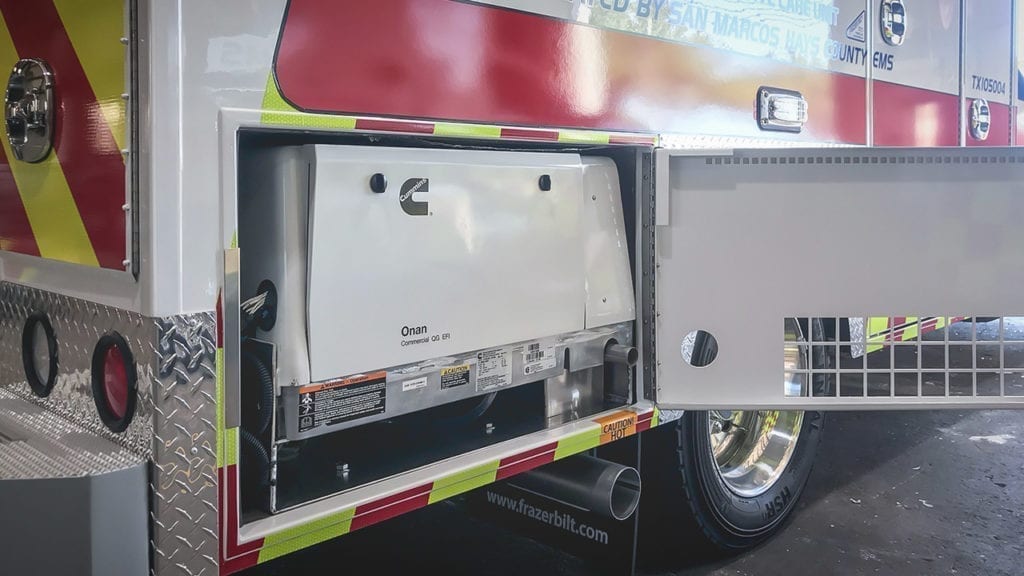
Thank you so much for your interest in Frazer EMS Vehicles! If you’re here you’re likely a prospective ambulance buyer and that probably means you saw us at a trade show or perhaps on a social media post; maybe one of your neighboring communities has one of our vehicles; or it’s possible you found us with a good old fashioned web search. However it happened, welcome! We’re glad you stopped by. If you missed Part 1 of this series, please click here to check it out. Like any potential customer you have lots of questions. Since this may be the first time you’ve ever heard of us, we’ve compiled a list of the most common things we hear asked by ambulance buyers or their committees. Hopefully these will give you a better sense of our company and our products. If you don’t find the answer you’re looking for here, please feel free to call one of our sales team at 888-372-9371. Or, if you prefer, fill out a request for our handy Buyer’s Guide. How Do You Service Customers Not In Texas? Our approach to service works directly with the way we’ve designed our product. We know components can fail over time. Given that fact, we’ve tried to make everything on your vehicle easy to identify, troubleshoot, and repair. If you have a fleet maintenance department, they will run into very few things they won’t be able to fix. We offer free training to all of our customers for dealing with maintenance and repair on the generator , air conditioner, electrical systems and much more. Our service department is always just a call away. You can even find the number right on the electrical compartment door. Customers have been amazed over the years at how many issues they’ve been able to solve over the phone. Because we designed our EMS vehicles to feature module independence, we don’t make modifications to the factory chassis. If you do have a truck issue, your local dealer will be able to work on it, and the finger pointing we hear about with traditionally powered ambulances goes away. Frazer has excellent relationships with service centers around the country. Click here to see a list of Authorized Service Centers. If you are more comfortable with a service center in your area, we can review their expertise and work directly with them. We can even have them come to the factory for training if necessary. Our Service Department is constantly on the lookout for good people to work with. We have a goal to add 10 more Authorized Service Centers in 2019, bringing our total to 23. To find out more about our numerous service options, please call 888-372-9371 and speak with one of our sales team or ask for Bert Jones, our VP of Service. Also, we highly encourage you to talk to our customers, especially those outside of Texas, to find out how our service has worked for them. Why Do I Need a Generator for My EMS Vehicle? Our customers find generator power on their EMS vehicle gives them a number of major advantages over traditional ambulance electrical systems. They typically have had issues with at least one of the following situations. First, it allows for our super cold, independent 120V A/C system. Customer experiences with the truck-based A/C systems common on traditional ambulances, especially in hotter parts of the country, have definitely been underwhelming. Second, they typically find the separate source of power for the module on their EMS vehicle far more efficient than trying to run everything off the truck electrical system. They no longer rely on load management systems to keep major module functions operable. You just turn it on and go. Third, the modular design and module independence allows for easy, cost effective remounts down the line. Smaller departments frequently tell us how this has allowed them to expand their ambulance fleet without breaking the bank. Fourth, thanks to generator power, mechanics love the simplicity of our electrical design. Our electrical compartment features a detailed print of all circuitry along with the serial numbers and makes of all major components. Lastly, should something go wrong, you don’t want to find yourself without power. If an issue arises with either generator method, our EMS vehicles are designed to automatically switch back over to the chassis electrical system, giving you redundant 12V power in the event of an unexpected problem. Onan or MEPS for My EMS Vehicle? Frazer offers two different approaches to the generator solution on our EMS vehicles. One method uses an on-board Onan 5.5 kW generator located in its own compartment. The advantage to this design is that it does not rely on the chassis to create power. If you should have a truck issue, the patient module will remain fully operable with all major systems intact.  Our other solution utilizes an under hood, belt driven generator from Mobile Electric Power Solutions, MEPS for short. The MEPS system provides 6.3 kW of output. Customers find the advantage of the MEPS system in not having to maintain another piece of equipment. If you don’t have a dedicated fleet maintenance department, this may be the right solution for you. Please click here to view a more comprehensive discussion of the pros and cons of each design. However, if you’re not experiencing consistent battery and alternator failures, poor A/C quality, or system outages on your current ambulance, it’s quite likely a generator powered module is not a priority for your service. But if any of these complaints sound familiar, give one of our sales pros a call at 888-372-9371. They can walk you through these scenarios and discuss the MEPS v. Onan questions to see if generator power, and which approach, would be a good fit for your department. What’s Your Sales Process? We know the sales cycle can be daunting for a prospective customer. We’ve worked hard to streamline the process so you get the most out of your Factory

Ambulance Buyer’s Top FAQs – Part 1

Ambulance Purchase

Thank you so much for your interest in Frazer EMS Vehicles! If you’re here you’re likely a prospective ambulance buyer and that probably means you saw us at a trade show or perhaps on a social media post; maybe one of your neighboring communities has one of our vehicles; or it’s possible you found us with a good old fashioned web search. However it happened, welcome! We’re glad you stopped by. Like any potential customer you have lots of questions. Since this may be the first time you’ve ever heard of us, we’ve compiled a list of the most common things we hear asked by ambulance buyers or their committees. Hopefully these will give you a better sense of our company and our products. If you don’t find the answer you’re looking for here, please feel free to call one of our sales team at 888-372-9371. Or, if you prefer, fill out a request for our handy Buyer’s Guide. How Much Does an Ambulance Cost? Like most complex, big-ticket items the short answer is, it depends. Frazer EMS vehicles start around $145,000.00. However, we have customers at the other end of the spectrum who have requested major customization or added numerous high-dollar options and loose items to the point where we’ve seen prices as high as $375,000.00.  A Frazer sales professional can walk you through the process using our Configuration tool to give you exact pricing based on your needs. If you’re not quite ready for that level of commitment, click here for more info. Why Haven’t I Heard of You? We get this question a lot and frankly there are numerous reasons you might not know who we are. Though the company has been around since 1956, we’ve only been building EMS vehicles since 1985. Back then our primary business was in the seismic exploration field so most of our growth in EMS was organic and most of our marketing was word of mouth. Our generator powered concept was unique in the EMS industry and we didn’t have a large sales staff to promote the concept. We accepted this was a niche product and might not be the sort of thing that would catch on in a widespread fashion. But we also heard horror stories from our customers about experiences with dealers. We committed early on to maintaining a Factory Direct sales model that allowed prospective and existing customers to have a much bigger voice in the direction our product took.  As our market share grew we increased our sales team, but we also made the decision to spend our advertising and marketing dollars cultivating direct relationships with EMS agencies. This meant we rarely advertised in the national trade publications and didn’t show up at every convention.  All of this is to say we’ve been around for many years in the EMS industry but our approach over time has not left us as a household name. Thanks to the internet and social media, and coupled with a larger sales team and marketing budget, we’re able to grow awareness while still keeping the personal interaction we’re known for.  Ultimately, our customers are our best sales force and we highly encourage you to reach out to as many of them as you want. We’re glad you found out about us. Let them give you the rest of the story. Who Runs your EMS Vehicle In My Area? As a prospective ambulance buyer you’re probably curious to know who else might have a vehicle you’re interested in. Frazer provides EMS vehicles to services around the country. While Texas is our predominant market (we build for over half of the 911 agencies in the state), we have customers in 32 states throughout the US.  We’ve built our customer base largely through word of mouth, and, as we offer a Factory Direct buying experience, we don’t have a large dealer network. But we’re hard at work getting the word out via trade shows, social media, and our website.   Please call us toll free at 888-372-9371. Or you can click here to see where are customers are located. We encourage you to contact them to find out more about our products and our legendary service. Do You Customize? Contrary to what other dealers might say, yes, Frazer does tons of customization with all sorts of unique design elements and customer specific features. But in reality, the majority of ambulance buyers have neither the budget nor the time nor the specific need to justify getting too crazy with custom options. Ultimately though, you know what you need and we get that. Fortunately, someone else may have already had that need and likely asked us to engineer a solution. But we also know there are plenty of good ideas lurking around out there. If you have one for us to design, we’re ready, willing, and able to do so. Does Your A/C Hold Up to High Temperatures? Frazer set the standard for high quality air conditioning over 30 years ago when we introduced the generator powered EMS vehicle. Armed with sufficient power to run a completely independent A/C unit dedicated to cooling down the patient compartment, our product was a revelation in an industry used to what some of our customers called “drip air,” turn on the A/C then drip sweat on your patient. A 34 degree differential from outside air temperature is what we provide and what you should expect from your vehicle. Being in Houston puts us squarely in the middle of some of the most brutal summer heat in the country so we’ve had plenty of opportunity to prove the concept over a very long time. We assumed long ago every manufacturer would want to provide the same level of comfort for their customers, but it’s only been in the last handful of years that other builders have started offering a variation on the theme.  Given that Texas experiences extreme summer heat, it’s not surprising we have such a huge fan base here.