Lifecycle of a Type I EMS Vehicle Remount: Making Modules That Last
High-volume 911 service can be tough on a Type I truck chassis. High engine hours, extended idling, heavy mileage, and demanding operating conditions all add wear over time. Eventually, the chassis may reach the end of its useful service life while the custom workspace on the back still has years left to give.
That raises an important question: What if the module was designed to serve through more than one truck chassis?
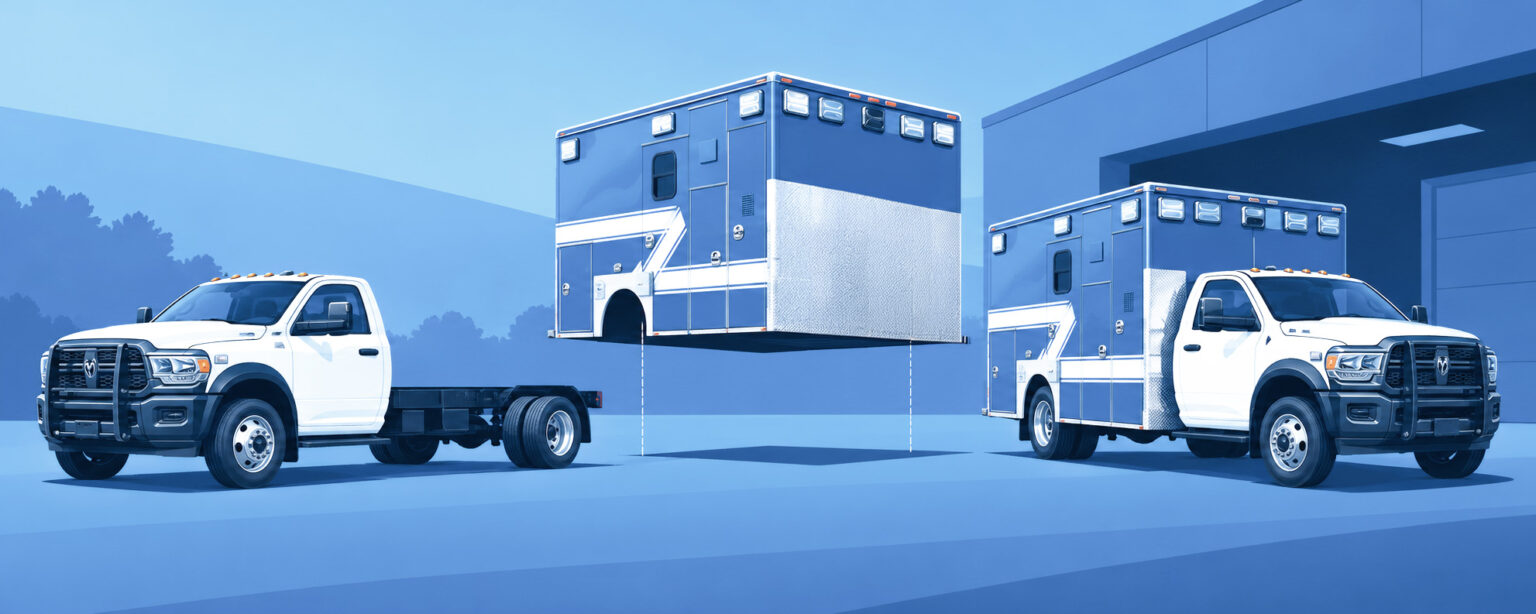
Remounting gives departments another option. Instead of replacing the complete vehicle every time the chassis ages out, an eligible EMS module can be inspected, updated, and mounted onto a new chassis. This article explains how that process works and what departments should consider when planning a long-term fleet strategy.
The Toll of High-Volume 911 Response on Type I Chassis
If you manage an EMS fleet, you already know what these vehicles go through. Type I units can spend long hours responding to emergencies, idling on scenes, traveling hard miles, and supporting demanding electrical loads.
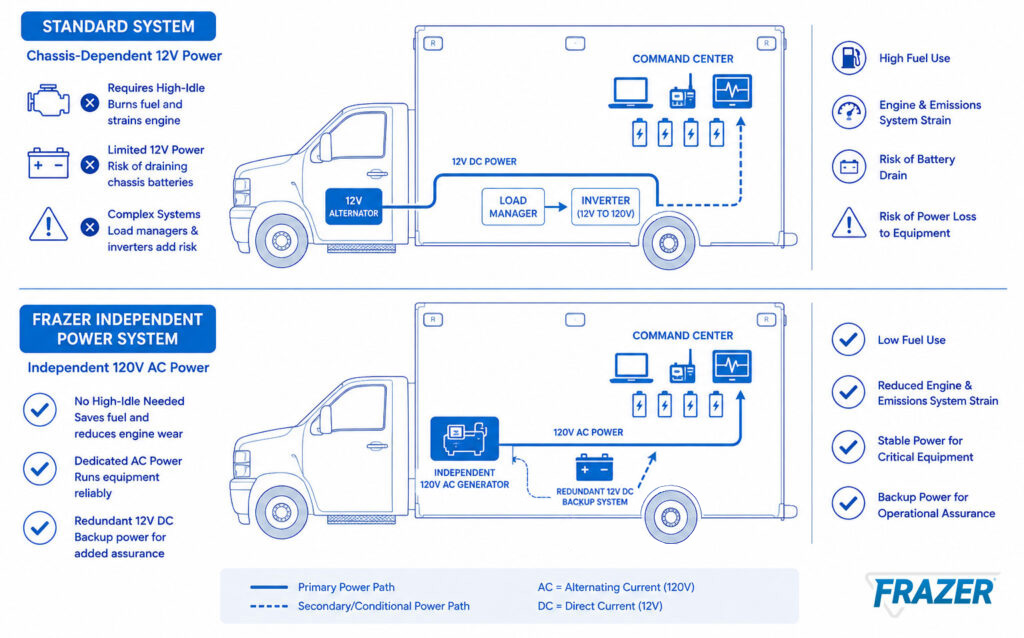
Engine hours are an important part of that picture. Extended idling can place additional demands on modern diesel emissions systems and the OEM truck electrical system. When the module also depends on the truck’s alternator to run high-draw medical equipment and air conditioning, the chassis electrical system has even more work to do. Over time, electrical or mechanical problems can take a frontline vehicle out of service and force crews to rely on reserve units.
The module may have a different service-life story. Mileage, engine hours, operating conditions, and maintenance all affect the truck chassis, but they do not automatically determine the useful life of the patient compartment. A module designed with independent systems can be evaluated separately to determine whether it is ready for another chassis.
How Can Independent Power Support EMS Module Life?
Frazer takes an independent approach to module power. Generator options such as Cummins Onan and MEPS allow the module to operate its 120V AC electrical equipment and HVAC separately from the truck’s OEM electrical system.
On a hot summer afternoon, for example, the truck’s alternator does not have to carry the module’s 120V HVAC load to keep the patient compartment cool. Separating those demands can reduce the electrical load placed on the OEM system.
Frazer also follows the KISS Principle, or Keep It Super Simple. We use point-to-point wiring and standard automotive relays instead of depending on complex proprietary multiplex nodes. The goal is simple: make the system easier to understand, diagnose, and service. Depending on the repair, that can help fleet mechanics solve electrical problems in their own shop with standard tools and get the unit back into service sooner.
When the truck chassis eventually reaches the end of its service life, the module’s power, HVAC, electrical, structural, and other systems can be inspected together to determine whether the module is a good candidate for remounting.
How Is an EMS Module Evaluated for Continued Service?
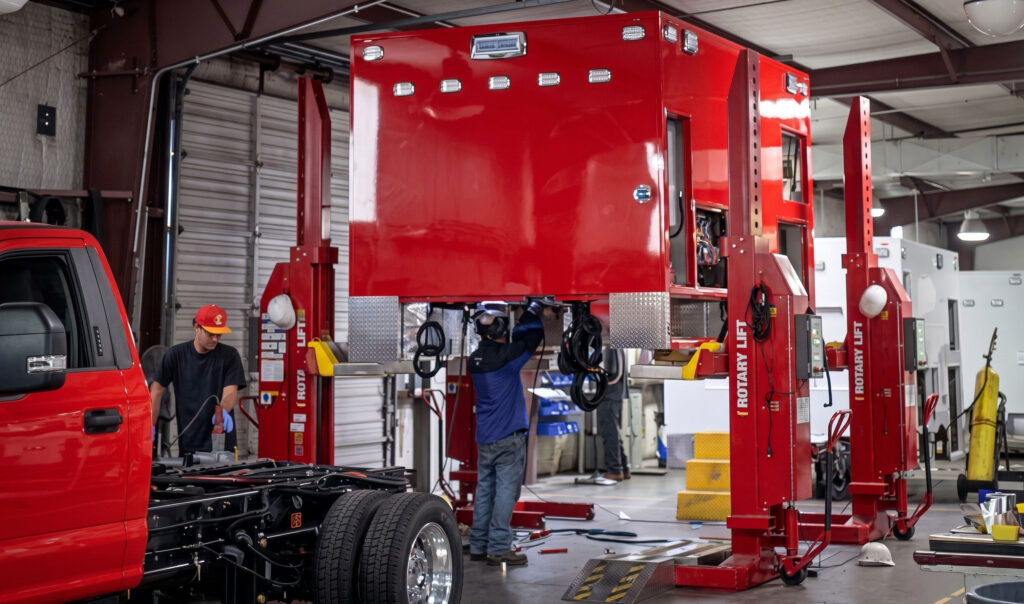
A remount is not simply a matter of moving a module from one chassis to another. The module first needs to be evaluated to determine whether its structure and systems remain suitable for continued service.
That matters to Fire Chiefs, Fleet Managers, mechanics, and medics. After years of calls, road miles, vibration, weather, and daily use, it is reasonable to ask how the module has held up and what may need attention before it begins another chassis lifecycle.
Frazer builds its patient modules around a base frame using 3″ x 1.5″ x 3/16″ 6061-T6 structural aluminum tube and channel. This construction is designed for the vibration, twisting, payloads, and operating conditions that come with EMS service. Frazer modules are also designed around applicable vehicle standards, including CAAS GVS and Triple-K requirements where applicable.
Structural Integrity in the Real World: The CareFlite Rollover
Compliance testing provides one way to evaluate module construction. Real-world incidents can provide another look at how a module performed under a specific set of conditions. According to Frazer records covering more than 4,500 EMS modules built since 1984, the company has recorded zero module detachments in collisions.
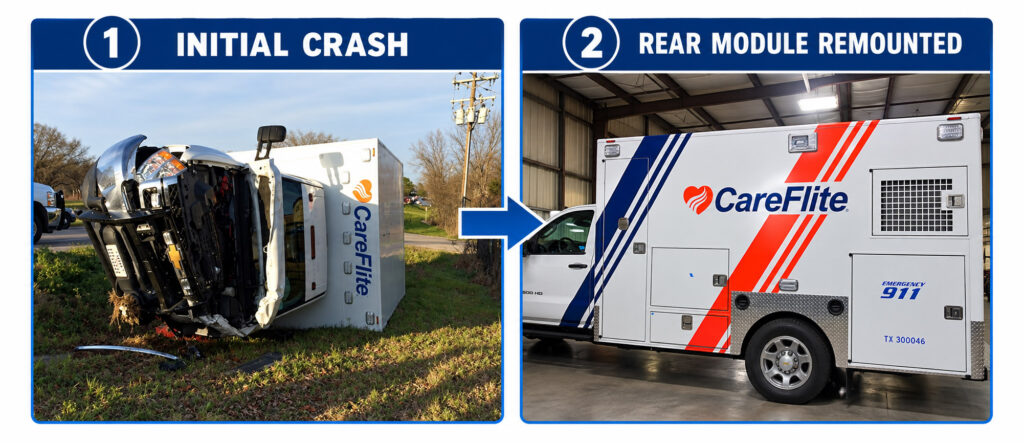
One documented CareFlite incident offers an example. During a severe collision, a CareFlite Frazer unit experienced a 52 MPH front driver’s-side impact followed by a 90-degree rollover. The truck chassis sustained significant damage, while the module remained intact enough to be evaluated for continued use. The crew reported no injuries. After evaluation and minor cosmetic repairs, the module was remounted onto a new chassis and returned to service.
This example does not predict how a module will perform in every collision. It does show how this particular Frazer module performed under those specific conditions.
Can a Remount Preserve Our Crew’s Custom Workspace?
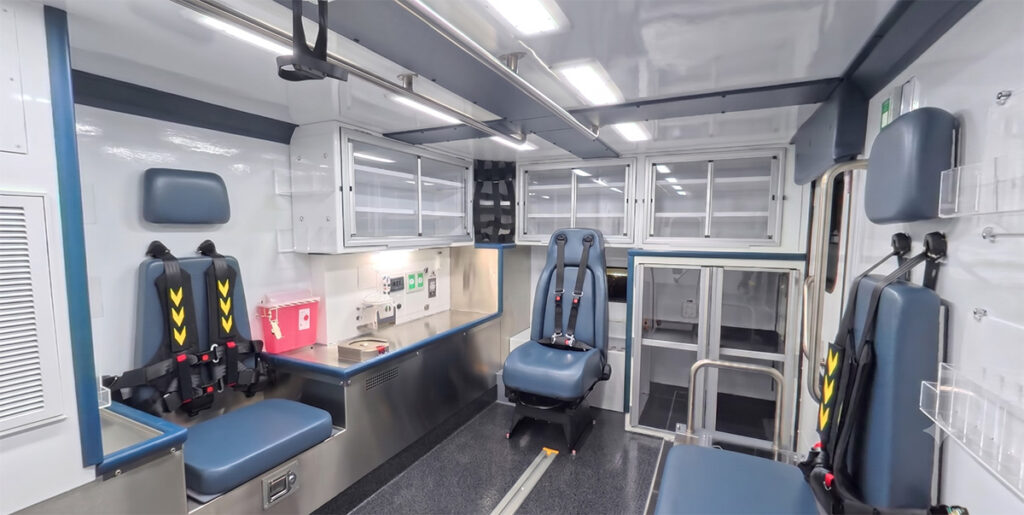
For medics running call after call, the patient compartment is more than the back of a truck. It is their workspace. They know where equipment is stored, how to move through the module, and how the layout supports patient care.
Replacing the complete vehicle can mean introducing a new stretcher configuration, different cabinet locations, or a different workflow. Crews then have to adjust to that new environment.
Remounting an eligible module can help preserve much of the workspace the crew already knows. Frazer uses formed aluminum cabinetry that is mechanically secured to the module structure rather than wood-based cabinetry. This helps reduce concerns related to moisture, warping, and deterioration of wood components over time.
During the remount process, the module structure, cabinetry, interior, HVAC, electrical systems, and other components can be inspected. The evaluation helps determine what can remain in service and what should be repaired, replaced, or updated. The result can give the department a new truck chassis while preserving much of the workspace and workflow its crews already use every day.
The Financial Side: Lowest Overall Cost of Ownership (LOCO)
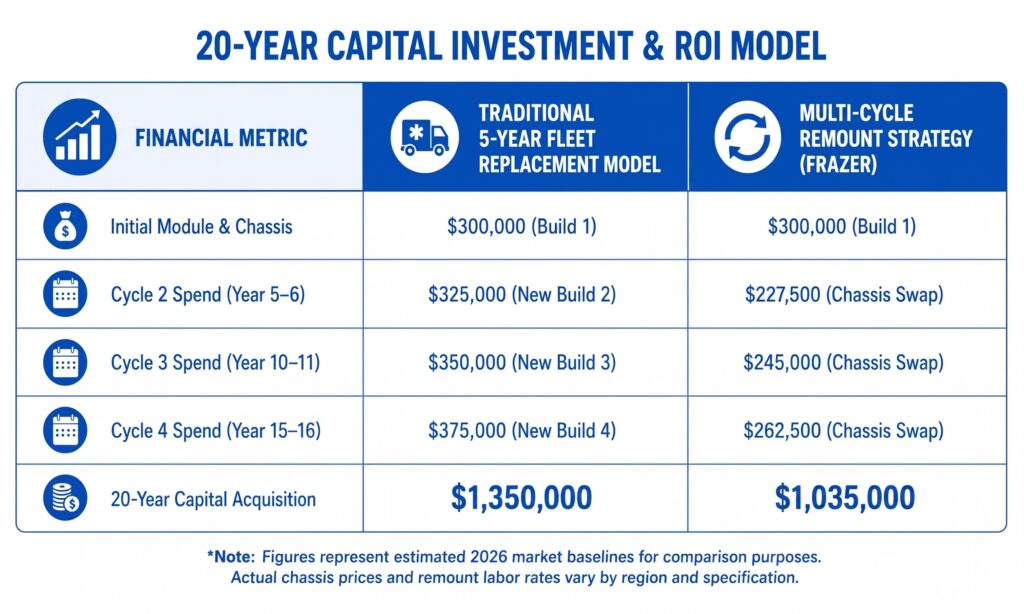
City Managers, EMS Directors, and Procurement Officers have to look beyond today’s purchase price. A custom Type I vehicle is a major capital investment, so it makes sense to consider what that investment may look like over 10, 15, or even 20 years.
Frazer calls this approach Lowest Overall Cost of Ownership, or LOCO.
Instead of automatically replacing the complete vehicle at the end of every chassis lifecycle, a department may be able to keep an eligible Frazer module and remount it onto a new chassis. If the module remains suitable for continued service, the department does not have to replace every part of the vehicle during each procurement cycle. That can reduce the amount of new equipment required and may lower long-term capital costs.
The Houston Fire Department provides an example of this strategy in demanding urban 911 service. According to the supporting fleet data, HFD operates 129 Frazer units, with modules commonly logging more than 260,000 miles per truck chassis. Frazer modules are engineered to be evaluated for remounting up to four times, and modules following this lifecycle can surpass 1,000,000 miles of total service across multiple chassis.
The exact financial impact will be different for every department. Chassis costs, module condition, equipment updates, maintenance history, labor, and replacement schedules all matter. The important point is to evaluate the complete lifecycle instead of looking only at the cost of the next purchase.
Support After the Sale: Renewing the Remount Warranty
A long service life only works when customers have support along the way. Fleet Managers need access to parts, technical help, warranty guidance, and people who understand the equipment they are working on.
In a double-blind survey of 100 EMS and Fire professionals, respondents identified “Support after the sale” as the number one attribute affecting their vehicle purchasing decisions. When respondents were asked which brand spends the least amount of time in the shop, Frazer received 39% of the mentions.
Frazer’s support does not stop when a unit leaves our facility. Our team is here to help customers throughout the module’s service life, including when it is time to consider a remount.
When Frazer performs an authorized remount, a 2-year warranty on the remounted module’s construction is renewed, subject to the applicable warranty terms and conditions. That gives fleet and maintenance teams additional support as the module begins its next chapter of service.
Invest in a Module Designed for the Long Haul
High-volume 911 response puts real demands on a Type I truck chassis. Engine hours climb, mileage adds up, parts wear, and eventually replacing the chassis can make operational and financial sense. That does not always mean the custom workspace on the back has reached the end of its useful life.
Frazer modules are built with independent 120V power options, wood-free formed aluminum cabinetry, and a 6061-T6 structural base frame. Together, these design choices give departments the option to plan beyond a single chassis lifecycle. When inspection shows that a module remains suitable for continued service, remounting can help preserve a familiar crew workspace, extend the value of the original module investment, and potentially lower costs over the life of the fleet.
Thinking about remounting as part of your fleet plan? Talk with our EMS vehicle specialists about your current module, expected replacement timeline, independent power options, and LOCO considerations. We can help you understand the options so your department can make the decision that fits its people, operations, and budget.
If you are planning your next vehicle and have questions about air management, talk with the Frazer team. We can walk you through how independent HVAC and active air-treatment systems work, what they are designed to do, and how they can fit the needs of your department.
Is a remounted EMS module as safe as a new one?
An eligible Frazer module is inspected and evaluated before remounting to determine whether it remains suitable for continued service. Frazer modules are designed around applicable vehicle standards, including CAAS GVS and Triple-K requirements where applicable. In one documented CareFlite incident, a Frazer module involved in a 52 MPH collision and rollover was evaluated, repaired, remounted onto a new chassis, and returned to service. That incident demonstrates how one module performed under those specific conditions, but it should not be interpreted as a guarantee of performance in every collision.