The Fleet Manager’s Guide to Ambulance Remounting: Warranties, Engineering, and Longevity
For Fire Chiefs, EMS Directors, and Fleet Managers, every budget cycle comes with the same challenge: keep emergency vehicles ready for service while making responsible capital decisions. Chassis costs and procurement timelines can make that job even harder. Replacing an entire vehicle every three to five years can put significant pressure on municipal budgets and private operations alike.
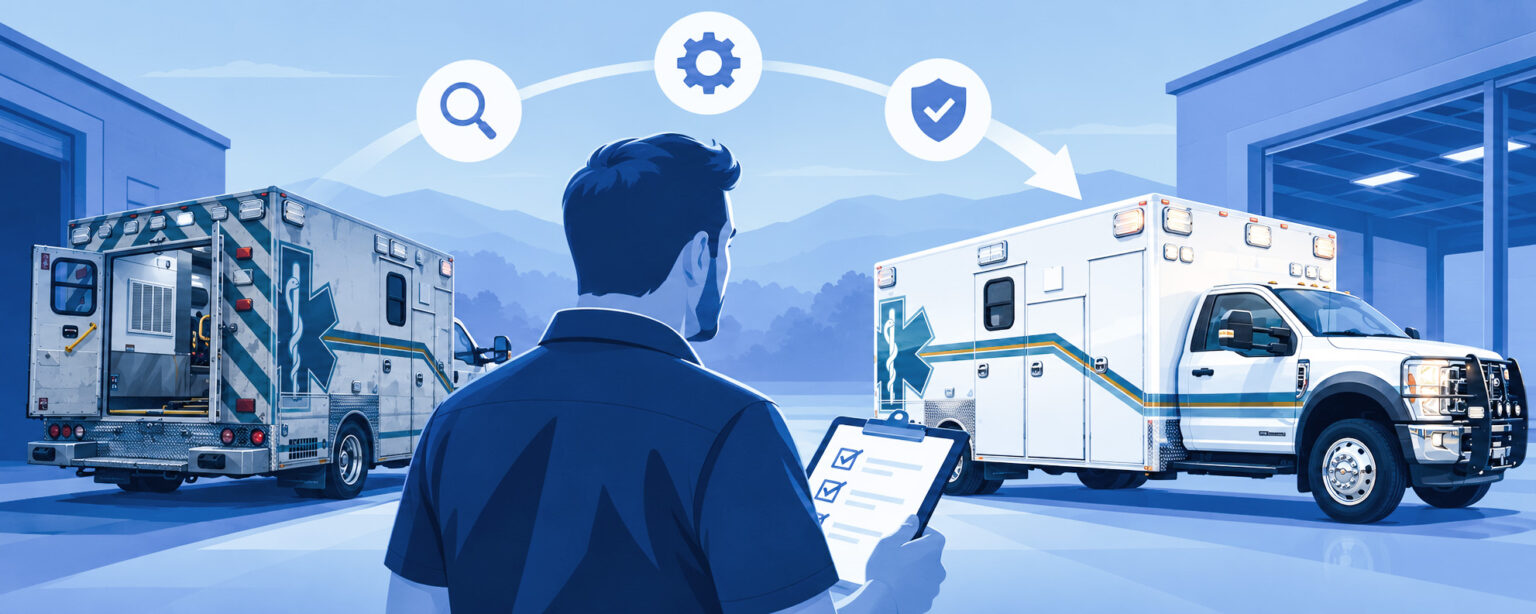
Remounting can give departments another option. But not every module is ready for another chassis. During inspection, fleet managers may discover hidden moisture damage, rot, or structural deterioration that affects whether an existing module is a good candidate for a chassis transfer.
That is why the way a module is built matters long before its first remount. In this guide, we look at the financial case for ambulance remounting, the wood-free engineering that can help a module serve through additional chassis lifecycles, and the post-remount warranty Frazer offers to help departments manage long-term financial risk.
The Financial Reality of Ambulance Remounting: Managing LOCO
When a chassis reaches the end of its reliable service life, leadership typically has two choices: purchase an entirely new vehicle or evaluate the existing module for a remount. Buyers may also compare remounting with purchasing a lower-cost replacement unit. Looking only at the initial price, however, does not tell the whole story.
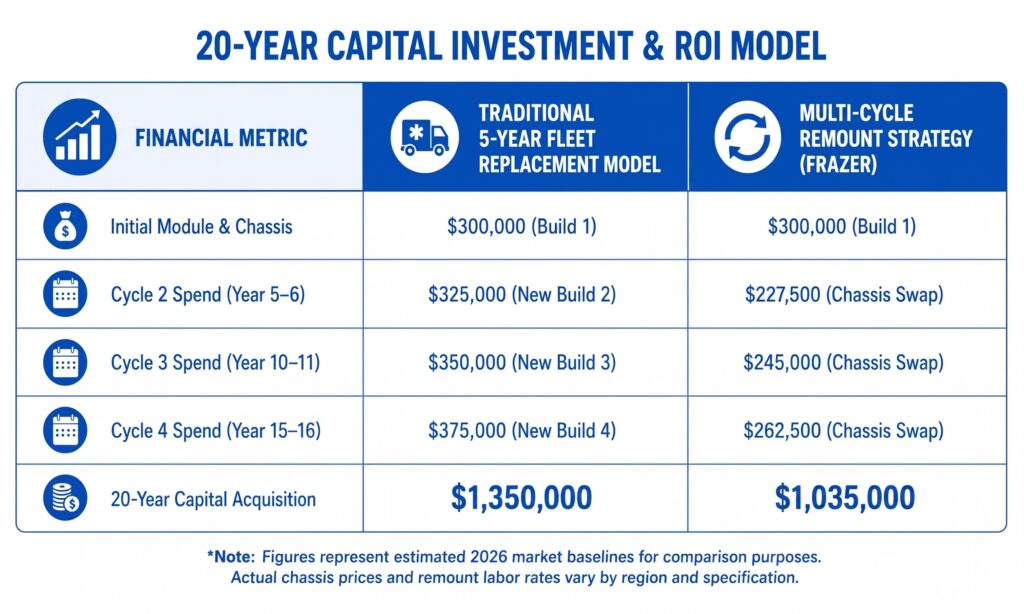
A better comparison considers fleet costs over a 15-to-20-year horizon. Frazer refers to this as the Lower Overall Cost of Ownership, or LOCO. Instead of asking only what a vehicle costs today, LOCO asks what the fleet will cost to own and operate across multiple replacement cycles.
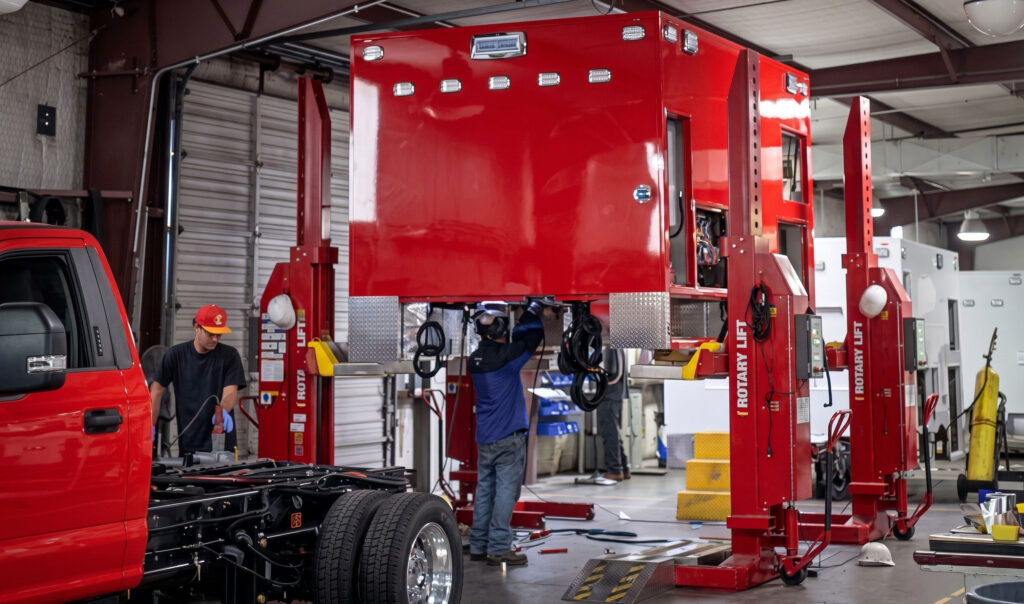
Remounting can be a practical way to reduce those lifecycle costs. Rather than treating an EMS vehicle as a single-use asset, departments can treat a well-engineered module as a longer-term capital asset when its condition supports continued use. Transferring a structurally sound patient module to a new chassis may require less capital than purchasing a completely new build. Over a 15-year period, reusing a high-quality custom module across three chassis can result in a significantly lower average annual cost than replacing a lower-cost vehicle entirely every five years.
The Example: Houston Fire Department (HFD)
Houston Fire Department offers a real-world example of how this strategy can work at scale. HFD operates a large, high-volume fleet that includes 129 Frazer units. Frazer modules are engineered to be remounted up to four times and are designed with multiple chassis lifecycles in mind. Based on customer reporting from HFD, it is not uncommon for these specific units to surpass 1,000,000 miles of total service over their lifespan.
Reusing a qualifying module across multiple chassis can help HFD extend the value of its capital assets, manage overall expenditures, and maintain greater layout consistency for frontline crews. Instead of starting over with every chassis replacement, the department can continue using a module that has already been configured around its operational needs.
Engineered for the Next Chassis: What Makes a Module Remountable?
Fleet maintenance teams sometimes face a difficult surprise during a remount evaluation. An agency plans to reuse its module, but inspection reveals significant wear, water damage, or structural deterioration. Depending on the severity, the module may no longer be a good candidate to move from its existing chassis to a new one.
Whether a module can support another chassis lifecycle depends on its design, materials, maintenance history, current condition, and the results of its remount evaluation. There is no substitute for inspecting the individual module, but the materials used during the original build can have a major effect on its long-term condition.
Why Do Some Ambulance Modules Fail Remount Inspections?
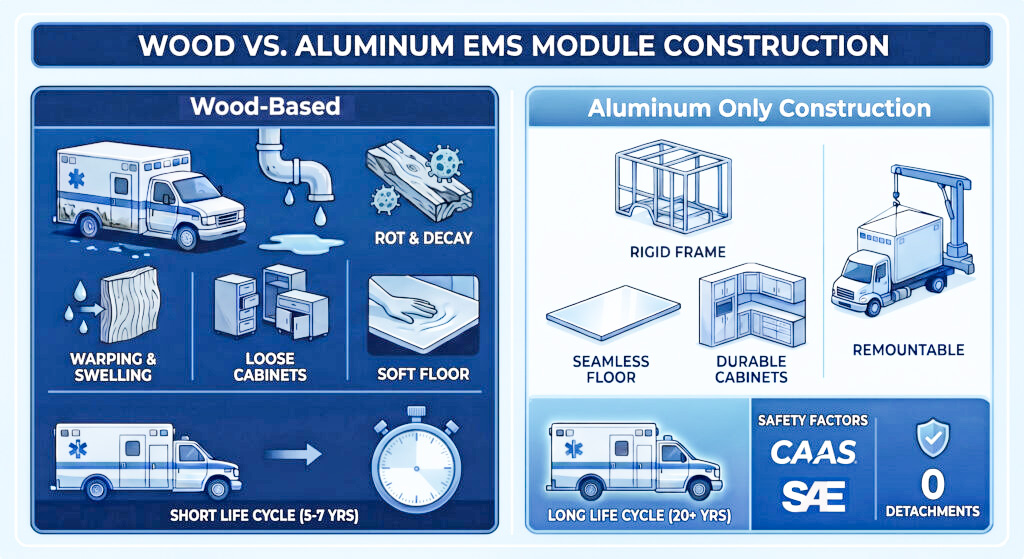
Hidden wood rot, moisture damage, and deterioration in the subfloor, cabinetry, or structure can affect whether an EMS module qualifies for another chassis. Modules built with 6061-T6 aluminum and wood-free polycarbonate subfloors are designed to resist certain forms of moisture-related degradation, helping support the module’s structural condition for future remount evaluations.
The Engineering Translation: Wood-Free Construction
Frazer takes a wood-free approach to key areas of EMS module construction because the materials inside a module matter over its entire service life. Our primary module structure uses 6061-T6 aluminum tube and channel, including 3″ x 1.5″ x 3/16″ base frame components. That framework is paired with a laminated subfloor made with aluminum sheets over a polycarbonate core, while the cabinetry is formed from powder-coated aluminum.
What This Means in the Field
Put simply, Frazer does not use wood in the primary module framing, cabinetry, or subfloor. That matters because EMS vehicles work in environments where moisture is part of everyday life. Interior wash-downs, spilled bio-fluids, cleaning chemicals, and extreme weather can all introduce moisture into the patient compartment. When wood components are present, repeated moisture exposure can contribute to deterioration or hidden rot over time.
By keeping wood out of the primary structure, Frazer reduces exposure to the types of moisture-related deterioration that can affect module longevity. It does not eliminate the need for maintenance or future inspection, but it can help a properly maintained module remain a candidate for another chassis when remount time arrives.
How Many Times Can You Remount an Ambulance?
A well-engineered EMS module can often be remounted up to four times, depending on its condition, maintenance history, configuration, and the results of each remount evaluation. Frazer modules are designed around multiple chassis lifecycles, using a 6061-T6 aluminum structure and eliminating wood from key structural areas. Houston Fire Department provides one example of this long-term approach, with customer reporting indicating that its Frazer modules frequently surpass 1,000,000 miles of total service.
Warranty Renewal: Managing Post-Remount Liability
Even when remounting makes financial sense and a module qualifies for another chassis lifecycle, leadership still needs to consider risk. Procurement Officers, Grant Administrators, and Fire Chiefs need to understand what happens if a structural problem develops after an older patient module is installed on a new chassis.
That concern is understandable. Departments may worry about creating an “orphan” vehicle where responsibility for a repair is unclear between the chassis dealer, module builder, or another service provider. When nobody knows who owns the problem, unexpected maintenance costs can quickly undermine the financial case for remounting.
Do You Get a Warranty on a Remounted Ambulance?
Frazer provides warranty coverage for qualifying remounted modules. A qualifying remounted module is warranted against structural failure due to design, construction, or installation errors for two full years, provided the module remains with the original owner and has not been modified by unauthorized third parties.
That warranty gives departments another layer of support as the module begins its next chassis lifecycle. It also reflects the larger idea behind Frazer’s approach to remounting: build the module for long-term use, evaluate it carefully at each stage, and continue supporting the customer after the original sale.
For procurement teams and department leadership, the two-year post-remount structural warranty can help reduce some of the financial uncertainty that comes with extending an existing module’s service life. Warranty coverage is one more factor to consider when comparing the long-term cost and risk of remounting with purchasing a completely new vehicle.
The Customer Voice: Why Support After the Sale Matters
A successful remounting strategy depends on more than the physical durability of the vehicle. If an EMS module stays in service for 15 or 20 years, the department also needs access to people who know the vehicle and can support it throughout that lifecycle.
A 2020 double-blind market research study of EMS and Fire professionals asked respondents which attributes most influenced their selection of an ambulance builder. “Support after the sale” received the highest rating among the attributes measured.
The Frazer Family Experience is built around that need. Our factory-direct and trusted dealer model is designed to connect customers with people who understand Frazer vehicles, know their service needs, and can help keep them working over the long term.
The same 2020 survey asked industry professionals, “Which brand spends the least amount of time in the shop?” Frazer received 39% of all mentions, significantly outperforming competitors in the survey results. Our goal is straightforward: engineer vehicles for more time in service and provide accessible support when a vehicle needs service or a remount evaluation.
Customer experience provides another view of what a long-term fleet strategy can look like. When asked about its approach, Marble Falls Area EMS shared an example that reaches back decades:
“We bought our first Frazer in 1996, and we’re still remounting it. That says a lot about the quality of your product.”
Extending the Fleet Lifecycle
Ambulance remounting is more than a cosmetic refresh. For the right module, it can be a practical fleet lifecycle and financial strategy. Departments looking to lower their Lowest Overall Cost of Ownership can benefit from starting with a vehicle designed around the demands of mobile healthcare and the possibility of future remounts.
Frazer supports that strategy with wood-free 6061-T6 aluminum construction, a two-year post-remount structural warranty for qualifying remounts, and customer support that continues after the initial sale. Together, those elements give departments more options for managing capital expenditures while extending the useful life of their fleet assets.
Interested in extending your fleet lifecycle and getting more from your capital budget? Contact the Frazer team to evaluate your current fleet for remounting or learn how our custom engineering can support your long-term cost-management goals on your next build.
Why do some ambulance modules fail remount inspections?
Some EMS modules may not qualify for a remount because of hidden wood rot, moisture damage, structural deterioration, or other issues identified during inspection. Frazer uses 6061-T6 aluminum construction and a wood-free polycarbonate subfloor to reduce exposure to certain types of moisture-related deterioration that can affect a module’s long-term condition.