

A Practical Guide to Emergency Vehicle HVAC Systems: Reliability in Extreme Conditions
Fleet managers and medics know what summer heat can do to an EMS vehicle. Long scenes on hot pavement, demanding operating conditions, and hours of continuous use can put real pressure on a vehicle’s air conditioning system.
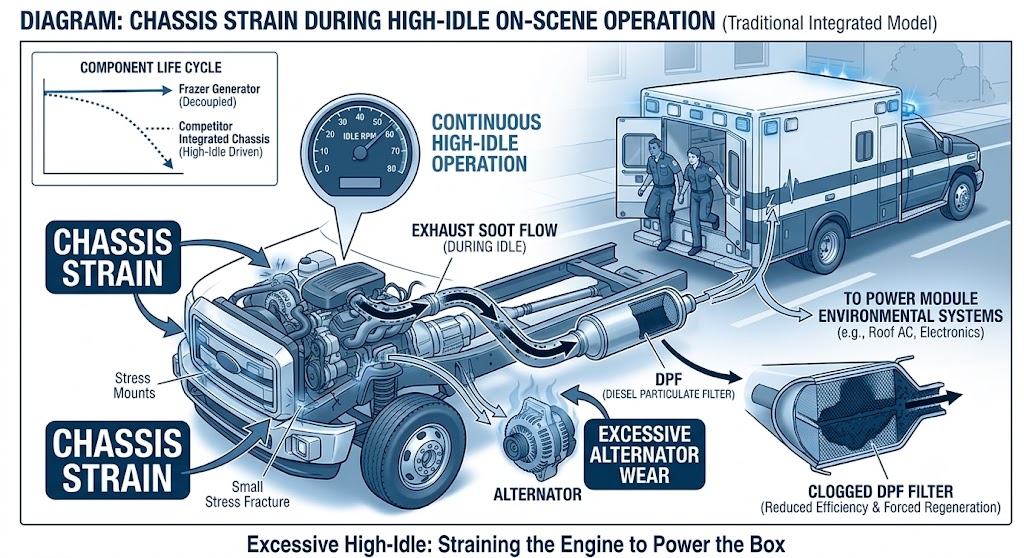
Cooling capacity matters, but BTU ratings are only part of the story. It is also worth asking how the HVAC system gets its power. Systems tied to the truck’s OEM compressor may require the chassis engine to run whenever climate control is needed. Over time, that can add engine hours, fuel use, and maintenance demands.
With chassis costs rising, lead times stretching, and municipal budgets under pressure, agencies have good reason to look beyond the initial purchase price. This guide explains why the way an emergency vehicle HVAC system is powered matters alongside cooling capacity, and how an independent HVAC configuration can reduce reliance on the chassis engine while supporting crew and patient comfort.
The Operational Considerations of Standard EMS Air Conditioning
Many emergency vehicle air conditioning systems rely on components connected to the truck chassis. Depending on the design, that may include the OEM compressor and other chassis systems. In those configurations, the engine may need to stay running to provide the desired level of cooling.
That can matter during long calls, standby periods, or hot-weather operations. Extended idling adds operating hours to the chassis and can increase fuel use and maintenance needs. Depending on the vehicle, duty cycle, and conditions, idling may also contribute to Diesel Particulate Filter regeneration requirements and added wear on chassis components.
For fleet managers, the question is not simply whether the air conditioner gets cold. It is also how much work the chassis must do to keep the patient module comfortable.
How Independent Emergency Vehicle HVAC Systems Reduce Reliance on the Chassis
One way to reduce dependence on the chassis engine is to power the patient-module climate system separately from the truck engine.
Frazer modules can use independent power systems such as Cummins Onan, MEPS, or hPower to support a 120V AC climate-control system. This gives the patient module its own source of power for HVAC operation instead of relying only on the chassis engine.
Depending on the vehicle configuration and the independent power system in use, crews may be able to operate the module HVAC while the truck engine is off. Separating these systems is designed to reduce HVAC-related load on the OEM chassis and may help reduce engine hours associated with extended idling.
How can you run module air conditioning without idling the truck engine?
A module can operate air conditioning without relying solely on the truck engine when the vehicle is equipped with an independent power source designed to support the HVAC system.
Frazer offers independent power options including Onan, MEPS, and hPower systems. These systems can provide power to the module’s 120V AC climate-control unit, giving crews another way to cool the patient area without depending entirely on the OEM chassis engine.
Cooling Performance in Demanding Conditions
Emergency vehicle HVAC systems have to perform in difficult conditions, including high temperatures and humid environments.
The Frazer 15,000 BTU self-contained unit is engineered to maintain a minimum 25- to 30-degree cooling differential and typically maintains 35°F+. Controlled module temperatures can help support crew comfort and provide a more stable environment for temperature-sensitive equipment, including equipment used in specialty vehicles such as Mobile Stroke Units.
Cab Isolation and Active Air Purification
Temperature is only one part of air management. Airflow between the patient module and the driver cab can also be an important design consideration.
HVAC layouts vary by manufacturer and vehicle. Some designs may use shared components or air-handling systems across different areas of the vehicle.
Frazer’s independent 115VAC HVAC system does not share ducting or air handling with the truck cab. The patient module and driver cab use separate air-handling paths. This physical separation is designed to help limit air exchange between those areas and can support an agency’s infection-control practices.
Does emergency vehicle air conditioning share air with the driver cab?
It depends on the vehicle and HVAC design. Frazer’s independent 115VAC HVAC system does not share ducting or air handling with the truck cab. The patient module and cab have separate air-handling paths, which are designed to help limit air exchange between those spaces.
Beyond Passive Filters: The Dometic BreatheEasy System
Physical filters can help capture airborne particulates, but some systems also use active air-management technology.
Frazer’s air-management system uses photocatalytic purification through the Dometic BreatheEasy Ionizer package. The system uses UV light and nano-filter technology designed to help reduce airborne contaminants, odors, and particulates while recirculating the module’s air volume every two minutes.
Designed for the Bay: Serviceability and Uptime
When an EMS vehicle is out of service, the impact goes beyond the repair bill. Fleet availability matters, which makes serviceability an important part of vehicle design.
Some custom emergency vehicles use multiplex wiring systems that may require specialized diagnostic tools, software, or electronic components. That can affect how technicians diagnose and repair electrical issues.
Frazer takes a simpler approach. Its electrical design uses point-to-point wiring, common terminal strips, and standard automotive relays. The goal is to give fleet technicians familiar components and direct diagnostic paths when troubleshooting.
Depending on the issue, available parts, and technician experience, this design may allow fleet teams to complete some diagnostics and repairs in their own maintenance facilities instead of depending on specialized electronic tools.
Customer research also points to the value of keeping units available. In a blind survey of 100 EMS and fire professionals, Frazer received 39% of mentions for “spends the least amount of time in the shop,” compared with 7% for the nearest competitors.
Are emergency vehicle HVAC systems easy to repair in the field?
Serviceability depends on the vehicle design, the components involved, and the type of repair.
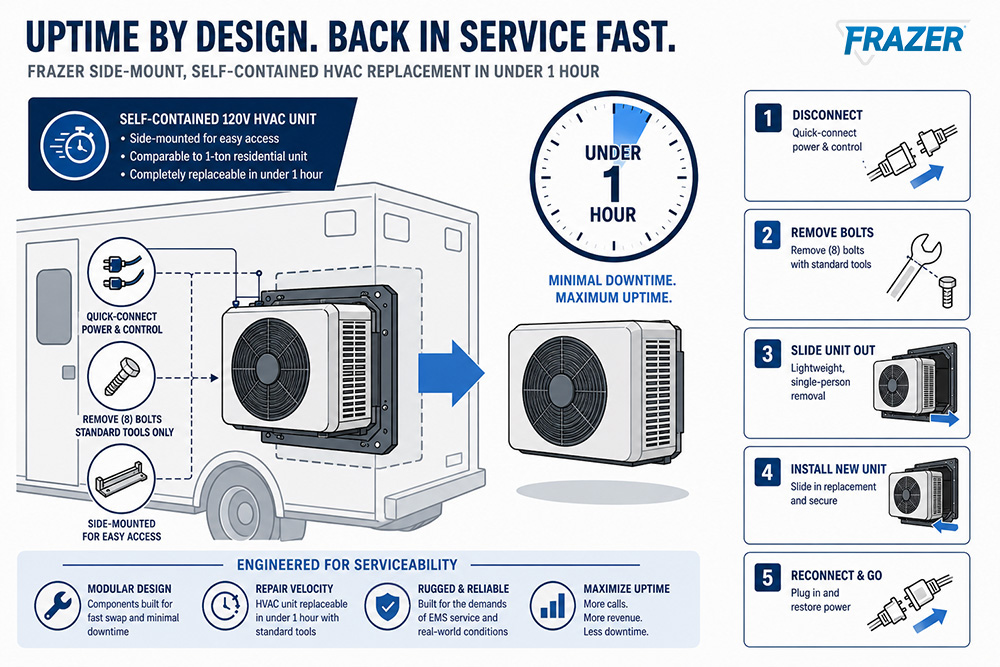
Frazer uses point-to-point wiring and standard relays rather than a complex multiplex architecture for these systems. That gives technicians a more direct approach to many diagnostic tasks. Routine maintenance is also designed with field service in mind, including replaceable physical air filters and active UV bulbs.
Field-Replaceable Maintenance Components
Routine HVAC maintenance does not always require a trip to a specialized service location. The physical air filters and the active UV bulbs within the Frazer air-management system are designed to be field-replaceable.
Where appropriate, qualified fleet personnel can perform these maintenance tasks in their own facilities. That can make routine service easier to plan around the needs of the larger fleet.
Long-Term Fleet Planning and the LOCO Approach
When an agency invests in a custom EMS vehicle, the initial purchase price is only one part of the decision. Fire chiefs, EMS directors, administrators, and fleet managers also have to think about maintenance, chassis replacement, and how long major components can remain useful.
The AAP-Dometic air conditioner/heater includes a four-year parts and labor warranty. Eligible repairs are covered during the applicable warranty period according to the warranty’s terms and conditions.
Frazer modules are also designed to be remounted onto replacement truck chassis. Some customers have remounted the same module as many as four times. This can allow an agency to keep using a serviceable module and compatible equipment when the chassis reaches the end of its useful life.
That approach supports Frazer’s Lower Overall Cost of Ownership, or LOCO, strategy. Whether remounting makes sense depends on the condition of the module, chassis compatibility, operational requirements, configuration, and other fleet-specific factors.
Documented use cases indicate that remounting can produce significant long-term savings for some municipalities over a 10- to 20-year asset life. Actual savings vary based on chassis pricing, remount frequency, module condition, maintenance needs, labor costs, configuration, and other factors.
Keep Your Fleet Cool Under Pressure
Extreme summer temperatures put extra demands on both HVAC systems and the vehicles supporting them. Cooling performance matters, but so does the way the system is powered, maintained, and integrated into the rest of the vehicle.
An independent power configuration gives agencies another way to manage module climate control while reducing reliance on the chassis engine for HVAC operation. For fleet teams focused on uptime, maintenance, and long-term vehicle use, those design choices are worth asking about before the next purchase.
Contact the Frazer team to learn more about independent power options, 120V AC climate-control systems, and custom mobile healthcare vehicle configurations. We can walk through the available choices and help your team evaluate which setup best fits your operational and maintenance needs.
How can you run module air conditioning without idling the truck engine?
A module can operate air conditioning without relying solely on the truck engine when the vehicle is equipped with an independent power source designed to support the HVAC system. Frazer offers independent power options, including Onan, MEPS, and hPower systems, that can power the module’s 120V AC climate-control system. Depending on the configuration, this allows crews to operate module climate control while the chassis engine is off, helping reduce HVAC-related engine hours and extended idling.