

Stop the Shivering: Why Ambulance Heaters Fail (And How to Fix It)
Picture a 2:00 AM winter transport. The roads are iced over. Your crew is bundled up, and your patient needs to stay warm. You turn up the thermostat, but the air coming from the heater is not getting the job done.
Cold weather can expose weaknesses that are easy to overlook when specifying an emergency vehicle. If patient-compartment heat depends on the chassis, or if outside air is finding its way into an aging module, keeping the patient compartment comfortable can become more difficult.
So, what should you look for? Start with two questions: Where does the heat come from, and how well does the module keep that heat inside?
Why Can Emergency Vehicles Lose Heat While Idling?
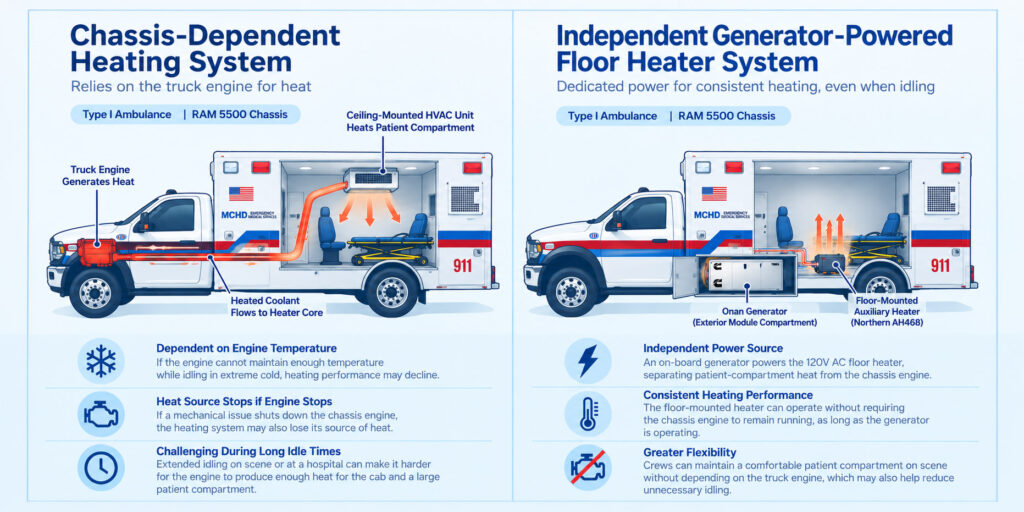
Some emergency vehicle heating systems depend on heat generated by the chassis engine. If the engine cannot maintain enough temperature while idling in extreme cold, patient-compartment heating performance may decline.
The heater itself may not be the only issue. When patient-compartment climate control depends on the chassis engine’s coolant loop, the performance of that system is tied directly to the operation and temperature of the engine.
The Challenge With Chassis-Dependent Heat
During severe winter weather, an emergency vehicle may spend a long time idling on scene or at a hospital. A traditional chassis-driven heating system gets its heat from the truck engine. In extreme cold, an idling diesel engine may have a harder time producing enough heat for both the cab and a large patient compartment.
There is another consideration. If a mechanical issue shuts down the chassis engine, a heating system that depends on that engine may also lose its source of heat. For crews working in freezing conditions, separating patient-compartment climate control from the chassis can provide another way to manage that risk.
What Causes Cold Drafts in Older Emergency Vehicles?
Materials, joints, seals, and other parts of a module can change as a vehicle ages. If gaps develop or environmental seals deteriorate, cold outside air can enter the patient compartment and make it harder to maintain the desired temperature.
A drafty unit is not always just an insulation problem. Keeping a patient compartment warm also depends on the condition of the module and its environmental seals. Emergency vehicles experience years of road vibration, weather, temperature changes, and daily use. Over time, those conditions can affect construction materials and sealed joints.
When outside air finds a path into the module, the HVAC system has more work to do. That added cold-air load can make maintaining a comfortable patient compartment more difficult, especially during severe winter weather.
What Should You Consider When Specifying a Heating System?
When evaluating winter performance, look beyond the heater’s specifications. Consider how the HVAC system gets its power, what happens when the chassis engine is off, and how the module is built to maintain its interior environment over time.
How Can Independent Power Help With Heating?
An independent 120V AC HVAC system powered by a dedicated generator separates patient-compartment climate control from the chassis engine. This allows the module’s HVAC system to operate without requiring the chassis engine to remain running, as long as the independent power source is operating.
Frazer offers independent 120V AC power through generator options such as Onan and MEPS. This setup allows the module’s HVAC system to operate independently from the chassis engine. On scene, crews can continue using the module’s climate-control system without depending on the truck engine for HVAC power.
That independence can also give fleet managers more flexibility in how they manage chassis idle time. Reducing unnecessary idling may help reduce associated maintenance demands and support chassis service life, depending on the vehicle, operating conditions, and fleet practices.
Want to take a closer look at the differences between power systems? Read our guide to chassis-independent power systems.
Why Does Module Construction Matter?
Generating heat is only part of the job. You also need to keep that heated air inside the patient compartment.
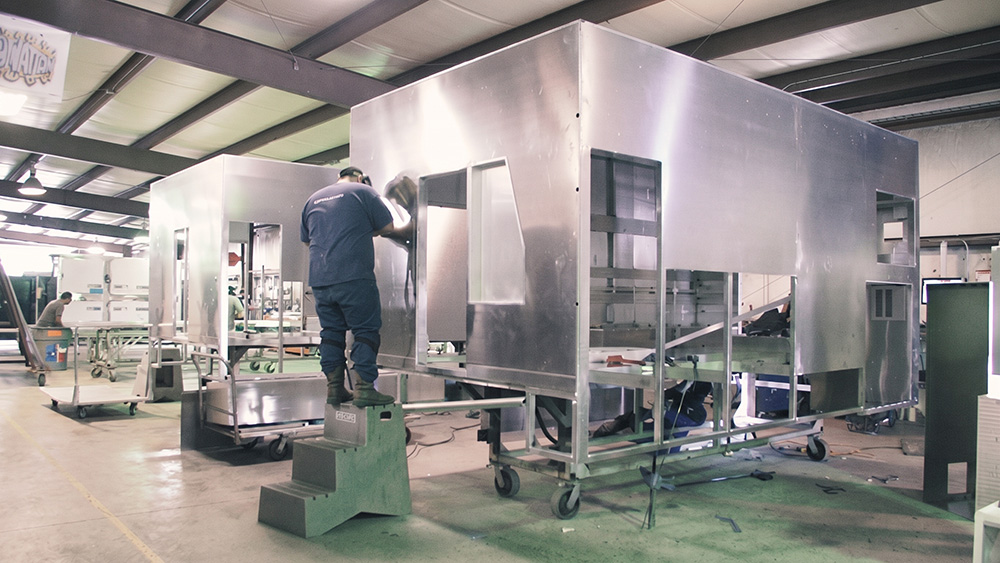
Frazer modules use all-aluminum, wood-free construction. Aluminum does not have some of the material concerns associated with wood, including rot, and Frazer’s construction approach is designed to support structural integrity over years of service.
That matters for more than winter comfort. Long-term structural integrity is also part of Frazer’s Lowest Overall Cost of Ownership (LOCO) approach. Frazer modules are designed with remounting in mind, allowing customers to put the module back to work on another chassis when appropriate.
For a closer look at how construction materials can affect a module over its service life, read our analysis of all-aluminum EMS module construction.
What Happens When Something Needs Repair in Freezing Weather?
Independent systems naturally raise another question: Does adding another system make the vehicle harder to maintain?
The answer depends in part on how that system is designed. Electrical architecture can have a major effect on how technicians diagnose problems, find replacement parts, and complete repairs.
Some multiplex electrical systems use computer boards and specialized components that can require additional diagnostic steps or specific replacement parts. Depending on the system and the repair, technicians may also need to access components inside the chassis or dashboard.
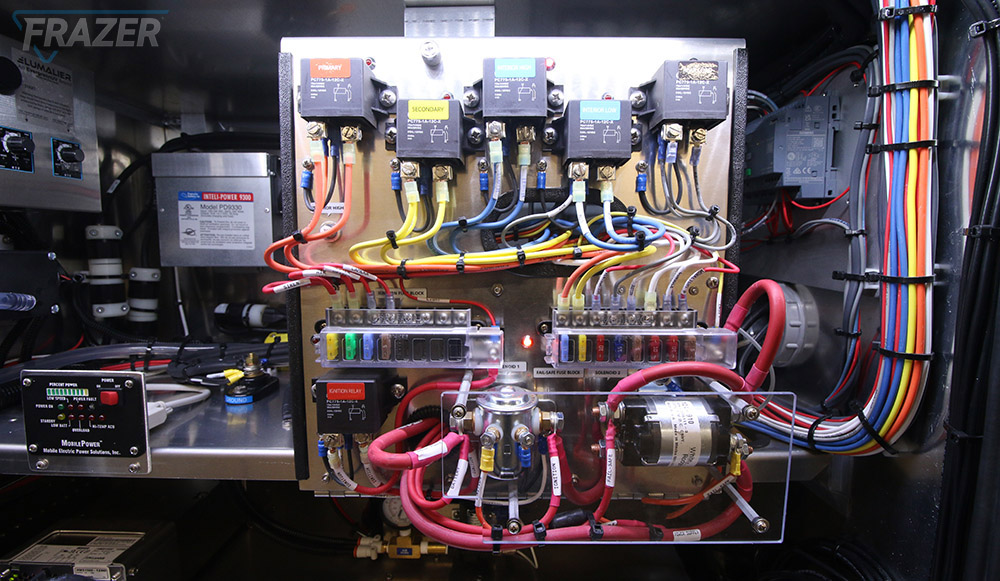
Frazer takes a simpler approach. Our KISS Principle, Keep It Super Simple, is reflected in an electrical system that uses point-to-point wiring, standard automotive relays, and accessible fuses.
For fleet mechanics, that can make a practical difference. When a switch, relay, fuse, or related component needs attention, standard components may make some repairs easier to diagnose and complete without waiting for a proprietary computer board. The goal is straightforward: make the system easier to understand, service, and get back to work.
According to Frazer’s 2020 customer survey, 39% of respondents recognized Frazer as spending the least time in the shop. As with any survey result, actual maintenance experience will vary by fleet, vehicle use, maintenance practices, and operating conditions.
For more on electrical system design and maintenance, read about how complex multiplex wiring can affect fleet maintenance budgets.
What Does Winter Performance Look Like in the Real World?
Specifications tell you how a system is designed. Customer experience can help show how that design performs in the field.
For EMS leaders evaluating vehicles for northern winters, feedback from departments operating in cold climates can provide useful context. After putting a Frazer unit through winter conditions, the Altoona Fire Department shared this feedback:
“Please let your team know that the ambulance is awesome. Our winter put to rest any concerns regarding staying warm in a Frazer. And the A/C unit in the summer rocks… Good job and thanks for leading us in the right direction.”
Frazer’s approach combines independent 120V AC climate control with all-aluminum, wood-free module construction. Together, these systems are designed to help crews maintain a controlled patient-compartment environment without relying on the chassis engine as the HVAC power source.
Frazer also provides a 4-year parts and labor warranty on the AAP-Dometic A/C and heater unit, subject to the terms and conditions of the applicable warranty.
Planning for Better Winter Performance?
When you’re specifying your next emergency vehicle, winter HVAC performance deserves more than a quick look at the thermostat. Ask how the system is powered, what happens when the chassis engine is off, how the module is built, and how easily your team can service the electrical system.
Those questions can help you choose a configuration that fits your climate, your maintenance practices, and the way your crews actually work.
Contact the Frazer team to talk through your fleet’s needs and learn how independent power, all-aluminum construction, and Frazer’s service-focused approach can support your operation.
Why do emergency vehicles lose heat when idling in winter?
Some traditional heating systems rely on heat generated by the chassis engine. In extreme cold, an idling engine may have difficulty maintaining enough temperature to comfortably heat both the cab and patient compartment. If the chassis engine shuts down, a chassis-dependent system may also lose its source of heat.