

Wood vs. Aluminum EMS Module Construction: A Lifecycle Safety Analysis
Many departments replace emergency vehicles on a regular cycle, often around the same time the chassis reaches the end of its planned service life. Sometimes the chassis or drivetrain is the main reason for replacement. In other cases, wear, movement, moisture exposure, or deterioration inside the patient module can also factor into that decision.
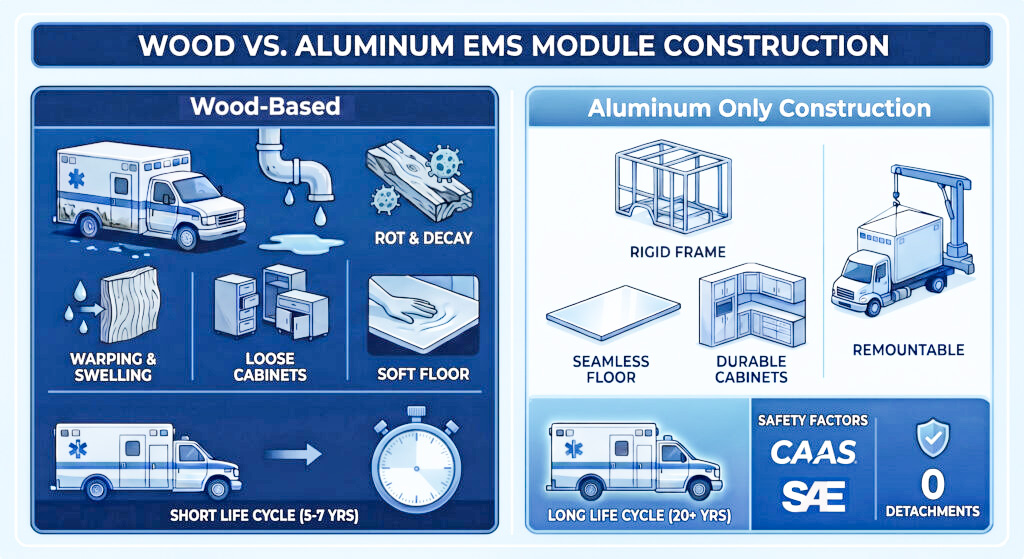
Wood subfloors and cabinetry have been used in EMS vehicle construction for decades. Over time, repeated exposure to moisture, fluids, vibration, and daily use can change the condition of wood and composite components. That can create added maintenance work and may affect how long a module remains practical to keep in service.
When you write specifications for your next vehicle, it is worth looking beyond the initial purchase price. The difference between wood-composite and wood-free aluminum construction can affect maintenance, remount options, service life, and long-term fleet planning.
What Should You Consider with Wood-Based Construction?
Picture your lead mechanic inspecting a five-year-old frontline unit. The engine is running well, but one area of the module floor feels soft and some interior cabinetry has started to shift. Moisture intrusion, fluid exposure, vibration, installation methods, maintenance practices, and operating conditions can all contribute to changes in wood or composite materials over time.
Emergency-service driving also puts the module through years of vibration and movement. If deterioration develops, a department may face additional repairs and downtime. Fleet managers then have to decide whether continued repairs make sense or whether it is time to replace the module.
Those issues can affect more than maintenance. Movement or deterioration inside the patient compartment can make the primary workspace harder for crews to use and maintain. Repairs to floors, cabinetry, or other components can also take the vehicle out of service.
Some departments operate on a five- to seven-year replacement cycle. If the module reaches the end of its useful service life at roughly the same time as the chassis, the department may need to fund a complete replacement instead of reusing the module on another chassis.
How Can Wood-Free Aluminum Construction Support Safety?
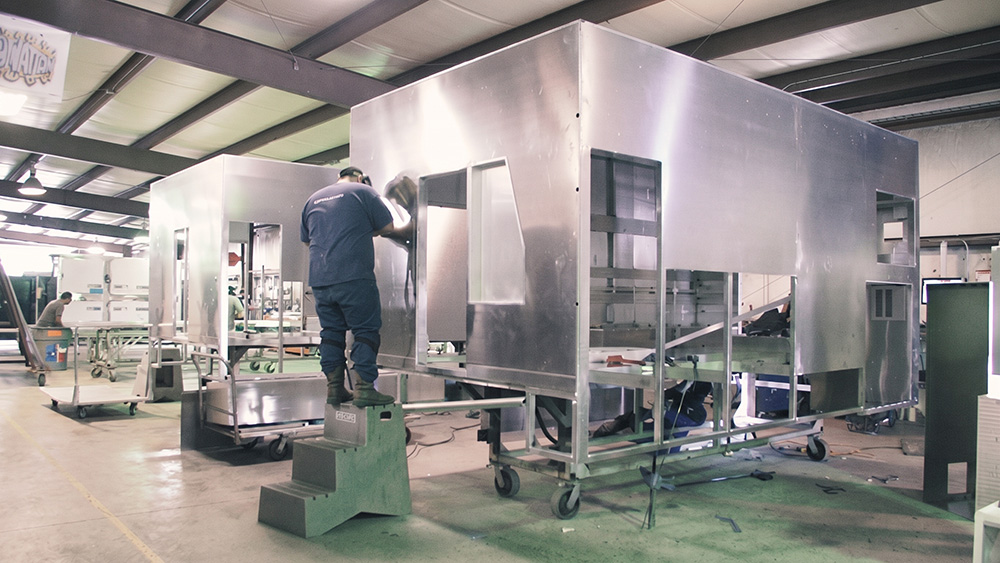
A wood-free module built with 6061 T-6 structural aluminum tubing uses a rigid aluminum framework around the patient compartment. Unlike wood, aluminum does not rot when exposed to moisture. That removes one potential source of material deterioration from the module structure.
Material choice is only part of the safety picture. Crash performance depends on the complete module design, mounting system, configuration, impact conditions, maintenance, and other factors. Frazer uses 6061 T-6 structural aluminum tubing as part of a module design intended to support structural integrity under demanding operating conditions and evaluated through applicable testing.
What Is the Difference Between Sheet Aluminum and 6061 T-6 Structural Tubing?
Saying a module is made with aluminum does not tell you how its structure is built. Manufacturers may use different alloys, tubing profiles, sheet products, joining methods, mounting systems, and structural designs. Those details matter when comparing vehicles.
Frazer builds its module framework with heat-treated 6061 T-6 structural aluminum tubing. The material has defined properties that engineers can account for when designing the structure. For fire chiefs, EMS leaders, fleet managers, and safety officers writing specifications, it makes sense to look at the complete construction method, mounting system, and documented testing instead of evaluating the material name alone.
No Recorded Module Detachments in Frazer’s Records
Module attachment matters because a severe collision can place significant loads on the connection between the module and chassis. That is why the mounting system should be considered along with the module structure itself.
Frazer modules are engineered and tested to applicable requirements, including CAAS GVS v2.0 and SAE J3043. Frazer’s records covering nearly 2,500 units built since 1984 report zero module detachments in collisions.
That history is one data point departments can consider along with laboratory testing, vehicle configuration, maintenance history, and the circumstances of individual crashes. Frazer also uses crash-tested cabinetry and an aluminum module mounting system as part of its overall approach to patient-compartment construction.
How Can Wood-Free Construction Affect Cost of Ownership?
Removing wood from the module structure eliminates exposure to wood rot and related moisture deterioration in those structural components. The goal is straightforward: help the module remain serviceable beyond the life of a single chassis when its condition, maintenance history, inspection results, and configuration support continued use.
If a module is still suitable for service when the chassis is ready for replacement, a department may be able to remount that module onto a compatible replacement chassis. That can reduce how much body structure and equipment must be purchased again during the next fleet cycle.
Looking Beyond a Seven-Year Replacement Cycle
“An aluminum unit costs more on day one. We cannot justify the capital expense.”
Initial price matters, especially when departments are working within a fixed municipal budget. But the purchase price is only one part of lifecycle cost. Maintenance, downtime, module life, remount potential, and future replacement costs can all affect what a vehicle actually costs over years of service.
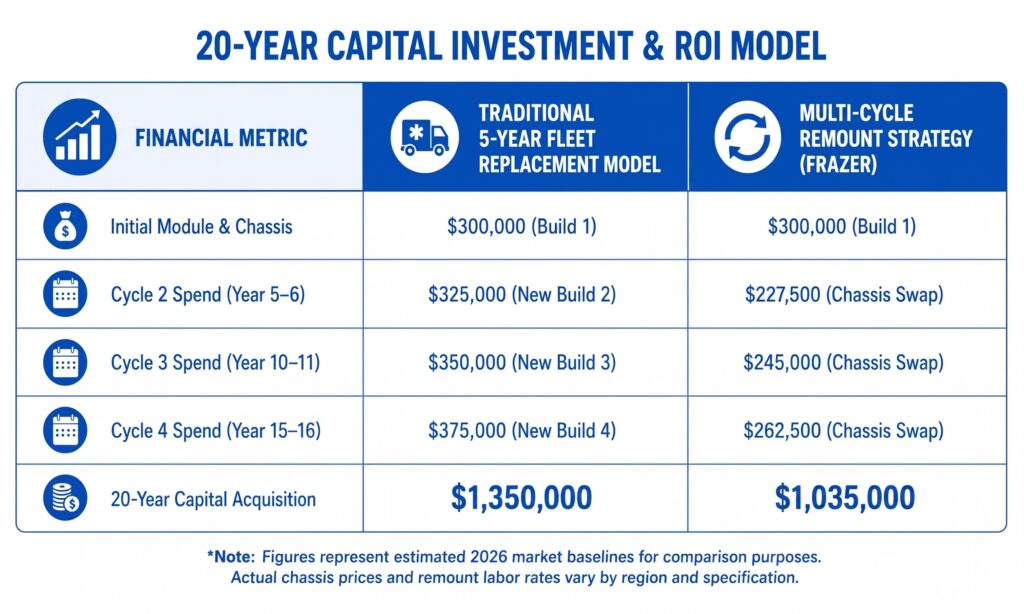
A complete new emergency vehicle can cost $300,000 or more depending on its chassis, configuration, equipment, and options. If a department can reuse a serviceable module when a high-mileage chassis is replaced, it may avoid purchasing another complete module during that replacement cycle.
Frazer’s wood-free construction is designed to avoid wood-related rot and moisture deterioration in the module structure. Depending on operating conditions and maintenance history, that may also reduce repairs tied specifically to deteriorated wood floors or cabinetry.
Customers have reported fleet maintenance cost reductions ranging from 42% to 60% after moving to this design philosophy. Results will vary by fleet, duty cycle, vehicle configuration, labor rates, maintenance practices, operating environment, and other factors, so departments should evaluate their own costs when comparing options.
Can You Remount an Aluminum EMS Module?
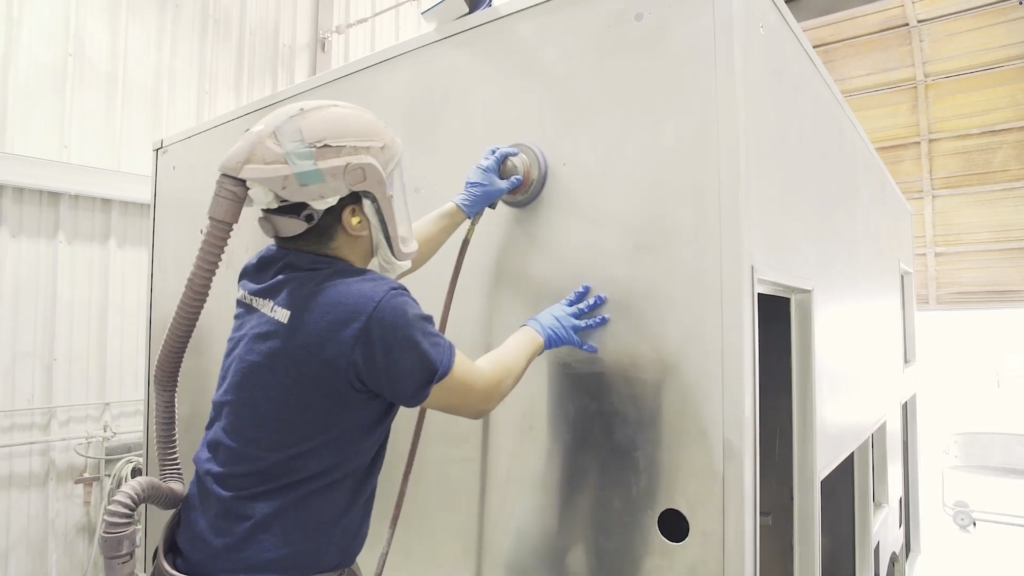
Yes. A purpose-built aluminum module can be designed for remounting. Frazer’s wood-free 6061 T-6 aluminum construction is intended to support continued module use after the original chassis reaches the end of its service cycle, provided the module passes inspection and meets condition, compatibility, and applicable remount requirements.
When those conditions are met, the existing module can be transferred to a compatible replacement chassis instead of replacing the complete vehicle body. That gives fleet managers another option when planning future chassis replacements.
How Multi-Chassis Remounting Can Affect Long-Term Cost
Remounting can lower lifecycle costs by allowing a department to continue using a serviceable module after replacing its chassis. Instead of tying the life of the module directly to the life of one truck, the department can evaluate each part of the vehicle separately.
For example, a department may decide to replace a chassis after it reaches 200,000 miles. If the module remains suitable for continued service and is compatible with the replacement chassis, it may be transferred rather than replaced. That allows the department to preserve more of its original investment.
Module condition is always part of the decision. Frazer’s wood-free design removes wood-related rot from the module structure and is intended to support long-term serviceability. Some Frazer modules have remained in service for more than 20 years, showing the potential for use across multiple chassis when condition and fleet requirements support it.
For municipalities, this approach can also make capital planning more flexible. Chassis replacement and module replacement do not always have to happen at the same time.
What Does Frazer’s Lifetime Module Construction Warranty Cover?
Long-term ownership is not only about how a module is built. Purchasing teams also need to know what support exists if a construction issue develops later in the module’s life.
Frazer provides a lifetime warranty on module construction for the original owner, subject to the terms, conditions, limitations, and exclusions of the applicable warranty. This provides defined coverage for qualifying module-construction issues while reinforcing Frazer’s commitment to supporting customers after delivery.
Warranty coverage should be considered alongside inspection practices, maintenance requirements, service support, and fleet lifecycle planning. Purchasing teams should review the applicable warranty documents before procurement so they understand exactly what is and is not covered.
Planning for More Than One Chassis Cycle
Choosing how an EMS module is built involves more than comparing individual features on a specification sheet. Construction materials can affect maintenance needs, service life, remount options, and long-term capital planning, especially for departments that plan their fleets across multiple budget cycles.
If your department is planning beyond the next chassis cycle, module construction deserves a place in the conversation. Looking at service life, maintenance, remount potential, and warranty coverage together can give you a clearer picture of long-term value.
Ready to explore a longer-term approach to fleet replacement? Reach out to one of our EMS experts to learn what to consider when specifying a wood-free EMS vehicle for your next procurement cycle.
How can wood-free aluminum construction support safety?
6061 T-6 structural aluminum tubing provides a rigid framework around the patient compartment and does not experience wood rot from fluid exposure. Frazer uses this material as part of a module design intended to support structural performance under demanding conditions. Actual crash performance depends on the complete vehicle design, mounting system, configuration, impact conditions, maintenance, and other factors.