Point-to-Point Wiring vs. Multiplex Emergency Vehicles: How Electrical Complexity Can Affect Fleet Maintenance Budgets
When a frontline emergency medical vehicle remains out of service for several days, the cause may be an electrical control issue rather than a major engine or drivetrain failure. For fire chiefs, EMS directors, and city finance officers, electrical design can directly affect unplanned maintenance costs and vehicle availability.
Rising chassis replacement expenses, constrained municipal capital budgets, a national shortage of Emergency Vehicle Technicians (EVTs), and increasing dealer labor rates can make specialized vehicle repairs more difficult to manage in 2026. Evaluating point-to-point wiring alongside multiplex emergency vehicle systems can help fleet leaders understand how electrical design may affect readiness and lifecycle operating costs. For a broader framework on evaluating long-term fleet expenses, read our guide to ambulance total cost of ownership and fleet lifecycle management.
This guide explains the cost considerations tied to multiplex and point-to-point electrical systems. It also shows how accessible components can support in-house repairs and gives fleet leaders practical language for evaluating long-term maintenance needs.
Why can multiplex emergency vehicle wiring increase fleet maintenance costs?
Multiplex emergency vehicle wiring may increase fleet maintenance costs because it can incorporate printed circuit boards, proprietary electronic control nodes, and CAN-bus networks that require specialized diagnostic software. When a node fails, internal mechanics may not be able to diagnose or repair the issue with standard tools. Depending on the system and the fault, that can mean more time in the shop, higher outside labor costs, and expensive circuit-board replacements.
How a Minor Fault Can Lead to Days of Downtime
Multiplex electrical systems route command signals digitally through programmed microprocessors and electronic control units, or ECUs. Multiplexing can reduce wire-harness thickness and support configurable button programming. In emergency medical service environments, vehicles may also experience thermal cycling, road vibration, and moisture exposure. When a circuit board or control node is affected, multiple vehicle functions may be involved.
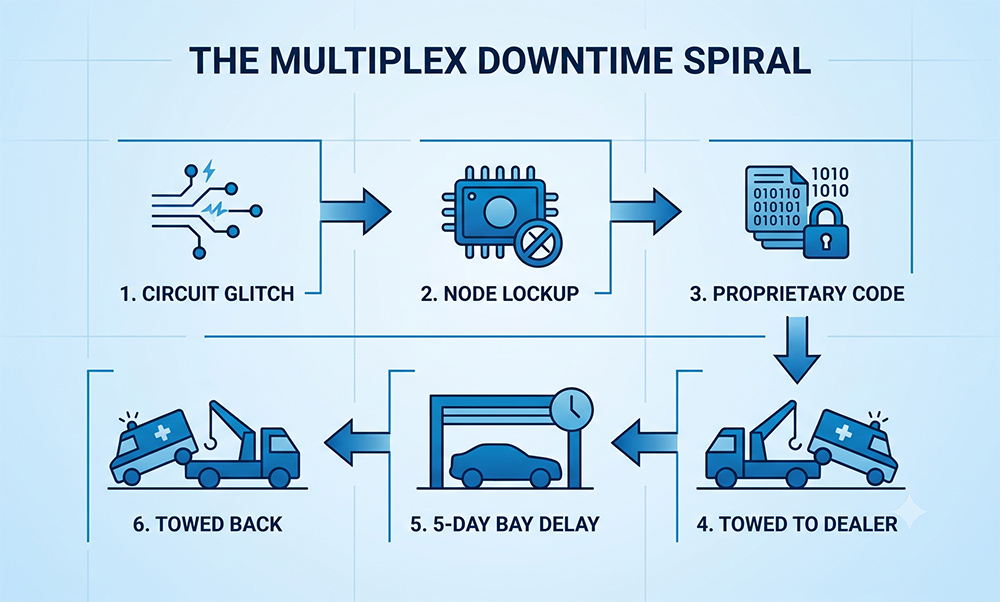
When a solid-state multiplex node experiences a voltage spike or internal logic error, it may lock up or stop communicating. Because signal pathways operate through embedded electronics rather than individual physical circuits, a shop mechanic may not be able to inspect the problem visually. A repair that would otherwise involve a fuse or relay can require additional diagnostic time when the issue involves software, network communication, or a complex control node.
For a deeper look at the financial impact of operational delays, review our analysis of Lower Overall Cost of Ownership (LOCO).
Specialized Diagnostics Can Add Time and Cost
The maintenance requirements associated with multiplex systems may include software licenses, specialized interface devices, and factory updates. Some multiplexed module systems require proprietary diagnostic software or manufacturer-specific tools. When an electrical fault occurs, municipal technicians may need outside support if they do not have access to the required equipment or system information.
This can create additional operational challenges during a national shortage of certified Emergency Vehicle Technicians. Even municipalities that train their own mechanics may encounter limitations when a system requires manufacturer-specific access. To clear a module fault code or recalibrate a lighting node, a department may need to consider one or more of the following obstacles:
- Pay external towing fees to transport the unit to a franchised dealer.
- Pay third-party dealer shop labor rates, often ranging from $150 to $250+ per hour.
- Wait for available dealer bay space.
- Purchase proprietary, single-source electronic control boards rather than standard components.
When electrical work moves from an in-house shop to an outside service provider, even routine repairs can become harder to schedule and budget.
What is the difference between multiplex and point-to-point emergency vehicle wiring?
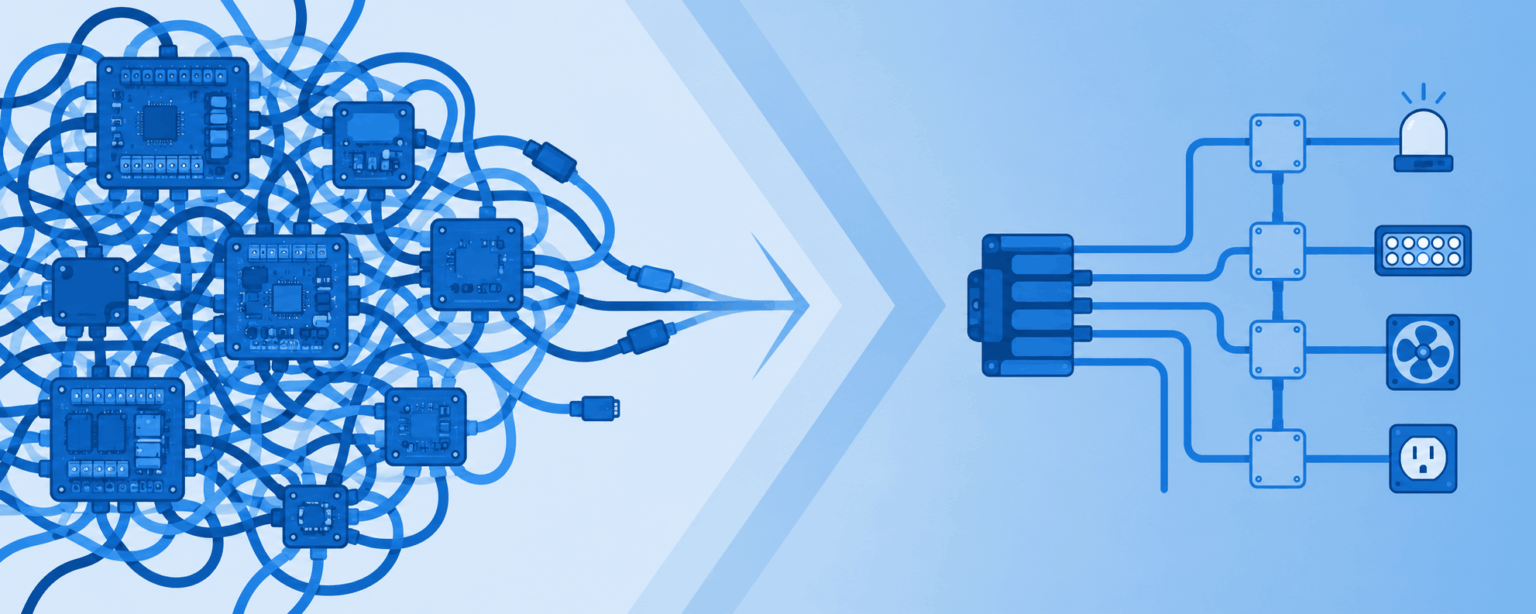
Multiplex wiring uses computerized circuit boards and solid-state nodes to route digital signals through shared data lines. Point-to-point wiring uses color-coded copper wires connected directly to individual functions through standard relays, fuses, and terminal strips. This design can allow mechanics to diagnose many issues with standard multimeters and readily available replacement parts.
Troubleshooting with Standard Tools
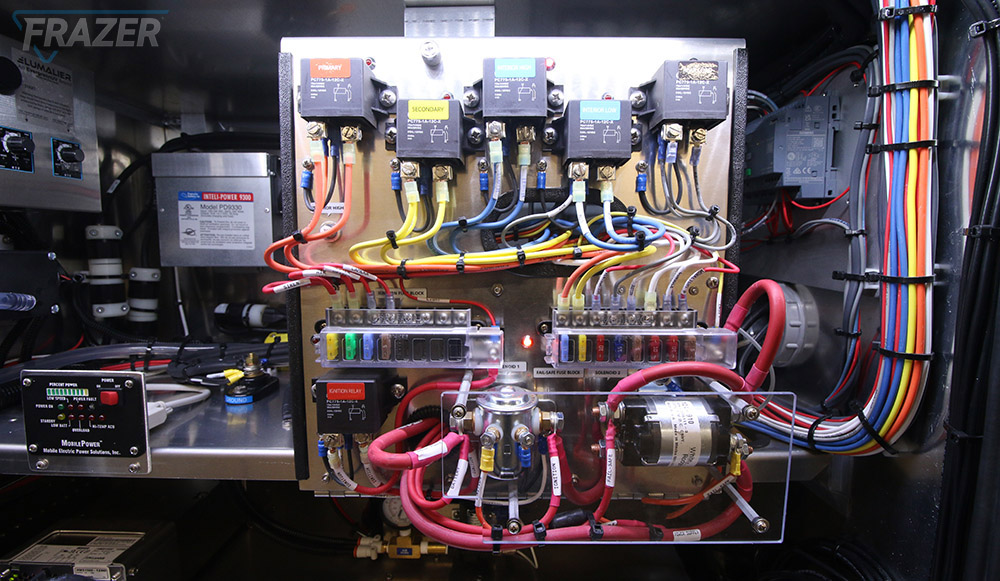
Point-to-point wiring uses dedicated copper wire that runs from a physical switch to its intended function, such as scene lights, exhaust fans, or climate-control units. Signals pass through terminal strips, relays, and fuses housed in an accessible exterior compartment.
When an electrical function stops working in a point-to-point system, a mechanic may follow these steps:
- Visual inspection: The mechanic opens the exterior compartment and checks the main power panel. Visual LED monitoring diodes can help indicate circuit continuity and power flow.
- Basic-tool diagnostics: Using a standard $20 multimeter or test light, the mechanic can trace the circuit without relying on manufacturer-specific diagnostic software.
- Component replacement: When a relay or fuse has failed, the mechanic can remove and replace the affected component directly.
Because point-to-point systems use physical circuits and standard components, they can reduce reliance on programmed microprocessors, hidden network nodes, and proprietary diagnostic access.
How Parts Availability Can Affect Downtime
Electrical architecture can affect parts availability and supply-chain exposure. When a multiplex ECU or printed circuit board fails, the replacement may need to come from the vehicle upfitter or a specific electronics supplier. When that component is backordered or no longer produced, the vehicle may remain out of service until a compatible part or repair option becomes available.
Point-to-point architecture uses standard automotive components, including relays, fuses, and terminal strips. Depending on the specification, these parts may be available through local auto-parts stores, heavy-duty truck suppliers, or the vehicle manufacturer.
| Feature / Metric | Multiplex Electrical Systems | Point-to-Point Hardwired Architecture |
|---|---|---|
| Primary Circuit Components | Microprocessors, ECU nodes, printed circuit boards | Color-coded copper wire, terminal strips, standard relays and fuses |
| Diagnostic Tool Required | Proprietary laptop software, OEM interface dongle | Standard multimeter, test light, visual panel diodes |
| Repair Location | May require an authorized dealer or qualified service provider | May be serviceable in an internal municipal shop or local garage |
| Parts Availability | Single-source circuit boards that may be backordered ($500–$1,200+) | Off-the-shelf automotive relays |
| Typical Troubleshooting Time | Hours to days, depending on software connection and code tracing | 10 to 30 minutes for a visual check and continuity test |
| Remount Compatibility | May be affected by software compatibility and node availability | Designed to support transfer across multiple compatible chassis |
| Warranty Backing | Typically 1-year limited electronic board coverage | 5-year electrical wiring warranty |
Standard components can reduce exposure to some supply-chain delays. They also give many shops a better chance to complete repairs with affordable parts and return the unit to service without extended outside diagnostics.
How Electrical Downtime Can Affect Reserve Fleet Planning
One potential consequence of extended electrical downtime is increased reserve-fleet demand. When frontline units remain in repair facilities while technicians diagnose electrical problems or wait for replacement components, departments can need additional backup vehicles to support service coverage.
Maintaining additional reserve emergency vehicles can create capital and operational costs:
- Capital funds may be allocated to additional chassis and modules.
- Insurance, licensing, preventive maintenance, and storage costs may continue while reserve assets are idle.
- Staff may spend time rotating equipment and operating aging reserve vehicles.
Improved vehicle availability may help departments manage reserve-fleet requirements. In a double-blind third-party survey conducted with 100 EMS decision-makers and fleet technicians across the industry, 39% of respondents identified Frazer as spending the least amount of time in the shop, compared to just 5% to 7% for major competitors utilizing multiplex architecture.
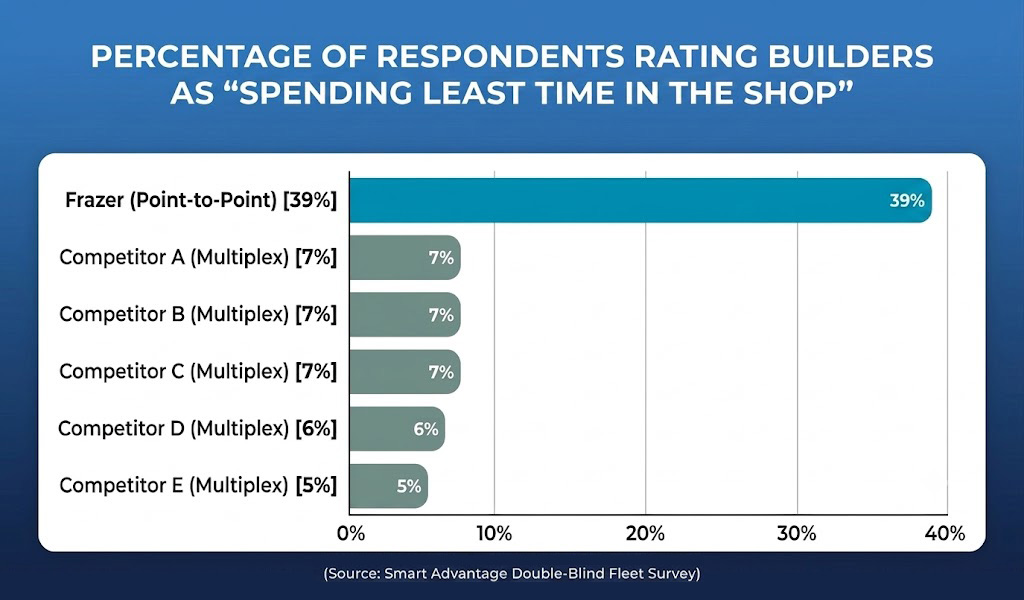
When frontline emergency vehicles spend less time in the shop, departments may be able to meet community coverage needs with fewer reserve assets. Actual fleet requirements and financial results will depend on call volume, maintenance practices, vehicle age, service conditions, and local operating needs.
Electrical Design and Long-Term Remount Value
A potential contributor to Lower Overall Cost of Ownership, or LOCO, is the ability to remount a structurally sound patient module onto a new chassis when the original engine and transmission reach the end of their intended service life. Departments with multiplexed units may encounter electrical compatibility or component-availability issues during year six or seven.
Third-party electronics manufacturers may revise or discontinue multiplex logic boards every 5 to 7 years. When a department evaluates a remount onto a newer chassis, it may discover that:
- The original circuit-board nodes are no longer manufactured or supported.
- The legacy multiplex software may not communicate with newer OEM chassis electronics.
- Replacing the module’s electrical system with a current multiplex platform may approach the cost of a new module.
Point-to-point wiring is designed to reduce some of these obsolescence concerns. Frazer modules use heavy-duty 6061 T-6 structural aluminum tubing and standard terminal strips. This non-multiplexed design can support transfer across compatible chassis generations. Fleet examples illustrate the potential service life: departments such as San Antonio Fire have remounted modules up to four times, accumulating over 1 million service miles on a single module.
To explore how module construction can support long-term fleet budgeting, read more about our multi-life module remounting process.
How Independent 120V Power Can Reduce Chassis Electrical Demand
In addition to body wiring architecture, chassis power demand can affect maintenance costs. Many emergency vehicles use the OEM chassis 12V DC charging system to support patient-module air conditioning, suction pumps, lighting, and medical equipment. Depending on the electrical load and vehicle configuration, this demand can place additional strain on alternators, batteries, and factory wiring systems.
When 12V demand exceeds available alternator output, some vehicle configurations use electronic load managers. These systems may shut off selected onboard equipment, such as compartment lights or secondary HVAC fans, to preserve available electrical capacity. The frequency and effect of these events depend on vehicle configuration, equipment load, alternator capacity, operating conditions, and system design.
Frazer units are designed to separate patient-module power from primary chassis electrical demand. By using an independent 120V AC power system, such as a Cummins Onan generator, MEPS underhood belt-driven system, or Harrison hPower system, as the primary power source for the patient module and self-contained HVAC, the chassis electrical system can remain focused on chassis functions.
Potential Benefits of Independent Power
- Chassis warranty support: Operating module systems independently may help reduce chassis electrical modifications and limit disputes involving chassis and module electrical loads. Warranty coverage remains subject to the applicable manufacturer terms and conditions.
- Reduced reliance on load managers: A high-capacity 120V AC system is designed to supply power to climate-control systems and medical equipment without routine load-manager shutoffs.
- Backup power capability: When primary generator power is unavailable, a configured backup system can use the chassis 12V DC system as a secondary power source for designated operational functions.
A Procurement Checklist for Serviceable Electrical Systems
For Fire Chiefs, EMS Directors, and City Purchasing Officers preparing upcoming RFP specifications, clear maintenance-focused requirements can help departments evaluate long-term service needs, parts access, diagnostic requirements, and potential vendor dependence.
Use this specification checklist during your next procurement cycle to request straightforward, serviceable electrical architecture:
Supporting Fleet Readiness and Budget Control
As vehicle costs rise and budgets remain tight, procurement teams should evaluate long-term serviceability alongside features and technology. Multiplex wiring can offer configurable control capabilities, while customer experience and fleet survey results also indicate that circuit-board availability, specialized software access, and outside service requirements may affect operating costs and vehicle availability.
Point-to-point electrical architecture connected through standard components can offer several practical advantages:
- Reduced shop downtime: Survey data shows that 39% of respondents identified Frazer as spending the least time in the shop.
- Greater support for in-house maintenance: Municipal mechanics may be able to diagnose and repair certain issues using standard tools.
- Reportedly lower operating expenses: Customer-reported fleet maintenance cost reductions range from 42% to 60%.
- Support for multi-life remounting: Standard components and accessible wiring can help preserve module utility across compatible chassis replacements.
By specifying serviceable electrical architecture, direct factory support, and independent power options, fleet managers and city leaders can improve maintenance planning, support their technicians, and help keep emergency response vehicles available for community service.
Plan for Long-Term Fleet Maintenance
Proprietary diagnostic access and limited component availability can affect maintenance planning and vehicle readiness. Connect with our team to discuss non-multiplexed vehicle specifications or request procurement resources for an upcoming bid cycle.
Why can multiplex emergency vehicle wiring increase maintenance costs?
Multiplex emergency vehicle wiring may increase fleet maintenance costs because it can include printed circuit boards, proprietary electronic control nodes, and CAN-bus networks that require specialized diagnostic software. When a node fails, internal mechanics may not be able to troubleshoot it with standard tools. Depending on the fault and system configuration, this can contribute to longer shop downtime, dealer labor charges, and circuit-board replacement costs.