
Chassis-Independent Power: How Generators Can Help Reduce EMS Downtime and Cost
It is 2:00 PM in the middle of July when the tones drop for a critical call. Your frontline unit should be ready to respond, but an overworked chassis alternator has failed while supporting emergency lighting, medical equipment, and air conditioning.
Traditional emergency vehicles can place significant electrical demand on the truck chassis and multiplex circuit boards. With tighter municipal budgets, rising call volumes, and longer waits for some proprietary or dealer-supplied parts, many departments are looking for practical ways to keep frontline units out of the maintenance bay.
This guide explains how separating module power from the truck chassis can simplify electrical service, support air-conditioning performance at idle, and help control long-term fleet costs.
Common EMS Electrical Challenges with Multiplex Systems
When a fleet relies on chassis-dependent power, mechanics may spend a significant amount of time diagnosing electrical problems. Many modern emergency vehicles use multiplex systems, which are computer-controlled networks of circuit boards, nodes, and electronic components.
Point-to-point wiring uses common relays, fuses, and physical wiring instead of relying heavily on complex circuit boards. Many of these components may be available through local suppliers, which can make certain electrical problems easier to trace and repair.
A failed multiplex node may affect several systems at once, including interior lighting, suction, and climate control. Depending on the system, the mechanic may also need manufacturer-specific diagnostic equipment or a proprietary replacement component before the vehicle can return to service.
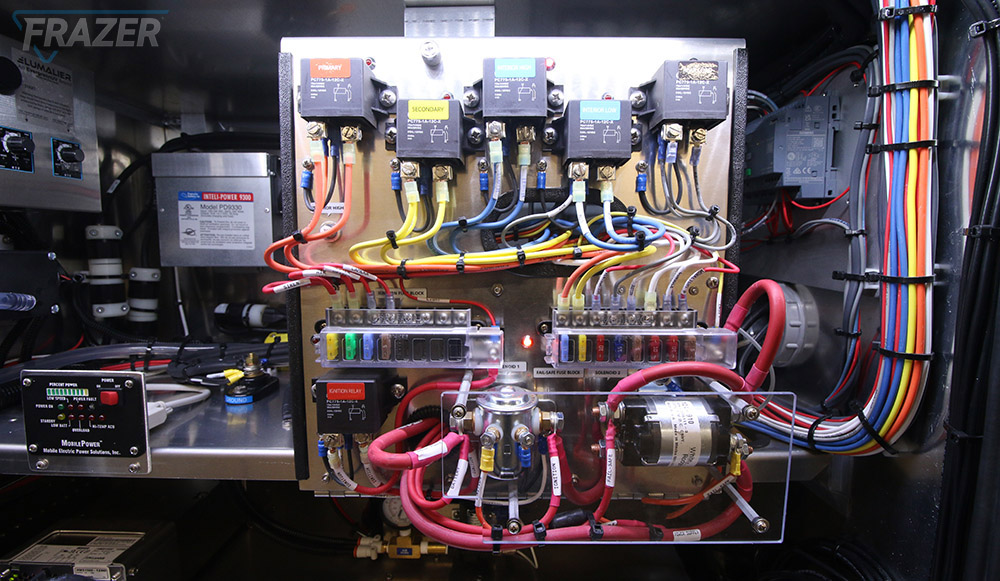
Frazer takes a more straightforward approach. Our point-to-point wiring uses standard terminal strips to reduce diagnostic complexity. When a light stops working at 2:00 AM, a mechanic can trace a physical wire, inspect a standard fuse or relay, and begin working toward a repair without first have to decode a computer network.
Generator vs. Inverter Ambulance Power: What Is the Difference?
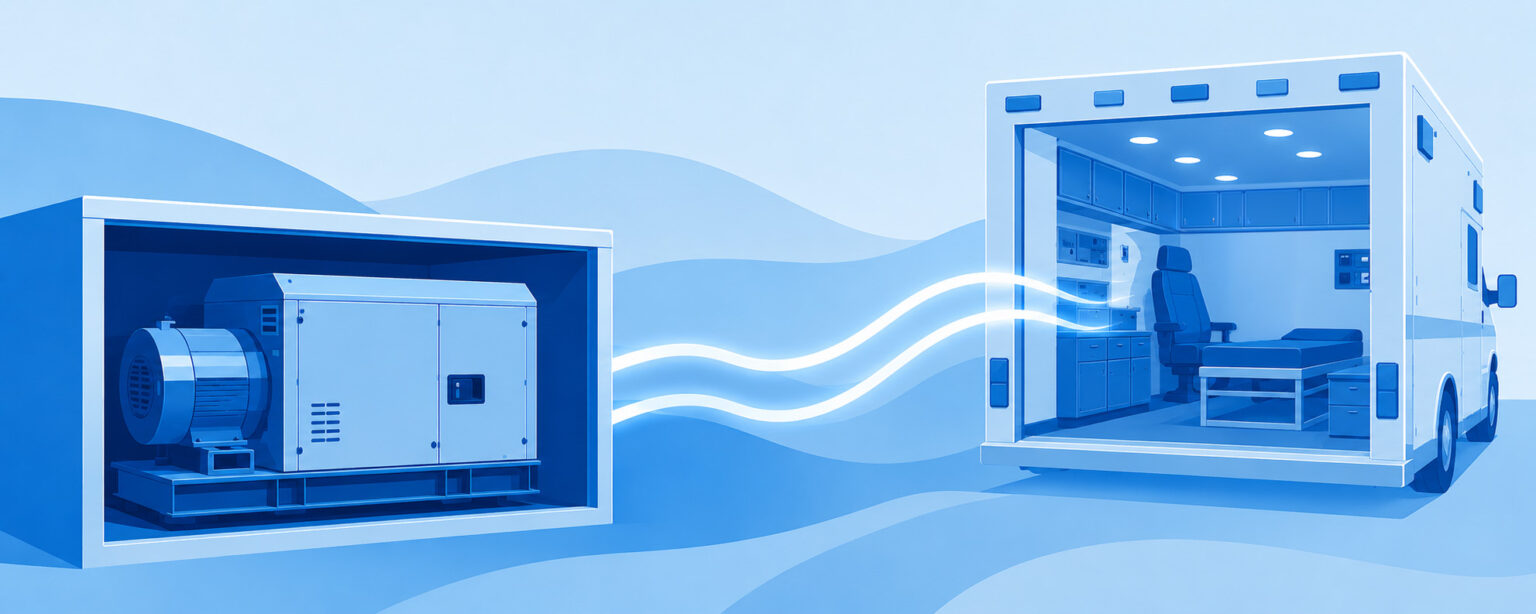
A generator-powered EMS vehicle uses an independent 120V AC generator to support module systems such as medical equipment, lighting, and HVAC. The generator removes much of the module’s heavy electrical demand from the chassis alternator and reduces its dependence on the truck’s electrical system.
When developing your next procurement specification, it helps to understand how generator and inverter systems place different demands on the vehicle.
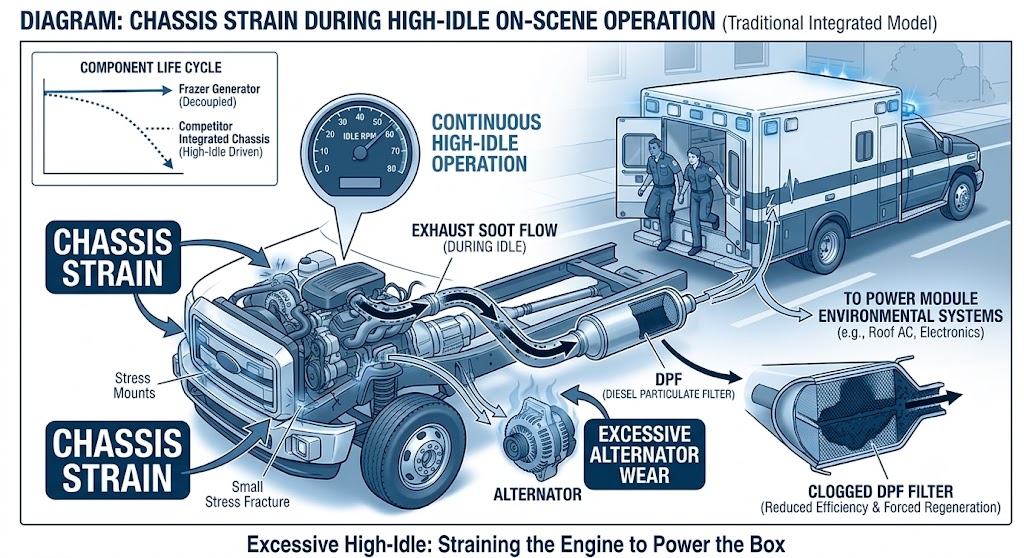
An inverter converts power supplied by the truck’s batteries and alternator. Supporting medical equipment, communication systems, lighting, and air conditioning may require the chassis engine to run at high idle, increasing demand on the OEM electrical system. A voltage problem or alternator failure may then affect both medical equipment and patient-compartment climate control.
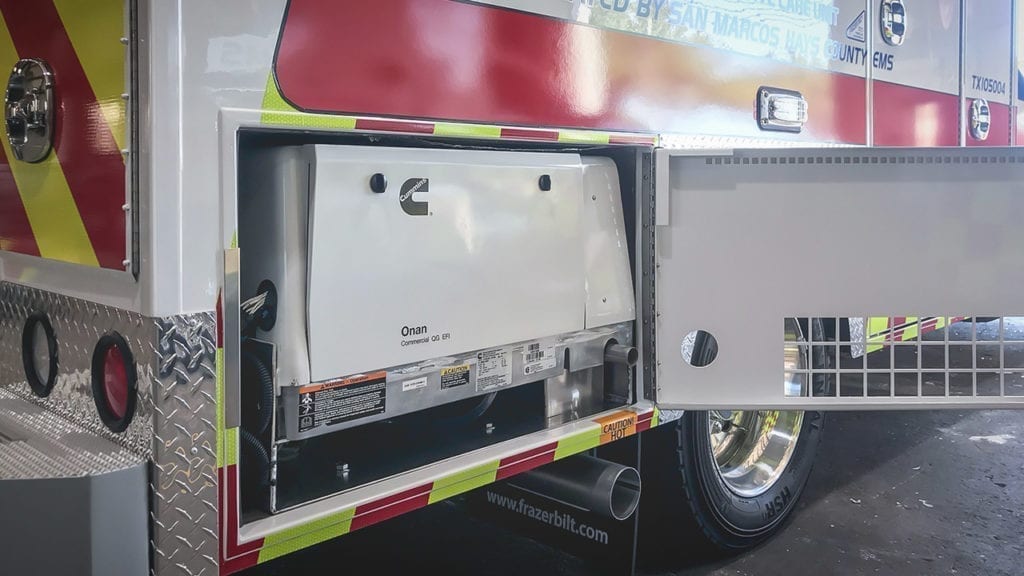
A chassis-independent system works differently. It uses a dedicated generator, such as a Cummins Onan or MEPS system, as the primary source of module power, with a redundant 12V DC system as backup. This architecture allows many module functions to operate separately from the truck’s electrical system. Fleets evaluating chassis-independent power can consider how that separation may support operations while the vehicle is moving or parked on a hot scene.
Addressing Patient-Compartment Heat with 120V HVAC
Medics need a dependable, climate-controlled environment to care for patients and recover between demanding calls. Chassis-driven air-conditioning systems may struggle during extreme summer heat, especially when a vehicle idles on scene for an extended period.
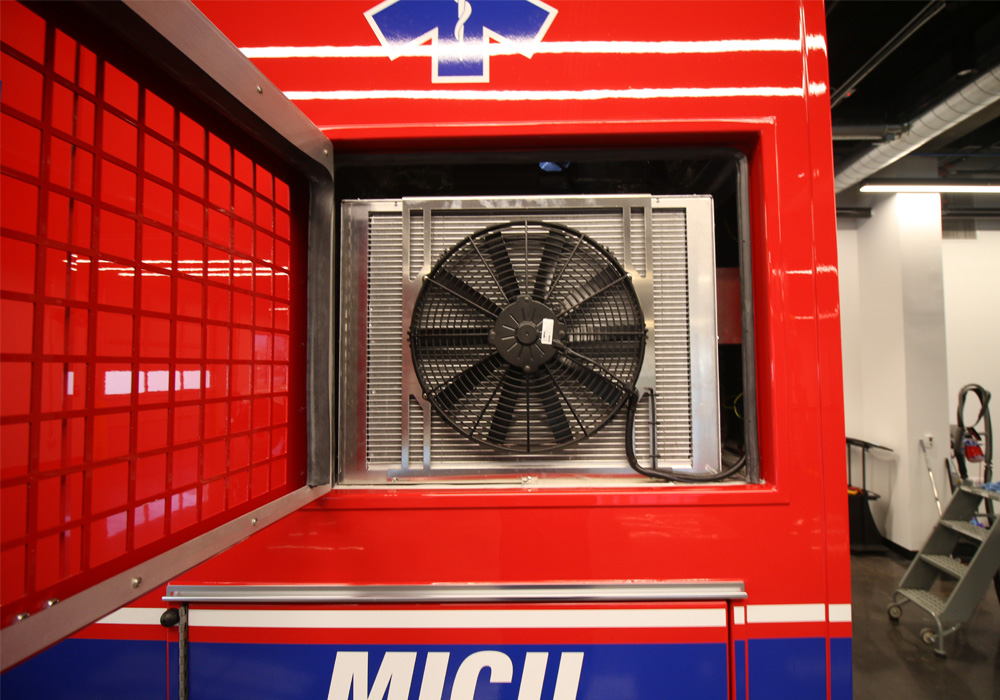
Because Frazer modules can use independent 120V generator power, they can be equipped with a self-contained air-conditioning system comparable to a one-ton residential unit. The system is engineered to maintain up to a 35°F temperature difference from outside conditions, helping support a cooler patient compartment without relying entirely on the truck’s electrical system.
The independent design can also make certain HVAC repairs more manageable. On some traditional vehicles, mechanics may need to access air-conditioning components behind the dashboard or inside the engine compartment, which can increase repair time and vehicle downtime.
Frazer’s self-contained 120V HVAC unit is mounted on the exterior side of the module. When major service is needed, a mechanic can slide out the complete unit and replace it in under one hour. This modular approach is designed to simplify service and help departments return vehicles to operation sooner.
Will a Generator Add to My Maintenance Schedule?
Fleet managers often raise a fair concern when considering chassis-independent power: “A separate generator is just another engine I have to maintain.”
While a generator does require routine oil changes and preventive maintenance, the more useful question is how that scheduled maintenance compares with the cost and disruption of chassis-related repairs.
Routine service on an accessible generator may be easier to plan and complete than replacing a failed chassis alternator or addressing major engine wear. By carrying the module’s heavy 120V AC load, the generator can also reduce the need for the truck engine to run continuously at high idle.
This strategy shifts part of the vehicle’s maintenance workload toward planned generator service. It may also reduce exposure to certain chassis electrical problems while helping protect one of the fleet’s largest capital investments.
How Chassis-Independent Power Can Support a Lower Cost of Ownership
Removing heavy module loads from the truck’s electrical system can reduce demand on chassis components and may limit some forms of premature wear. The ability to remount a Frazer module onto a new chassis can also extend the module’s useful life and support a more flexible long-term replacement strategy.
For EMS chiefs, finance directors, and municipal budget committees, the purchase price is only one part of the decision. Rental units, major repairs, downtime, and early vehicle replacement can all affect the fleet’s operating budget. Frazer designs its vehicles with these long-term ownership costs in mind.
For a broader framework on evaluating lifetime fleet costs, read our 2026 Guide to Ambulance Total Cost of Ownership & Fleet Lifecycle Management.
In customer surveys, some fleets reported maintenance cost reductions ranging from 42% to 60% after moving to Frazer units. Customers commonly connected those reported results to two areas: reduced demand on the truck chassis and the ability to remount the module.
Because the generator carries much of the module’s electrical demand, the chassis engine may experience less high-idle use and electrical strain. Some fleets report fewer alternator replacements, fewer dead batteries on scene, and fewer major engine repairs. Keeping frontline vehicles in operation may also reduce dependence on aging or expensive reserve units.
The Remount Advantage
Protecting the truck chassis is one part of the ownership strategy. Preserving the module is another. Frazer modules use wood-free, all-aluminum construction with 6061-T6 structural aluminum tubing. This construction and the module’s independent power architecture make it well-suited for remounting when the chassis reaches the end of its service life.
Remounting allows a department to preserve the value of the existing module while reducing the cost of replacing an entire vehicle. Some Frazer modules have exceeded 1 million miles of service after multiple remounts across a 15-to-20-year lifecycle.
Support After the Sale: A Direct Approach to Vehicle Service
When a complex electrical problem involves both the chassis and module of a traditional emergency vehicle, it may not be immediately clear which manufacturer or dealer is responsible. Sorting out that responsibility can add time to the repair process.
Frazer’s chassis-independent design separates many truck and module systems, which can make diagnostics and service responsibility easier to understand. For module-related concerns, customers have a direct point of contact with Frazer.
Frazer has built over 2,500 EMS modules and our support model connects customers with the team behind their vehicle. Customers have access to 24/7 technical support, authorized service locations across the country, and direct troubleshooting assistance to help identify needed parts. Frazer also provides a lifetime module construction warranty for the original owner, subject to the applicable warranty terms and conditions.
In short, when you need help with a module, you can contact people who understand how it was designed and built instead of working through several layers of third-party support to find a solution.
Ready to Build Reliability into Your Next Specification?
Electrical problems, summer heat, and chassis repairs can place real pressure on an EMS fleet. Point-to-point wiring, independent power, and modular service access give fleet leaders practical options to consider when developing their next vehicle specification.
Contact our team to discuss Frazer’s generator-powered options and how chassis-independent power may fit your fleet’s operational, maintenance, and budget priorities.
What is a generator-powered EMS vehicle?
A generator-powered EMS vehicle uses an independent 120V AC generator to support module systems such as medical equipment, lighting, and HVAC. The generator removes much of the module’s heavy electrical load from the chassis alternator and reduces the module’s dependence on the truck’s electrical system.