Independent Power vs. Traditional Electrical Systems: Which Is More Reliable for EMS Operations?
Imagine waiting for a proprietary circuit board while a frontline EMS vehicle sits in the shop for a second week. Your reserve units are already in use, temperatures are rising, and leadership wants to know why Vehicle Down Time, or VDT, keeps increasing.
For many fleet managers, this is not a made-up problem. It is a real operational risk.
Choosing a reliable EMS vehicle involves more than comparing cabinets, chassis, and engine specifications. The electrical system also affects how the unit performs, how quickly problems can be found, and how easily repairs can be completed.
This guide compares traditional multiplexed systems with independent generator-powered systems. It can help you evaluate a platform designed with serviceability and fleet uptime in mind.
Why Power System Design Matters
Many traditional systems connect patient compartment power closely to the truck chassis. The chassis engine and alternator may support lighting, climate control, and medical equipment while crews are on scene.
This approach can provide advanced controls, but it may also place more demand on the chassis and create a more complex system for fleet technicians to service.
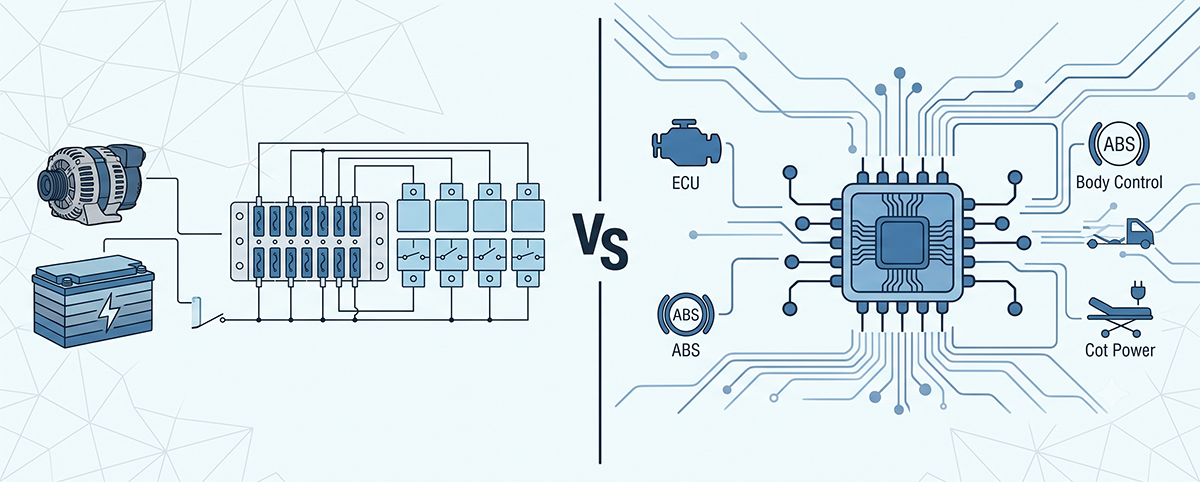
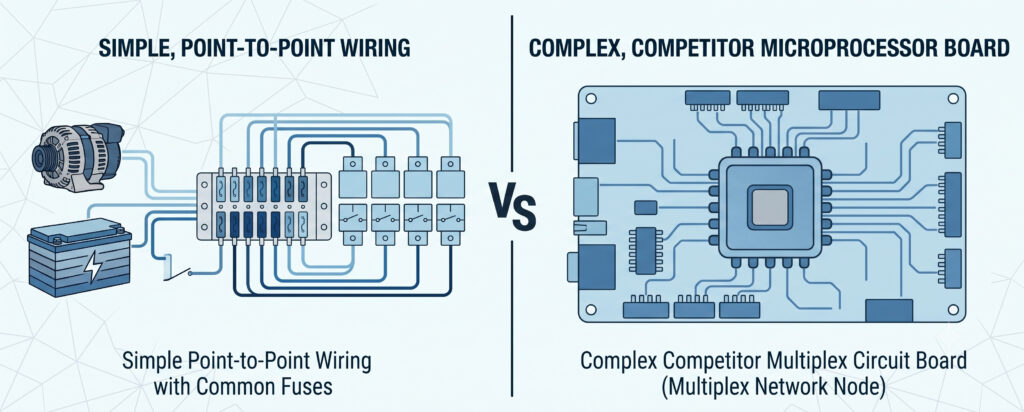
Multiplexing uses a central computer and connected nodes to manage electrical functions. The tradeoff is added complexity. Digital nodes and enclosed circuits replace familiar switches, fuses, and relays. If a screen or control node fails, several patient compartment functions may be affected at the same time.
Frazer Electrical Systems
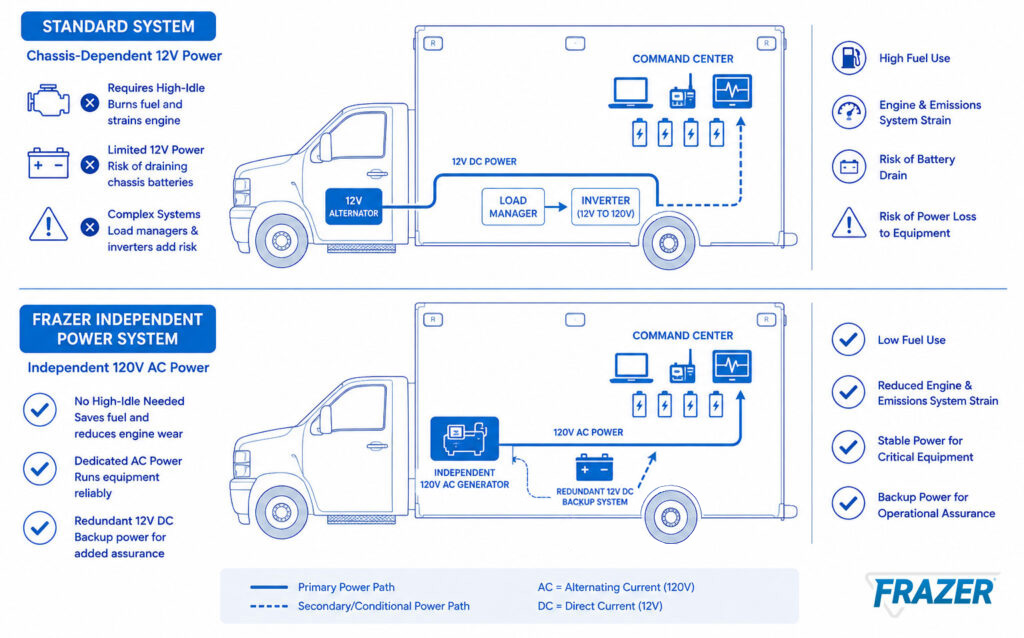
On a Frazer unit, a chassis-independent 120V AC generator system separates the patient care compartment and helps reduce the need for extended high-idle operation. This is engineered to provide steady power whether the vehicle is parked or moving.
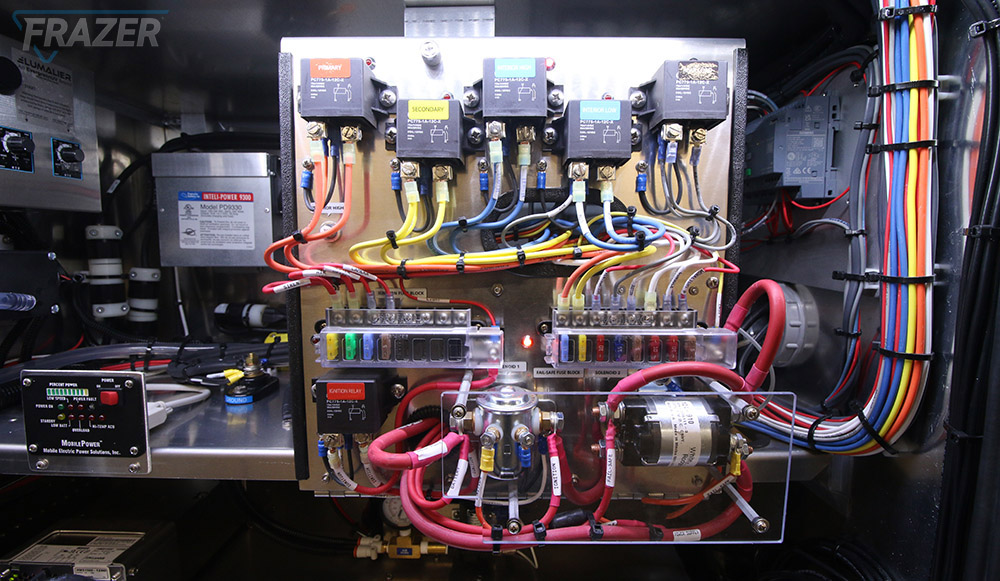
The system also uses point-to-point wiring and common mechanical relays instead of a complex and computerized multiplex network. An intermittent wire or failed control can leave a vehicle out of service while technicians search for the cause.
But with point-to-point wiring, a local technician may need just a test light and wiring diagram to find the problem.
Our article on the seven most common EMS vehicle reliability failures explains how electrical problems can affect operational readiness.
High Idle, Engine Wear, and Emissions Systems
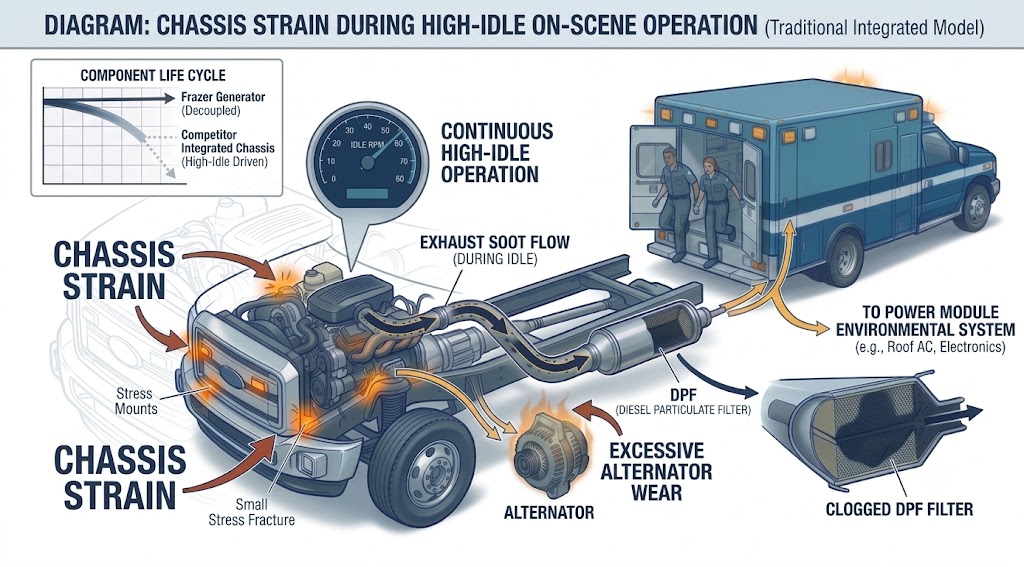
A chassis-powered system may require the truck engine to run at high idle while crews are on scene. This helps the alternator produce enough power for lighting, climate control, and medical equipment.
Extended idling can add wear to modern diesel and high-output gasoline engines. On diesel chassis, long idle periods may also affect the Diesel Particulate Filter, or DPF, and other emissions components. Depending on the chassis and operating conditions, this can contribute to more frequent regeneration cycles, added maintenance, or limp-mode events.
In plain language: The truck engine may have to work harder and run longer just to support the patient compartment. Over time, that can increase fuel use and add wear to expensive chassis components. Those costs can affect the vehicle’s overall cost of ownership.
Frazer takes a different approach by separating patient compartment power from many chassis power demands. Our generator-powered modules are designed to reduce dependence on the truck engine and limit shared failure points.
Does a Generator Add More Maintenance?
A generator-based system does require routine care, including scheduled oil changes and other service recommended by the manufacturer. This may lead some fleet manager to question whether these additional maintenance items are worth the effort.
The better question is how that routine maintenance compares with the possible cost of prolonged high-idle operation, alternator wear, emissions-system repairs, proprietary control boards, and extended vehicle downtime.
A useful fleet comparison should include the generator’s preventive maintenance requirements and the costs associated with the complete vehicle lifecycle. It should not focus on one maintenance item alone.
Frazer’s generator system is designed to reduce the need for high-idle chassis operation while crews are on scene. This allows the truck engine and exhaust system to focus more of their operating time on moving the vehicle.
Simple Point-to-Point Wiring
Simple does not mean limited. It means the system is designed so technicians can understand it, inspect it, and repair it.
Added electrical complexity can create more failure points and make troubleshooting harder. Frazer systems use point-to-point wiring and common mechanical components instead of expensive inverters, load managers, and multiplex boards.
This gives many fleet mechanics a more familiar system to maintain. Our article on why EMS vehicle serviceability matters explains how design choices can affect downtime and maintenance costs.
Faster Diagnosis and Repair
Some computerized electrical systems require factory software or special access for diagnosis. Frazer systems are designed to make common components easier to reach, inspect, and replace.
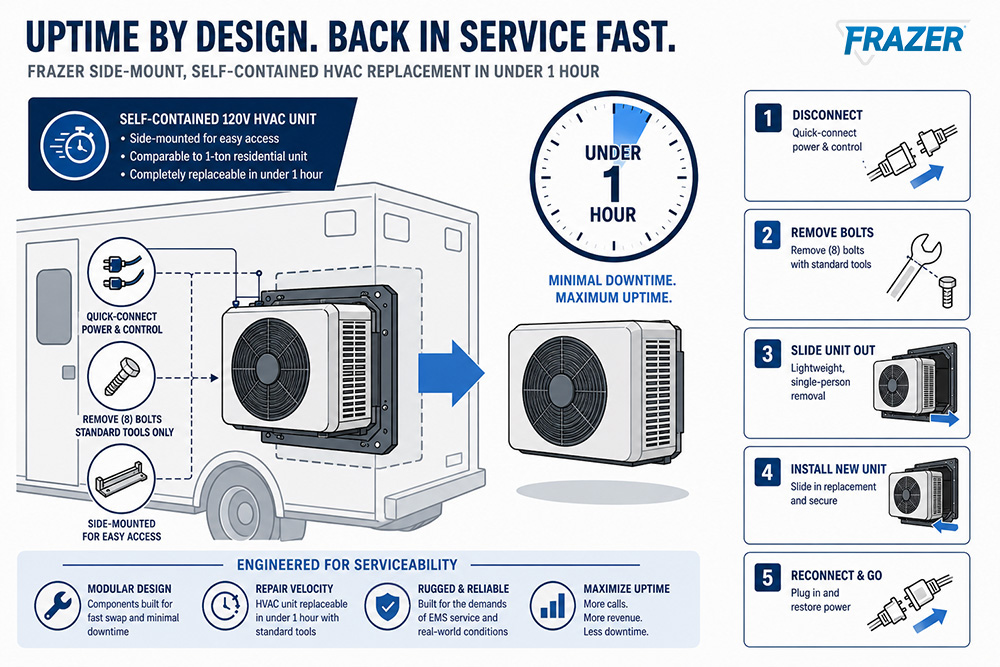
Frazer also places complex HVAC lines outside the interior framing. Our self-contained 120V HVAC units are side-mounted and replaceable, which can make major service less disruptive.
Frazer passes through applicable warranties from component manufacturers, including available parts-and-labor coverage for the HVAC system. Coverage can vary by component, model, and warranty terms.
Overall Cost of Ownership
Frazer uses the term Lower Overall Cost of Ownership, or LOCO, to describe the full cost of owning and operating an EMS vehicle.
A system that depends heavily on the chassis engine may contribute to added engine hours and wear. Fleet leaders should include these factors when planning an EMS vehicle lifecycle program.
The value of a serviceable module can also extend beyond the first chassis. Frazer’s all-aluminum, wood-free module is designed to resist corrosion and support multiple remount cycles.
When the chassis reaches the end of its service life, a fleet may be able to move the existing Frazer module to a new chassis. This can help the agency preserve more of its original investment and use capital funds more efficiently.
Long-Term Use in Demanding Applications
Lifecycle value depends on more than the purchase price. Maintenance needs, repair access, system design, and remount potential all affect the long-term value of an EMS vehicle.
Frazer modules have recorded more than one million miles of service in high-volume municipal operations. Frazer has also developed custom solutions for specialty mobile healthcare applications, including SAE J3043-compliant CT scanner mounting systems.
These capabilities support the use of independent power in demanding Mobile Stroke Unit applications. UTHealth’s Mobile Stroke Unit program also provides an example of long-term use and continued support for Frazer-built modules.
Choosing Between Simplicity and Complexity
The choice is not simply between old and new technology. It is a choice between two engineering approaches.
Integrated systems can provide digital controls and advanced interfaces. They can also increase diagnostic complexity, depending on their design and the resources available to the fleet.
Independent power, point-to-point wiring, and replaceable components take a different approach. The goal is to give fleet teams steady power and a system they can service with less dependence on proprietary tools and 3rd-party timelines.
Take the Next Step
As you plan your next EMS vehicle, ask how the electrical system will affect long-term service, maintenance, and uptime. The power system should support your crews in the field and your technicians in the shop.
Contact the Frazer team to discuss an electrical system that fits your operating needs, maintenance program, and long-term fleet plan.
How can a chassis-independent power system affect maintenance costs?
A chassis-independent system can reduce the need for high-idle engine operation while crews are on scene. This may help limit engine hours, fuel use, alternator demand, and wear on certain emissions-system components.
The system also replaces some complex computerized controls with familiar wiring and mechanical components. Actual savings will vary based on vehicle use, maintenance practices, chassis type, local labor costs, and operating conditions.
How does point-to-point wiring help reduce vehicle downtime?
Is an independent generator more reliable than a traditional electrical system?
–
Performance, maintenance, and lifecycle observations referenced in this article are based on documented fleet experience, internal engineering evaluations, and supporting third-party or customer data where applicable. Actual results may vary depending on vehicle configuration, maintenance practices, operating environment, and duty cycle.