
Why Serviceability Matters: How Vehicle Design Impacts Ambulance Maintenance Costs and Fleet Uptime
Ambulance purchasing decisions often focus on features such as touchscreens, digital controls, and integrated chassis systems. Fleet maintenance teams may look at those same features differently. They need to know how each system affects diagnostics, repair access, parts availability, and vehicle downtime.
Computers and sensors can add useful functions, but they can also add steps when something needs service. Every hour a vehicle remains in a repair bay is an hour the fleet cannot use an important operational asset. That is why serviceability should be considered before a vehicle is purchased, not only after a problem occurs.
Why Can Modern Ambulance Electrical Systems Be Difficult to Diagnose?
Some modern ambulance electrical systems use computerized multiplex boards to manage several module functions. A problem in one circuit may affect the board or other connected systems. Diagnosing the issue may require proprietary OEM software, specialized hardware, or dealer support. These requirements can increase repair time, especially when a fleet must wait for a technician or replacement component. Learn more in our 2026 Guide to EMS Vehicle Reliability & Fleet Uptime.
Multiplex vs. Point-to-Point Wiring: How Electrical Design Affects Service Access
When an electrical issue occurs, the system’s design can affect how quickly a fleet technician can begin troubleshooting. A mechanic may have years of experience, but a multiplex system can still require manufacturer-specific tools, software, and procedures.
The concern: “My mechanics aren’t trained to fix modern ambulance electrical systems. We have to send them to the dealer because we don’t have the diagnostic laptops.”
What can happen: Multiplex systems route electrical commands through centralized computer modules. If a dome light stops working or an A/C fan does not turn on, a mechanic may need specialized software to retrieve system information rather than tracing one circuit directly. If a proprietary board must be replaced, the fleet may also need to wait for a manufacturer-specific part.
The Frazer approach: Frazer uses point-to-point wiring with common relays, fuses, and terminal strips. The wiring is color-coded, marked by function, and routed directly between switches and components. This design is intended to simplify troubleshooting and help fleets address common service challenges and potential failure points.
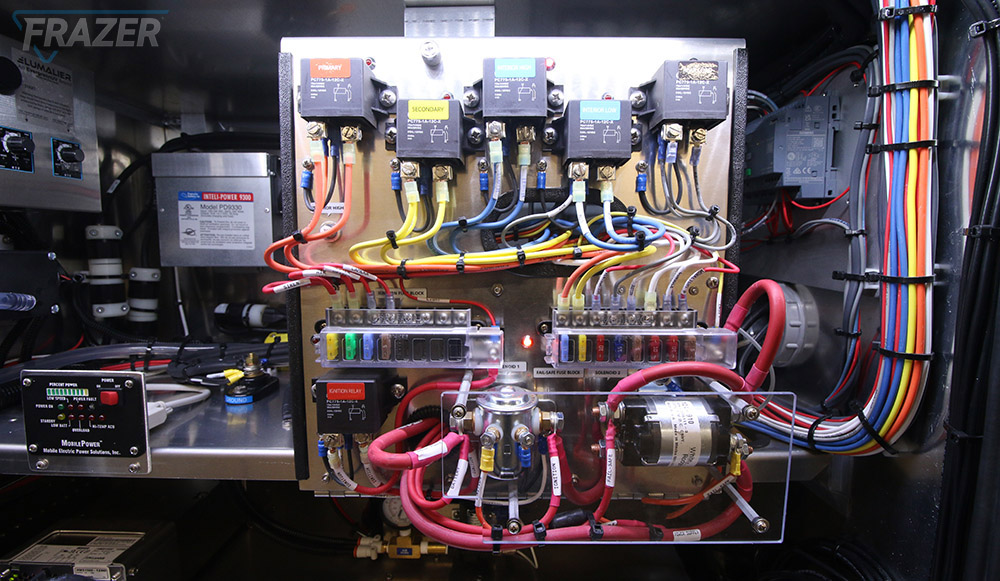
Depending on the issue, an in-house mechanic may be able to diagnose a Frazer unit with a standard multimeter, common replacement parts, and the vehicle’s wiring documentation. This gives fleet departments more opportunities to complete electrical work in-house and may reduce diagnostic time, repair costs, and vehicle downtime.
High-Idle Chassis Wear: Addressing Module Power Demand
Electrical repairs can create frustrating service delays, but major chassis engine repairs can create even larger costs. Fleet tracking tools can help departments monitor idling, but crews may still need to power climate control, ventilators, monitors, refrigerators, lighting, and other equipment while parked at a scene.
When those systems depend on the chassis engine, the vehicle may remain at high idle for much of a shift. The way a vehicle supplies module power can therefore affect fuel use, maintenance needs, and long-term chassis life.
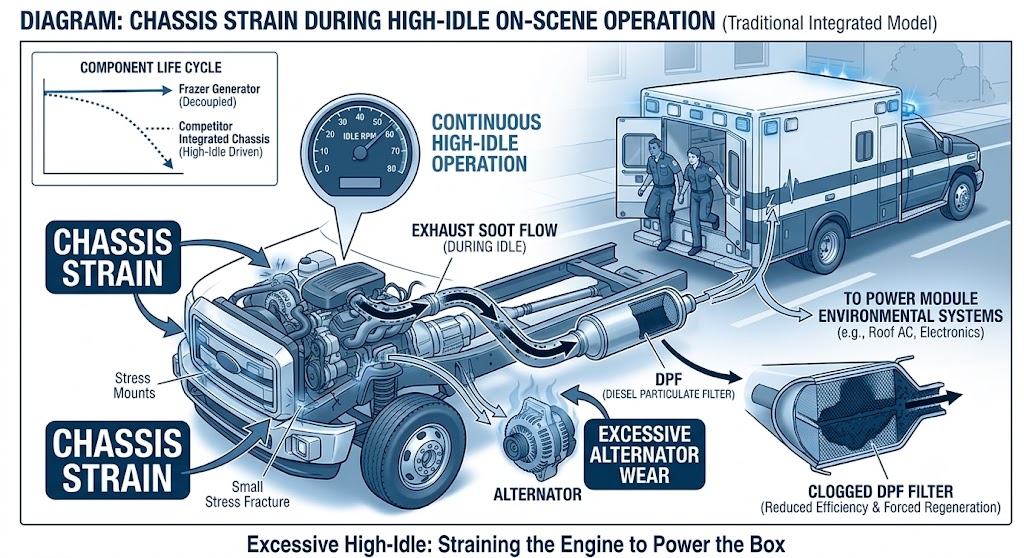
Many ambulances use heavy-duty alternators and inverters to draw module power from the chassis engine. When a modern diesel chassis operates at high idle for long periods, conditions may not always support effective exhaust regeneration. This can contribute to soot buildup in the diesel particulate filter. In some cases, a DPF-related condition may place the vehicle in limp mode, interrupt operations, and require an unplanned repair.
The concern: “Moving to an independent generator gives my team a second engine to maintain. That sounds like more work, not less.”
What to consider: A generator does require scheduled oil and filter changes. Fleets should compare that predictable maintenance with the possible cost of chassis engine repairs. In most operating environments, maintaining a small, accessible generator should cost less than repairing or rebuilding a modern diesel chassis engine affected by extended high-idle operation.
The Frazer approach: Frazer mobile healthcare units use an independent 120V AC generator as the primary power source for the module. This separates most module power demand from the chassis electrical system. Frazer units also include a redundant 12V DC backup system designed to support certain operations if the primary power source is interrupted.
This design can reduce the need to keep the chassis engine at high idle only to operate the module’s A/C, lights, outlets, and supported equipment. It also provides a steady source of power while the vehicle is driving or parked. By moving much of the environmental and electrical demand to the generator, fleets may be able to reduce chassis strain and plan maintenance around a smaller, more accessible power source.
Customers who have transitioned from chassis-dependent power systems to generator-powered Frazer modules have reported overall fleet maintenance cost reductions ranging from 42% to 60%. Actual results vary based on duty cycle, maintenance practices, fleet configuration, and operating conditions.
Modular Serviceability: Reducing the Operational Impact of Downtime
Maintenance cost is not limited to the price of a replacement part. Fleet managers must also account for technician labor, repair access, outside service, and the operational effect of removing a vehicle from service.
In some traditional configurations, technicians must remove cabinetry, ceiling panels, or parts of the dash to reach a major component. A relatively inexpensive part can lead to many hours of labor and several days of downtime when access is limited.
Speed of Service as an Engineering Consideration
Serviceability depends on more than readable wiring. It also depends on where components are placed and how quickly a technician can reach, remove, and replace them. Frazer considers repair access and service time during the engineering process.
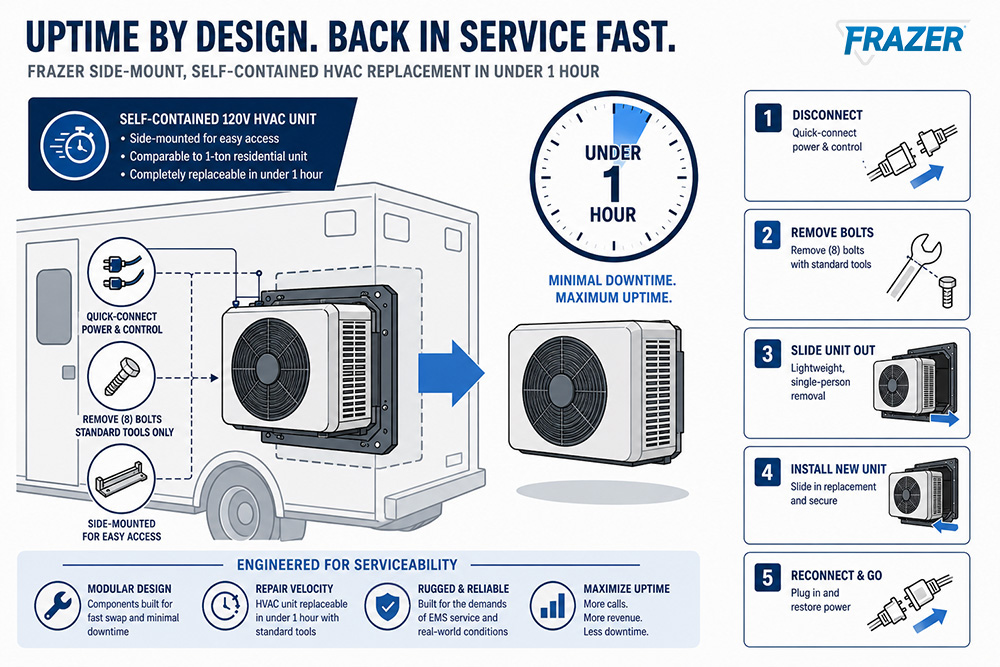
The Frazer approach: Frazer uses a modular design with a self-contained 120V AC HVAC system for the patient module. The system is comparable in capacity to a one-ton residential unit and does not depend on chassis A/C lines to cool the module.
If an HVAC unit needs replacement, its side-mounted, self-contained design may reduce the amount of disassembly required. A mechanic can access the unit through the side compartment, remove it, and install a replacement. Frazer side-mounted HVAC units can often be replaced in less than one hour, depending on the vehicle and service conditions.
Beyond Preventive Maintenance: Pursuing a Lower Overall Cost of Ownership
Wiring, HVAC service, and chassis engine use all affect a fleet’s ongoing operating expenses. A complete cost review should also consider the vehicle’s service life, remount options, structural materials, and the frequency of full vehicle replacement.
The Economics of a Long-Term Asset
Municipalities, hospitals, and private organizations often compare the upfront cost of a custom module with the price of a standard vehicle configuration. That initial price matters, but it does not tell the full story.
The concern: “These custom aluminum modules cost too much upfront. My Chief and City Council may not approve the capital budget when a less expensive standard vehicle is available.”
What to consider: A lower purchase price does not always result in a lower lifecycle cost. Some traditional ambulances use wood subfloors or other materials that may be affected by moisture, warping, or deterioration. When the original chassis reaches the end of its service life, the module’s construction and condition can determine whether it can be reused or whether the fleet must purchase a complete replacement vehicle.
The Frazer approach: Frazer engineers its mobile healthcare vehicles around a Lower Overall Cost of Ownership strategy. Frazer modules use wood-free aluminum construction with 6061-T6 structural aluminum tubing. This construction is designed to support long-term durability and resist moisture-related deterioration.
When a chassis reaches the end of its service life, an eligible Frazer module may be removed, refurbished, and remounted onto a new chassis instead of being replaced with a completely new mobile healthcare vehicle.
Frazer modules have been remounted more than once, and some have exceeded 1 million miles of service or remained in frontline use for more than 20 years. Frazer also provides a lifetime module construction warranty to the original owner, subject to the applicable warranty terms and conditions.
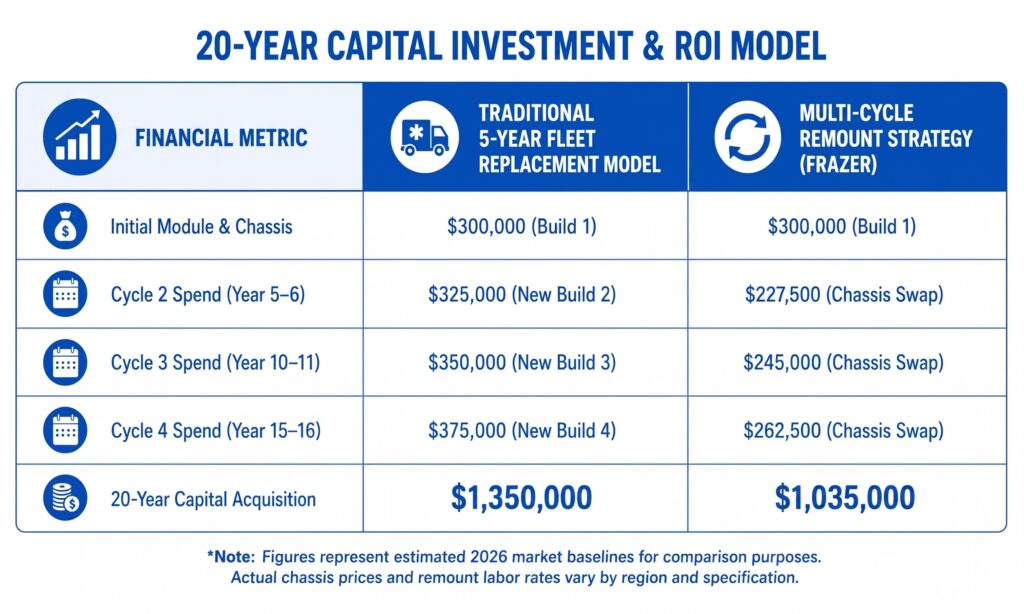
A remount strategy can help fleet managers extend the value of their capital investment and reduce the frequency of complete vehicle purchases. Instead of treating the entire vehicle as a short-term asset, a fleet can evaluate the module as a long-term platform that may continue serving the department through multiple chassis cycles.
Lower Costs Can Begin with Service-Focused Engineering
Preventive maintenance programs and driver-monitoring tools can support fleet performance, but the vehicle’s design also matters. Systems that require proprietary diagnostic tools, hard-to-find parts, or extended chassis idling may continue to create repair and cost challenges even when a strong maintenance program is in place.
Fleets evaluating ambulance maintenance costs should look closely at the vehicle’s wiring, power source, component access, structural materials, warranty, and remount options. Point-to-point wiring may give mechanics more in-house diagnostic options. Independent generator power can reduce module demand on the chassis. Accessible components can shorten some repairs, while wood-free aluminum construction can support a long-term remount strategy.
Consider how the vehicle’s design will affect your fleet long after delivery. To review a mobile healthcare platform designed around serviceability, reliability, and long-term support, contact our team of EMS vehicle specialists. We can help you compare the electrical, power, HVAC, structural, and service features that may affect your fleet’s uptime and overall cost of ownership.
Why Can Modern Ambulance Electrical Systems Experience Service Issues?
Some modern ambulance electrical systems use computerized multiplex boards to control several module functions. A problem in one digital circuit may affect the board or other connected systems. Diagnosing these systems may require proprietary OEM software, specialized hardware, or dealer service, which can increase vehicle downtime in some cases.