Wood-Free EMS Modules: Why Materials Matter for Cleaning, Durability, and Long-Term Fleet Costs
After a difficult call, crews need to clean, restock, and get their vehicle back into service. But what happens when fluids make their way past the surfaces crews can see? If porous materials are underneath, moisture and contaminants may be harder to address and can contribute to odors or material deterioration over time.
That is one reason construction materials deserve a closer look when your department is specifying its next emergency vehicle. A wood-free module can help create an environment that is easier to maintain while supporting the long service life departments expect from a major fleet investment.
Why Can Decontamination Affect Traditional Emergency Vehicle Modules?
Emergency vehicle construction varies by manufacturer. Some designs may use plywood subflooring or other wood-based materials behind flooring, cabinet surfaces, wall panels, or other interior components.
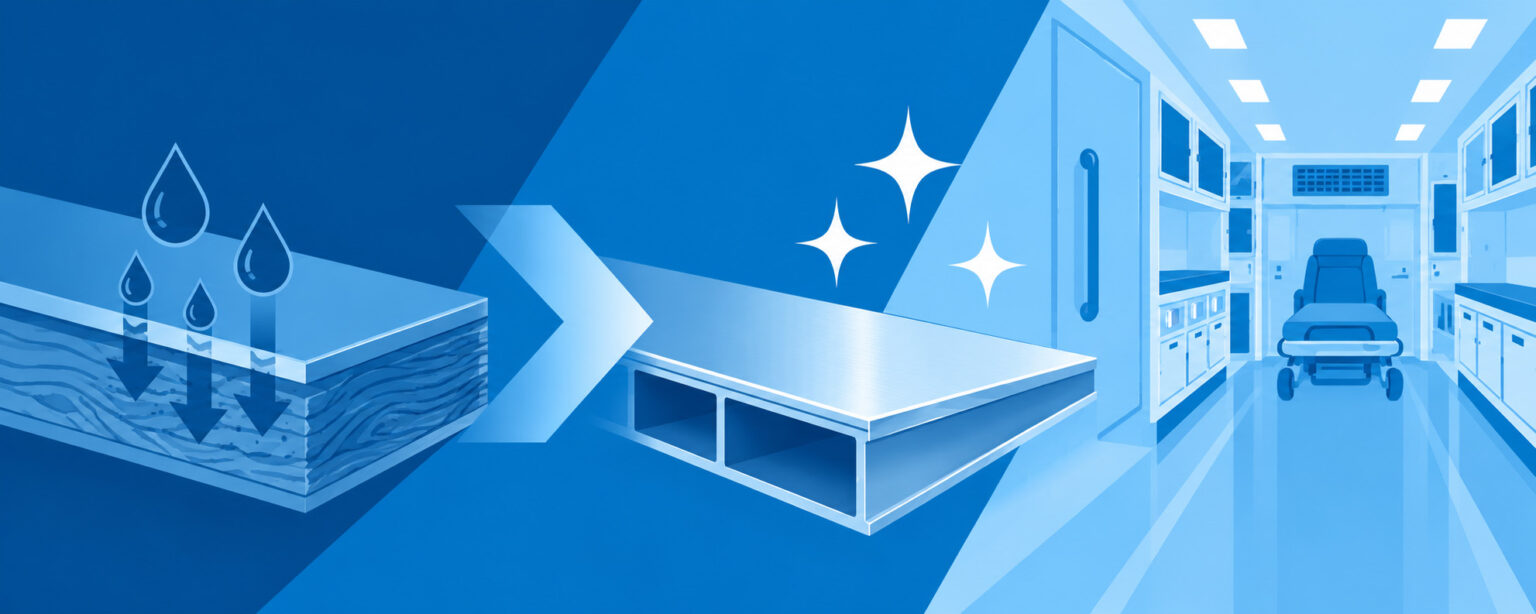
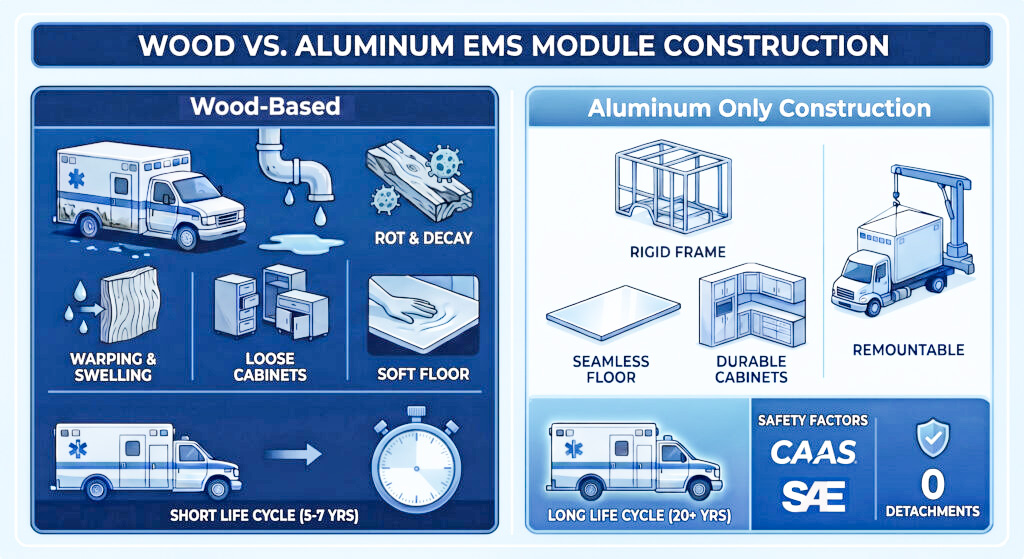
Those materials are usually hidden during everyday use. The concern begins when moisture gets past the finished surface and reaches a porous material underneath. Repeated exposure to moisture and cleaning chemicals can contribute to swelling, delamination, retained odors, or deterioration depending on the material and construction method.
Where Wood May Be Used in Emergency Vehicles
Depending on the manufacturer and vehicle design, wood-based materials may be used as subflooring or as backing behind cabinets, walls, seating components, and other finished surfaces. These materials can include plywood, marine plywood, particleboard, oriented strand board (OSB), or other wood-based products.
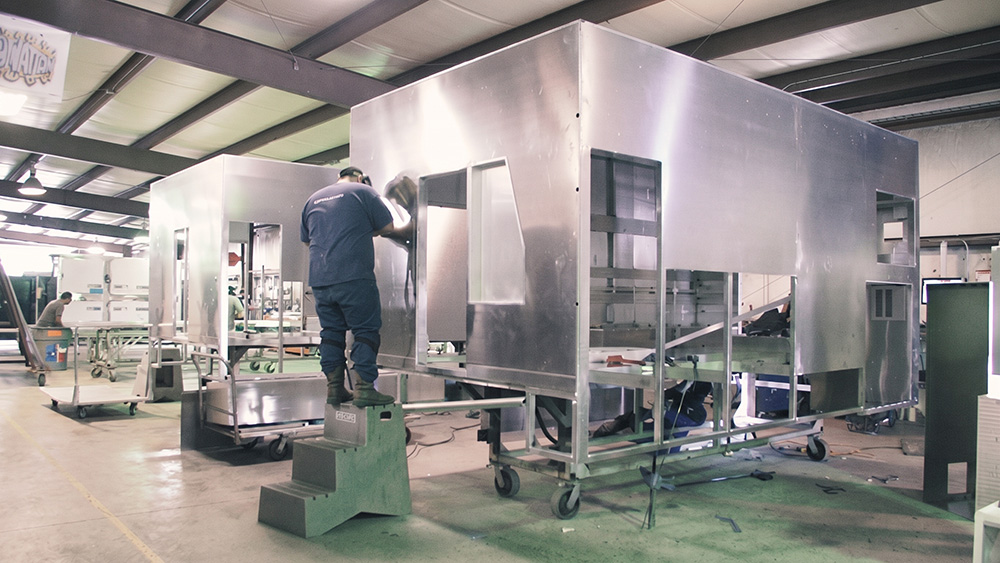
Frazer takes a different approach. Our module structure uses welded 6061-T6 structural aluminum tubing rather than wood reinforcement. The base frame uses 3″ x 1.5″ x 3/16″ tube and channel, creating a rigid aluminum structure designed for the demands of emergency vehicle service.
What Happens When Moisture Gets Below the Surface?
Emergency vehicle cleaning may involve hospital-grade disinfectants, diluted bleach solutions, quaternary ammonium compounds, hydrogen peroxide solutions, and other approved cleaning products. These products are part of routine infection-control practices, but liquids can sometimes find their way through seams, mounting points, floor transitions, or other openings.
If that liquid reaches a porous substrate, the material can absorb moisture. Depending on the material and the amount of exposure, that can contribute to swelling, adhesive deterioration, retained contaminants, or persistent odors. More scrubbing on the finished surface does not solve a problem occurring underneath it.
Non-porous aluminum and stainless steel do not absorb liquids the way wood fibers can. That gives departments one less hidden material concern when they think about cleaning and long-term vehicle durability.
How Can Wood-Free Construction Support Faster Turnaround?
Every minute an EMS vehicle spends out of service matters. After a fluid-heavy call, crews may need to clean blood, vomit, irrigation fluids, and other contaminants from floors, cabinets, walls, seams, and equipment mounting areas before returning the unit to service.
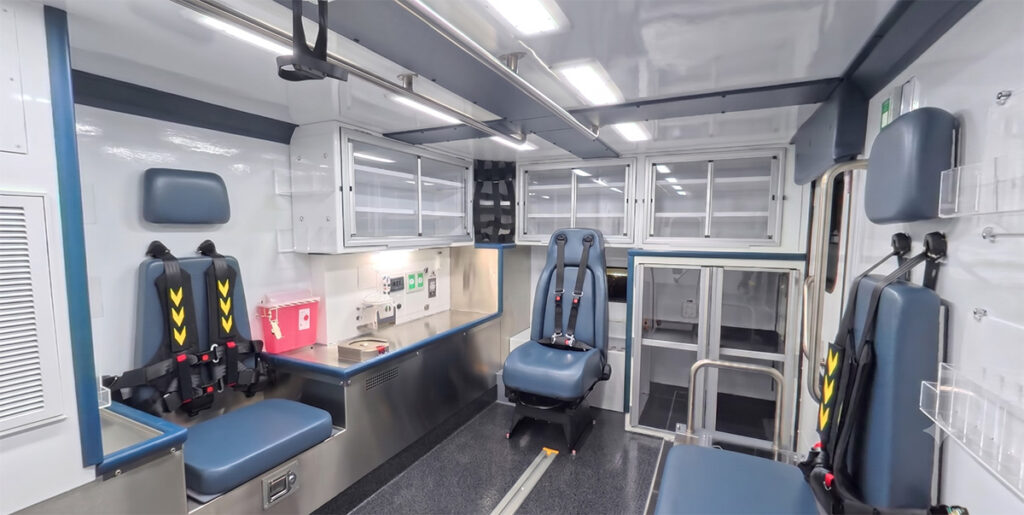
A wood-free module does not eliminate the need to follow proper cleaning procedures, chemical dwell times, or your department’s infection-control protocols. What it can do is reduce reliance on porous materials underneath the surfaces crews are cleaning. Aluminum cabinetry, structural aluminum, and stainless steel cladding are designed to resist fluid absorption and allow accessible surfaces to be cleaned without the same concerns associated with exposed wood fibers.
Turning Cleaning Time Back Into Street Time
For a busy 911 system, cleaning time is also fleet availability time. A unit sitting in the wash bay is a unit that is not covering its normal response area. When departments can make the cleaning process more straightforward without compromising their infection-control procedures, crews can move toward restocking and returning to service more efficiently.
That benefit can add up across a fleet. Even modest improvements in turnaround time can give departments valuable operational time back during high-volume shifts while reducing unnecessary cleaning effort for crews.
Looking Beyond Surfaces: Airflow and Disinfection Systems
Cleaning surfaces is only one part of infection control inside an emergency vehicle. Departments may also consider how the vehicle manages air, how the patient module is separated from the cab, and whether additional disinfection technologies fit their operating procedures.
Why Module Materials Matter With Misting Systems
Some departments use portable or integrated misting systems as part of their infection-control process. Aerosolized products can reach areas around seat bases, access panels, floor transitions, and other spaces that may be difficult to reach by hand.
If moisture reaches porous materials, it may remain there longer than it would on a non-porous metal surface. Departments considering these systems should look beyond the visible interior finishes and ask what materials are being used underneath them.
Integrated Disinfection and Air Treatment Options
Frazer offers options that can become part of a department’s broader infection-control strategy. The available Sentinel Vehicle Disinfection System provides an integrated misting solution that crews can activate from an exterior control, while the available Dometic BreatheEasy system uses ultraviolet light and photocatalytic technology as part of its air-treatment process.
These systems do not replace your department’s established cleaning and infection-control procedures. They provide additional tools agencies can consider when configuring a vehicle around their specific operational needs.
Independent HVAC for the Patient Module
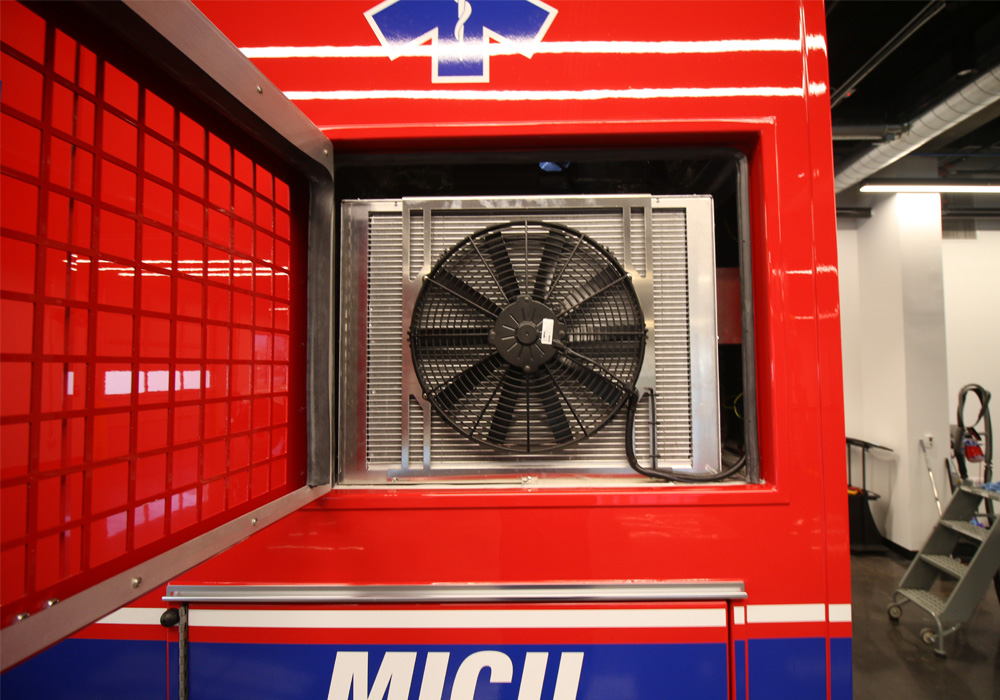
HVAC design is another important difference to consider. Frazer uses a dedicated independent 120V AC HVAC system for the patient module. Because the module climate system operates separately from the chassis climate controls, crews can manage the patient-compartment environment without depending on the chassis engine’s HVAC system.
The system can operate from Frazer’s onboard power solution or shore power. This independent approach is a long-standing part of the Frazer design philosophy and gives departments greater control over the environment where their crews and patients spend their time.
How Does Construction Affect Future Remounts?
A remount gives an agency the opportunity to move an existing module onto a new chassis when the module remains suitable for continued service. That makes the condition of the module especially important. Damage or deterioration discovered in floors, backing materials, structural components, or other areas can add repairs, time, and expense to a planned remount.
Wood-free aluminum construction helps remove one potential source of moisture-related deterioration from the equation. It does not guarantee that every module will qualify for every future remount, but it gives departments a structure designed with long-term service and remountability in mind.
When a Remount Plan Meets an Unexpected Repair
A department may plan to remount an existing module onto a new chassis rather than replace the entire vehicle. If technicians discover deterioration during inspection and teardown, however, additional repairs may be required before that module can return to service.
That is why construction choices made during the original purchase can matter years later. Specifying durable, non-porous materials from the beginning can support a department’s long-term fleet plan instead of treating the module as a component that must automatically be replaced with each chassis.
Lower Overall Cost of Ownership
Frazer’s approach to lower overall cost of ownership (LOCO) looks beyond the initial purchase price. The question is not simply what an emergency vehicle costs today. It is what that vehicle can cost your department over its useful life.
A durable module that remains suitable for future remounts can allow an agency to reuse a significant portion of its original investment instead of purchasing an entirely new module each time the chassis reaches the end of its service life. Actual savings and remount opportunities will depend on vehicle condition, configuration, usage, chassis availability, and the agency’s requirements.
Lifetime Module Construction Warranty
Frazer backs its module construction with a lifetime module construction warranty for the original purchaser, subject to the applicable warranty terms and conditions. It is one more way we stand behind the vehicle long after delivery.
That long-term support is an important part of the Frazer Family Experience. We want to be a resource throughout the life of your vehicle, from the original specification and build through service, support, parts, and future remount decisions.
What About Rattles and Noise in an All-Metal Interior?
It is a fair question. When people hear “all-metal interior,” they may picture panels rattling against each other every time the vehicle hits a rough road. Frazer’s construction methods are designed to manage that concern through the way panels are bonded to the structural frame.
Using 3M VHB Tape to Bond and Dampen
Frazer uses full-length 3M Very High Bond (VHB) tape between structural tubing and the aluminum skin. The viscoelastic bonding material conforms to surfaces and helps absorb vibration while creating a continuous bond between the skin and frame.
This approach also helps create a barrier against moisture and road spray entering the wall cavity. Instead of treating noise control, panel attachment, and moisture protection as separate problems, the construction method is designed to address them together.
Structural Testing Matters Too
Material selection is only part of the story. Emergency vehicle buyers should also ask how a module’s structure has been tested and how the design performs under demanding loads.
Frazer’s module construction has undergone AMD 001 static-load testing. Frazer also has decades of real-world fleet experience that informs how we design, build, service, and support our modules. If structural testing is an important part of your specification process, ask your Frazer representative for the applicable test documentation so your team can review the results directly.
How Do You Specify Wood-Free Construction in an RFP?
If your department wants a truly wood-free vehicle, the specification needs to say more than “moisture resistant.” Ask what materials are behind the flooring, cabinet faces, walls, and other surfaces you can see. A finished laminate or composite surface does not necessarily tell you what is underneath it.
What Should Your Specification Address?
Your specification can identify the structural material and dimensions required for the module, including welded 6061-T6 structural aluminum where appropriate. It can also state that the patient compartment, subfloor, cabinetry, and interior wall construction must be free of plywood, OSB, particleboard, and other wood-based substrates.
Departments may also specify non-porous materials for high-splash areas and define their requirements for module HVAC architecture. The goal is not to add complicated language for the sake of a longer specification. It is to make sure bidders clearly understand what your department expects and can explain how their construction meets those requirements.
Every agency has different operational, regulatory, and procurement requirements, so specifications should be reviewed and adapted by the appropriate agency personnel before being issued.
Cooperative Purchasing Is Another Option
Some departments may also be able to purchase through a cooperative contract instead of developing an independent RFP. Frazer vehicles are available through cooperative purchasing programs including HGACBuy and Sourcewell. Eligibility and purchasing requirements vary, so procurement officials should confirm that the applicable contract meets their agency’s state, local, and internal purchasing requirements.
Build for the Call Today and the Fleet Plan Tomorrow
Cleaning, vehicle availability, durability, and capital planning may sound like separate fleet issues, but the materials inside your module can connect all four. Porous materials can absorb moisture when exposed, while non-porous aluminum and stainless steel give departments a construction approach designed around cleaning, durability, and long-term service.
Whether building frontline EMS units or configuring custom mobile healthcare units and outreach vehicles, specifying an easy-to-disinfect, all-aluminum foundation protects fleet investments across diverse care delivery roles.
That is the bigger question to ask when comparing emergency vehicles. Do not stop at what the interior looks like on delivery day. Ask what is behind the walls, underneath the floor, and inside the cabinets, then consider how those materials may affect your crews and your budget years from now.
Does Your Fleet Specification Address Hidden Wood Materials?
If you are planning your next emergency vehicle purchase, Frazer can help you understand the construction choices available and what they mean for your fleet. Bring us your questions, including the difficult ones. We would rather help you make an informed decision than leave you guessing about what is underneath the finished surfaces.
Talk with a Frazer Direct Fleet Specialist
Why does chemical decontamination degrade traditional emergency vehicle modules?
Some emergency vehicle designs may use wood-based materials beneath finished surfaces. If moisture reaches a porous substrate, the material may absorb it. Depending on the material, construction method, exposure, and maintenance practices, repeated moisture exposure can contribute to swelling, delamination, odors, or deterioration.
Frazer uses wood-free aluminum construction in its module design to reduce reliance on porous wood-based substrates.