
Beyond the ER: Custom Mobile Healthcare Clinics and California’s Frontline Outreach
For public health directors and EMS leaders across California, healthcare is moving beyond hospital walls. Street medicine, community paramedicine, preventive care, behavioral health, and other outreach programs are bringing clinical teams directly to the people they serve.
That creates a practical question: What kind of vehicle can reliably support the team, equipment, power needs, and working environment required for regular field care?
A purpose-built custom mobile healthcare clinic can provide an outpatient-style exam space wherever care is needed. The goal is simple: give healthcare teams a dependable place to work while creating a comfortable, professional environment for patients.
How do you power medical equipment without draining the vehicle battery?
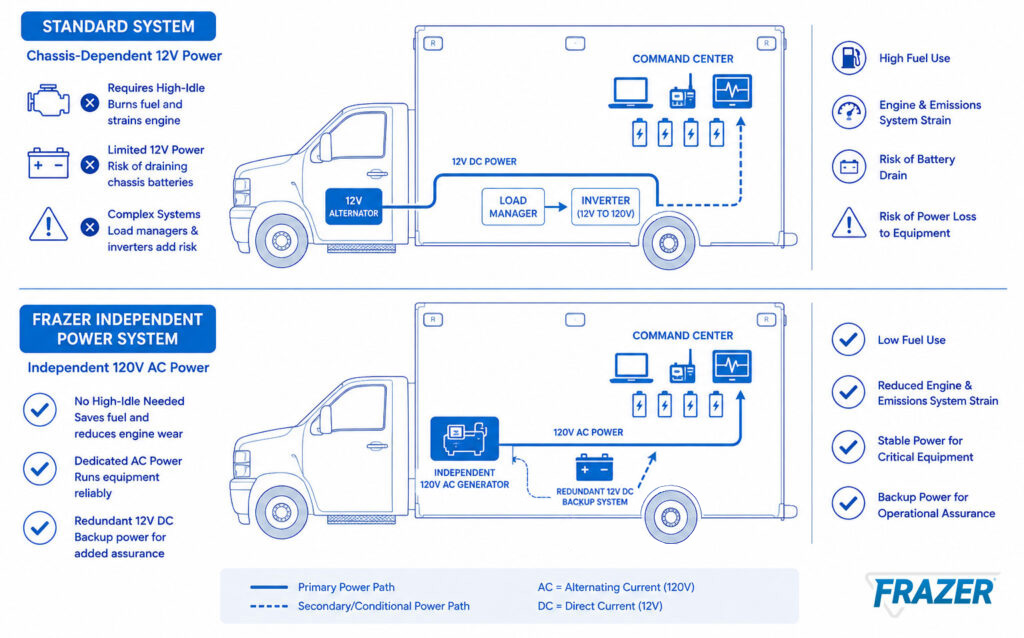
One option is to separate clinical power needs from the vehicle’s automotive electrical system. An independent 120V AC auxiliary power source can operate configured diagnostic equipment, refrigeration, lighting, and air conditioning while the truck engine is shut off.
This approach reduces the demand placed on chassis batteries and alternators during stationary operations and gives clinical teams a dedicated power source for the work happening inside the module.
Why California Outreach Programs Need the Right Clinical Platform
Emergency department crowding remains a challenge for healthcare systems. Non-emergent 911 calls, unmanaged chronic conditions, behavioral health needs, and limited access to routine care can all increase pressure on emergency departments and local response systems.
Programs such as CalAIM, street medicine, and community paramedicine create more ways to deliver care where people live. But moving care into the field also means choosing a vehicle that can support clinical equipment, patient privacy, staff comfort, and long periods of stationary operation.
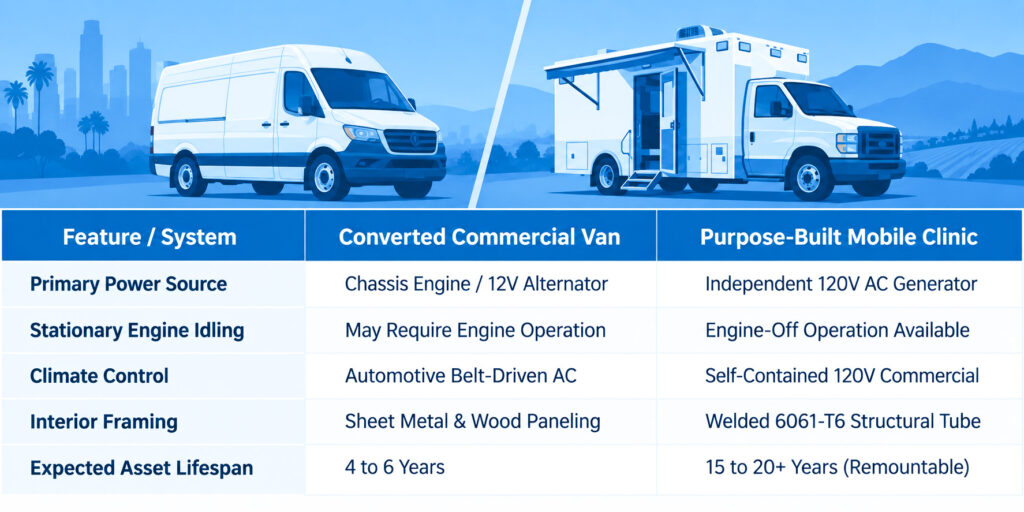
Repurposed emergency transport units present a challenge. Those interiors are generally designed around acute stabilization and cot transport. Depending on the configuration, they may offer less room or privacy for preventive exams, consultations, behavioral health intake, and other outpatient services.
A purpose-built clinic gives outreach programs another option. Instead of adapting a transport environment to clinical outreach, the vehicle can be configured around how the team plans to provide care.
Power Independence in the Field
What happens when the clinic needs power for hours at a time?
Point-of-care analyzers, medication refrigerators, exam lighting, computers, and telehealth equipment can create a significant electrical demand during a deployment. The issue becomes more important when the chassis electrical system is expected to support those loads while the vehicle remains parked.
Frazer addresses this by using an independent 120V AC auxiliary power system for the clinical module. Depending on the configuration, this may include a Cummins Onan gas or diesel generator or a Mobile Electric Power Solutions system.
For the team in the field, that means configured workstations, lighting, refrigeration, and other supported equipment can operate while the truck engine is shut off. This can reduce unnecessary engine idling and lessen demand on the chassis alternator and batteries. Chassis warranty coverage remains subject to the applicable OEM warranty terms and conditions.
Supporting Sensitive Medical Equipment
Blood analyzers, centrifuges, pharmaceutical refrigeration, computers, and other sensitive equipment can be affected by power interruptions or changes in voltage. Some chassis-dependent systems use load management that can reduce electrical demand when certain operating thresholds are reached.
In a mobile clinic, an unexpected interruption may affect medication storage, specimens, refrigeration, or diagnostic equipment. A dedicated 120V AC system gives configured clinical equipment its own source of power rather than depending entirely on the truck’s automotive electrical system.
Backup Lighting When Primary Power Is Unavailable
Frazer also incorporates a secondary 12V DC circuit tied to the chassis batteries. It is designed to provide backup power for essential interior lighting if primary generator power becomes unavailable. That gives the team light while they wrap up patient care and address the power interruption.
Climate Control for California Heat
California outreach teams may work in the Central Valley, Inland Empire, desert communities, and other locations where summer temperatures rise above 100°F. During those deployments, climate control affects more than comfort. It can also matter for staff working conditions and temperature-sensitive supplies.
Vehicle air-conditioning systems that depend on the chassis may perform differently during long periods of stationary use, depending on the platform and conditions. Frazer uses a self-contained 120V air conditioning system that operates independently from the chassis air-conditioning system.
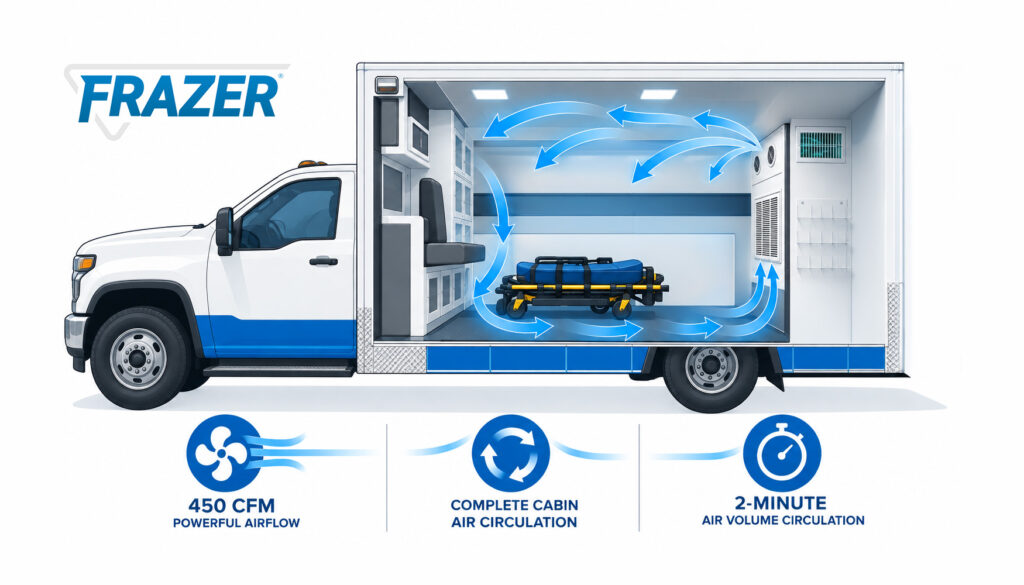
The side-mounted system provides 15,000 BTUs of cooling capacity and is engineered to maintain a temperature differential of 35°F or more from outside ambient air. A 450 CFM blower circulates the module’s cabin air approximately every two minutes to help distribute conditioned air throughout the workspace under ideal conditions. The air-conditioning system is backed by a four-year parts-and-labor warranty, subject to applicable warranty terms.
Separate Air Paths and Available Air Treatment
Respiratory screenings and other community health programs may also benefit from a vehicle designed with airflow separation in mind. Frazer’s module HVAC system does not share ductwork or air handling with the driver cab, creating separate air paths between the two spaces.
Available Dometic BreatheEasy integration adds photocatalytic air treatment using ultraviolet light and nano-filter technology designed to treat airborne contaminants, bacteria, and odors within the unit.
A Serviceable, Modular HVAC Design
When an automotive air-conditioning system is integrated throughout the engine bay and chassis, certain repairs can become more involved. Frazer’s system uses a self-contained, side-mounted assembly designed for modular replacement.
When replacement is needed, fleet mechanics can remove and replace the HVAC assembly in under one hour. Frazer has documented a replacement completed in 45 minutes. The goal is straightforward serviceability and less unnecessary downtime.
Designing a Clinic Around Patients and Clinical Work
Not every patient wants to receive care in an environment that feels like an emergency transport vehicle. That can be especially important for preventive care, behavioral health, and harm reduction.
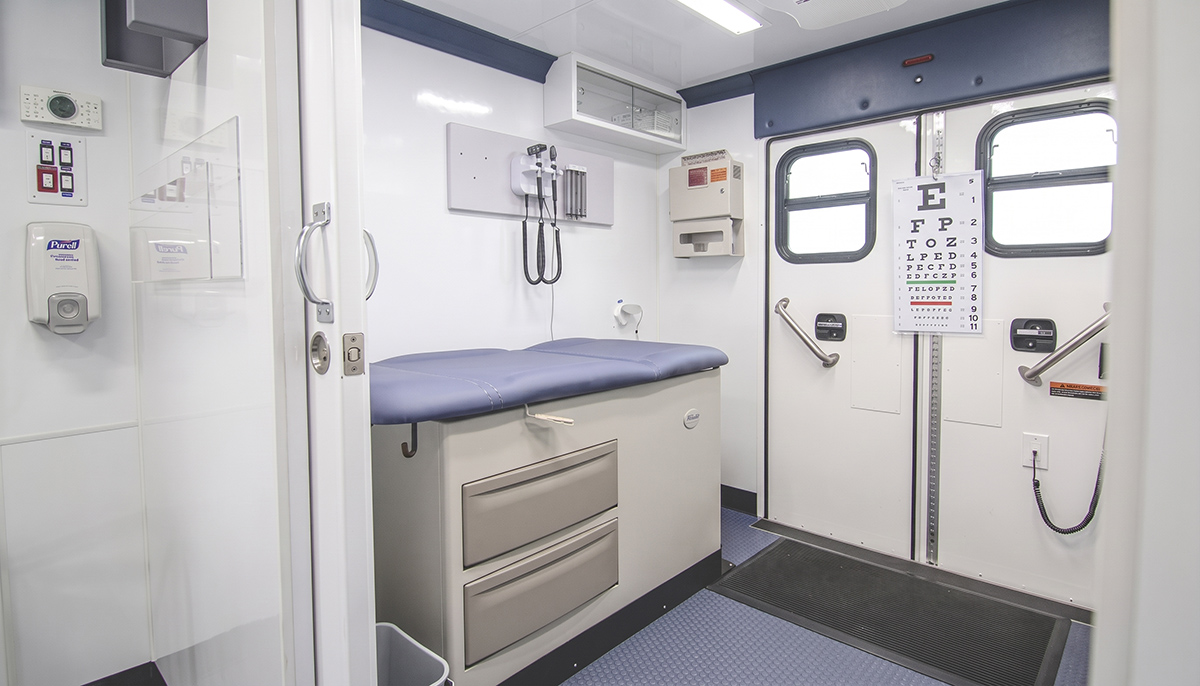
A dedicated outpatient-style environment can give clinical teams room to work while providing patients with greater privacy and a setting designed specifically for consultation and treatment.
Creating a Quieter Space for Care
Behavioral health conversations, social work intake, and routine physical exams can benefit from a quieter working environment. Frazer uses pliable 3M VHB isolation tape between the module framing and outer aluminum skin to help absorb vibration and reduce exterior noise and generator hum.
Wood-Free Structural Construction
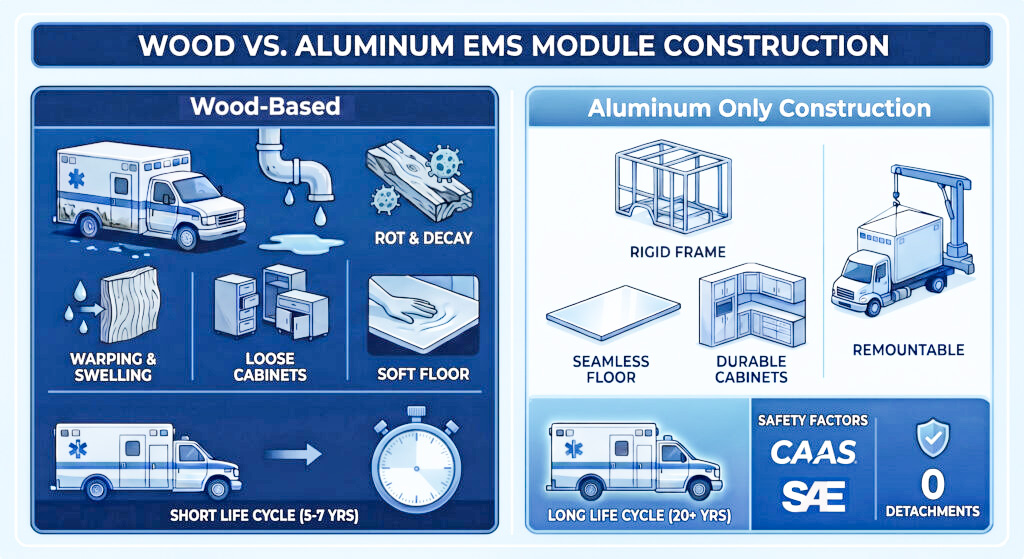
Frequent cleaning is part of everyday clinical work. Some converted vehicles use plywood, particleboard, or wood-backed materials within the interior structure. These materials can respond differently to moisture and repeated cleaning over time.
Frazer uses welded structural aluminum for interior framing and cabinetry along with non-porous composite cladding. The design reduces the use of moisture-absorbing structural materials and supports routine cleaning between patient encounters.
Flexible Layouts on an 18-Foot Platform
The purpose-built 18-foot mobile clinic platform can be configured around a program’s workflow. Wide center aisles provide room for clinicians and patients to move through the space, while interior zones can support private consultations, outpatient exams, secure lab work, medication storage, and telemedicine equipment.
Those layouts can include private consultation booths for behavioral health or social work, exam tables with diagnostic tools, secure point-of-care lab stations, lockable medication storage, and high-speed telemedicine connections for collaboration with hospital specialists.
Thinking Beyond the First Chassis
A converted commercial cargo van and a removable clinical module are different types of assets. The source estimates a typical commercial van conversion at a four-to-six-year lifecycle, while a structural aluminum clinic module is designed around a 15-to-20-plus-year service horizon.
The key difference is remounting. Because Frazer’s clinical body is built as a module separate from the truck chassis, the module can be refurbished and installed on a replacement chassis when appropriate. That gives agencies the option to keep using the clinical space after the original chassis reaches the end of its service life.
Upfront Cost vs. Long-Term Asset Use
A custom 18-foot mobile healthcare clinic requires a larger initial capital investment. That initial price, however, does not tell the whole story. A van conversion generally combines the chassis and medical upfit into one asset. Replacing the vehicle may also mean replacing or rebuilding much of the clinical environment.
Frazer builds its modules from welded 6061-T6 structural aluminum tubing as an independent structural asset. When the chassis reaches the end of its useful service life, the module is designed to be refurbished and remounted onto another compatible chassis. For organizations planning across multiple capital cycles, that may change how the long-term investment is evaluated.
Structural Testing and Module Construction
Frazer’s module uses 6061-T6 structural aluminum alloy tubing with welded corners to create a rigid unibody structure. The aluminum has a stated tensile strength of 20 to 40 KSI.
In certified third-party testing to AMD 001 standards, which require resistance to 2.5 times curb weight, the module supported 70,000 pounds on the roof and 55,000 pounds on the sides. Test deflection measured three-quarters of an inch compared with the five-inch allowable limit. After the test load was removed, the module returned to its original shape and the entry doors operated normally.
Frazer records also show zero instances of a Frazer module separating from its chassis during a collision across approximately 4,500 EMS modules built since 1984.
The module is backed by a lifetime structural warranty for the original purchaser covering design, construction, and workmanship, subject to applicable warranty terms and exclusions.
Procurement and Support After Delivery
A specialized mobile clinic raises questions that go beyond the floor plan. Public health managers and purchasing teams also need to know how they can buy the unit, who can service it, how difficult electrical troubleshooting will be, and what happens when they need help after delivery.
Cooperative Purchasing Options
Public agencies may be able to streamline procurement through competitively bid cooperative contracts. Frazer vehicles are available through programs including HGACBuy and Sourcewell.
Depending on the agency, jurisdiction, and procurement rules, these programs may offer an alternative to conducting a separate public RFP. Purchasing organizations should confirm that the selected contract and process comply with their state, local, and internal requirements.
Frazer also holds Motor Vehicle Dealer and Converter licensing, NHTSA registration, active SAM.gov registration, and Women’s Business Enterprise certification through WBENC.
Point-to-Point Wiring for Straightforward Troubleshooting
Some vehicle electrical systems use proprietary circuit boards, multiplex nodes, or dedicated diagnostic software. Depending on the repair, that can require specialized tools or outside technical assistance.
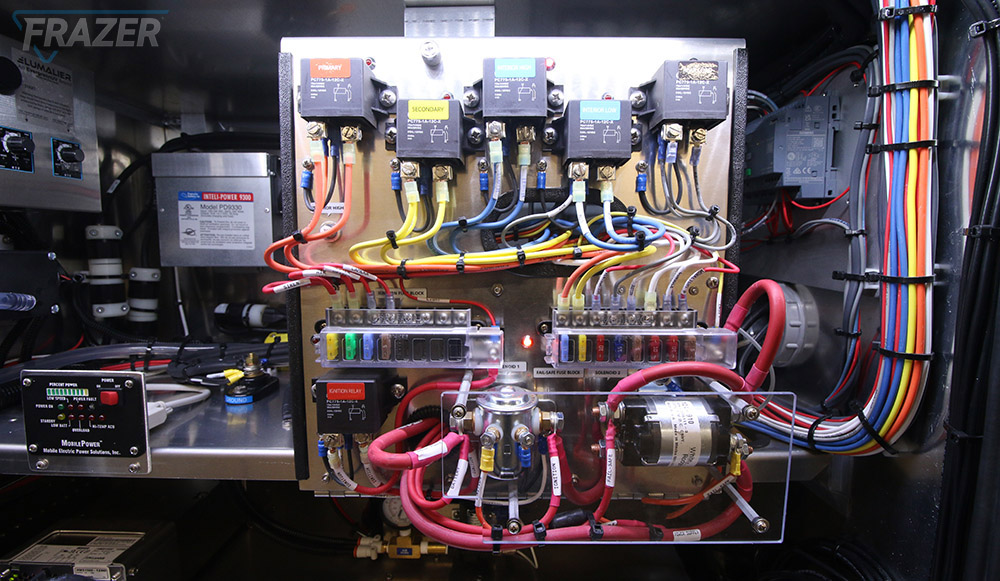
Frazer uses point-to-point wiring with common automotive relays, terminal strips, visible fuses, wiring diagrams, and diagnostic monitoring diodes. Components are organized in an exterior-facing electrical compartment so technicians can reach and inspect them more easily.
For many troubleshooting tasks, an in-house fleet technician can use a standard digital multimeter and commonly available components. Frazer electrical wiring is protected by a dedicated five-year warranty, subject to applicable warranty terms.
Direct Support from Frazer
Service after the sale is part of the Frazer experience. Customers can work directly with people who know Frazer vehicles and the systems installed in them instead of being limited to an unfamiliar third party.
Frazer’s multi-stage quality control process results in an average of one punch-list item per vehicle at final inspection. In an independent double-blind Smart Advantage survey of 100 industry professionals, 39% identified Frazer as the company whose vehicles spend the least amount of time in the shop. That response was more than five times higher than any other competitor named in the survey.
Agency technicians also have 24/7 direct phone access to experienced service technicians and can attend free hands-on generator, MEPS, and electrical training classes.
What Should You Look for in a Purpose-Built Mobile Outreach Vehicle?
Start with the way your team actually plans to work. Ask how the vehicle will provide power while parked, how the HVAC system performs in local conditions, how easily your fleet team can troubleshoot it, and whether the clinical body can continue serving your organization after the original chassis is retired.
For a purpose-built outreach clinic, key considerations include an independent 120V AC auxiliary power source, engine-off operation for configured clinical systems, self-contained climate control, serviceable HVAC components, separate air paths, durable non-wood structural materials, remountable construction, and an electrical system your technicians can understand and access.
Procurement matters too. Ask whether cooperative contracts are available and whether the purchasing method meets your organization’s requirements before moving forward.
Planning a Community Health or ER Diversion Outreach Program?
A mobile healthcare clinic should be designed around the work your team needs to do, not the other way around. Frazer can help you review electrical loads, explore custom 18-foot floor plans, and discuss how a remountable clinical module may fit into your long-term fleet and capital plans.
Schedule a Clinical Platform Consultation with Frazer
How do you power medical equipment on a mobile healthcare clinic without draining the vehicle battery?
Powering stationary mobile clinics requires isolating clinical equipment from the vehicle’s automotive electrical system. Utilizing an independent 120-volt AC auxiliary generator as the primary power source allows clinicians to operate diagnostic analyzers, vaccine refrigeration, and air conditioning with the truck engine completely shut off, protecting chassis batteries and alternators from burnout.