The Financial Case for Texas Ambulance Remounts: Warranties & LOCO
If you manage an emergency response fleet in Texas, you know the challenge. Your vehicles need to be ready for the next call, but new equipment is a major investment. That makes every replacement decision important. How do you keep reliable vehicles in service while making responsible use of your department’s budget?
Many departments consider replacing EMS vehicles on a five-to-seven-year cycle. But the truck chassis and patient module do not always age at the same rate. If the module is still in good condition, replacing the complete vehicle may mean retiring a major asset that could continue serving your department through a remount.
Texas heat, demanding duty cycles, aging equipment, and tight municipal budgets make long-term fleet planning especially important. A remount gives departments another option. Instead of asking only, “When should we replace this vehicle?” you can also ask, “Which parts of this vehicle actually need to be replaced?”
This guide looks at the financial and operational factors behind factory-direct remounting, including Lowest Overall Cost of Ownership (LOCO), warranty coverage, service after the sale, and HVAC performance in demanding Texas conditions.
The Depreciating Asset Challenge: Rethinking EMS Vehicle Lifecycles
A common fleet replacement cycle is simple: purchase a complete vehicle, operate it for five to seven years, retire it, and purchase another one. That approach treats the chassis and patient module as if they have the same useful life. In practice, they may not.
Engines, drivetrains, and other chassis components face demanding conditions that include long periods of idling and emergency-response driving. A properly engineered all-aluminum patient module can have a much longer service life. When that module remains structurally suitable for continued use, remounting allows a department to keep the module and replace the chassis beneath it.
This is where Lower Overall Cost of Ownership, or LOCO, becomes useful. Instead of looking only at the purchase price of the next vehicle, LOCO asks departments to consider costs across the life of the equipment. A department may be able to purchase a new chassis and remount its existing custom module rather than purchasing a complete replacement vehicle every cycle.
Frazer modules use all-aluminum, wood-free construction and are designed to support multiple remounts when their condition remains suitable. Some Frazer modules have exceeded 1 million miles of service and 20 years of continuous use through the remounting process. That does not mean every module will reach those milestones, but it shows why evaluating the condition of the module separately from the chassis can be an important part of fleet planning.
What Is an Important Factor When Choosing an EMS Vehicle Builder?
Price matters, but it is not the only factor departments consider. In a double-blind survey of 100 EMS and Fire professionals, “Support after the sale” ranked as the number one attribute influencing builder selection. That makes sense when you consider how long a department may own and maintain its equipment.
Why Support After the Sale Matters
Imagine an electrical issue takes a unit out of service. Your team may need technical guidance, warranty information, replacement parts, or help with a repair. When several organizations are involved, getting those answers can require more calls and more coordination.
A factory-direct relationship gives customers a direct connection to the company that built the unit. When your mechanics have a technical question or need a replacement part, they can contact Frazer directly instead of routing the request through a third-party sales organization. In the same survey of EMS and Fire professionals, Frazer received 39% of mentions for the brand spending the “least amount of time in the shop.”
For departments evaluating long-term costs, that support relationship belongs in the conversation alongside purchase price, maintenance needs, warranty coverage, and expected service life.
Does an EMS Vehicle Remount Renew Warranty Coverage?
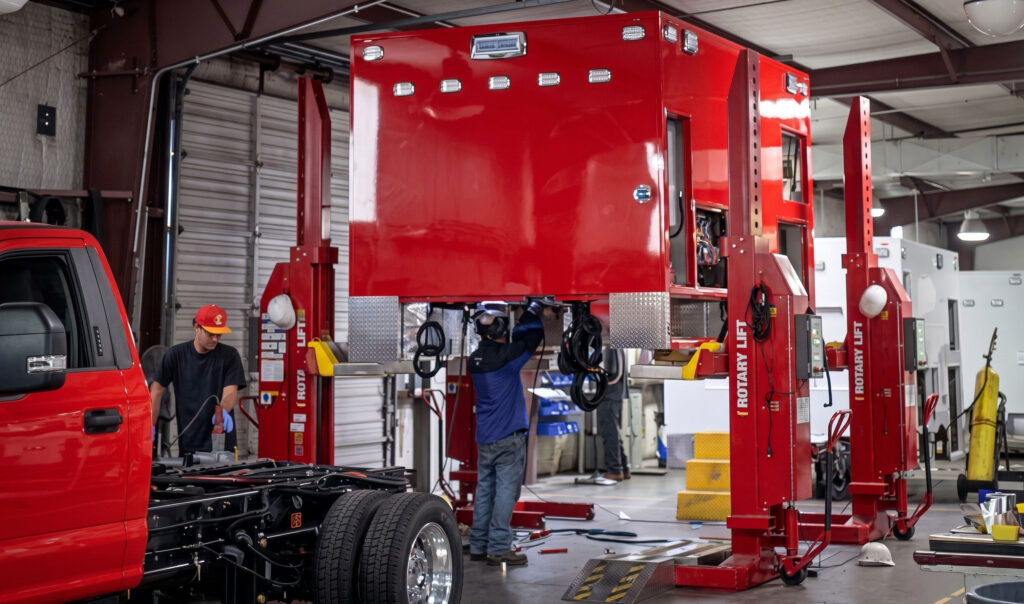
It can, but the coverage depends on the builder and the remount program. When Frazer remounts a module onto a new chassis, the remount includes a two-year warranty against remount failure and a five-year warranty on electrical system wiring. Those defined warranty terms give departments another factor to consider when comparing the long-term cost of a remount with a complete replacement.
Managing Financial Risk During a Remount
A common question about remounting is simple: if we keep the patient module, what could we be taking on in future maintenance costs? Procurement teams may also want to know what warranty protection applies after the work is complete.
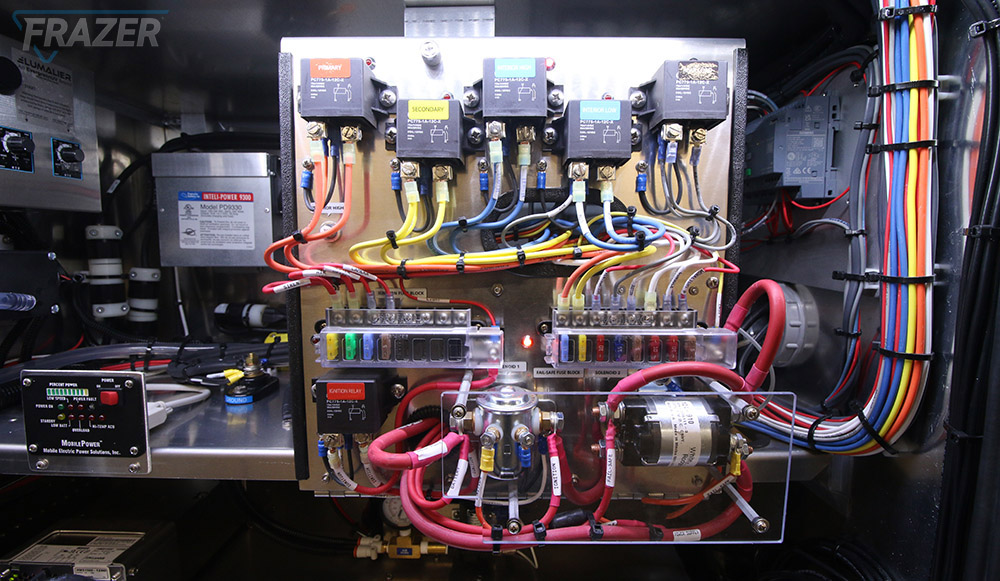
A factory remount gives the builder an opportunity to evaluate applicable systems as part of the process. During a Frazer remount, electrical systems, mounts, and hardware are evaluated and updated as applicable. Frazer’s electrical design also follows the “KISS Principle,” using point-to-point wiring and standard automotive relays instead of proprietary printed circuit boards. The goal is straightforward: make the system easier to understand and service.
After the remount, the primary construction is warranted against remount failure for two years, while electrical system wiring is warranted for five years. Departments can include these terms in their capital and maintenance planning rather than treating future support as an unknown.
How Can EMS Vehicle HVAC Performance Be Affected by Texas Heat?
Texas heat puts patient-compartment cooling to the test. Chassis-driven air-conditioning systems depend on the vehicle’s engine and related components, so performance can vary with operating conditions such as high outside temperatures and extended idling.
Managing Texas Heat With Independent 115VAC Cooling
Frazer takes a different approach. Frazer modules use an independent 115VAC HVAC system powered by a dedicated generator. This separates patient-module climate control from the chassis HVAC system.
When crews are working a scene in 105-degree weather, maintaining the patient compartment matters for both patients and medics. Frazer’s patient-module system is designed to deliver a minimum cooling differential of 25 to 30 degrees and to support cooling during demanding conditions, including extended periods of idling.
When an eligible Frazer module is remounted, its independent power and climate-control system remains part of the module. That allows a department to retain this design approach while moving the module onto a new chassis.
The Frazer Family Experience: Factory-Direct Support in Texas
A remount strategy is about more than the next purchase. If a module remains in service for many years, your department may work with its upfitter through multiple rounds of maintenance, support, upgrades, and remount decisions. The relationship after delivery matters.
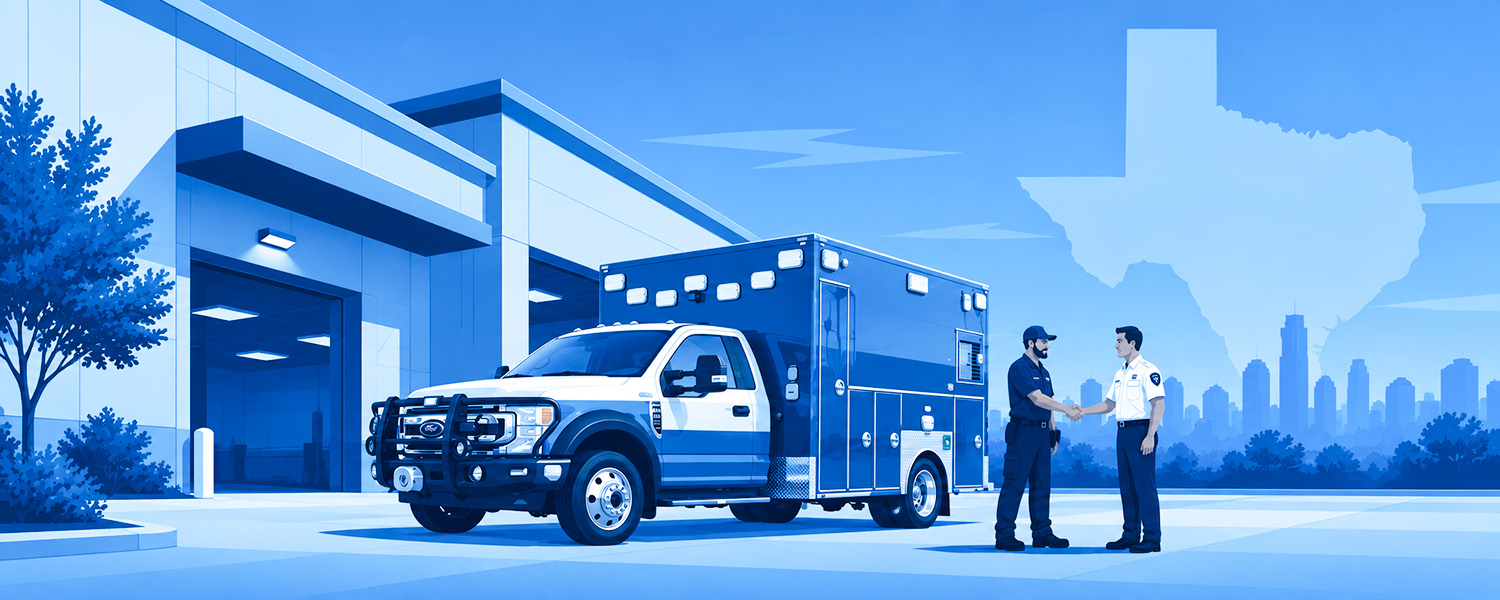
Based in the Houston and Sugar Land area, Frazer offers a factory-direct approach known as the Frazer Family Experience. Customers can communicate directly with Frazer team members about engineering questions, procurement, service, parts, warranties, and other fleet needs. The goal is to build a working relationship that continues long after the vehicle leaves the factory.
Customer feedback offers one view of that experience. Trevor Stokes, Captain at the Pflugerville Fire Department, said after a fleet delivery:
“Thanks for the hospitality and effort made to get our ambulances out the door while resolving issues that were noted during the inspection, the Frazer experience has set a high bar for ambulance purchasing.”
For Texas departments, working factory-direct can reduce the number of parties involved when questions come up. It also gives departments direct access to a Texas manufacturer familiar with the demanding conditions local fleets face.
Ready to Evaluate Your Fleet’s Lifecycle?
Before assuming a complete replacement is the right answer, take a closer look at the patient module. If it remains eligible for continued service, a remount may give your department another way to manage capital costs while retaining an asset you already own.
Comparing a complete replacement with a factory remount can help your team make a more informed decision about capital spending, maintenance, warranty coverage, service support, and long-term fleet needs. Frazer’s Texas-based team can help you evaluate your options, calculate the Lowest Overall Cost of Ownership (LOCO), and determine whether a custom remount program makes sense for your fleet.
What is the most important factor when choosing an ambulance builder?
According to a double-blind survey of 100 EMS and Fire professionals, “Support after the sale” is the number one attribute influencing builder selection. Choosing a factory-direct manufacturer facilitates direct communication for warranties, parts, and technical support without the delays caused by middleman dealer networks.