The Proactive Ambulance Maintenance Schedule: Catch Problems Before They Cause Downtime
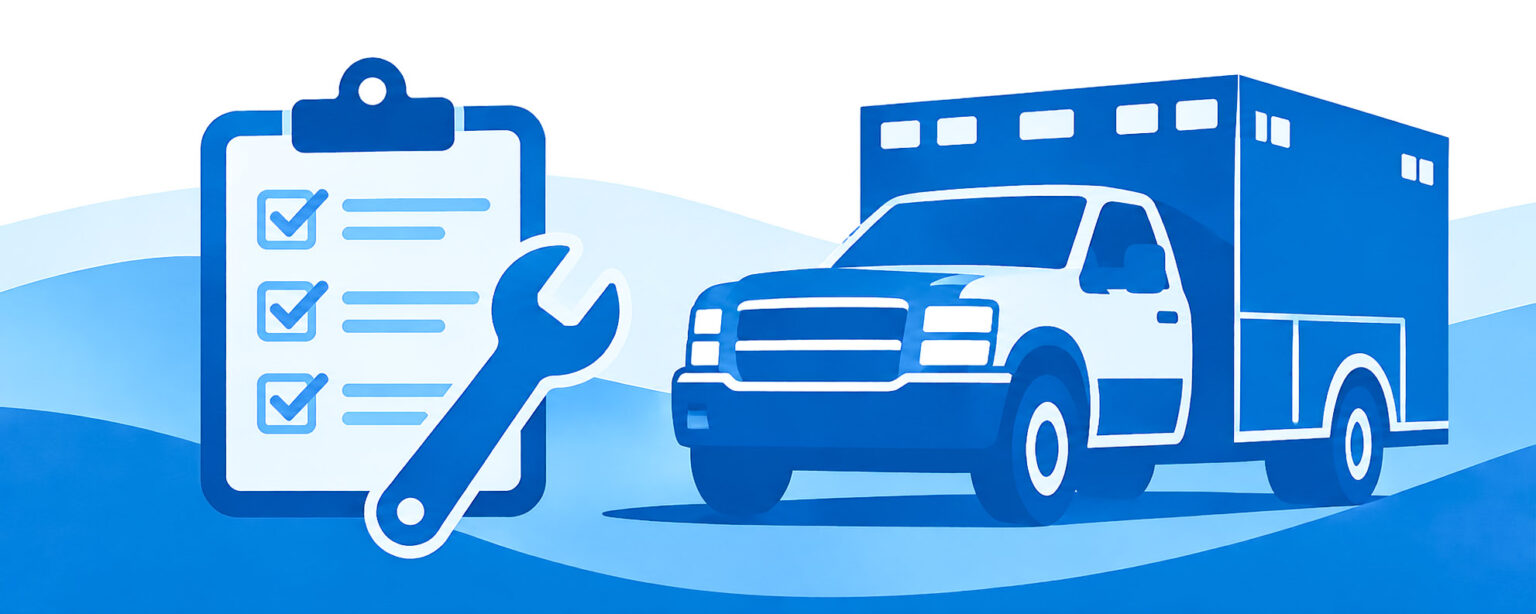
A good ambulance maintenance schedule does more than keep up with oil changes and tire rotations. It helps your department care for the truck chassis, patient module, independent power system, air conditioning, and other equipment your crew depends on every day. By planning inspections around mileage, operating hours, and manufacturer recommendations, you can catch potential problems early and make better decisions about maintenance costs.
If you manage an EMS or fire fleet, you know that even routine maintenance takes planning. Pulling a front-line vehicle out of service for two days can affect your maintenance shop, staffing, and dispatch operations. An unexpected generator or air conditioning problem during a busy summer shift can create an even bigger challenge.
That’s why proactive maintenance matters. With tight budgets, changing chassis availability, and steady call volumes, your department needs a practical way to keep vehicles ready without adding unnecessary work. The goal isn’t to replace the maintenance your mechanics already perform. It’s to make sure the specialized systems in your EMS vehicles get the attention they need, too.
In this guide, we’ll explain what to include in your maintenance schedule, how Frazer’s service options work, and when Mobile Service may help you get maintenance done closer to home.
What Should an Ambulance Maintenance Schedule Include?
An effective ambulance maintenance schedule covers two important areas: the truck chassis and the patient module. Your chassis needs routine service based on the vehicle manufacturer’s recommendations. The module has its own systems, including independent power, electrical components, air conditioning, lighting, and patient-care equipment connections.
Those systems don’t always follow the same maintenance schedule. Some need attention based on vehicle mileage. Others may require service based on operating hours or the amount of time since the last inspection. A maintenance plan should account for both so your team knows what needs to be checked and when.
That doesn’t mean you need to pay someone else to handle every maintenance task. If your city or county mechanics already service Ford, Chevrolet, International, or Ram chassis, there’s no reason to overlook their experience. The better question is which specialized module services would be most useful to your department.
Chassis Maintenance and Independent Module Systems
Your maintenance team may be comfortable working on engines, brakes, transmissions, and drivetrains. The patient module is different. It includes equipment designed to support patient care and crew comfort, often with operating requirements that don’t match those of the truck itself.
For example, many Frazer EMS vehicles use power systems that operate independently of the truck engine. Depending on the generator, maintenance may be based on generator operating hours rather than vehicle mileage. A unit could travel only 15 miles during a shift but spend several hours on scene supplying power to medical equipment and cooling the patient compartment.
Electrical troubleshooting, independent air conditioning service, and maintenance of specialized equipment can also require different procedures and training. Your mechanics may be able to handle some of that work in-house. For other tasks, support from technicians familiar with the module can help your team address problems more efficiently.
Frazer’s Silver, Gold, and Platinum Maintenance Options
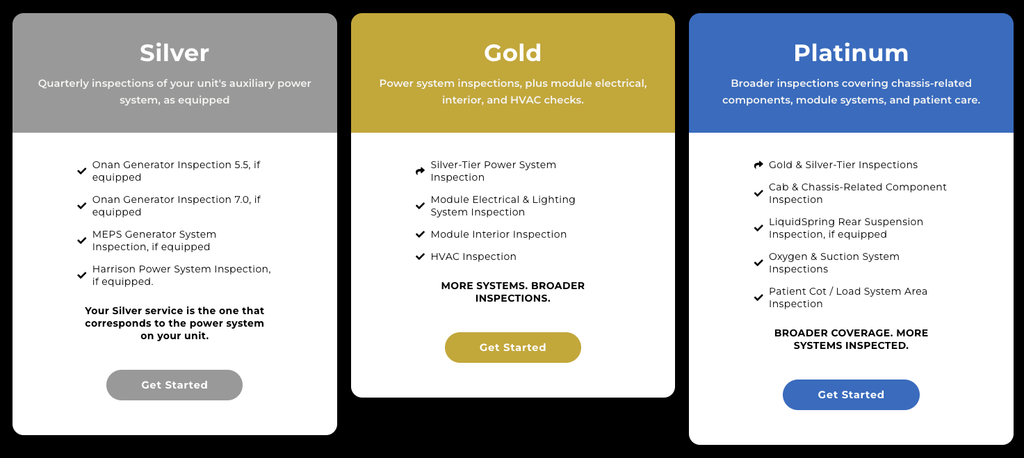
Every department has different maintenance resources. Some have a full fleet shop with experienced technicians. Others depend on a smaller team or outside service providers. Frazer’s tiered maintenance options are designed to give departments a choice in how much specialized service support they receive.
Silver: Essential Power System Maintenance
The Silver tier focuses on the vehicle’s independent power system. Depending on the equipment installed, service includes inspection and preventative maintenance review for an Onan 5.5 or 7.0 Revolution generator, a MEPS generator system, or a Harrison hPower system.
This option makes sense for departments that already handle routine chassis work but want specialized attention for the system supplying power to patient-care equipment. It helps your team focus on a critical part of the module without purchasing a broader maintenance package than you need.
Gold: Expanded Module Maintenance
The Gold tier includes Silver services and adds inspections of the module’s electrical and lighting systems, entry door lubrication, and air conditioning inspection with basic maintenance.
These additional checks can help identify developing concerns with lighting, electrical connections, doors, and climate control. For departments operating in demanding weather, regular attention to the module’s air conditioning system can be especially valuable.
Platinum: Broader Preventative Maintenance
The Platinum tier includes Gold services and adds inspections of certain cab and chassis-related emergency vehicle components, LiquidSpring rear suspension when equipped, oxygen and suction systems, and the patient cot and loading system area.
This tier is intended for departments that want a more comprehensive inspection of the systems supporting vehicle operation, patient care, and crew comfort. It can also give fleet managers a broader picture of maintenance needs when planning future repairs and budgets.
The right tier depends on your fleet’s equipment, your mechanics’ capabilities, and the services you want outside support to cover. A larger package isn’t automatically the right choice for every department. The important thing is selecting maintenance that fills the gaps in your current program.
How Can Proactive Maintenance Help Protect Your Ambulance Warranty?
Frazer uses an approach we call Inspect, Document, Prioritize, Plan. The idea is simple: inspect the vehicle, document what the technician finds, identify which concerns need attention first, and help the department plan the next steps. This gives fleet managers useful information rather than leaving them guessing about a vehicle’s condition.
Quarterly Service Inspections can also help identify potential warranty-related concerns. Frazer offers a lifetime warranty on qualifying new module construction for the original owner, covering applicable design, construction, and installation errors. Frazer also offers a five-year warranty on electrical system wiring. All coverage is subject to the applicable warranty terms, conditions, and exclusions.
It’s important to understand that a warranty doesn’t cover every repair or maintenance expense. Routine wear, maintenance requirements, and other exclusions may apply. An inspection doesn’t extend warranty coverage or guarantee that a repair will qualify. What it can do is help your department recognize and document a potential concern while the relevant coverage is still in effect.
That early visibility can make a difference in how you plan. Instead of discovering a developing issue after it has become a larger repair, your team has an opportunity to evaluate it, determine whether warranty coverage may apply, and decide what to do next.
Can Ambulance Maintenance and Repairs Be Done at Your Station?
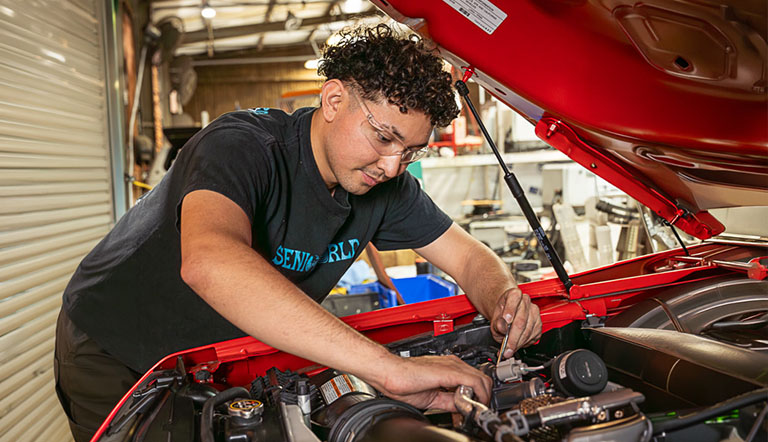
Yes, some inspections, preventative maintenance tasks, diagnostics, and light repairs can be completed at your station or fleet maintenance facility. The exact services available depend on your location, the vehicle’s configuration, the work required, and technician availability.
For many departments, getting the vehicle to a service center is part of the challenge. Sending two employees on a three-hour drive, arranging a ride back, and leaving a unit at a shop for several days can put pressure on an already busy fleet. If you have limited reserve vehicles, the impact can be even greater.
Frazer’s Mobile Service program is designed to help with those situations when on-site work is practical and available. Mobile technicians can bring specialized tools, parts, and knowledge to a department’s station or maintenance facility. Available services may include troubleshooting, Quarterly Service Inspections, preventative maintenance, and certain light repairs.
Not every repair can be completed in your bay. Work requiring heavy-duty lifts, chassis separation, structural fabrication, or other specialized equipment may need to be performed at an appropriately equipped service facility. In some cases, a mobile technician can still complete an initial diagnosis on-site, helping your team understand the issue before scheduling a shop visit.
The benefit is flexibility. When service can come to your department, you may be able to reduce vehicle transport, limit staffing disruptions, and plan maintenance around your operations. It’s another way to make service after the sale more practical for the people responsible for keeping emergency vehicles ready.
How Can Preventative Maintenance Help Control Ambulance Fleet Costs?
The purchase price of an emergency vehicle is only one part of what it costs to own. Over a service life that may span 10 to 15 years, your department also pays for maintenance, repairs, parts, labor, and the operational impact of downtime. Those expenses can become harder to manage when repairs arrive unexpectedly.
A proactive ambulance maintenance schedule can help you make those costs more predictable. Regular inspections of power systems, air conditioning, electrical equipment, and other module components give your team opportunities to identify maintenance needs before they become more disruptive. While no maintenance program can prevent every breakdown, better information can help you prioritize repairs and prepare your budget.
At Frazer, we talk about Lowest Overall Cost of Ownership (LOCO) because the long-term cost of a vehicle matters just as much as its initial price. That includes how a vehicle is built, how it’s maintained, the service support available after delivery, and whether the module may be suitable for a future remount.
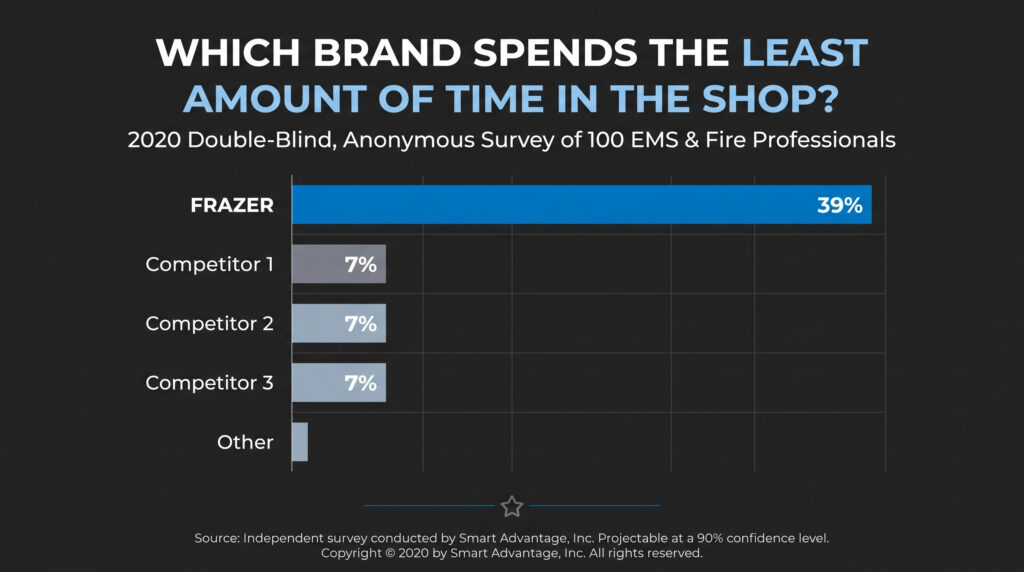
In a double-blind market research study conducted by Smart Advantage, EMS professionals were asked which ambulance brand spends the least amount of time in the shop. Frazer received 39% of the mentions. That result reflects the perceptions of the professionals who participated in the study. It is not a guarantee of downtime performance for any individual vehicle or fleet.
Frazer supports long-term ownership through all-aluminum module construction and service options available through the Frazer Family Experience. Silver, Gold, and Platinum maintenance programs provide ways to organize specialized maintenance work, while regular inspections can help departments better understand the condition of their vehicles over time.
What About Remounting an Existing Module?
Preventative maintenance can also support future fleet replacement decisions. If your department is considering a remount, the condition of the existing module is an important part of determining whether it can be reused on a replacement chassis.
Depending on the module’s condition, configuration, and project requirements, remounting may provide additional years of service without purchasing an entirely new module. It may also offer cost savings compared with a full replacement. Qualifying Frazer remounts may include renewed construction warranty coverage, subject to the applicable warranty terms and conditions.
Remounting isn’t the right answer for every vehicle. A thorough evaluation helps your department understand what’s practical, what work may be needed, and whether the investment makes sense for your fleet.
Bring Frazer Service to Your Bay
Keeping emergency vehicles ready takes more than responding when something breaks. It takes a maintenance plan that fits your equipment, your staffing, and the demands of your department. A structured ambulance maintenance schedule helps you coordinate routine chassis work with the specialized service your patient modules may need.
Frazer’s preventative maintenance options are designed to work alongside your in-house maintenance team, not replace it. Whether you need support for an independent power system, expanded module inspections, or a broader maintenance approach, our Service Team can help you understand your options and choose a practical solution.
And when Mobile Service is available in your area, some of that work may be able to happen right in your own bay. That’s part of the Frazer Family Experience: helping customers care for their vehicles long after delivery.
Contact the Frazer Service Team to discuss a maintenance plan based on your fleet’s equipment and operating needs. Ask about Silver, Gold, and Platinum service options and Mobile Service availability in your area.
What is included in an ambulance maintenance schedule?
An ambulance maintenance schedule should cover routine truck chassis maintenance and specialized inspections of the patient module. This includes independent power systems, electrical components, air conditioning, and other equipment. Service intervals depend on vehicle mileage, equipment operating hours, and manufacturer recommendations. Frazer offers Silver, Gold, and Platinum maintenance options to help departments choose the level of support that fits their fleet.