
Ambulance Remount Cost vs. Buying New: The Financial Math for EMS Leaders
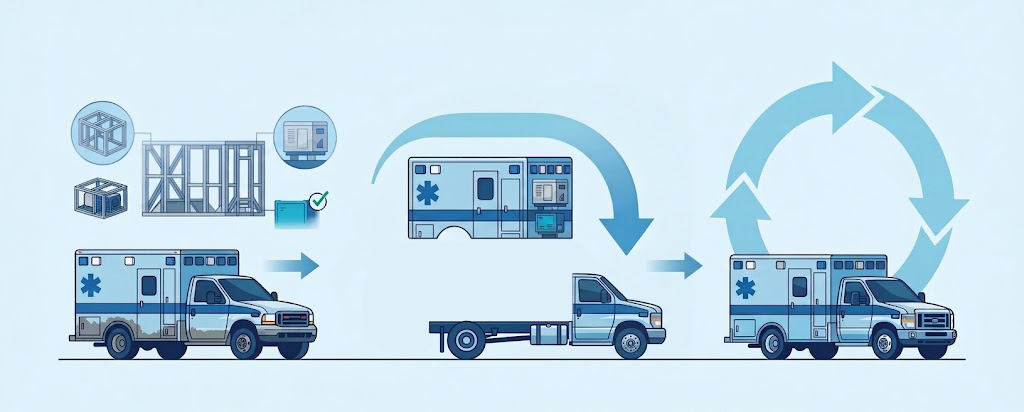
An all-aluminum module with an independent power system may help a department lower its overall cost of ownership, simplify future remounts, and reduce some long-term maintenance demands. It may also give fleet leaders more options when chassis availability and production schedules extend across multiple budget years.
As vehicle prices rise and lead times grow, Fire Chiefs, EMS Directors, fleet managers, and financial leaders are taking a closer look at remounting. They still need reliable vehicles in service, but they also need a plan that works within real capital and operating budgets.
That often leads elected officials and city managers to ask a simple question: “Can we remount the old box?” The answer depends on more than age or appearance. A lower-cost remount may not provide long-term value if the existing module has structural damage, aging materials, or an electrical system that is difficult to integrate and maintain.
A sound decision starts with financial and mechanical data. Fleet leaders should evaluate the condition of the module, its original construction, its service history, and the cost of keeping it in operation over the next 15 to 20 years.
How Much Money Can an Ambulance Remount Save?
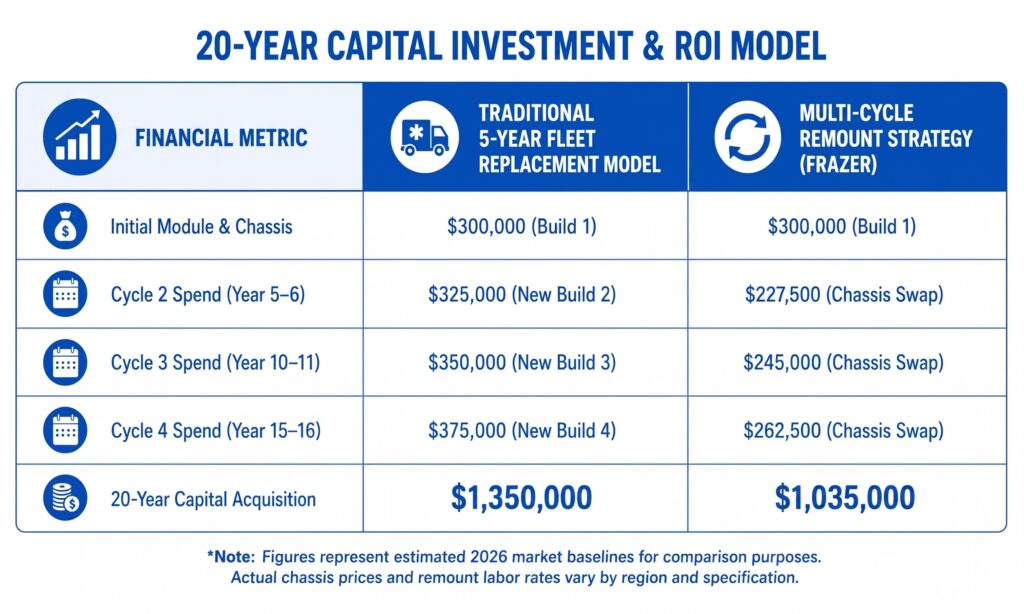
A single remount may reduce upfront capital costs by 30% to 50% compared with purchasing a complete new unit. The potential value may extend further when the module was designed from the beginning to serve through multiple chassis lifecycles.
A module built for repeated remounts can help reduce lifecycle ownership costs over 15 to 20 years. In this type of plan, remounting becomes part of a long-term fleet strategy instead of a temporary solution used only while waiting for another vehicle.
Some departments use remounts to bridge a gap in their replacement schedule. That can be useful, but extending the life of a module that was not designed for additional service cycles may offer limited value. Structural repairs, electrical work, and ongoing downtime can offset part of the initial savings.
The bigger question is how the department approaches fleet replacement as a whole. When leaders look beyond one purchase order and evaluate the lifecycle cost of a custom EMS vehicle, the financial picture changes.
Planning for future remounts during the original build can make replacement cycles more predictable. It can also give Fire Chiefs and EMS leaders a clearer, more structured capital plan to present to city managers, boards, and elected officials.
Can Any Ambulance Module Be Remounted?
Not every module is a good candidate for remounting. The decision should be based on its structural condition, construction materials, service history, electrical system, and compatibility with the replacement chassis.
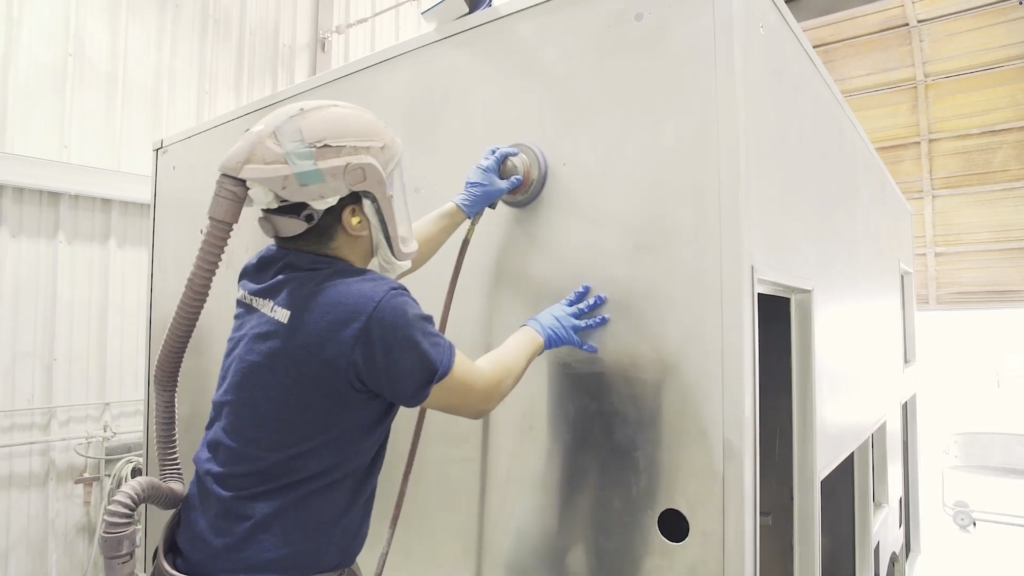
Modules with strong structural construction are generally better suited for additional lifecycles. Frazer modules use wood-free, 6061 T-6 structural aluminum tubing and crash-tested mounting systems designed to support continued service through chassis changes. Frazer also provides a lifetime module construction warranty for the original owner, subject to the applicable warranty terms and exclusions.
Modules built with wood or composite cores may change as they age. Wood may rot, composite materials may fatigue, and years of demanding service may affect the module’s overall condition. These factors do not automatically rule out a remount, but they should be evaluated before a department commits additional capital.
A module intended for a second or third chassis lifecycle needs a durable foundation. Frazer’s structural aluminum construction, crash-tested cabinetry, and module-to-chassis mounting systems are designed with that goal in mind. Any remount decision should still include an inspection of the module’s current condition.
Why Mechanics Might Prefer Point-to-Point Wiring on Remounts?
Electrical integration is one of the most important parts of a remount. Aging multiplex boards can be difficult to connect to the electrical system of a newer chassis, especially when proprietary software or dealer support is needed to diagnose problems.
Fleet managers and maintenance supervisors may be concerned that a remounted vehicle will return with electrical issues their technicians cannot easily troubleshoot. When a module depends heavily on the chassis engine, chassis computer, and proprietary circuit boards, a remount may require more integration work and create additional opportunities for service delays.
Dealer-specific diagnostic tools can also make routine repairs harder to handle in-house. A department may have to schedule outside service for an issue that would otherwise be simple to identify and repair.
A Cleaner Swap with Independent Power and Point-to-Point Wiring
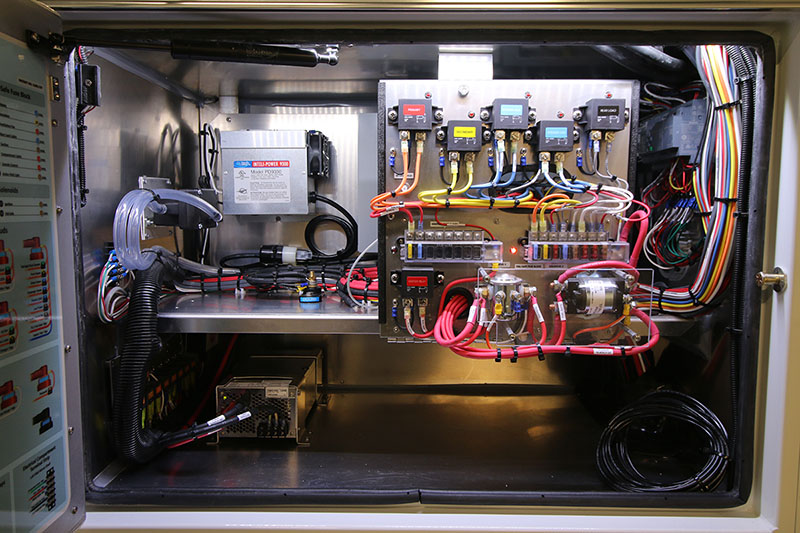
Frazer uses point-to-point wiring instead of multiplex boards. The electrical system uses common relays, fuses, terminal strips, and clearly routed circuits. This approach is designed to make many electrical components easier to understand, inspect, and service.
If a suction pump loses power or a dome light stops working, an in-house mechanic may be able to trace the circuit with a standard multimeter. This can reduce reliance on proprietary diagnostic software and regional dealers for many routine electrical issues.
Frazer’s design also uses an independent 120V AC generator as the primary power source, supported by a redundant 12V DC backup. Because the module produces its own power, it has less dependence on the replacement chassis computer.
During a remount, that separation can support a cleaner and more straightforward chassis swap. Reducing the interaction between the module and chassis electrical systems may also lower the risk of integration problems and extended downtime.
How Reduced Engine Idling May Lower Operating Costs
When leaders calculate remount costs, they may focus first on the capital expense required to acquire the vehicle. Fuel, repairs, maintenance, and downtime also affect the department’s budget and should be included in the comparison.
A remount does not automatically solve ongoing chassis maintenance concerns. With a traditional power system, crews may still need to leave the chassis engine running at high idle to cool the patient compartment and power onboard equipment while the vehicle is on scene.
Extended high-idle operation may contribute to diesel particulate filter buildup and additional wear on emissions-system components. Over time, that can lead to more chassis service, more downtime, and higher operating costs.
Frazer’s generator-powered design separates many module systems from the chassis engine. The independent generator powers onboard equipment and the self-contained 120V HVAC system, which may allow crews to shut down the chassis engine when operating conditions and department procedures permit.
Frazer’s side-mounted HVAC system is comparable to a one-ton residential unit and is designed for replacement in less than one hour under appropriate service conditions. If the HVAC system needs to be replaced during hot weather, a maintenance team may be able to swap it with a spare in less than 60 minutes.
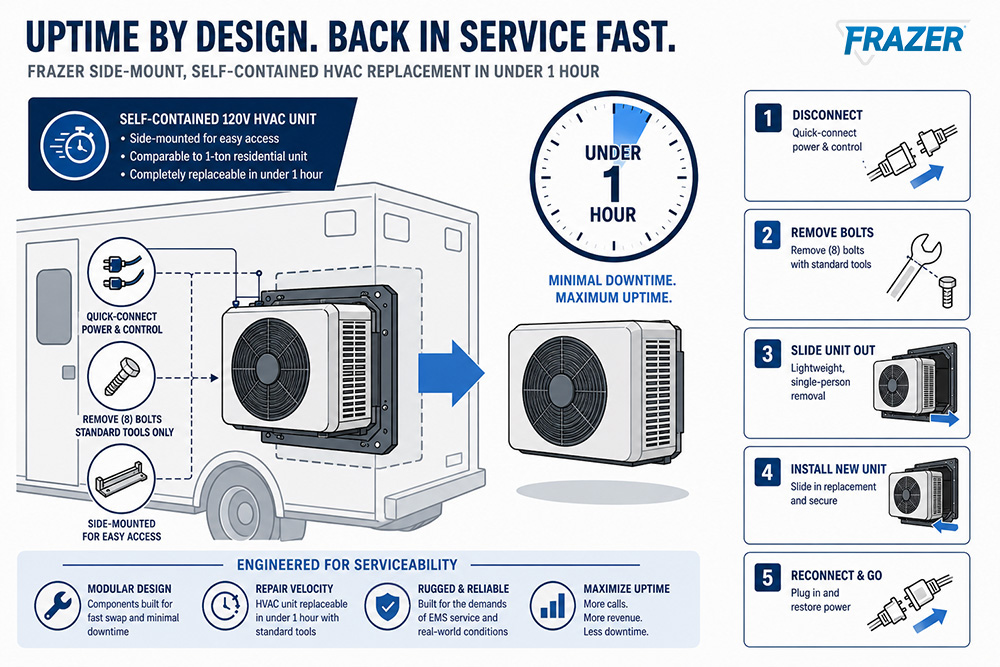
By reducing demand on the chassis engine, a generator-powered module may help lower ongoing maintenance expenses. Some customers have reported fleet maintenance cost reductions ranging from 42% to 60%. Results vary based on vehicle configuration, duty cycle, maintenance practices, operating environment, and other fleet conditions.
For departments evaluating a remount, this means the potential value is not limited to the initial purchase. The right module and power system may also reduce pressure on the annual operating budget.
The 15-Year LOCO Math: Building a Multi-Cycle Fleet Plan
A one-to-one comparison between one new purchase and one remount tells only part of the story. The potential value becomes clearer when leaders calculate the Lower Overall Cost of Ownership, or LOCO, across a 15-to-20-year period. For a broader framework for calculating lifetime fleet costs, review The 2026 Guide to Ambulance Total Cost of Ownership & Fleet Lifecycle Management.
In a traditional replacement model, a department may purchase a complete vehicle, operate it for five to seven years, and then replace both the chassis and module. Over 15 years, that approach may require the department to purchase three complete vehicles and absorb the depreciation of each module.
A multi-cycle remount plan changes that structure. Frazer’s all-aluminum module is designed for extended service, while its independent power system reduces the amount of electrical integration required between the module and chassis. Together, these features may allow the same module to remain in service across more than one chassis.
Frazer modules are designed to be remounted. Some documented units have remained in active service for more than 20 years and have exceeded 1 million miles.
Under this model, the department purchases the custom module during the first vehicle acquisition. After five to seven years, it may purchase a replacement chassis and remount the existing module. Depending on the module’s condition, service demands, and replacement plan, the department may repeat the process around year 10 or 12.
This model can help budget stakeholders see that a remount strategy is more than a response to a long lead time. It may preserve capital, increase the useful life of an existing asset, and demonstrate responsible use of public funds.
Ready to Evaluate Your Fleet’s Future?
Long lead times and rising maintenance costs can make fleet planning difficult. A clear lifecycle review can help your team compare the immediate cost of a remount with the long-term cost of replacing a complete vehicle.
Contact the Frazer team to review your current fleet and discuss a multi-cycle remount strategy built around your budget, maintenance needs, and vehicle availability goals.
How Much Money Can an Ambulance Remount Save?
A remount may cost 30% to 50% less upfront than purchasing a complete new vehicle. It may also lower overall lifecycle costs when the module was designed for repeated remounts. Some customers have reported maintenance cost reductions ranging from 42% to 60%, although results vary based on duty cycle, operating conditions, vehicle configuration, and maintenance practices.