Beyond the Bracket: What Fleet Managers Need to Know About SAE J3043 and Interior Projectile Prevention
Introduction
A loose equipment mount can remove an EMS vehicle from service and require inspection or repair. In some cases, technicians may also discover wear or damage where the mount connects to the vehicle structure.
Many discussions about equipment retention focus on the mounting device itself. The structure supporting that mount deserves equal attention. Years of vibration, moisture exposure, equipment changes, installation practices, and everyday vehicle use can all influence attachment points over time.
When evaluating an EMS vehicle, it is helpful to consider the mounting system and the supporting structure as one complete system rather than as separate components.
The Mount and the Structure Work Together
Crash-tested equipment mounts help secure medical equipment under the conditions defined by the applicable test. Their performance after installation also depends on several other factors, including the attachment method, supporting material, installation quality, vehicle configuration, and ongoing inspection.
Structural materials respond differently to years of service. Moisture, vibration, repeated equipment changes, and environmental conditions can affect attachment points over time. The extent of that wear depends on the construction method, operating environment, maintenance history, and the materials used.
For that reason, departments should evaluate the mount, attachment hardware, wall structure, cabinetry, and module framework together when optimizing your primary workspace and planning equipment retention.
Does an SAE J3043-Compliant Mount Make an Entire Vehicle Safe?
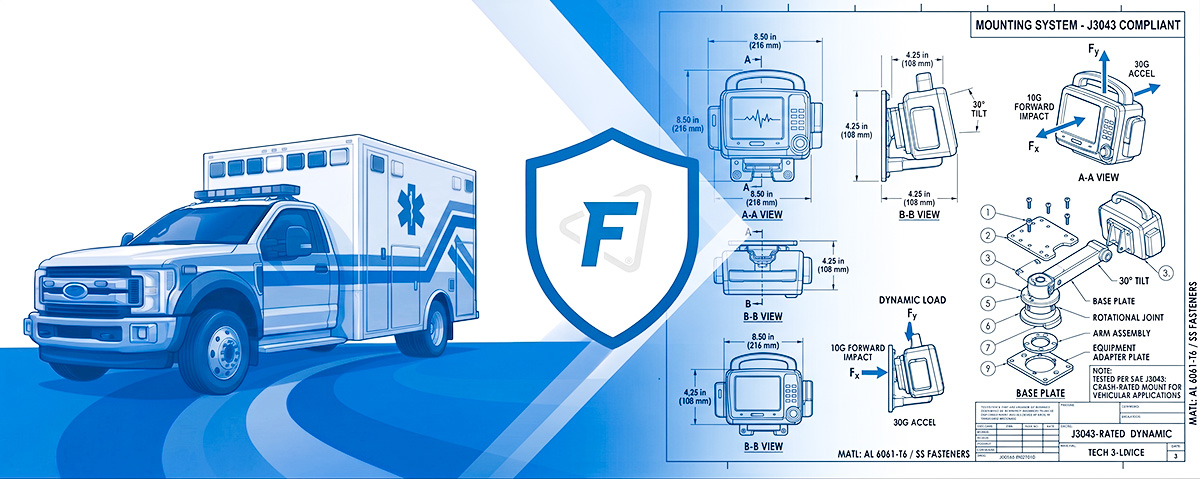
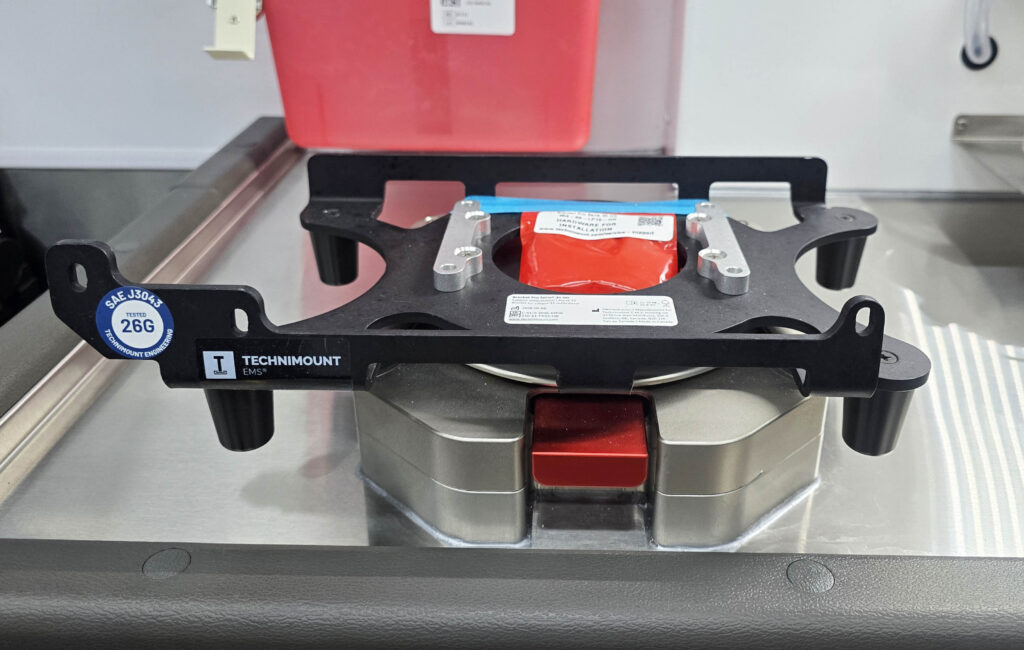
An SAE J3043-compliant mount demonstrates equipment retention under the conditions defined by the applicable standard. It does not establish the safety of an entire vehicle or installation.
Actual performance depends on factors such as the supporting structure, attachment hardware, equipment weight, mounting location, installation method, maintenance practices, and overall vehicle condition.
Before selecting any mounting system, departments should review the available test documentation and verify that the tested configuration matches their intended application.
A Structural Approach to Equipment Retention
Equipment retention extends beyond the mounting device itself. A complete evaluation may include the mounting hardware, attachment points, wall structure, cabinetry, storage systems, and the module-to-chassis connection.
Frazer designs its modules to meet the standards and requirements that apply to the specific vehicle and configuration. Certification and test documentation should always be confirmed for the exact model, options, and installation before publication or purchase.
Wood-Free Aluminum Module Construction
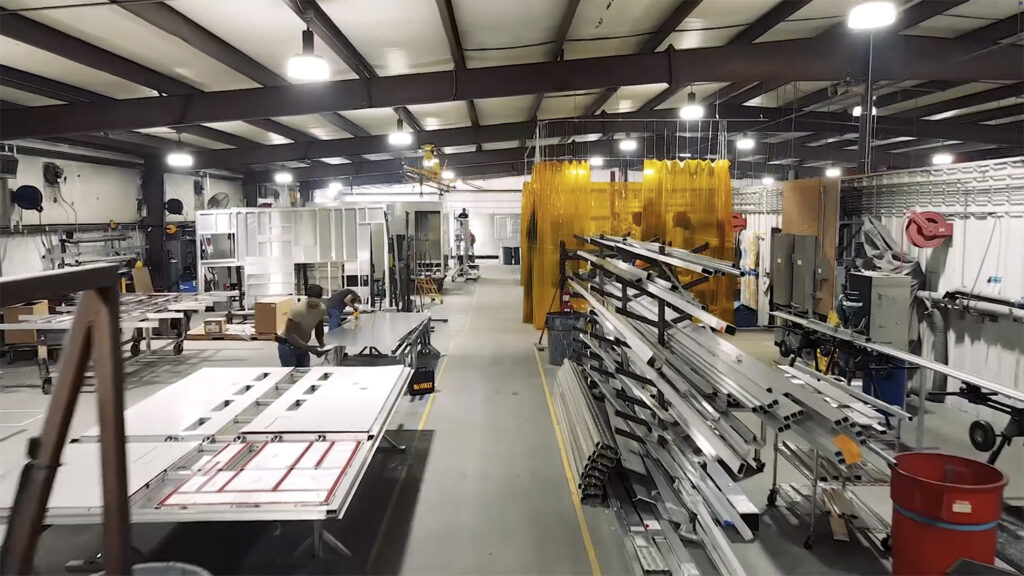
Frazer modules use a wood-free structural cage built from 6061-T6 aluminum tubing.
This design provides a defined structural framework for equipment installation while eliminating wood from the structural cage. Aluminum does not rot, although its long-term condition still depends on engineering, fabrication, installation quality, inspection, maintenance, environmental exposure, and vehicle use.
Equipment should be installed only at approved mounting locations and according to both Frazer engineering requirements and the mounting manufacturer’s installation instructions.
Heavy Equipment Installations
Frazer has engineered mounting solutions for specialty mobile healthcare equipment, including CT scanner installations. For one Mobile Stroke Unit application, Frazer engineers evaluated a mounting system supporting equipment weighing approximately 1,000 pounds.
Structural Design and Lifecycle Planning
Structural materials influence more than initial installation. They can also affect long-term maintenance, repair planning, service life, and the possibility of remounting a module onto a future compatible chassis.
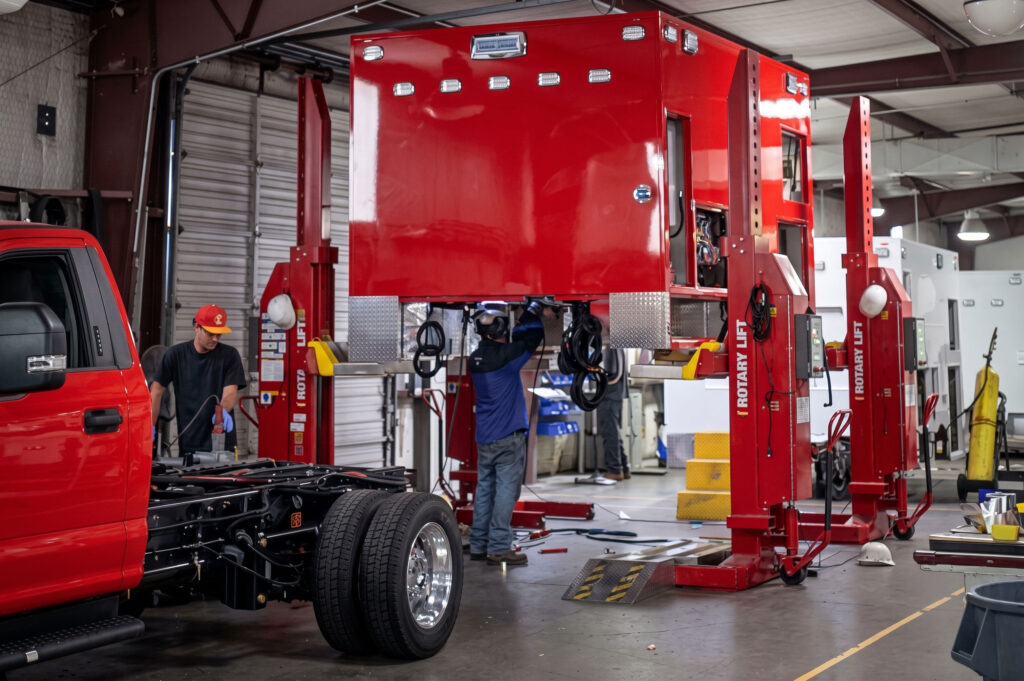
Frazer designs its modules with future remounting in mind. Whether a specific module remains suitable for remounting depends on its structural condition, inspection results, maintenance history, chassis compatibility, regulatory requirements, and the work required to complete the remount.
In some fleet situations, remounting may preserve a portion of the module’s remaining value and reduce certain replacement costs. Actual financial results vary depending on vehicle condition, chassis pricing, equipment upgrades, labor costs, downtime, financing, and the department’s replacement strategy.
Bid Specification Considerations
Departments developing bid specifications may benefit from requesting documentation covering both equipment retention and structural design:
- Useful requests may include descriptions of structural materials, equipment-mounting provisions, cabinetry testing, remounting options, warranty information, and available performance records.
- Departments may also ask bidders to identify the test method used, the tested configuration, equipment weight, mounting location, and documented results for equipment-retention testing. When evaluating remount options, agencies may request information about inspection procedures, compatibility requirements, warranty considerations, recertification requirements, and any modifications that may be necessary.
- Performance records should include available testing, warranty information, service history, and incident data, along with any limitations that apply to those records.
- Bid specifications should ultimately reflect each department’s operational needs and procurement requirements rather than relying on any single construction method as a substitute for documented performance.
Evaluating Retention Beyond the Mount
Equipment retention involves more than selecting a mounting device. The supporting structure, installation method, equipment configuration, maintenance practices, inspection requirements, and available testing documentation all contribute to long-term performance.
Reach out to our expert configurators for more information about Frazer aluminum module construction, equipment-mounting provisions, testing documentation, and remounting process. Final vehicle specifications should always reflect the department’s intended application, operating environment, and procurement requirements.
Does an SAE J3043 bracket make an EMS vehicle safe?
An SAE J3043-compliant bracket addresses one part of equipment retention. The design and condition of the supporting wall also matter. SAE J3043 testing evaluates whether the mount can withstand high crash forces, including forces up to 26G. If the underlying wall or attachment point degrades over time, the bracket may loosen or pull away from the structure, creating a potential projectile hazard.