
Do Ambulances Have Air Conditioning? A Guide to Ambulance Air Conditioners
Picture an August shift in Texas. The pavement is hot, the vehicle has been sitting outside a facility for hours, and the patient module is struggling to stay cool. For crews working in that environment, air conditioning is more than a comfort feature. It affects the space where medics work and patients receive care.
Fleet managers also have to think about what it takes to keep that space cool. Long periods of engine idling can add engine hours, increase wear, and create more maintenance needs over time. That makes climate control an important part of vehicle planning, especially for departments that operate in hot climates.
Industry research has also shown that HVAC matters to vehicle buyers. In our double-blind research, 76% of respondents identified HVAC and air filtration as the top safety feature influencing vehicle selection.
This guide explains how heavy-duty EMS climate-control systems work, where chassis-dependent systems can face limits, and how independent power can reduce reliance on the truck chassis for module cooling.
Why Standard Ambulance AC Can Struggle in the Summer
It is easy to assume that a standard vehicle air conditioner will be enough for the entire EMS vehicle. In very hot climates, that may not always be the case. A dashboard AC is designed mainly for the cab, and cooling a much larger patient module can place different demands on the system.
High temperatures can also make patient care harder. Starting an IV, managing an airway, documenting care, and handling equipment all require focus. A cooler workspace can help crews stay more comfortable while they do that work.
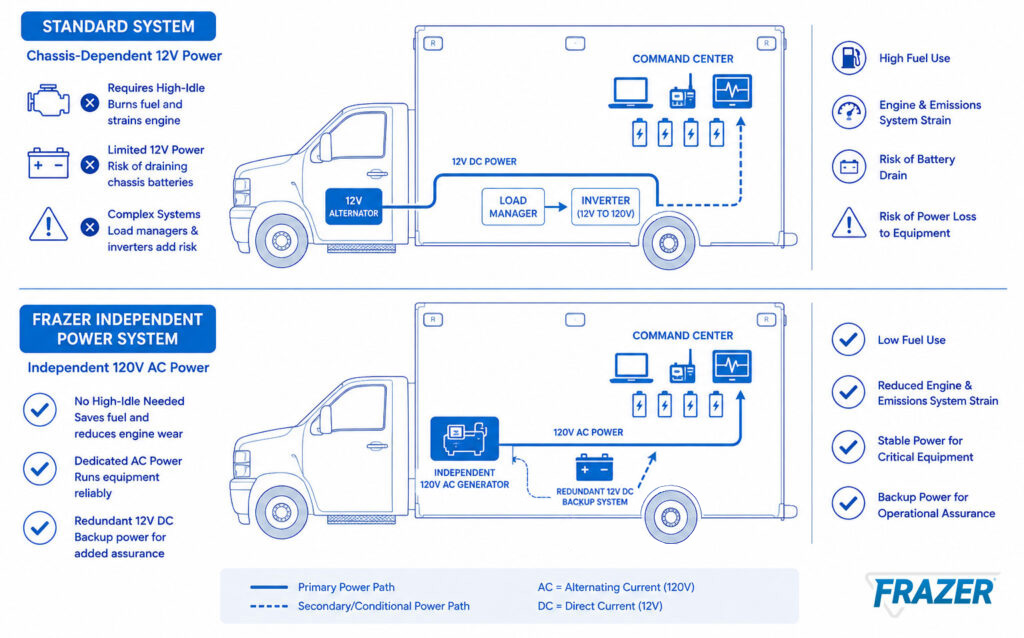
Power source is another important factor. Many traditional ambulance air conditioners rely on 12-volt DC power from the truck chassis. When the vehicle is parked on scene or waiting at a hospital, the engine may need to keep running to support climate control. During long idle periods and high outside temperatures, maintaining the desired module temperature can become more difficult.
How Do Ambulance Air Conditioners Work?
Many standard systems rely on the truck engine or chassis electrical system. Heavy-duty custom EMS vehicles can take a different approach by using an independent generator to power a self-contained 120V air conditioner. This allows the module AC to operate without using the truck engine as its primary power source and can help reduce unnecessary chassis engine hours.
That raises a fair question for fleet mechanics and operations managers: Will a larger AC put more demand on the truck batteries or engine? Frazer uses independent power options, including MEPS, Cummins Onan, and hPower, to separate module power needs from the chassis electrical system.
What does that mean in the field? The 15,000 BTU self-contained air conditioner runs from independent generator power. This means crews may be able to turn off the truck engine entirely while continuing to run the module AC. Less chassis idling means fewer engine hours and may help reduce maintenance tied to extended idle time, including some diesel particulate filter concerns. Over the life of the vehicle, reducing unnecessary idling may also help lower operating costs.
Is the Driver’s Cab Air Separate From the Patient Compartment?
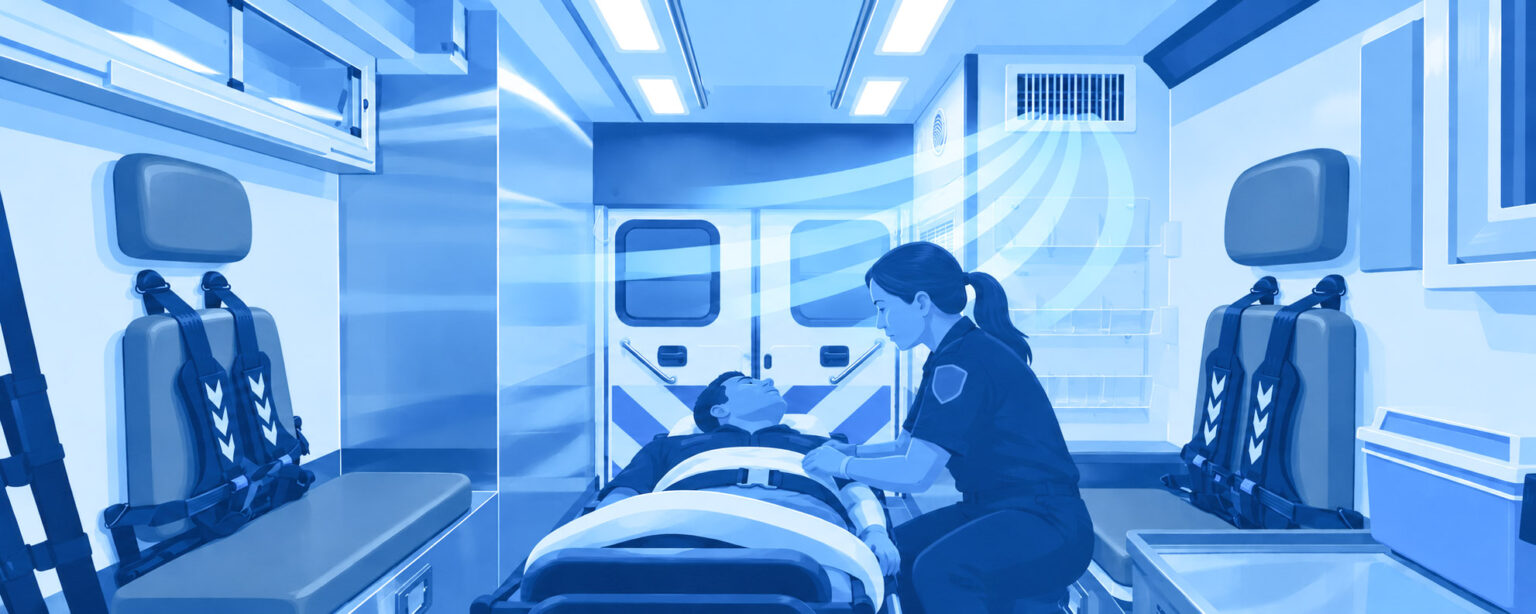
In Frazer vehicles equipped with this setup, the module AC does not share ductwork with the truck cab. The cab and patient module have separate airflow paths, which helps reduce shared recirculated air between the two spaces.
For EMS directors and safety officers, climate control is not only about temperature. Airflow can also be part of the conversation when reviewing infection-control practices and working conditions. Some vehicle designs allow more air to move between the cab and module, while separate systems reduce that shared airflow.
Why does this matter? Frazer’s 120V AC configuration is designed with separate air paths for the patient module and cab. That can support infection-control strategies intended to reduce shared airborne contaminants between those areas. Actual exposure risk depends on many factors, including vehicle setup, ventilation, filtration, PPE, operating practices, the type of pathogen, and other infection-control measures.
Extreme Heat: What Does a 35-Degree Temperature Difference Mean?
Departments in hot climates often want a simple answer to one question: How will the system perform during a Texas summer? Frazer units are designed with high-temperature operation in mind. The 15,000 BTU AC is designed to provide a minimum cooling differential of about 25 to 30 degrees and, under applicable operating conditions, can maintain a temperature difference of 35°F or more between the outside air and the patient module.
A cooler patient module can support crew comfort and create a more controlled environment for some temperature-sensitive equipment and medications. Storage requirements vary by product, so departments should always follow the manufacturer’s instructions for medications, electronics, and other temperature-sensitive equipment.
For crews, the benefit is simple. A more comfortable workspace can make it easier to focus on patient care when outside temperatures climb.
One Altoona Fire Department crew member described the experience this way after operating the unit in hot weather:
“The A/C unit in the summer rocks. We have been between 95° and 100° many days and I take a coat if I’m riding with a patient.”
What Happens if the Generator Fails During a Call?
Independent power naturally raises another question: What happens if the generator stops working? Frazer vehicles include backup power functionality for supported systems. If the primary 120V generator becomes unavailable, the vehicle’s 12V DC system is designed to provide backup power to certain equipment.
The goal is to keep power management simple for crews in the field. If generator power is lost, the 12V backup system can draw from the truck chassis for supported systems. Depending on the vehicle configuration, that can include equipment such as lighting, suction, and other essential 12V systems.
The exact backup capability depends on the vehicle and the equipment connected to the system, so departments should review their final configuration to understand what remains powered during a generator interruption.
Explore Our Guide to EMS Climate Control
Keeping crews comfortable in demanding conditions can take more than a standard dashboard AC. A purpose-built climate-control system can combine independent power with separate cab and module airflow, helping departments reduce reliance on chassis idling while creating a more controlled patient-care environment.
Want to learn more about how Frazer approaches climate control for frontline crews? Explore our Guide to EMS Climate Control, or talk to a Frazer specialist to see how we can keep your crews cool all year round.
How do ambulance air conditioners work?
Many standard systems rely on the truck engine or chassis electrical system for cooling. Frazer takes a different approach. Our self-contained 120V module AC is powered by an independent power system, reducing reliance on the chassis for module climate control. Depending on the vehicle configuration and operating conditions, crews can continue cooling the patient module without using the truck engine as the primary power source. This can reduce unnecessary idling, engine hours, and related chassis wear.