

How to Power and Cool Mobile Healthcare Clinics in Extreme Heat
Extreme heat pushes Florida’s mobile healthcare programs to their limits. When procuring EMS fleets, hospitals must prioritize climate reliability, not just for patient and staff comfort, but to protect sensitive equipment, maintain safe medication temperatures, and withstand long periods of idling.
Mobile Stroke Units and specialty outreach clinics give healthcare systems another way to bring care into the community. However, building a successful program takes more than securing funding, choosing medical equipment, and assembling a clinical team. The vehicle itself has to support the way that team will work every day.
That is where power and climate control become important. A mobile healthcare vehicle designed for long stationary deployments may benefit from systems that do not depend entirely on the truck chassis. Independent power and dedicated climate control can help support the clinical workspace while also making the vehicle easier to operate and service.
The Florida Heat Problem: Planning Beyond Chassis-Based Air Conditioning
Mobile clinics and Mobile Stroke Units may spend long periods parked in the community while clinical teams work inside. In Florida heat, that can place a heavy demand on the vehicle’s cooling system. Depending on the vehicle, outside temperature, system design, and operating conditions, a chassis-based air-conditioning system may have difficulty maintaining the desired temperature during an extended deployment.
That matters for more than comfort. Excessive interior heat can expose medications to temperatures outside their recommended storage range, place added thermal stress on diagnostic equipment, and make working conditions harder on clinical staff. Any of those issues can disrupt the program the vehicle was built to support.
When planning a mobile healthcare vehicle, program leaders should ask a simple question: How will this vehicle maintain the required interior temperature when parked for an extended period? If chassis-based cooling does not meet the needs of the application, an independent HVAC system may be worth considering.
Frazer uses a self-contained 120V HVAC system that is comparable in capacity to a one-ton residential unit. Because the system is powered independently from the chassis engine, it is designed to provide cooling while the vehicle is moving or stationary. Frazer’s HVAC system is engineered to support up to a 35°F temperature difference from ambient conditions, depending on operating conditions and vehicle configuration.
Powering the Mission: Start With the Equipment
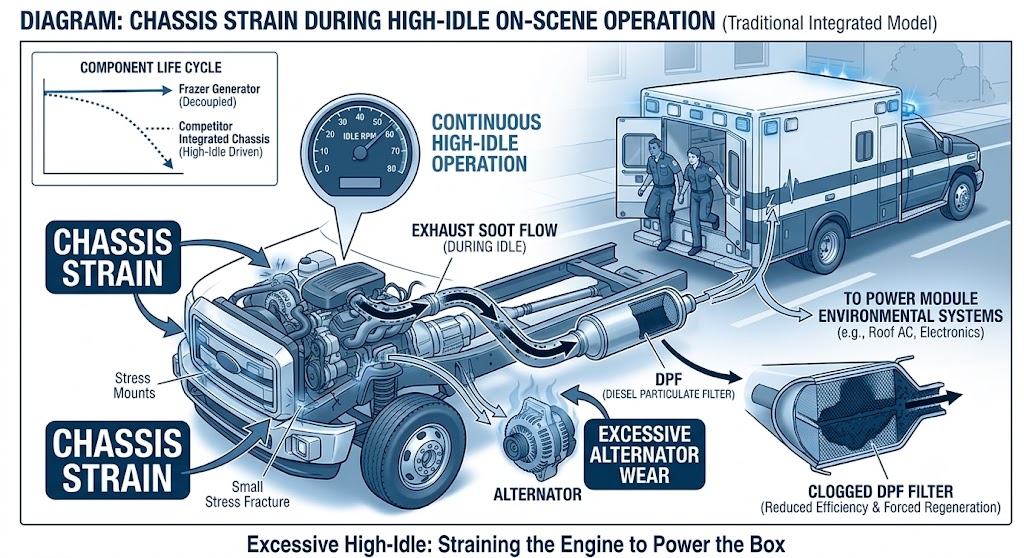
Advanced mobile healthcare programs can require much more electrical power than a typical transport-focused EMS vehicle. Depending on the mission, the vehicle may need to support lab equipment, telemedicine systems, imaging equipment, computers, lighting, HVAC, and other clinical systems at the same time.
That makes the power system an important part of the vehicle specification. Before choosing a configuration, healthcare teams should understand the electrical requirements of their equipment and how those systems will be used in the field. A system that works well while driving may face different demands when the vehicle is parked and operating as a clinical workspace.
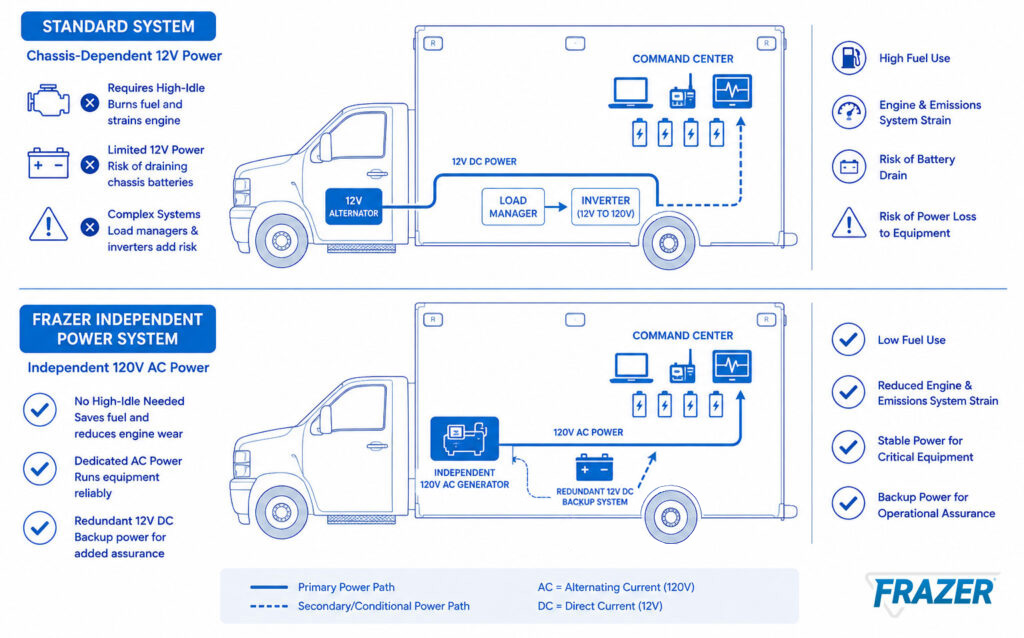
Frazer uses an independent 120V AC generator as the primary power source for the patient compartment. The generator operates separately from the truck engine, which allows the clinical workspace to use dedicated 120V AC power without depending solely on the chassis electrical system.
This approach can also allow patient-compartment systems to continue operating when the chassis engine is turned off. For a mobile healthcare program that may remain in one location for hours at a time, separating the clinical power system from the truck can give the team more flexibility in how the vehicle is used.
The Safety Question: How Is Heavy Medical Equipment Secured?
Power and cooling are only part of the conversation. A Mobile Stroke Unit may carry a CT scanner weighing about 1,000 pounds, along with other specialized medical equipment. Securing equipment of that size inside a moving vehicle requires careful engineering because the mounting system may be exposed to significant forces during a collision.
Healthcare administrators and compliance teams should ask how heavy equipment will be mounted before a vehicle design is finalized. Standard cabinetry or flooring may not be appropriate for specialty equipment without additional structural engineering and testing.
Frazer uses an SAE J3043-compliant CT scanner mounting system developed for mobile applications. Frazer began building Mobile Stroke Units in 2014 and has tested its CT mounting systems beyond 50,000 pounds of force.
Frazer records also show zero recorded module detachments in collisions across nearly 4,500 builds. Those figures provide useful context for healthcare teams evaluating the structural design, testing, and field history behind a specialty mobile healthcare vehicle.
Look Beyond Purchase Price to Fleet Reliability
A specialty mobile healthcare vehicle can require a larger initial investment than a more traditional EMS vehicle configuration. That purchase price matters, but it is only one part of the long-term cost. Maintenance, service access, downtime, equipment life, and future chassis replacement can all affect what the vehicle costs to own and operate over time.
For hospital systems, downtime can have an operational impact as well as a financial one. When a mobile clinic or Mobile Stroke Unit is unavailable, the organization may lose opportunities to provide screenings, treatment, transports, or other community-based services. That makes serviceability an important part of the buying decision.
Frazer refers to this broader view as Lower Overall Cost of Ownership, or LOCO. The idea is straightforward: design the vehicle so common systems are easier to understand, diagnose, repair, and replace when service is needed.
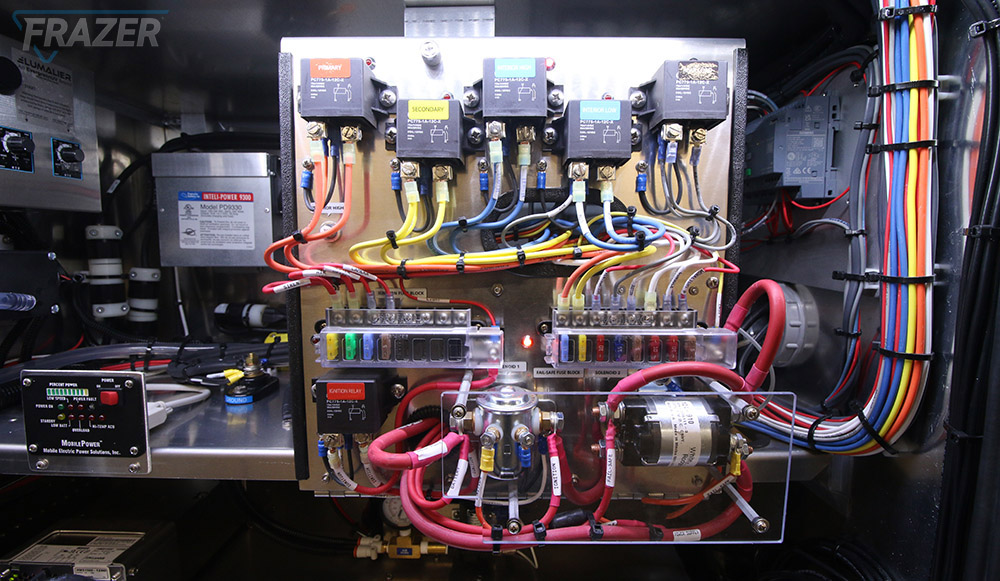
For example, Frazer uses point-to-point wiring with common relays, fuses, and terminal strips in the patient compartment rather than relying on a complex multiplex electrical architecture. This design is intended to help technicians troubleshoot many electrical issues with familiar tools like a multimeter.
Major components are also designed with service access in mind. Depending on the vehicle configuration and service conditions, a side-mounted HVAC unit can be replaced in less than an hour. Easier access does not eliminate maintenance, but it can reduce the time required for repairs and help get a fleet back into service sooner.
Plan for the Next Chassis, Too
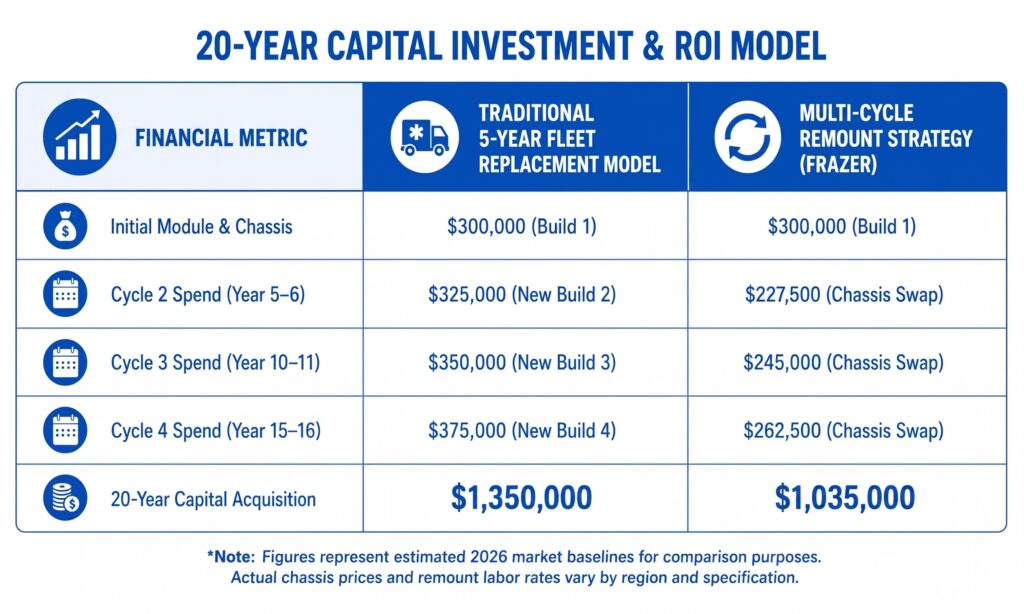
A mobile healthcare program may outlast the original truck chassis. Mileage, operating conditions, maintenance needs, and changing fleet requirements can eventually make chassis replacement necessary even when the clinical module still has useful life remaining.
Frazer modules are designed to support remounting onto another compatible chassis when the condition and configuration of the module make that practical. Instead of automatically replacing the entire vehicle, an eligible module may be reused on a new chassis. This can extend the useful life of the clinical space and may reduce future capital replacement needs.
Build the Vehicle Around the Clinical Mission
There is no single configuration that fits every mobile healthcare program. A Mobile Stroke Unit running advanced imaging equipment has different needs than a community screening clinic, and a vehicle operating in South Florida may face different environmental demands (such as hurricane readiness and severe weather prep) than one working in another part of the country.
The right starting point is the mission. What equipment will the team use? How much power does it require? How long will the vehicle remain stationary? What interior temperature needs to be maintained? How will heavy equipment be secured? Who will service the vehicle when something needs attention?
Answering those questions early helps connect the clinical plan to the vehicle design. Independent power, dedicated HVAC, serviceable electrical systems, engineered equipment mounting, and remount capability are all tools that may help a healthcare organization improve uptime and prepare for the long-term needs of its program.
Planning a Mobile Clinic or Mobile Stroke Unit?
A specialty mobile healthcare vehicle should support the work your clinical team needs to do, not force that team to work around the vehicle. Frazer can help your organization evaluate power, climate-control, structural, service, and equipment requirements based on how you plan to use the unit in the field.
Contact the Frazer Sales Team to discuss your upcoming mobile clinic or Mobile Stroke Unit project. We can help you work through the vehicle configuration and identify options that support your clinical goals, operating environment, and long-term fleet needs.
How do you keep a mobile clinic cool during stationary deployments in Florida?
Standard chassis-tied AC units often struggle during long stationary deployments in extreme heat. A self-contained, residential-style 120V HVAC system is engineered for just such circumstances. These independent units can often maintain up to a 35°F temperature differential from ambient conditions, which helps protect sensitive medications and prevent crew fatigue.