
Hurricane Readiness: Is Your EMS Fleet Ready for Severe Weather?
Severe-weather planning takes more than medical supplies, bottled water, and backup radios. Your vehicles need to be ready, too. Power, cooling, electrical serviceability, and module construction can all affect how well your fleet supports crews and patients during a long hurricane response.
Picture your team 36 hours into a major storm response. The local power grid is down, heat and humidity are climbing, and crews are operating with limited access to normal facilities and repair resources. Those conditions put more pressure on both your people and your equipment.
That is why fleet readiness should include more than what you carry inside the vehicle. It should also consider how the vehicle produces power, keeps the patient compartment cool, handles electrical troubleshooting, and protects the long-term value of the module.
Here are four questions worth asking as you prepare your fleet for hurricane season.
What Happens to an EMS Vehicle’s Electrical System in Floodwater?
Floodwater can damage chassis electrical systems and create problems for vehicle functions that depend on them. A separate source of module power can reduce that dependency.
Driving through flooded roads is dangerous for any commercial chassis. Water exposure can affect wiring, connectors, sensors, and other electrical components. If the patient compartment also depends heavily on the chassis electrical system, a chassis problem can create a larger operational issue.
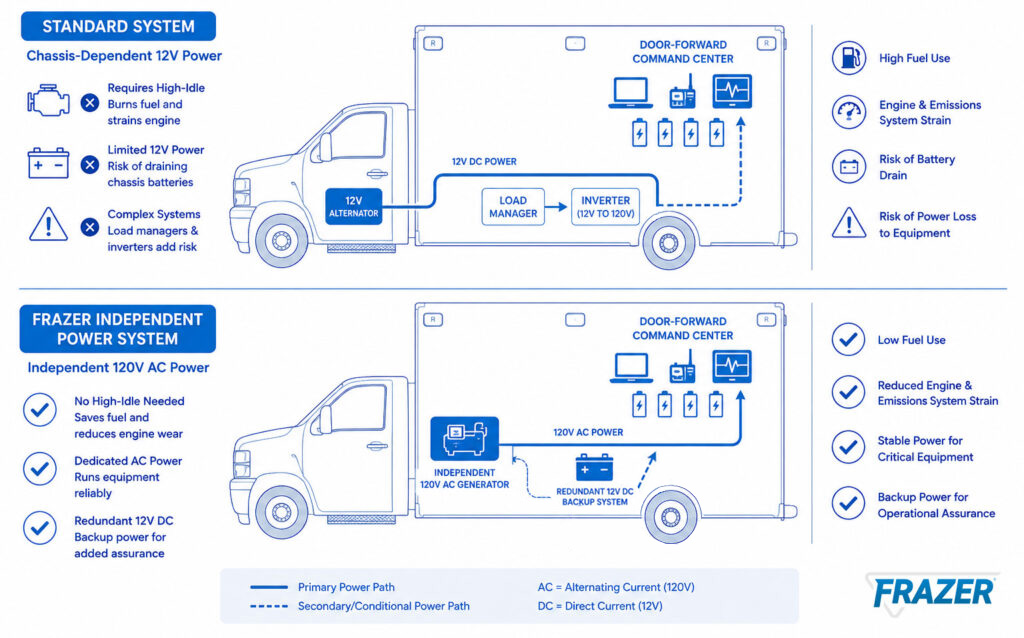
Frazer takes a different approach by separating primary module power from the chassis electrical system. Frazer’s 120V AC power system is designed to supply the patient module independently of the chassis alternator, with a 12V DC backup available for applicable systems.
That separation gives fleet teams another layer of flexibility when chassis electrical problems occur. It does not make a vehicle floodproof, but it can reduce the number of patient-compartment systems relying on one source of power.
Can You Cool the Patient Compartment Without Relying on Chassis-Engine Idling?
Yes. A self-contained HVAC system powered independently from the chassis can cool the module without relying on the chassis engine as its primary source of power.
That matters during hurricane response. Once the storm moves through, crews may still spend hours staging, transporting patients, or supporting recovery operations in extreme heat and humidity.
Extended engine idling can also add wear and maintenance demands to a chassis. Depending on the vehicle and operating conditions, long idle periods may contribute to diesel emissions-system maintenance and additional service needs.
Frazer’s self-contained 120V HVAC system runs from the independent module power system. That gives crews a way to cool the patient compartment without making prolonged chassis-engine idling the only option.
The HVAC unit is also mounted for service access. That reflects a larger Frazer design philosophy: when something needs maintenance, we want fleet technicians to be able to get to it without turning a repair into a major project.
How Easy Is It to Troubleshoot Electrical Problems in the Field?
When repair resources are limited, simple systems matter. A hurricane can leave fleet technicians working from temporary facilities with limited parts, tools, internet access, or outside support.
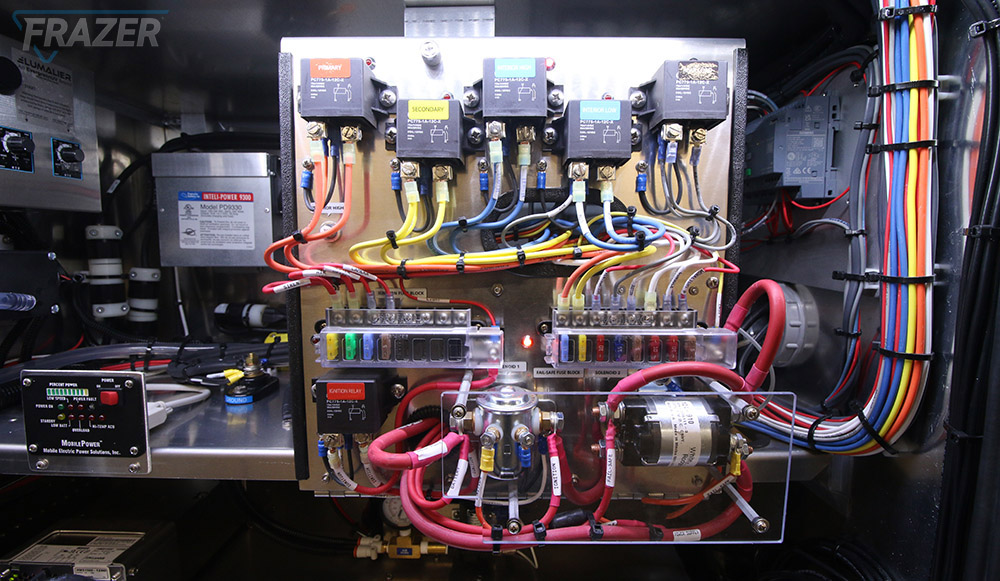
Complex, software-dependent electrical systems may require specialized diagnostic equipment or proprietary components for some repairs. Frazer takes a more straightforward approach to module wiring by using point-to-point circuits with familiar relays, fuses, and terminal strips.
For many electrical issues, that means a technician can work through the circuit using tools they already know. Common components may also be easier to source locally, depending on the part and availability.
And when a technician needs help, they are not on their own. Frazer’s Service Team provides direct support from people who know how Frazer units are built. That commitment to Service After the Sale is part of the Frazer Family Experience.
What Happens to the Module if the Chassis Is Damaged?
A damaged chassis does not always mean the entire unit has reached the end of its useful life. Module construction and condition play an important role in determining what options may be available after a major event.
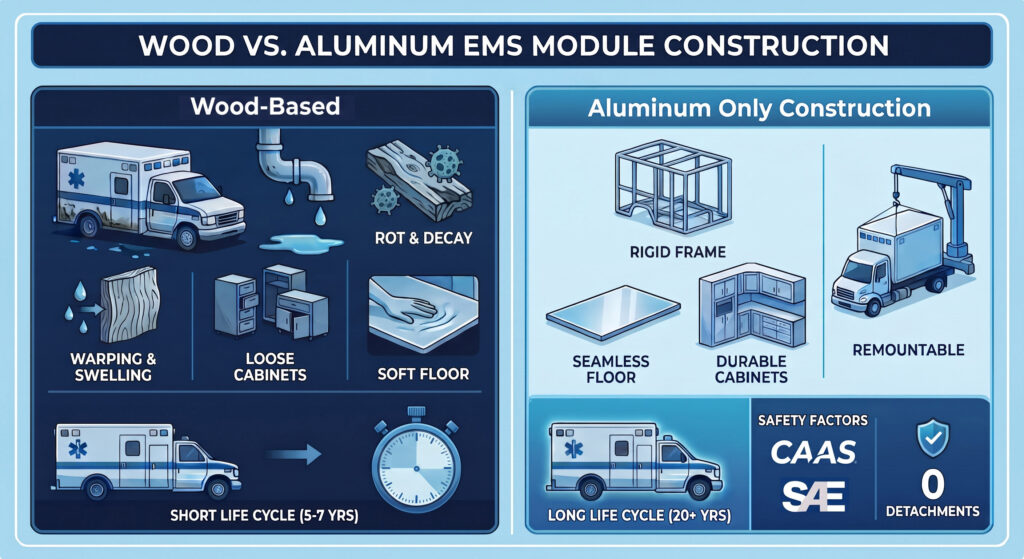
Moisture can create long-term problems for materials that absorb water. Frazer modules use all-aluminum, wood-free construction, which removes wood from the module structure and cabinetry.
If a chassis is taken out of service after a flood or another major event, the module can be evaluated to determine whether remounting is an option. The answer depends on the type of exposure, inspection results, sanitation requirements, structural condition, and other factors.
When a module is suitable for remounting, moving it to a replacement chassis can extend its service life and preserve more of the department’s original investment. That is an important consideration for agencies looking at long-term fleet costs instead of purchase price alone.
It is one reason Frazer focuses on serviceability, durable construction, and remountability as part of the overall ownership experience.
Hurricane Readiness Goes Beyond the Go-Bag
Your EMS vehicles can become critical pieces of mobile infrastructure during a long emergency response. When normal power, facilities, and repair resources are limited, the way a vehicle is designed can make a real difference for the people depending on it.
As you review your hurricane plan and future fleet purchases, ask how each vehicle handles power, cooling, electrical troubleshooting, maintenance, and long-term recovery after damage. Those questions can help you identify dependencies before a storm puts them to the test.
Frazer designs emergency vehicles around independent power, straightforward electrical systems, serviceable components, wood-free module construction, and support that continues long after delivery. The goal is simple: give your team a vehicle that is easier to operate, maintain, and support when conditions get difficult.
Want to talk through your fleet’s severe-weather needs? Let’s talk about your next build.
Does driving through floodwater ruin an ambulance electrical system?
Standard chassis alternators are vulnerable to floodwater shorts, which can disable emergency lighting and patient care equipment. However, EMS vehicles engineered with independent 120V generator power are designed to keep the module and critical life-saving systems operational, even if the chassis electrical system struggles in adverse conditions.