

Why Chassis-Driven EMS Cooling Fails in Florida Summers (And How to Fix It)
Picture a July afternoon in Florida. It is 95°F, the humidity is high, and one of your frontline units is headed back to the shop with an electrical problem after spending long periods idling on scene to keep the patient compartment cool.
For EMS leaders and fleet managers, that is more than an air conditioning problem. Heat can affect crew comfort, medication storage, vehicle availability, and maintenance costs, so the way a cooling system gets its power matters.
It is easy to focus only on the compressor when an AC system struggles. But the design of the vehicle’s power system can also affect how well the patient compartment stays cool while the vehicle is parked.
In this article, we will look at how chassis-driven cooling can affect EMS operations in hot weather and how an independent 120V power system can reduce some of that demand.
The Hidden Cost of Florida Summers: Chassis-Driven AC
One question we often hear is, “Why not just use a bigger AC compressor?” A larger or heavy-duty compressor may help in some situations, but it does not change where the system gets its power.
In many emergency vehicles, patient-compartment cooling depends on the chassis engine, alternator, or battery system. When the vehicle is parked on a scene, crews may need to keep the chassis running at a higher idle to provide enough power for cooling and other electrical loads.
That extra idle time adds engine hours and places more demand on chassis components. Prolonged idling can also contribute to diesel particulate filter loading, higher under-hood temperatures, and additional alternator load.
For a fleet manager, the question is simple: does it make sense to use the chassis engine for stationary electrical and cooling loads if another power source can do that job? Over the life of the vehicle, those added engine hours and electrical demands may affect maintenance needs and operating costs.
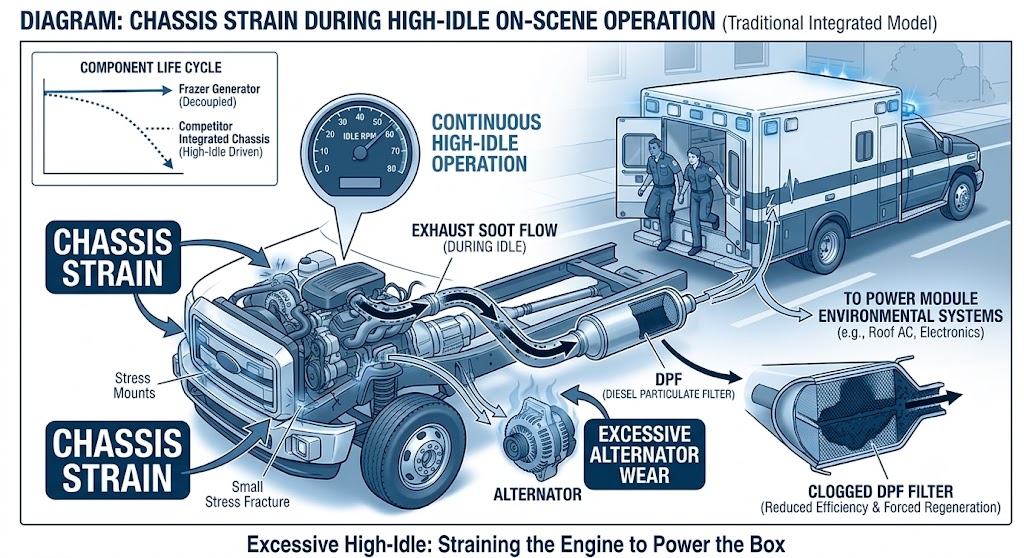
Why can EMS vehicle AC struggle while idling?
Some EMS vehicle AC systems depend heavily on the chassis engine and alternator. During long periods of idling in extreme heat, that can increase electrical demand, add chassis engine hours, and put more stress on components such as the alternator.
How Independent Power Can Reduce Chassis Demand
Frazer uses a different approach. Our patient module is built around an independent 120V AC power system, with generator options that include MEPS and Cummins Onan.
This design separates many patient-module electrical loads from the chassis electrical system. While the vehicle is parked, the independent power source can run module systems without depending on the chassis engine for the same job.
Fleet managers sometimes ask, “Doesn’t a generator just give my mechanics another engine to maintain?” That is a fair question. A generator does require routine preventive maintenance, including oil and filter changes.
The bigger question is what that maintenance replaces or reduces. Fleets can compare generator service needs with the costs tied to chassis idle time, alternator replacement, added engine hours, and other wear associated with powering stationary module loads from the chassis.
Independent power is designed to reduce the need for chassis high-idling while the vehicle is parked. It also gives the patient module a separate source of power, so some chassis electrical issues may have less effect on module cooling and electrical operation, depending on the fault and vehicle configuration.
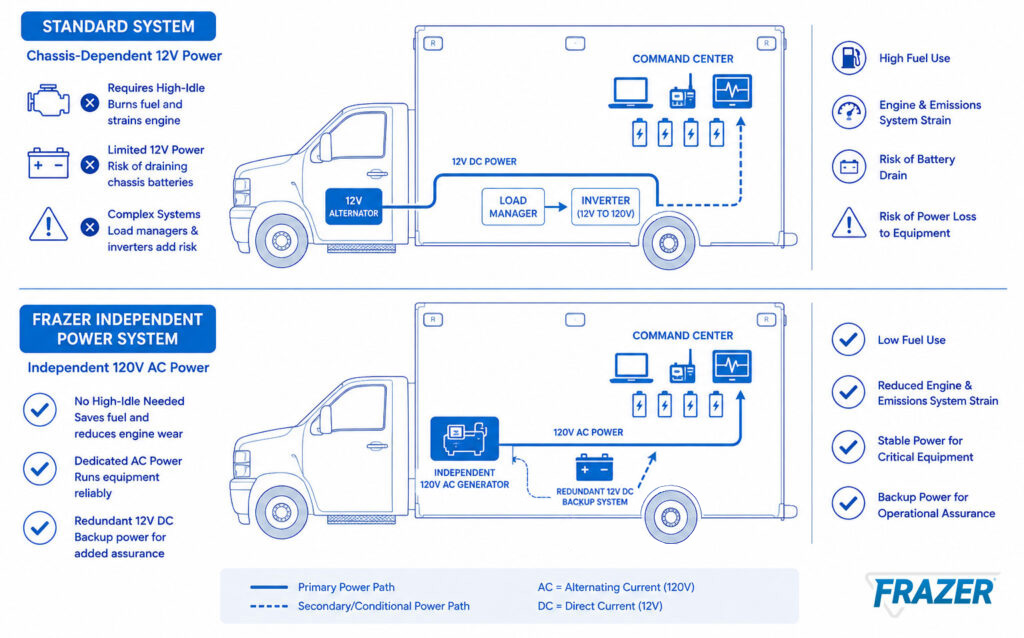
How can independent generator power help control fleet costs?
Independent generator power can reduce the need to keep the chassis running at a high idle just to operate patient-module systems. Less chassis idle time may mean fewer engine hours and less demand on some chassis components.
Some Frazer customers have reported maintenance cost reductions ranging from 42% to 60% after moving to a Frazer fleet. Actual results will vary based on fleet size, duty cycle, maintenance practices, vehicle age, and other operating conditions.
Built for Hot Conditions: Up to a 35°F Temperature Differential
Florida heat does not stop when the vehicle stops moving. For crews working long scenes, cooling performance while parked can matter just as much as cooling while driving.
Frazer’s 120V electrical system is designed to power a self-contained, residential-style AC unit in the patient module. Instead of relying on a traditional chassis-driven automotive AC setup for the module, the system has its own 120V power source.
The Frazer HVAC system is engineered to maintain up to a 35°F temperature difference from outdoor conditions. This gives crews a system designed to keep cooling whether the vehicle is moving down the highway or sitting on a scene.
The goal is straightforward: provide a more stable environment for patients and crews while supporting the temperature needs of medications and equipment. In a Florida summer, that can make a meaningful difference during long calls.
Designed for Service: HVAC Replacement in Under an Hour
Every mechanical system will eventually need service. For a fleet manager, the bigger issue is often how long the vehicle stays out of service when that happens.
Some integrated HVAC systems can require major disassembly or specialized parts to complete a repair. That can mean removing interior components, waiting for a dealer appointment, or tracking down proprietary electronics before the vehicle can return to service.
Frazer designs around serviceability. The HVAC unit is self-contained and mounted so technicians can access it from the side of the module instead of tearing into the interior ceiling for many types of service.
Frazer also uses point-to-point wiring with common relays, fuses, and terminal strips in an accessible exterior electrical compartment. This approach allows technicians to diagnose many electrical issues with familiar tools, including a standard multimeter, and use commonly available replacement components when appropriate.
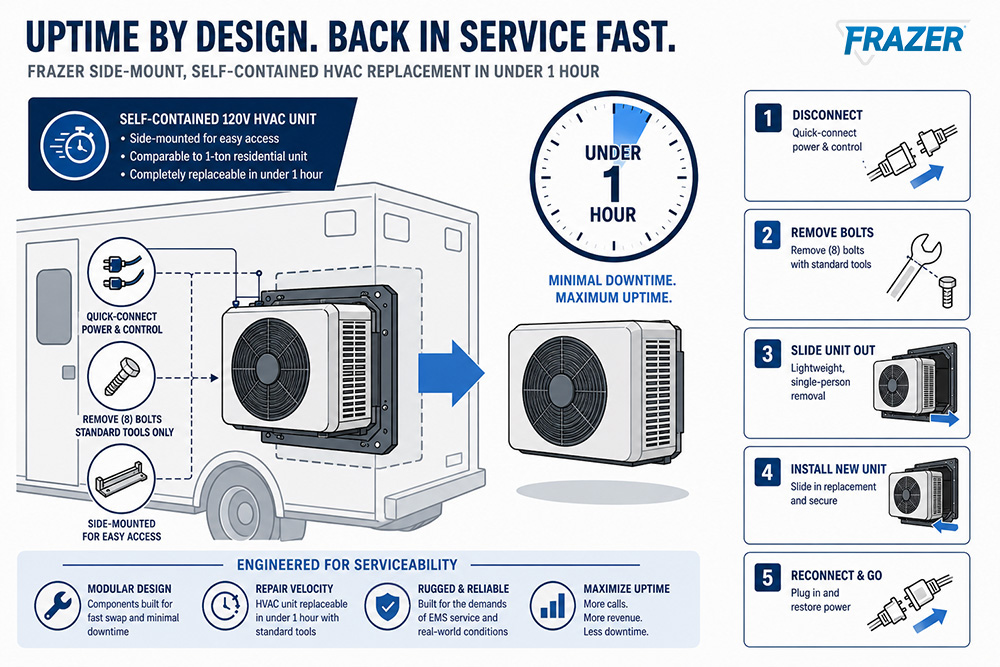
How fast can a mechanic replace a Frazer HVAC unit?
A Frazer self-contained 120V HVAC unit can typically be replaced in under an hour when the correct replacement unit, tools, and working conditions are available. The side-mounted design allows a fleet technician to remove the existing unit and install a replacement without taking apart large sections of the patient compartment.
Looking Beyond Purchase Price
Another question we hear is, “Why does a Frazer cost more upfront?” Purchase price matters, but as detailed in our guide to Florida EMS fleet procurement and extreme weather reliability, it is only one part of what a vehicle costs a fleet over its working life.
Chassis idle time, maintenance, repair time, vehicle downtime, and replacement cycles all affect long-term cost. Frazer’s Lowest Overall Cost of Ownership, or LOCO, approach looks at those costs together instead of focusing only on the initial purchase.
Independent power is designed to reduce unnecessary demand on the chassis during stationary operations. Frazer’s aluminum, wood-free module construction also supports remounting, allowing many customers to move an existing Frazer module onto a new chassis rather than replacing the entire unit.
When fleet leaders look at engine hours, service time, module life, remount opportunities, and vehicle availability together, the financial picture can change. Some Frazer customers have reported fleet maintenance cost reductions between 42% and 60%, although results depend on each fleet’s operation and maintenance practices.

The Bottom Line
Florida summers are hard on emergency vehicles, and cooling problems can affect far more than comfort. The way the patient module gets its power can influence chassis idle time, electrical demand, serviceability, and long-term fleet costs.
Frazer’s independent 120V power architecture is designed to give the patient module its own source of power, reduce reliance on chassis high-idling, and make common service work easier for fleet technicians. It is a different way to solve the problem, built around keeping crews supported and vehicles available for service.
Tired of tearing apart your fleet to fix complex AC issues? See how a chassis-independent Frazer vehicle can support cooling, serviceability, and vehicle availability in demanding conditions. Connect with a Frazer Account Executive today.
Why does an EMS vehicle AC fail while idling at a scene?
EMS vehicle AC systems often fail at idle because they rely on the chassis engine and alternator for power. In extreme heat, prolonged high-idling overworks the truck’s electrical system, which can lead to alternator burnout, weak cooling performance, and premature chassis engine wear.