
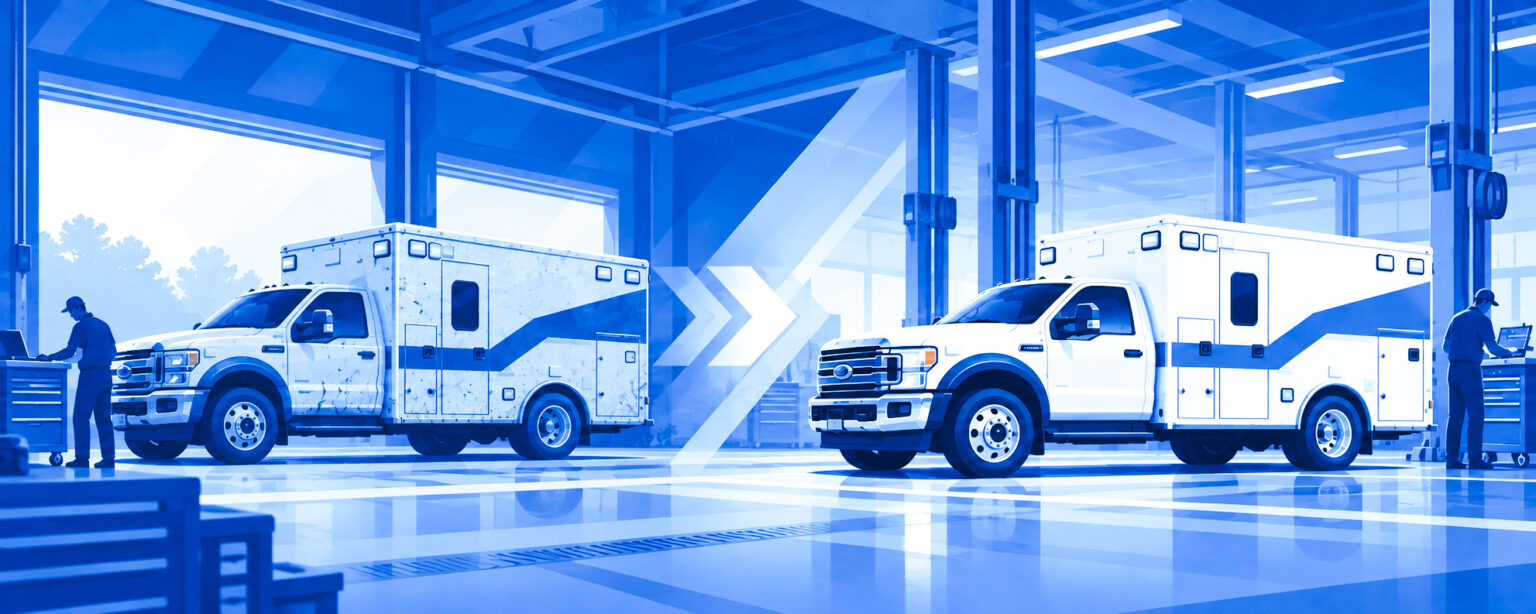
Maximizing Fleet ROI: Remounting vs. Replacing Medical Vehicles
Every fleet replacement comes with a big question: How do you get the most value from your budget without compromising the vehicles your crews depend on? Rising chassis costs, tight budgets, and long procurement timelines make that question even harder for fleet directors and financial decision-makers.
Replacing an entire medical vehicle every five to seven years may seem like the simplest approach, but it is not always the most cost-effective one. If the patient care module is still in good condition, remounting it onto a new chassis may help your department get more years of service from its original investment. Here is what to consider when comparing the cost of remounting with the cost of buying new.
Is It Cheaper to Remount a Medical Vehicle or Buy New?
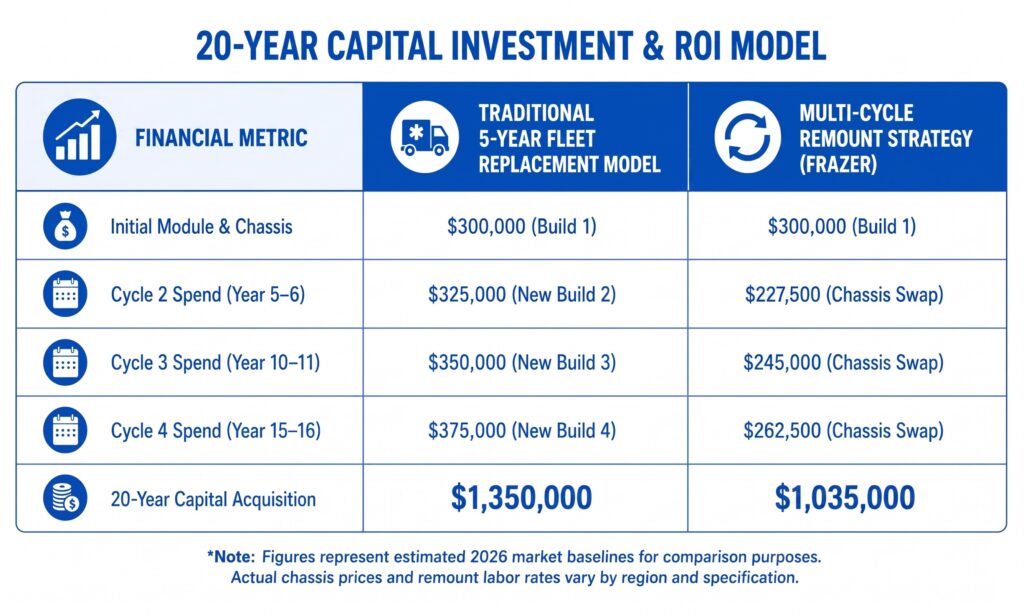
In many cases, remounting an existing medical module onto a new chassis costs less upfront than purchasing a completely new vehicle. It may also lower your total cost of ownership over 15 years or more. The actual savings depend on the condition of your module, the price of the replacement chassis, the refurbishment work needed, and how the original vehicle was built.
That last factor matters. A durable module built with long-term service in mind gives your department more options when the chassis reaches the end of its planned service life. Instead of automatically replacing the entire unit, you can evaluate whether the patient care module is ready for another round of service.
Why the Traditional Replacement Cycle Can Get Expensive
Many departments operate a medical vehicle for five to seven years before replacing it. That schedule can make sense for the chassis, especially in demanding EMS operations. But the chassis and patient care module do not always wear out at the same rate.
When you replace the entire vehicle because the chassis has reached its service limit, you may also retire a module that still has years of useful life. That means spending capital dollars on another patient compartment when your existing one may still be a good investment. Those dollars could otherwise support staffing, training, equipment, community paramedicine initiatives, or other department priorities.
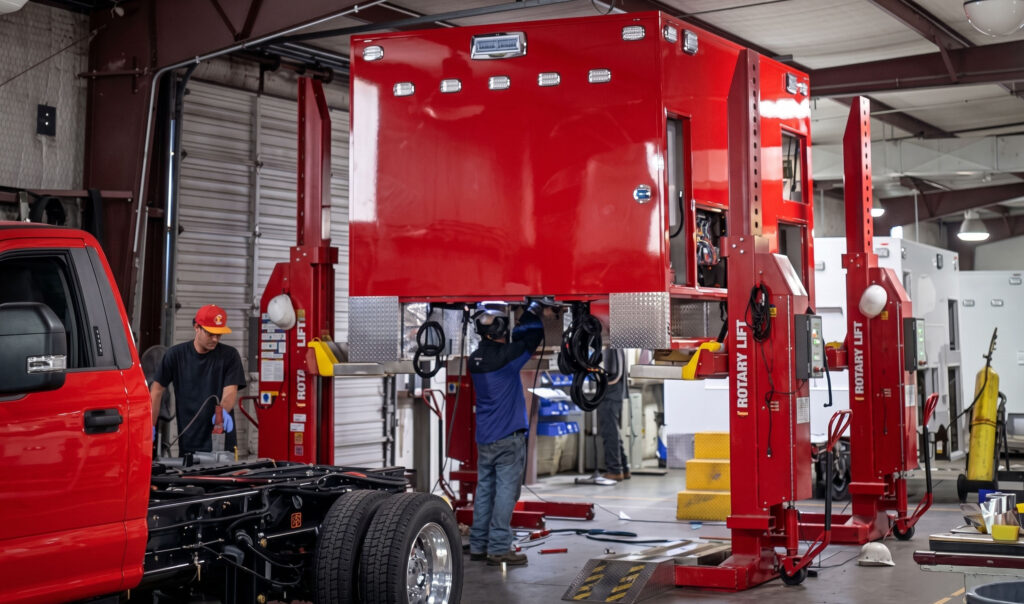
Remounting offers another path. By moving a serviceable module to a replacement chassis, your department can continue using an asset it has already paid for while keeping its fleet aligned with operational needs.
Look Beyond the Purchase Price
When departments compare bids, the initial purchase price naturally gets a lot of attention. A standard vehicle may look like the more affordable choice when the decision is based on what it costs today. But a lower purchase price does not always mean a lower cost over the vehicle’s working life.
Frazer encourages departments to consider the Lowest Overall Cost of Ownership, or LOCO. This approach looks at the bigger financial picture, including the original purchase, maintenance, refurbishment, chassis replacement, and expected years of service. It helps answer a more useful question: What will this fleet investment cost your department over time?
Consider a 15-to-20-year planning period. One department might purchase three complete vehicles as each chassis reaches its replacement date. Another might purchase a custom module once, then remount it onto new chassis as needed. If that module remains in good condition and each remount makes financial sense, the second approach may reduce how often the department pays for a new patient compartment.
Across a large fleet, those avoided purchases can add up. Depending on fleet size, replacement schedules, remount costs, and actual operating expenses, the cumulative savings could reach millions of dollars. The key is to compare realistic lifecycle costs rather than assume either approach is always cheaper.
Is Your Existing Module a Good Candidate for Remounting?
Not every medical module should be remounted. Before making that decision, your department needs to understand how the module was built, how it has been maintained, and what condition it is in today. Structural wear, damaged flooring, loose components, and moisture-related deterioration can all affect the cost and practicality of a remount.
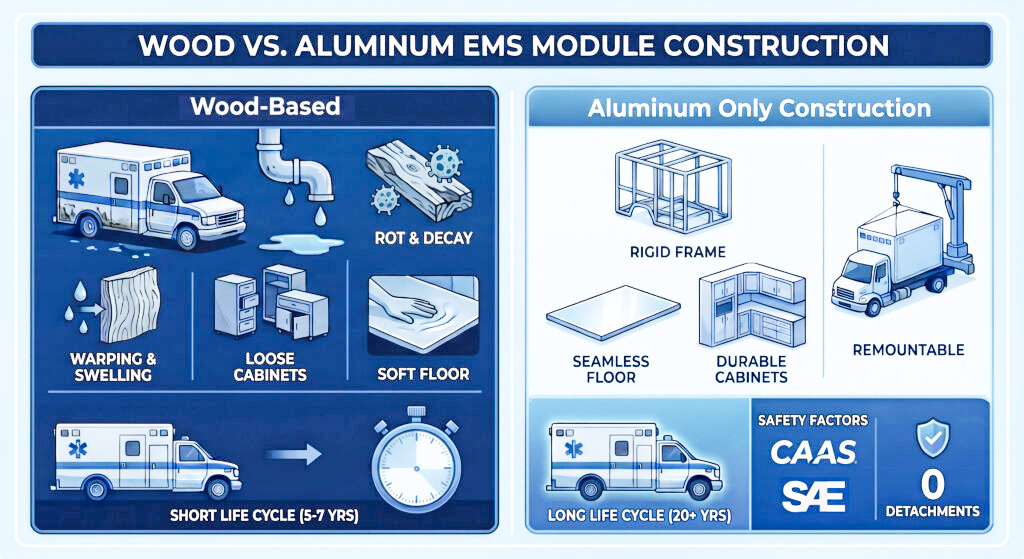
Construction materials play an important role. Some wood-based materials can absorb moisture after repeated exposure to fluids or environmental conditions. Depending on the material and how it is protected, that moisture can contribute to swelling, deterioration, or other problems. If the damage affects critical components, repairs may become expensive enough to change the financial case for remounting.
This is why remount planning should start when you purchase the original vehicle, not when the chassis is ready to be replaced. Choosing materials and construction methods intended for long service can help preserve your options years down the road.
How Frazer’s Wood-Free Construction Supports Long-Term Value
Frazer builds its medical modules with long-term service and future remounts in mind. Our structural, cabinetry, and subfloor designs do not rely on wood-based construction materials. The base frame uses 6061-T6 aluminum structural members, while the subfloor features a polycarbonate core.
These material choices help reduce concerns associated with moisture damage to wood, including rot, warping, and splintering. They do not eliminate the need for maintenance or inspections, but they give departments a durable foundation for evaluating future remounts. When the module remains structurally sound and compatible with a replacement chassis, keeping it in service may be a practical choice.
How Many Times Can a Medical Vehicle Be Remounted?
There is no single number that applies to every vehicle. The answer depends on the module’s construction, maintenance history, structural condition, and compatibility with future chassis. Wood-free, all-aluminum modules are often designed with three to four remount cycles in mind, although every remount should be evaluated on its own merits.
With proper care and refurbishment, some custom medical modules built for extended service have accumulated more than 1 million miles across multiple chassis lifecycles. That kind of service life can make a meaningful difference in a department’s long-term fleet budget, provided the ongoing maintenance and remount costs remain reasonable.
What About Maintenance Costs on an Older Module?
It is a fair question. Putting a 10-year-old module on a new chassis does not make every component inside the module new again. Electrical systems, HVAC equipment, and mechanical components can require repairs or replacement as they age. Those costs belong in any serious remount comparison.
Frazer designs its electrical systems around a simple idea: Make them easier to understand and service. We call it the KISS principle, or Keep It Super Simple. Rather than relying on complex proprietary printed circuit boards throughout the module, Frazer uses point-to-point wiring and standard automotive relays. That gives qualified fleet technicians familiar components and a more straightforward path to diagnosing many electrical issues.
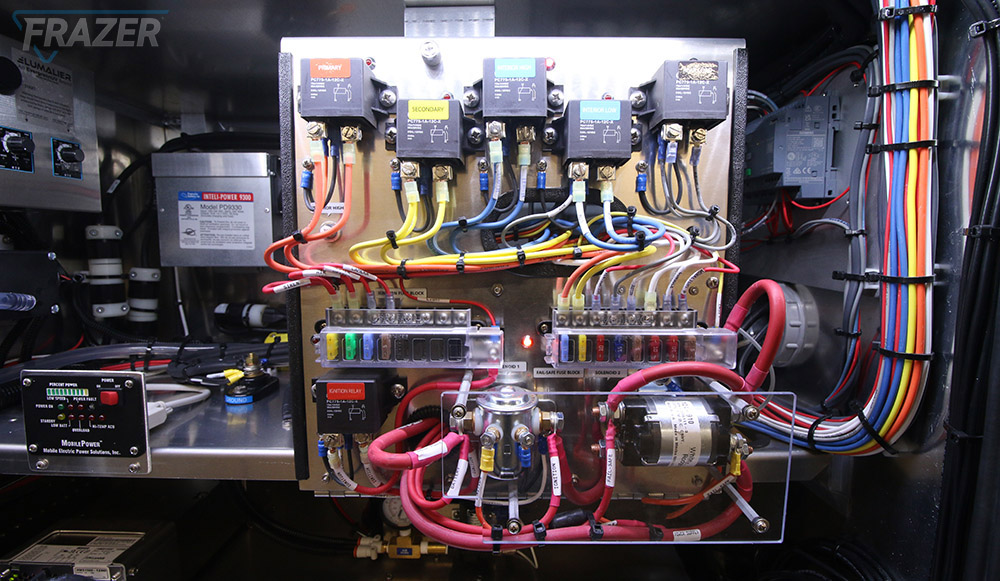
Imagine a switch stops working during an overnight shift. Depending on the problem and available parts, a local mechanic may be able to identify the issue and replace the component without waiting for a specialized electronic assembly. Some straightforward repairs may take about an hour, while others will require more time or factory support. The goal is to make service practical and help reduce avoidable downtime.
During a factory remount, Frazer also performs electrical, structural, and mechanical refurbishment work to address applicable wear and service needs. That process helps prepare the module for its next chassis lifecycle and gives your department a clearer picture of its condition before it returns to service.
What Warranty Comes With a Frazer Remount?
Warranty coverage is an important part of comparing remount options, especially when your department is planning maintenance costs for the years ahead. Coverage varies by manufacturer and by the work performed, so it is worth reviewing the specific terms before making a decision.
Frazer offers a 2-Year Renewed Remount Warranty for eligible remounted modules. It covers qualifying failures or malfunctions related to design, construction, or installation errors, subject to the applicable warranty terms and conditions. That coverage provides added support as your department puts a refurbished module back into service.
For fleet directors and financial teams, the value is not just the warranty itself. It is the ability to evaluate a remount with a clearer understanding of the work performed, the coverage provided, and the potential costs that still need to be included in your long-term plan.
Can a Medical Module Really Reach 1 Million Miles?
For a high-volume EMS system, a million miles may sound like a stretch. But the experience of departments such as the Houston Fire Department shows why it is worth looking at service life across multiple chassis rather than judging a module by the mileage on a single truck.
Houston Fire Department operates a fleet that includes 129 Frazer units. Some are approaching 20 years of service and remain in active operation. HFD frequently reports more than 260,000 miles per truck chassis, and certain modules have been remounted as many as four times. Over multiple chassis lifecycles, that creates the potential for an individual module to exceed 1 million miles of cumulative service.
Frazer’s independent generator power system also supports the patient care compartment without requiring the truck engine to idle continuously for compartment power. This design is another factor departments can consider when evaluating how their vehicles operate over time.
Houston is not the only example of long-term module use. A representative from Marble Falls Area EMS described the department’s experience this way: “We bought our first Frazer in 1996, and we’re still remounting it.” Stories like these help show what extended module service can look like, although results will vary based on vehicle use, maintenance, and condition.
Serviceability matters, too. In a double-blind survey of 100 EMS and fire professionals, 39% of respondents identified Frazer as the brand that spends the “least amount of time in the shop,” compared with 7% who selected major competitors. These results reflect the opinions of the people surveyed, not a guarantee of maintenance performance for every fleet. Still, they offer another perspective for departments weighing long-term service and downtime.
How to Build a Smarter 15-Year Fleet Plan
Remounting is not the right answer for every department or every vehicle. But if your fleet regularly replaces complete units when their chassis reach the end of service, it is worth asking whether those patient care modules could continue working for you.
Start by reviewing the age and condition of your existing modules, your planned chassis replacement dates, and the costs of buying new versus remounting. Include maintenance, refurbishment, downtime, and warranty coverage in the comparison. A durable module, serviceable components, and a well-planned remount process may help your department stretch its capital budget without losing sight of crew and patient needs.
The goal is not simply to keep a vehicle longer. It is to make sure every dollar invested in your fleet delivers value for as long as it reasonably can.
Want to know whether remounting makes sense for your fleet? Talk with the Frazer team about your current modules, upcoming replacement schedule, and long-term budget goals. We can help you evaluate your options and build a Lowest Overall Cost of Ownership strategy around your department’s needs.
Is it cheaper to remount a medical vehicle or buy new?
Remounting an existing medical module onto a new chassis often costs less upfront than purchasing an entirely new vehicle. It may also reduce long-term fleet expenses by allowing your department to reuse a serviceable module across multiple chassis lifecycles. Actual savings depend on the module’s condition, replacement chassis costs, and any refurbishment work needed. Evaluating these factors together can help your department determine which option offers the lowest overall cost of ownership.