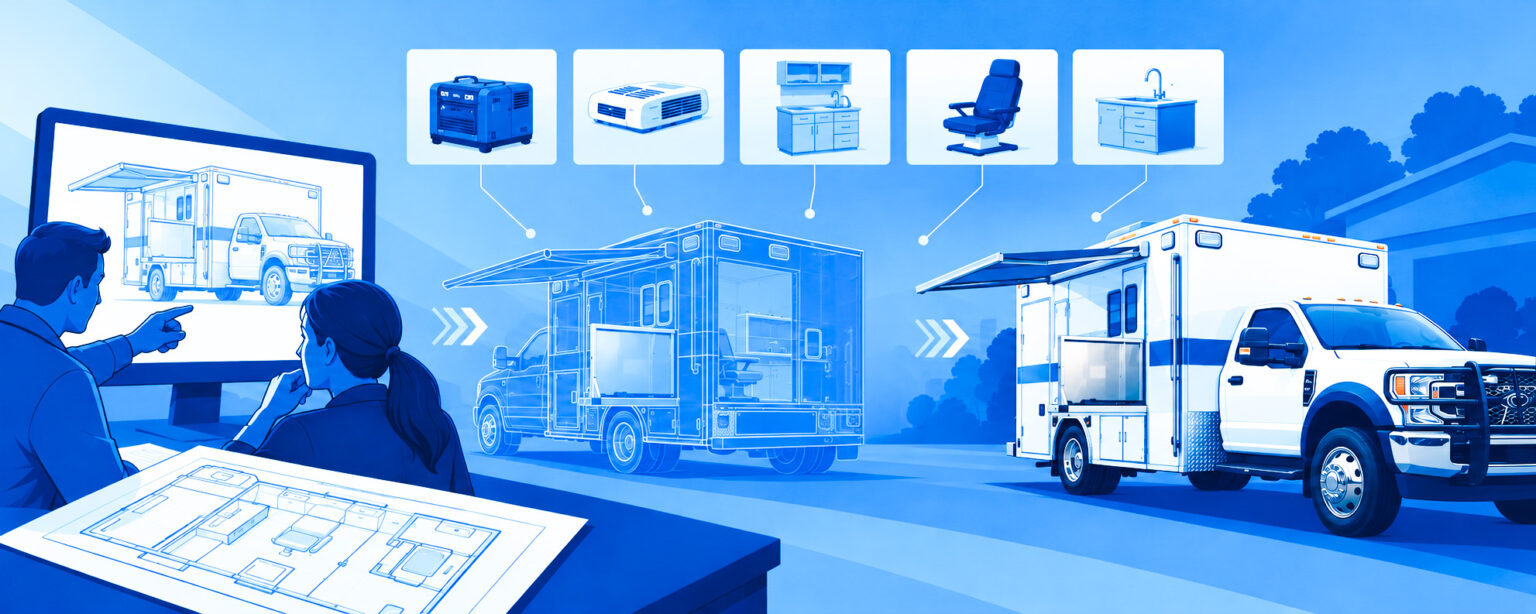
Customizing an Emergency Medical Vehicle for Mobile Integrated Healthcare
Mobile Integrated Healthcare (MIH) brings care closer to the people who need it. But a strong clinical plan also needs a vehicle that works for your crew, your equipment, and your maintenance team.
Community paramedicine visits can keep a vehicle parked outside a home for 45 to 90 minutes. During that time, crews may need power for telehealth devices, reliable cooling for the patient compartment, and room to provide care. If those systems depend on a running truck engine, the extra idle time can become a fleet maintenance concern.
So, what should you look for when planning an MIH vehicle? Start with the power system, heating and cooling, electrical serviceability, interior layout, and long-term cost. Each choice can affect how well your program works today and how easily your fleet can support it in the years ahead.
How Do You Power Telehealth Equipment Without Running the Truck Engine?
Telehealth screens, diagnostic devices, and other clinical tools need dependable electricity. One option is a chassis-based inverter, which may require the truck engine to run for extended periods. Another is an independent power system that supplies 120V AC power without relying on continuous chassis engine operation.
For MIH teams making longer visits, independent power can help manage engine hours while keeping essential equipment available. The right setup depends on the equipment you plan to use, its power requirements, and how your crews work in the field.
Consider the Cost of Extended Idle Time
It is fair to ask whether adding a generator means adding another item to your maintenance schedule. Generators need service, and fleet teams should account for that when comparing vehicle configurations.
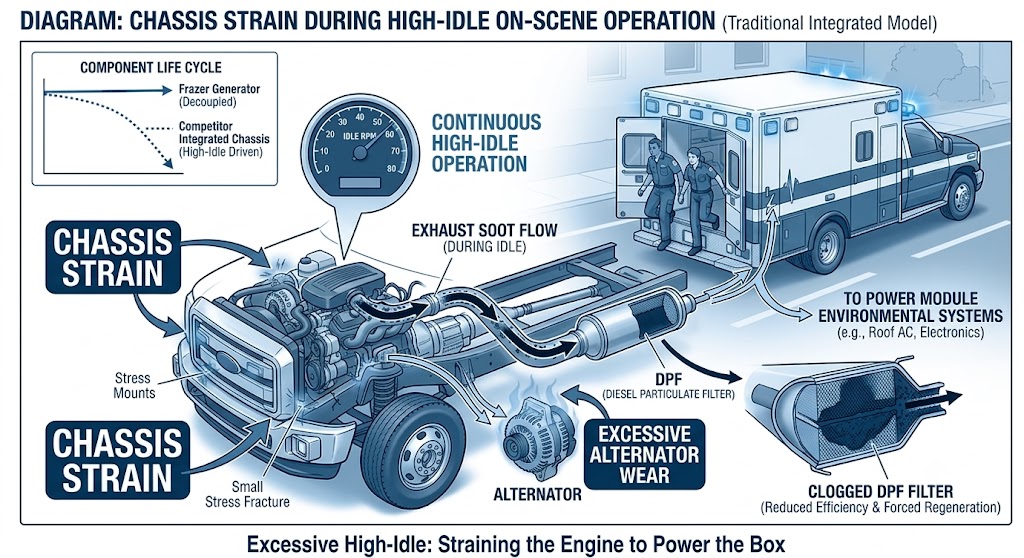
But there is another cost to consider: keeping a heavy-duty diesel engine running while a crew provides care. Extended idling can add engine hours and may contribute to wear on engine components and the diesel particulate filter (DPF). The effect depends on how the vehicle is used and maintained.
Frazer offers several chassis-independent power options, including Mobile Electric Power Solutions (MEPS), Cummins Onan gas or diesel generators, and Harrison hPower systems. Depending on the configuration, these systems can supply 120V AC power to telehealth and diagnostic equipment while the truck engine is off. Certain medical devices may also remain powered if the chassis engine is unavailable, as long as the independent power system is operating.
There is no one-size-fits-all answer. Compare routine generator service with the cost of added chassis engine hours, then choose a system based on your equipment load, typical time on scene, and maintenance plan.
Why Does Separate Climate Control Matter for MIH Vehicles?
An MIH crew may spend much more time parked than a crew responding to a typical transport call. That makes patient compartment cooling an important part of the vehicle design, especially in hot weather.
Some diagnostic devices, mobile lab equipment, and medications have specific storage or operating temperature requirements. A separate HVAC system can help maintain a more controlled patient compartment without depending on continuous operation of the truck engine. Actual performance depends on the power system, outside temperature, and vehicle configuration.
Understand the Cooling Performance
Chassis-driven air conditioning may struggle to cool a large patient compartment during a long stop, especially when the truck is parked in the heat. Before choosing an HVAC system, ask how it performs in the conditions your crew will face.
Frazer’s decoupled 115V AC HVAC system has air handling and ductwork separate from the truck cab. It is engineered to deliver a cooling differential of at least 25 to 30 degrees and can maintain a differential of 35°F or more under applicable operating conditions. That gives departments an option designed around patient compartment cooling and crew comfort during longer visits.
Always compare the system’s published performance with the actual temperature limits for your equipment and supplies. Cooling capability is one part of a complete plan for safe storage and clinical operations.
Plan for Air Filtration and Treatment
Air management matters when a vehicle serves as a mobile treatment space. Along with ventilation and regular cleaning, departments may want to consider filtration and active air treatment for the patient compartment.
Frazer offers the Dometic BreatheEasy Ionizer package, which uses UV light and nano-filters designed to help reduce certain airborne contaminants, odors, and particles. Frazer’s separate patient compartment air handling also allows departments to evaluate airflow in the treatment area apart from the truck cab.
No air treatment system replaces cleaning, ventilation, or your agency’s infection-control practices. Results depend on the equipment specifications, how the system is used, and your department’s procedures.
How Can Simple Wiring Help Keep an MIH Vehicle in Service?
Adding telehealth devices and medical equipment can make a vehicle more useful, but it can also add electrical complexity. When something stops working, your fleet team needs to find the issue and get the vehicle back on the road.
That is why serviceability should be part of your purchase decision. Ask whether technicians can troubleshoot the system with familiar tools, whether replacement parts are readily available, and whether repairs require specialized software or proprietary electronic modules.
The KISS Approach to Electrical Design
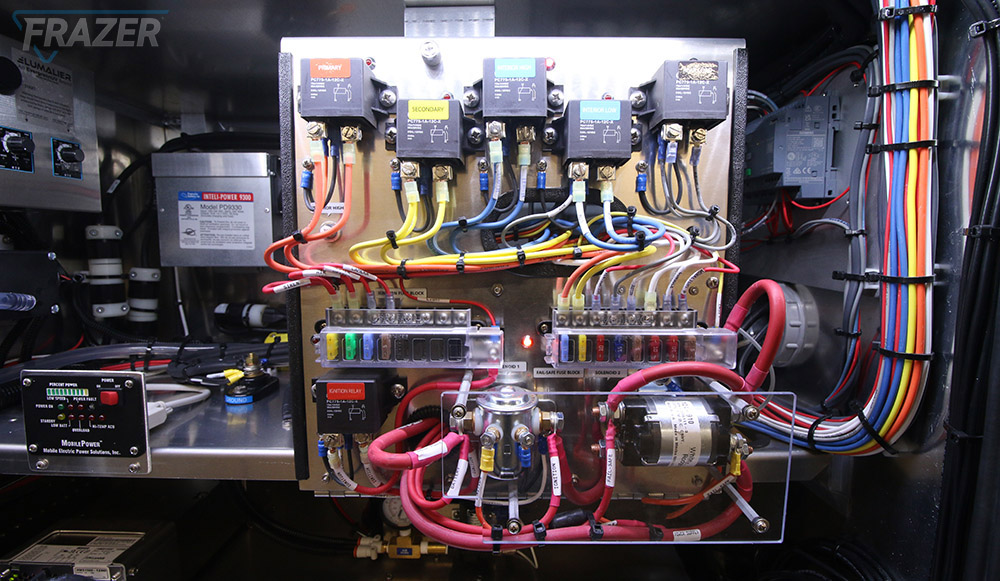
Frazer uses the KISS principle: Keep It Super Simple. Its point-to-point wiring design uses common terminal strips and standard automotive relays, with service and repair in mind.
For example, if a switch or relay in an MIH equipment circuit fails, a mechanic may be able to trace the problem using familiar troubleshooting steps. Depending on the part and installation, a replacement may be available from a local automotive supplier. That can make some repairs easier to plan without requiring a specialized electronic control node.
Service time matters, and it is worth asking other departments about their experience. In a 2020 double-blind survey of 100 EMS and fire professionals, respondents were asked which brand spent the least time in the shop. Frazer received 39% of the mentions. This finding is one reference point, not a promise about the downtime of any individual vehicle.
How Should You Design the Interior for MIH Care?
Start with the care your team will provide. A vehicle used mainly for wellness checks may need a different layout from one equipped for advanced diagnostics or higher-acuity treatment. Think about where clinicians will stand, how they will reach patients, where equipment will be secured, and how often supplies will need to be restocked.
Frazer offers bright, open patient compartments with layout options for caregiver movement and equipment access. One center-mounted cot layout is designed to provide nearly 50 inches of open aisle space and generally allows 360-degree access to the patient. Actual space and access depend on the interior layout and installed equipment.
Choose Materials That Hold Up to Daily Use
Mobile care spaces see frequent cleaning, changing weather, and daily wear. Materials matter, especially around cabinets and work surfaces.
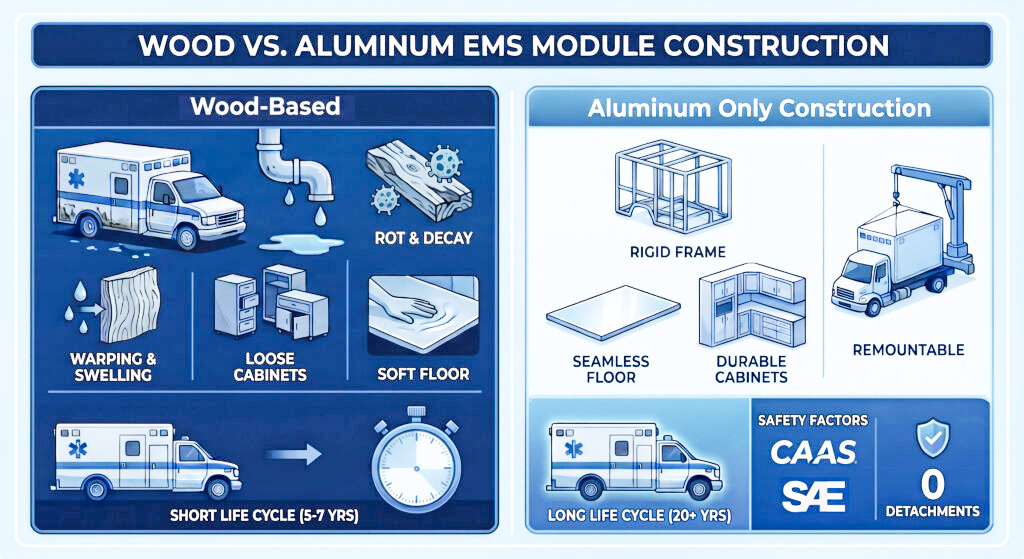
Frazer builds its cabinetry from formed aluminum that is powder-coated and mechanically secured to the module structure. Its cabinetry does not rely on wood, MDF, or particle board, helping address concerns about moisture absorption and material breakdown. Available stainless steel work surfaces provide durable, nonporous areas that support routine cleaning when crews follow the appropriate procedures and product instructions.
Account for Heavy Medical Equipment
Advanced equipment, such as CT scanners or large telehealth systems, needs more than floor space. Departments should review mounting, structural support, and equipment retention early in the design process.
Frazer’s experience includes development of a Mobile Stroke Unit in 2014. The company developed an equipment retention system designed to meet SAE J3043 requirements. In the cited test, the system retained equipment under more than 50,000 pounds of force with no recorded damage. These results provide a starting point for a conversation about retention, but performance in your vehicle depends on the equipment, installation, and applicable testing conditions.
What Does an MIH Vehicle Cost Over Its Working Life?
A smaller transit van and a custom Type I MIH vehicle can serve different needs and come with different purchase prices. If you are making a fleet decision, the sticker price is only part of the picture.
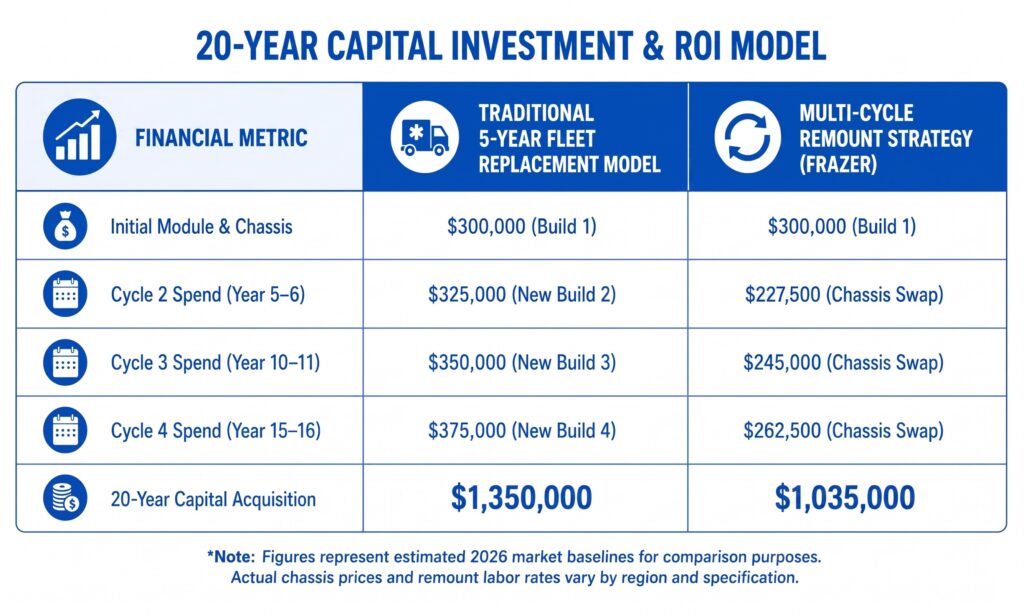
Consider how long you expect to keep the vehicle, how often it will need service, and what happens when the chassis wears out. For a program looking 10 to 20 years ahead, the ability to reuse a patient compartment may change the total replacement cost.
How Remounting Supports Long-Term Fleet Planning
Some light-duty vans are not built around a modular remounting process. When their chassis reaches the end of its working life, replacing it may also mean replacing or extensively rebuilding the clinical interior.
Frazer uses an all-aluminum welded structural framework designed for long-term module service and future remounting. A Frazer module can typically be remounted onto a new chassis up to four times, depending on the module’s condition, chassis compatibility, maintenance history, and operating needs.
Remounting gives departments a chance to reuse an existing medical module rather than buy a complete new vehicle. That is part of Frazer’s Lowest Overall Cost of Ownership (LOCO) approach. Whether it saves your department money depends on the initial investment, maintenance costs, remount expenses, and replacement schedule.
The Houston Fire Department offers an example of long-term module use. Many of its Frazer modules are nearing 20 years in service, and some have accumulated more than one million miles over their operating histories through maintenance and remounting. Those experiences show what can be possible with a long-term fleet plan, though service life and costs will vary by vehicle.
Build Your MIH Vehicle Around Your Program
A good MIH vehicle starts with a clear understanding of what your crew needs to do. Think beyond the list of medical equipment and consider the full workday: time spent parked, power demands, hot-weather visits, routine service, and plans for replacing the chassis.
Frazer can help you evaluate independent power options, separate HVAC, serviceable wiring, durable interiors, and remounting opportunities. Planning a mobile healthcare unit? Contact the Frazer team to talk through your program, compare available configurations, and explore a vehicle design built around your needs.
How Do You Power Telehealth Gear in an Emergency Medical Vehicle?
Telehealth equipment and diagnostic devices need reliable power, especially during longer patient visits. Frazer offers independent 120V AC power options that can run compatible equipment without requiring the truck engine to idle continuously. This helps departments manage engine hours while supporting clinical operations in the field. The right power system depends on your equipment, electrical needs, and vehicle configuration.