

The Cost of a Type I Ambulance: Pricing Tiers for Value-Conscious Fleets
For municipal fire and EMS departments planning their 2026 capital budgets, the rising cost of new heavy-duty apparatus can make budgeting difficult. Public pricing can also be hard to find, leaving chiefs and finance directors trying to account for the initial purchase, possible changes during the build, and the long-term cost of keeping a vehicle in service.
A purchase price tells only part of the story. Departments also have to think about maintenance, downtime, serviceability, and how long the vehicle can remain useful. This guide breaks down 2026 pricing tiers for custom Type I mobile healthcare vehicles and explains how Frazer’s Lowest Overall Cost of Ownership (LOCO) approach looks beyond the initial price.
How much does a new Type 1 custom ambulance cost in 2026?
In 2026, a new Type I custom ambulance typically ranges from $200,000 to more than $450,000, depending heavily on the build. Base custom modules cost about $200,000 to $250,000. The focused Foundation™ Series starts at $252,000. Common custom builds generally range from $250,000 to $300,000, while highly customized specialty units can range from $350,000 to $450,000.
2026 Type I Ambulance Pricing Tiers: What to Expect
When building a Capital Improvement Plan (CIP), municipal buyers need a realistic starting point. Limited public pricing and “Request a Quote” processes can make that difficult. Understanding the general pricing tiers can help your department establish a budget before getting deep into specifications and options.
Base Custom Modules ($200k – $250k)
This entry-level tier typically includes standard custom builds on lighter chassis platforms. Depending on the manufacturer and configuration, these vehicles may include basic interior cabinetry packages, standard suspensions, and traditional chassis-tied electrical systems.
The Foundation™ Series (Starting at $252,000)
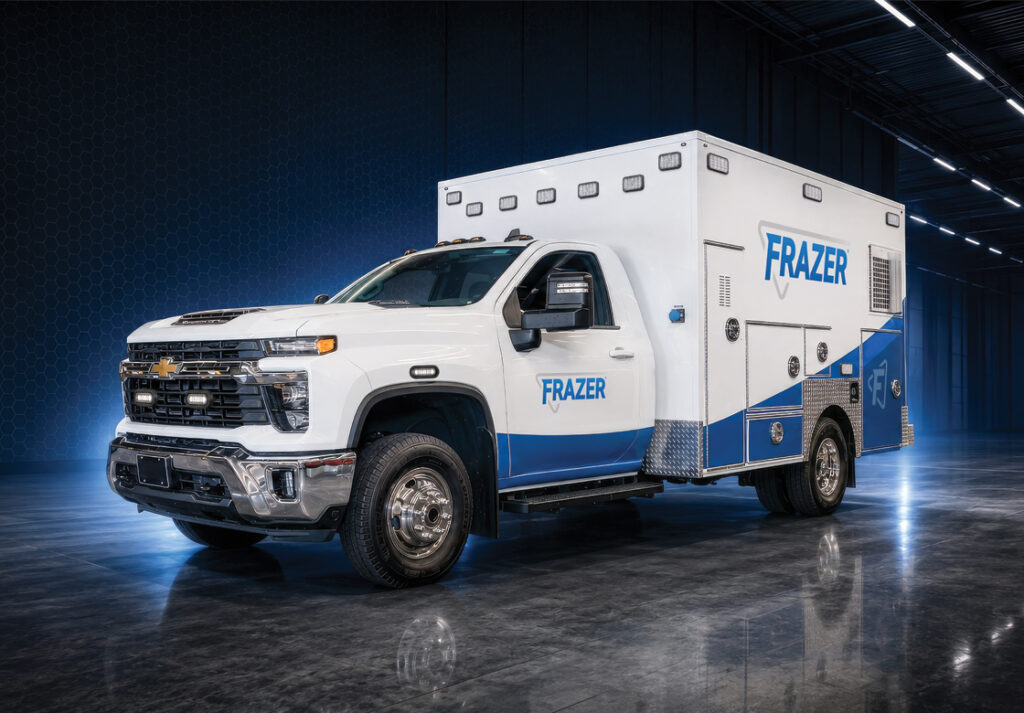
If your department is focused on keeping the initial purchase price down, it is still important to look closely at construction, configuration, and crew needs. Frazer designed the Foundation™ Series as a clearly defined 12-foot Type I mobile healthcare vehicle for value-conscious fleets. Instead of simply removing features to reach a price point, the Foundation™ Series uses a focused set of features and options to simplify the build.
The Foundation™ Series features welded 6061-T6 aluminum framing, zero-wood composite subfloors, and an independent 115VAC HVAC system consistent with core construction and system features available in Frazer custom units. Its standardized layout provides nearly 50 inches of center aisle walk-around space and seating for four caregivers. By limiting the amount of custom engineering required, Frazer can offer the Foundation™ Series starting at $252,000. Departments can compare the standard configuration with their operational requirements to determine whether it is the right fit.
Common Custom Configurations ($250k – $300k)
Many busy 911 operations may find their needs fall within this range. Vehicles in this tier typically feature 12-foot to 14-foot modules on heavy-duty chassis such as the Chevy 3500/4500 or Ford F-450/550. The final price can reflect options such as 4×4 drivetrains, LiquidSpring suspension upgrades, independent generator power, and interior storage designed around a department’s protocols and equipment.
Highly Customized Specialty Units ($350k – $450k)
Agencies with complex interfacility or specialty transport requirements may need a larger, more specialized configuration. This tier can include 14-foot-plus modules with features such as bariatric winch systems, dual-cot configurations, and Critical Care Transport (CCT) equipment. These builds may also require greater payload capacity or redundant high-output power systems.
What is the most important factor when buying an emergency vehicle?
According to a double-blind Smart Advantage study of 100 EMS and fire leaders, respondents identified post-sale support, custom design flexibility, and defect-free delivery among the most important factors when evaluating an emergency vehicle. After rating operational attributes, just 9% of buyers prioritized initial purchase price.
Looking Beyond the “Low Bid”
Fire chiefs and EMS directors often work within municipal purchasing rules that place significant weight on the lowest initial bid. That makes the purchase price important, but it can also make it harder to account for what happens after the vehicle enters service. Maintenance, downtime, parts availability, and ease of repair can all affect what a vehicle costs over its working life.
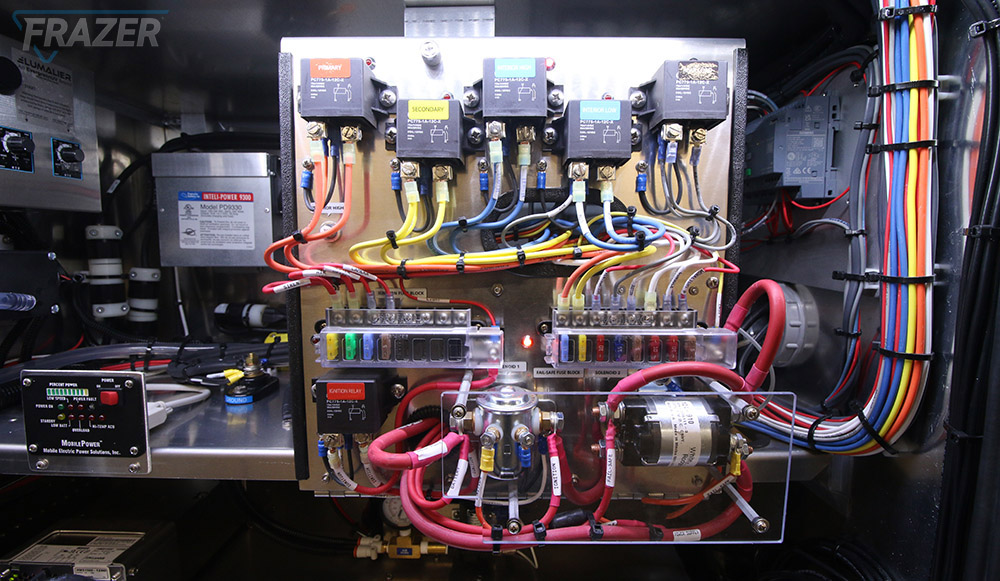
Frazer uses point-to-point electrical wiring and standard automotive relays. The goal is straightforward serviceability, including giving local fleet mechanics a system they can work with. In the same double-blind survey, 39% of respondents identified Frazer when asked which manufacturer spent the least time in the repair shop, compared with 7% for leading competitors. Survey results reflect respondent perceptions and experiences, but they point to an important question for any department: What will this vehicle cost us to keep on the road?
How much does remounting an ambulance save compared to buying new?
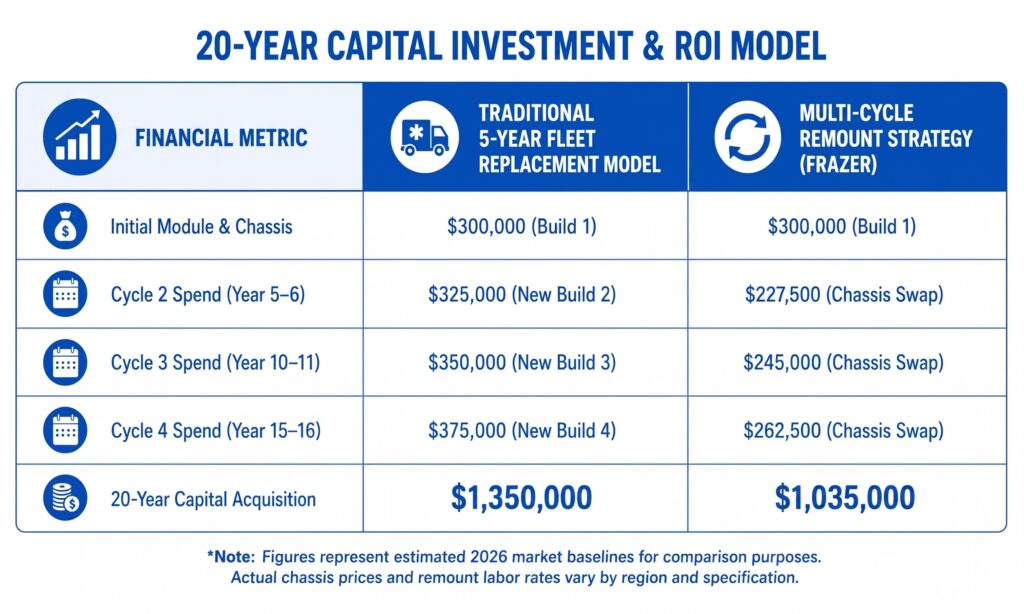
Remounting a structurally sound, wood-free ambulance module can save a department 30% to 50% compared with purchasing a completely new vehicle. Instead of replacing both the chassis and module, a remount allows an eligible module to continue serving across multiple chassis lifecycles. That can reduce long-term capital replacement costs while extending the value of the department’s original investment.
The LOCO Math: Remounting and the 15-Year Lifecycle
For finance directors and CFOs, replacing a $275,000 vehicle every five to seven years can put significant pressure on capital reserves. The construction of the module can play an important role in determining what options a department has when the chassis reaches replacement age.
Some ambulance modules use wood or particle board in subfloors or cabinets. Over time, repeated washdowns and exposure to biological fluids can contribute to the degradation of these materials. That may affect whether a module remains a practical candidate for continued service when it is time to replace the chassis.
Frazer’s Lowest Overall Cost of Ownership (LOCO) approach considers that longer lifecycle from the beginning. Frazer cabinets use aluminum, while the subfloors use composite materials. These materials are designed to resist problems such as rotting, swelling, and odor retention associated with repeated washdowns.
When the chassis reaches the end of its planned service life, a structurally sound Frazer module may be eligible for another chassis instead of requiring replacement of the complete vehicle. Through Frazer’s EMS vehicle remounting process, a department can retain its custom module, place it onto a new truck chassis, and save up to 50% compared with the cost of a new acquisition.
There are Frazer modules in active fleet service that have been used across multiple chassis lifecycles. The Houston Fire Department operates 129 Frazer units in a demanding urban environment. Through the remount program, the department has used individual modules across as many as four chassis lifecycles, with some modules surpassing 1,000,000 miles and nearly 20 years of active service.
Those numbers are examples, not a promise that every module will reach the same mileage or service life. Remount eligibility depends on the condition of the module, its use, maintenance history, and other factors. Frazer provides a 2-year factory warranty on remounted modules.
Procurement Pathways: Simplifying the Purchase
Even when a fire chief and CFO agree on the budget and long-term fleet plan, procurement requirements can add time and complexity. Formal sealed bidding may require significant administrative work and can include vendor challenges or other procedures that departments need to account for.
Frazer offers purchasing options that can help eligible agencies navigate the process. Frazer vehicles are available through national cooperative purchasing agreements, including HGACBuy and BuyBoard. Depending on the agency, jurisdiction, and applicable procurement rules, these cooperative purchasing options may provide a more efficient path than conducting a separate competitive solicitation. Agencies should always confirm the purchasing requirements that apply to their specific procurement.
Ready to Plan Your 2026 Fleet Budget?
Planning your 2026 fleet replacements starts with understanding what your department actually needs, what that configuration may cost, and what it could take to keep the vehicle working for years to come. The lowest purchase price and the lowest long-term cost are not always the same thing.
Talk with the Frazer team about your fleet plans, explore HGACBuy purchasing options, or see whether the Foundation™ Series fits your department’s needs. We can help you understand the options so your team can make an informed decision for your budget, your crews, and the communities you serve.
How much does a new Type I custom ambulance cost in 2026?
In 2026, a new Type I custom ambulance typically ranges from $200,000 to more than $450,000, depending on the build. Base custom modules range from $200,000 to $250,000, the Foundation™ Series starts at $252,000, common custom configurations range from $250,000 to $300,000, and highly customized specialty units can range from $350,000 to $450,000.