
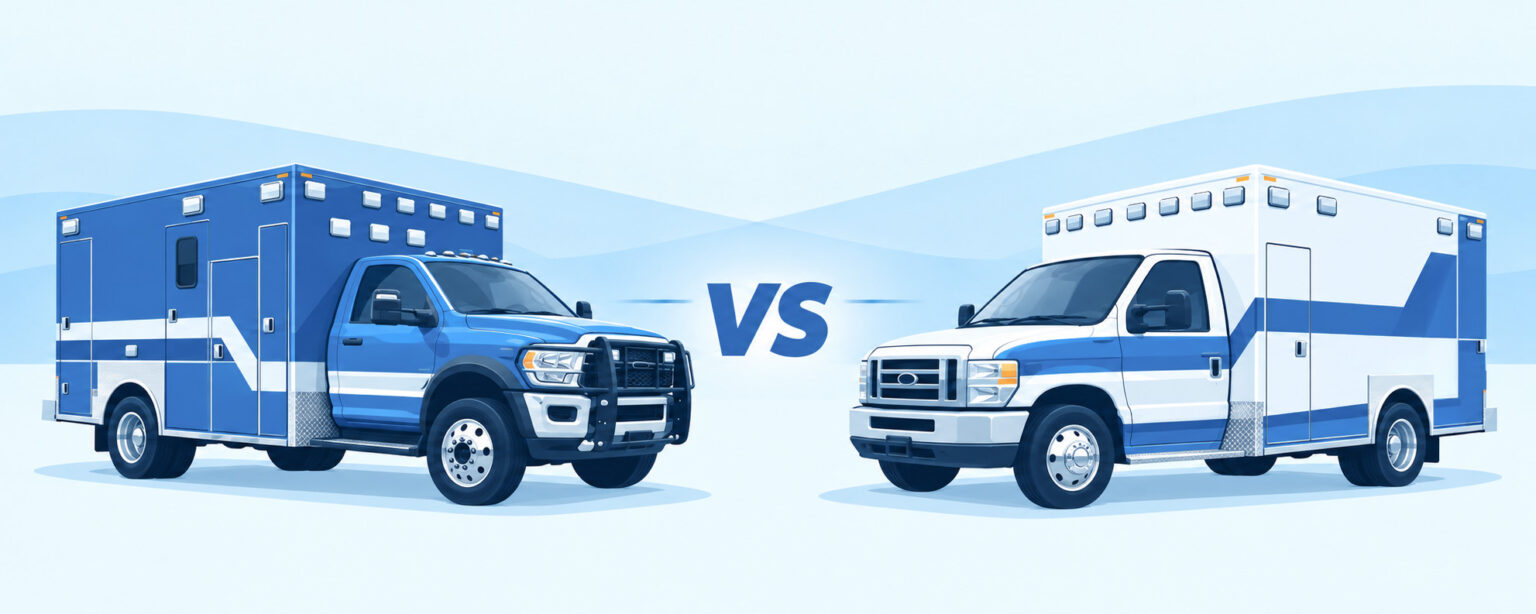
Type I vs. Type III Ambulances: A Practical Guide to Fleet Planning
Choosing a new EMS vehicle takes more than comparing purchase prices. Your department also needs a vehicle that fits your response area, carries the right equipment, and makes sense to maintain over time. When you compare Type I and Type III platforms, the chassis can have a major impact on those decisions.
Whether you’re preparing a proposal for a budget committee or working with your maintenance team on replacement plans, it’s worth looking beyond the day the vehicle arrives. This guide breaks down the differences in chassis design, remount potential, service access, payload, and power systems so you can make an informed decision for your fleet.
Type I vs. Type III: What’s the Difference?
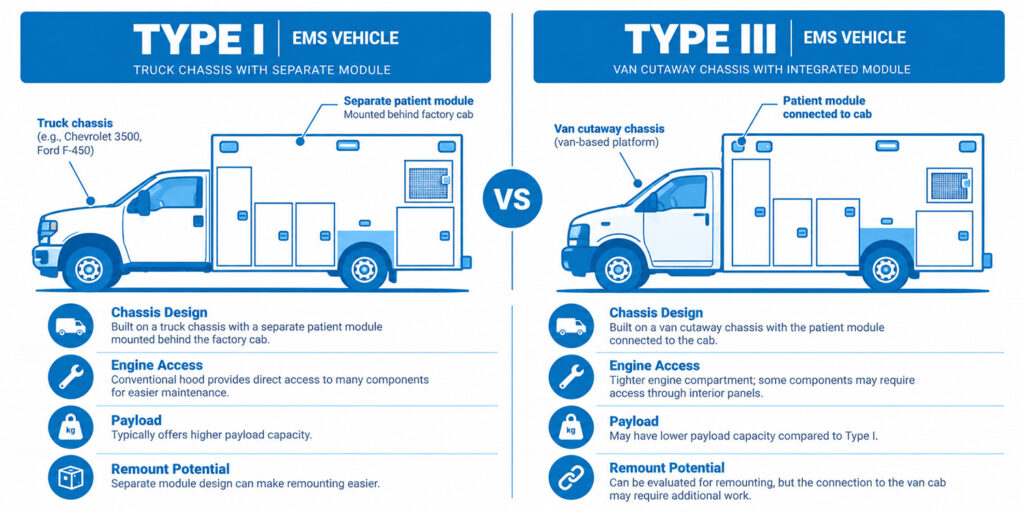
The biggest difference is the chassis. A Type I EMS vehicle is built on a truck chassis with a patient module mounted behind the factory cab. A Type III vehicle uses a van cutaway chassis, with the patient module connected to the cab. That structural difference affects everything from engine access to interior layout.
Type I platforms commonly use truck chassis such as the Chevrolet 3500 or Ford F-450. Departments often consider them for available chassis choices, payload capacity, and long-term remount plans. Type III platforms are built on van-based cutaways and may offer advantages in maneuverability or access between the cab and patient compartment, depending on the specific design.
Neither configuration is automatically the right choice. Start with how your crews use the vehicle, where they drive, what they carry, and how your department plans to service it.
Look Beyond the Purchase Price
A purchase price matters, especially when every fleet investment needs approval. But the lowest upfront cost isn’t always the lowest long-term cost. Maintenance, time out of service, chassis replacement, and the ability to reuse a patient module can all affect what your department spends over the next 10 to 15 years.
Some Type I configurations cost more initially than certain Type III configurations. That makes it important to compare complete vehicle specifications rather than assume one category is always more affordable. A realistic total cost of ownership review should include the original purchase, expected repairs, maintenance schedules, replacement plans, and reserve fleet needs.
Can You Remount a Type I or Type III Module?
Remounting means removing an existing patient module and installing it on a compatible replacement chassis. It can help a department keep a serviceable module in operation after the original chassis reaches the end of its useful life.
The separate module design of a Type I vehicle can make it easier to plan for this process. Type III modules can also be evaluated for remounting, but the connection to the van cab may introduce additional work involving attachment points, cab dimensions, and chassis compatibility. In either case, the module’s condition and the replacement chassis specifications determine what’s practical.
Frazer builds Type I modules with wood-free aluminum construction and long-term service in mind. When a chassis is due for replacement, an eligible module can be inspected and evaluated for installation on a compatible new chassis. Departments that plan for module remounting may be able to avoid purchasing a complete new vehicle at every chassis replacement. Actual savings depend on the module, the work required, and current chassis costs.
What does this look like in a working fleet? Houston Fire Department operates a fleet that includes 129 Frazer units. Depending on module condition, compatibility, and operating requirements, Frazer modules may be remounted as many as four times. Frazer has reported modules exceeding one million cumulative service miles, with some approaching 20 years in service. These are examples of long-term potential, not guaranteed results for every unit.
Maintenance Access Matters
Every hour a vehicle spends in the shop is an hour your fleet has to cover another way. Chassis choice can affect how easily technicians reach components, perform inspections, and complete certain repairs. That’s worth discussing with your maintenance team before finalizing a specification.
Some Type III van cutaway designs have tighter engine compartments and require technicians to access certain components through interior panels. A Type I truck chassis generally has a conventional hood, which may provide more direct access to many components from outside the vehicle. The time saved, if any, depends on the chassis, the repair, and the technician.
Ask your mechanics which engines and chassis they already know, which repairs they perform most often, and whether the proposed vehicle will create new service requirements. Those answers may be more useful than a broad claim that one platform is always easier to maintain.
How Frazer Makes Electrical Service More Straightforward
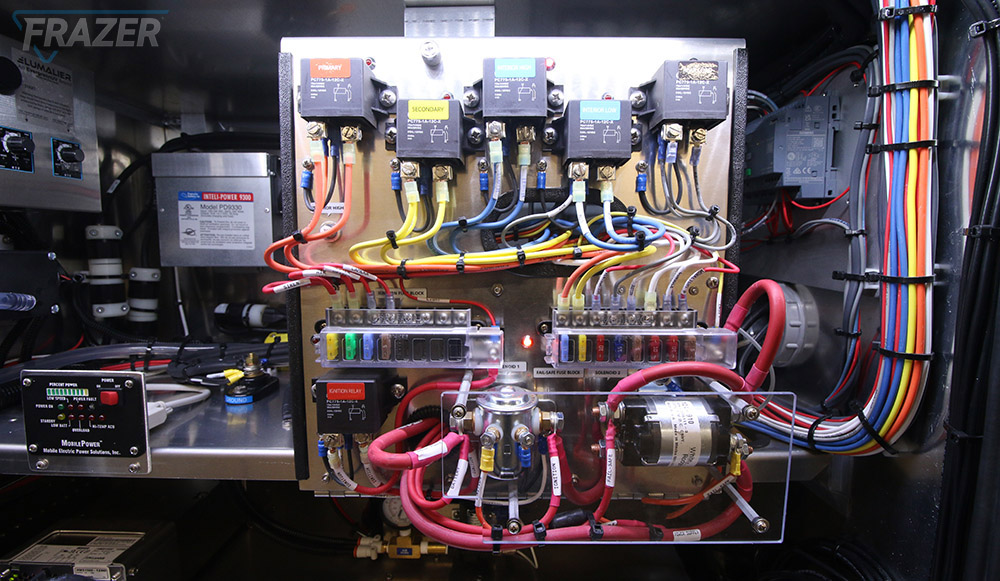
Chassis access isn’t the only maintenance consideration. Frazer follows the KISS Principle, Keep It Super Simple, in its electrical design. Point-to-point wiring, common terminal strips, and standard automotive relays help make circuits easier to trace and components more familiar to technicians.
For a department that services its own vehicles, this approach can make troubleshooting more manageable. Depending on the issue, a technician may be able to identify a fault and replace a commonly available part without specialized proprietary diagnostic equipment. The goal is practical serviceability, both when the unit is new and years down the road.
What have operators reported? In a 2020 double-blind survey of 100 EMS and fire professionals, respondents were asked which ambulance brand they associated with spending the least time in the shop. Frazer received 39% of mentions, while the next-highest brands received 7% each. This was a survey of perceptions, not a measurement of actual repair hours, but it provides context for how respondents viewed maintenance experience at the time.
Payload, Terrain, and Chassis Capacity
Your crews carry more than a cot. Patient-handling equipment, monitors, rescue gear, supplies, and personnel all contribute to the vehicle’s loaded weight. That makes Gross Vehicle Weight Rating, or GVWR, an important part of the specification process.
Some medium-duty Type I truck chassis offer higher weight ratings than lighter van cutaway options. That extra capacity may be valuable for departments with demanding equipment requirements. What matters, though, is the finished vehicle’s actual weight and remaining payload, not just the chassis rating on paper.
Terrain matters too. Certain Type I truck chassis offer 4×4 capability and greater ground clearance, which may help in rural response areas, on rough roads, or in challenging weather. Review the specific chassis and completed vehicle configuration before making assumptions about off-road performance or load capacity.
Why Independent Power Belongs in the Conversation
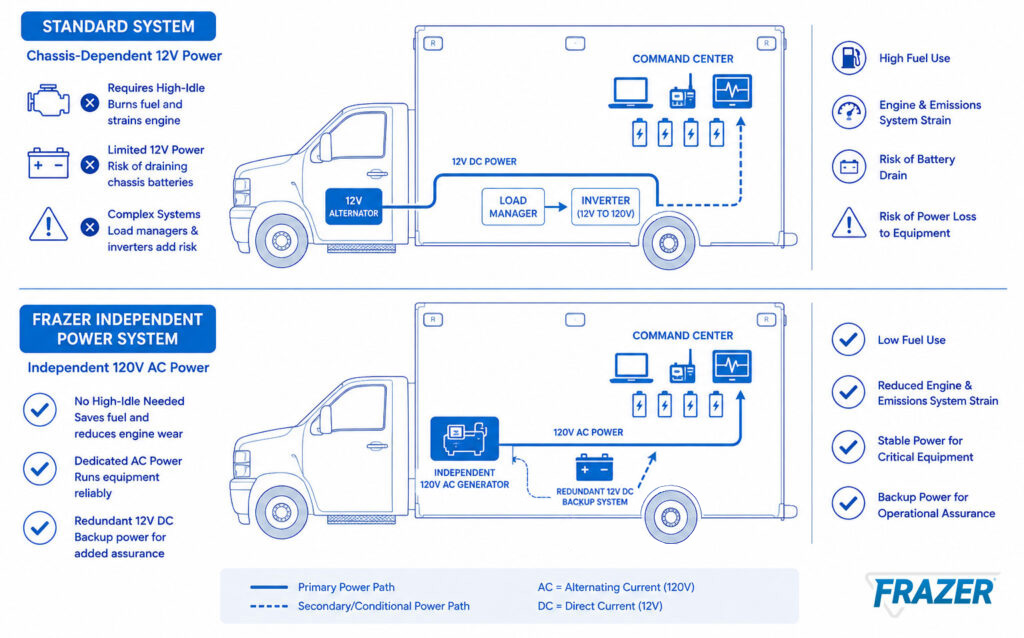
A vehicle may spend long periods parked while its patient compartment still needs lights, climate control, and medical equipment. If those systems depend heavily on the chassis engine, extended stationary operation can add engine hours, fuel use, and wear.
Frazer offers chassis-independent power options, including dedicated generator configurations that supply electricity to the patient module. With the right setup, crews can operate certain patient-compartment systems without relying on continuous chassis-engine idling.
That separation can help departments manage how the chassis engine is used over its service life. It isn’t free power, and an independent generator still requires fuel and maintenance. Include those costs in your fleet comparison, along with the way your crews actually operate on calls.
Patient Module Design, Comfort, and Safety
A crew’s working environment matters just as much as what happens under the hood. Departments should consider the way a vehicle handles vibration, noise, temperature, and airflow, along with the durability of its patient module.
A Type I vehicle’s separately mounted module allows designers to address noise and vibration transfer through the mounting and structural design. The results depend on the specific vehicle and operating conditions, so it’s useful to evaluate ride quality in a completed unit rather than rely on chassis type alone.
Frazer’s independent 115VAC HVAC system is dedicated to the patient module instead of using shared ductwork with the truck cab. Separate climate-control systems can reduce direct air exchange through common ducting, although airflow still depends on pass-throughs, doors, ventilation settings, and vehicle use. Departments should follow their own infection-control procedures and evaluate the actual configuration.
Frazer also uses a wood-free aluminum primary structure built for long-term durability. According to Frazer’s reported records, more than 4,500 EMS modules built since 1984 have had zero recorded module detachments in collisions, including rollovers. That is a historical fleet record, not a promise about the outcome of any future crash.
Frazer has also reported voluntary testing of its SAE J3043-compliant equipment retention system at forces exceeding 50,000 pounds, with no damage observed under those test conditions. As with any safety-related specification, review the applicable test procedures, tested configuration, and installation requirements when comparing vehicles.
Which Platform Fits Your Department?
The most useful question isn’t simply whether Type I is better than Type III. It’s which platform gives your department the capabilities it needs, with maintenance demands and long-term costs it can support.
A Type I May Be a Good Fit When…
Your department runs a busy 911 or fire-rescue operation, needs available truck-based payload capacity, or serves areas where 4×4 capability and additional ground clearance could be useful. It may also make sense when conventional engine access matters to your maintenance team or when your capital plan includes keeping a patient module through multiple chassis lifecycles.
A Type III May Be a Good Fit When…
Your work centers on inter-facility transport or frequent trips through tight urban streets, hospital approaches, and loading areas. Depending on the model, a Type III can also support a preferred cab-to-module connection or a specialized interior arrangement. Confirm vehicle dimensions, layout, and available configurations before assuming a particular van platform will meet those needs.
In both cases, compare the finished vehicle’s payload, turning requirements, equipment layout, service access, and operating costs. Involve the crews who will use it and the technicians who will maintain it. Their input can reveal practical issues that don’t show up in a purchase-price comparison.
Plan for the Fleet You Need Tomorrow
An EMS vehicle purchase is a long-term decision. The right platform should meet today’s response requirements while giving your department a clear plan for maintenance, support, and future replacement.
If you’re exploring truck-based modular construction, take a closer look at Frazer’s custom Type I EMS vehicles. Our team can walk through your response environment, equipment needs, available power systems, remount considerations, and budget priorities. We’ll help you evaluate the tradeoffs so you can choose a vehicle that fits your operation. Contact us today for a free consultation.
What is the main difference between a Type I and Type III emergency vehicle?
A Type I emergency vehicle uses a truck chassis with a separately mounted patient module. This configuration is often chosen for its available payload capacity, conventional engine access, and potential for future remounting. A Type III vehicle uses a van cutaway chassis with a connection between the cab and patient module. Depending on the design, this configuration may offer advantages in maneuverability and interior access. The right choice depends on your department’s operating needs.