
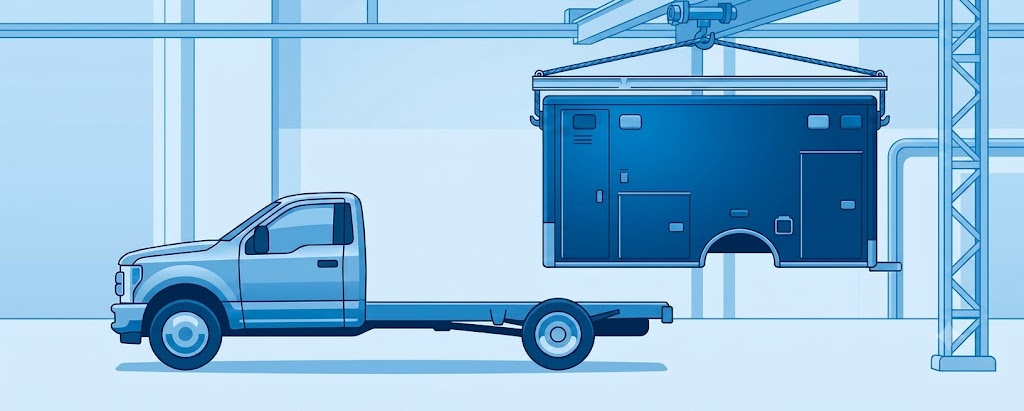
Ambulance Remount vs. Replacement: Which Option Creates the Lower Overall Cost of Ownership?
Your Fleet Manager has flagged a few aging units, and budget season is getting close. You need a recommendation you can explain to leaders who may not work with these vehicles every day. The real question is not which option sounds less expensive. It is which option is more likely to support your department’s operational and financial needs after the budget is approved and the vehicle returns to service.
Fleet Managers and Fire Chiefs need a practical way to compare remounting and replacement. We’ll cover lifecycle cost, module condition, operational needs, and warranty questions so your team can make a better-informed decision.
Why This Decision Is More Complex Than It Looks
Your team needs more than a sales claim. You need a clear framework that can stand up to questions from leadership, purchasing, finance, and the crews who will use the vehicle.
Experience with both remount and replacement decisions can make that guidance more useful. Frazer has built EMS vehicles since the early 1980s as part of a company founded in 1956. Since 1984, Frazer has built over 4,500 EMS modules, including many units that later reached a remount-or-replace decision.
Departments typically begin this review after a high repair estimate, more frequent shop visits, or a budget deadline. Whatever brought the issue forward, the goal is the same: turn a fleet concern into a documented recommendation your department can explain and defend.
What “Lower Overall Cost of Ownership” Means
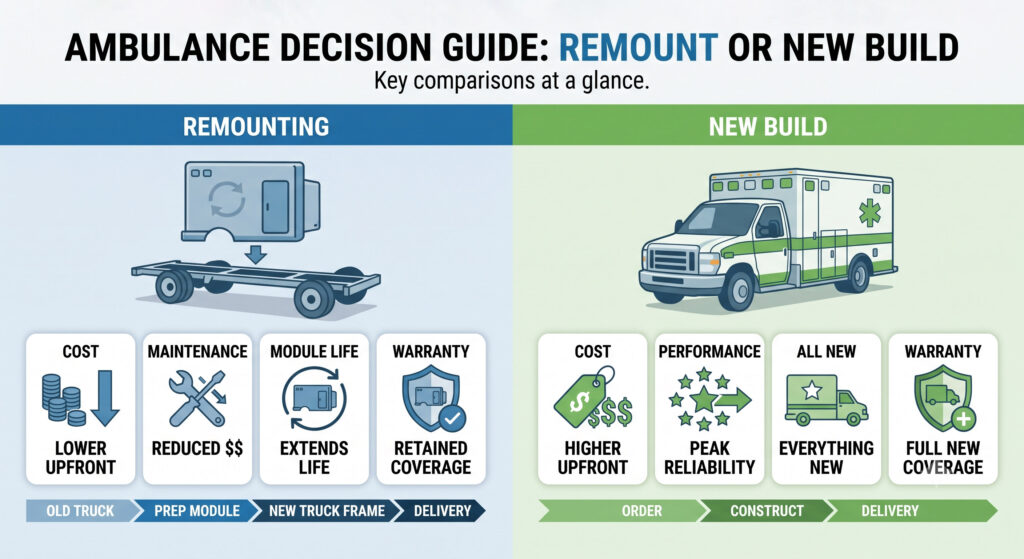
Lower overall cost of ownership, or LOCO, looks at the full cost of a decision over the vehicle’s remaining service life. It includes the cost to remount or replace, expected maintenance, operational downtime, and the useful life your department may receive from the investment.
A lower-priced remount may not be the better value if it needs major repairs two years later. A new build may cost more at the start but provide a longer and more predictable service life. Comparing all four factors gives your team a clearer picture than purchase price alone.
How to Tell Whether Your Module Is a Good Remount Candidate
Before comparing prices, determine whether the existing module is a practical candidate for remounting. Start with its structure, service record, and ability to meet the standards that apply to your department.
Structural Condition of the Module
The module is the patient compartment, not the chassis under it. Its condition is one of the most important parts of the decision. A module built from durable materials and supported by a sound structural history may be eligible for more than one remount, subject to inspection and certification.
Frazer modules use all-aluminum, wood-free construction with 6061 T-6 structural aluminum tubing. The cabinetry and mounting systems are also resilient and crash tested. Aluminum and wood-framed modules can react differently to moisture, age, wear, and demanding service conditions, which can affect how long each module remains a practical remount candidate.
Mileage and Service History
A module with complete records and no major structural incidents may be a stronger candidate than one with an unclear or difficult history. Maintenance records can help your team separate normal repairs from repeated structural, electrical, or system problems that need a closer look before another service cycle.
Remaining Certifiable Lifespan
A remounted module must still meet the safety and construction standards that apply to the finished vehicle. Ask the builder or inspector whether the module can be certified after the proposed work, including NFPA 1917 and CAAS GVS v2.0 when applicable. Request written confirmation for the specific unit and scope of work.
What a Remount May Cost and Save
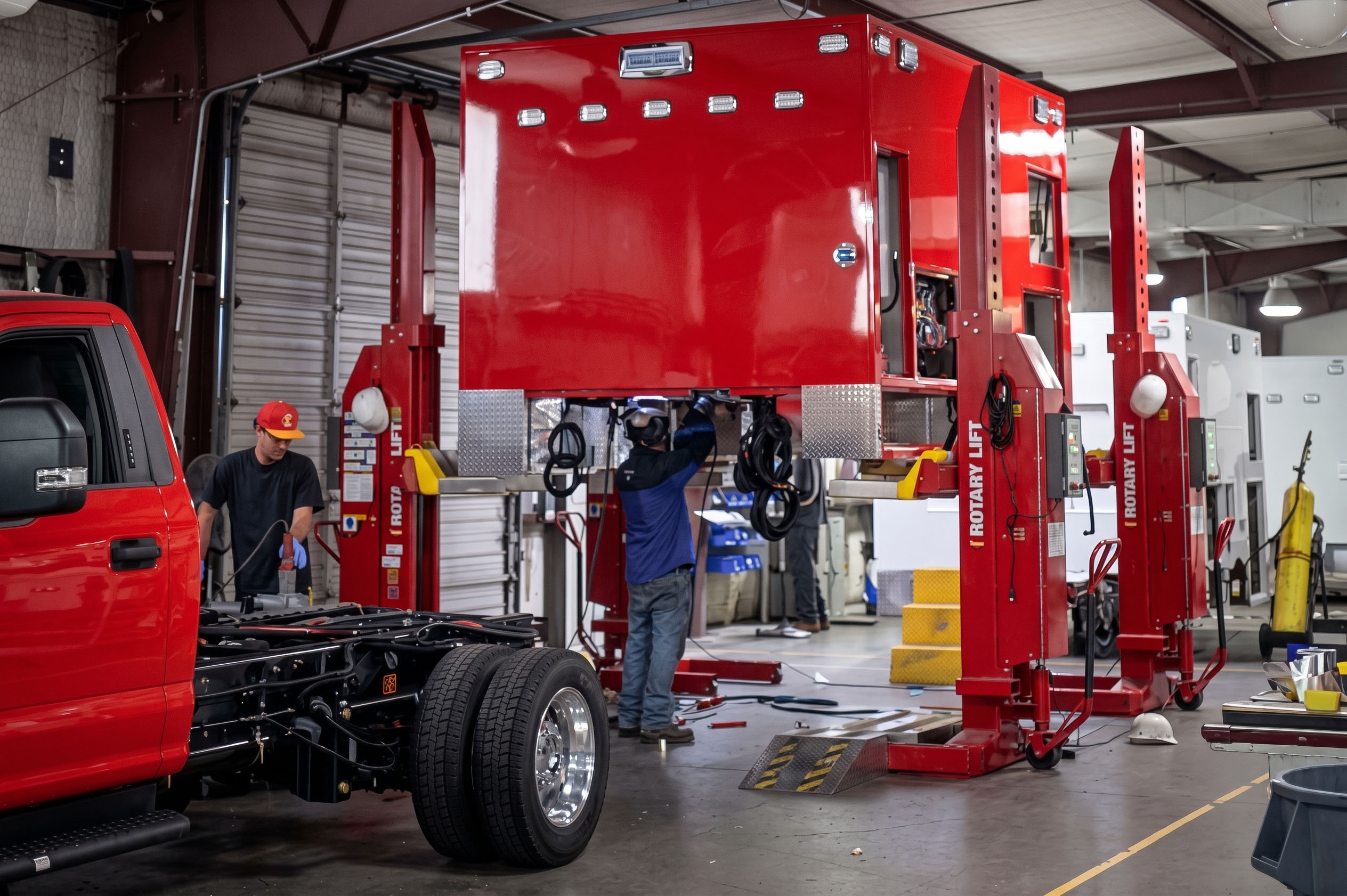
Remount discussions often begin with a savings percentage, but the number alone does not tell the full story. Your team should understand what produced the reported savings and whether the same conditions apply to your fleet.
Some customers who remounted Frazer modules onto new chassis reported fleet maintenance cost reductions between 42% and 60% compared with their prior costs. This is a customer-reported range, not a guaranteed result for every fleet.
The potential savings may come from more than avoiding the cost of a new module. A durable module and a simple, serviceable design may contribute to fewer maintenance issues over time.
Frazer uses point-to-point wiring with common relays, fuses, and terminal strips instead of a multiplex electrical system. This approach can help some maintenance teams diagnose and repair issues without specialized software or an outside vendor. The actual benefit depends on the problem and the department’s in-house capabilities, but easier service may help limit repair costs and downtime.
Support after the vehicle returns to service also matters. Review the builder’s service model, parts support, and geographic coverage before making a decision because serviceability is part of the lifecycle calculation.
Some Frazer modules have exceeded 1 million miles of service, and some have remained in use for more than 20 years through multiple remount cycles. These examples show what may be possible under the right operating, maintenance, inspection, and service conditions.
Does Remounting Affect Your Warranty?
Warranty coverage should be part of the review before your department approves a remount. Read the applicable terms and confirm in writing how the proposed work will affect both the module and its components.
What Frazer’s Lifetime Module Warranty Covers
Frazer provides a lifetime module construction warranty for the original owner. It covers design, workmanship, installation errors, and defective materials, subject to the warranty’s terms, conditions, exclusions, and limitations.
The coverage is tied to the module and the original owner rather than a single chassis. That may allow the warranty to continue after an eligible remount. Your department should still confirm coverage for the specific unit and proposed work before authorizing the project.
What Happens to Component Manufacturer Warranties
An EMS vehicle also includes systems and components covered under separate manufacturer warranties. Frazer passes through applicable component manufacturer warranties. Whether that coverage continues may depend on the manufacturer’s terms, the component’s age and condition, and the work included in the remount.
Ask the builder to document the coverage that will apply after the remount. This gives your team a clear record of what continues, what changes, and which components need a separate review.
When Replacement May Be the Better Choice
A fair comparison must include situations where a remount is not the best fit. Replacement deserves serious consideration when the module has structural damage beyond normal wear, has a pattern of repeated problems, or cannot be certified to applicable standards.
Your department’s mission may also have changed. Higher call volume, new clinical requirements, staffing changes, or a move to a different vehicle type may make a new build more practical than extending the life of an older configuration.
These factors are not meant to steer every department toward replacement. They help your team evaluate the unit without assuming one answer before the inspection and cost review are complete.
A builder should be willing to discuss both options, including the reasons its remount program may not fit a specific unit. Frazer uses this approach with fire and EMS departments across the country, including long-standing customers such as Fort Bend County EMS and Houston Fire Department. The recommendation depends on the fleet’s condition, history, configuration, and operating needs.
How to Build the Case for Your Department
Once you have reviewed the unit, document the recommendation in a way that leadership, purchasing, finance, and operations can follow. The steps below keep the decision focused on facts rather than assumptions.
- Document the module’s condition. Include structural inspection results, mileage, major repairs, and service history.
- Calculate the lifecycle cost for both options. Use documented maintenance, downtime, and expected service-life data instead of purchase price alone.
- Confirm warranty terms in writing. Make sure the terms apply to the specific unit and proposed remount.
- Compare both options with your current mission. Consider call volume, service area, staffing, clinical needs, and the suitability of the existing layout.
This process can support either a remount or a replacement recommendation. The goal is not to force a certain answer, but to give decision-makers a clear record of the facts, costs, assumptions, and operational needs behind your recommendation.
For a deeper look at lifecycle planning, read the 2026 Guide to EMS Vehicle Reliability & Fleet Uptime. A conversation with an experienced builder can also help your team work through the inspection findings and cost comparison before making a final decision.
If your department is deciding between a remount and replacement, a Frazer team member can review the unit’s history, condition, configuration, and operating needs with you. The purpose is simple: help your team understand what each path may involve so you can make the decision that fits your fleet.
Is it cheaper to remount an ambulance or buy a new one?
It depends on the module’s condition, history, configuration, and remaining certifiable lifespan. When the module is structurally sound and still meets the department’s needs, remounting may offer a lower lifecycle cost. Some customers have reported fleet maintenance cost reductions between 42% and 60% after remounting, but results vary by fleet and operating conditions. When the module has structural damage or cannot be certified to applicable standards, replacement may be the better financial choice despite the higher upfront cost.