The 2026 Guide to Ambulance Total Cost of Ownership & Fleet Lifecycle Management
Fire Chiefs, EMS Directors, and Fleet Managers often face a difficult operational challenge: emergency vehicles can spend substantial time in the shop. A seemingly minor electrical issue may leave a frontline unit at a dealership for weeks while the department waits for a proprietary part. During that time, mechanics may face added pressure, reserve fleets may carry more of the workload, and maintenance costs can increase.
In a climate of supply chain delays and tightening municipal budgets, departments may benefit from considering whether EMS modules should be replaced every five to seven years. A broader evaluation can help leaders understand how vehicle design, serviceability, and lifecycle planning affect long-term costs.
What is the total cost of ownership for an ambulance?
The total cost of ownership (TCO) for an ambulance includes the initial purchase price plus the lifetime costs of maintenance, fuel, parts, and downtime. High maintenance costs and frequent fleet replacements can cause a lower initial bid to become more expensive over a ten-to-fifteen-year lifecycle.
When evaluating a new vehicle purchase, procurement teams may focus heavily on the Capital Expenditure (CapEx), or the sticker price paid on day one. That price represents only one part of the financial picture. Operating Expenditures (OpEx) can also have a significant effect on department budgets over time.
OpEx may include replacement parts, dealership labor rates, towing, and the cost of maintaining a larger reserve fleet to cover vehicles that experience frequent downtime.
When a department presents a premium vehicle builder to its procurement committee, a common objection may be, “But this costs more upfront than the standard units we usually bid.” Higher-quality engineering and structural materials may require a larger initial investment. However, if a lower-cost truck spends 45 days a year in the shop, some of the apparent upfront savings may shift into the maintenance budget and place additional demands on fleet personnel.
Procurement teams can use the Overall Cost of Ownership (LOCO) framework to compare more than the purchase price. A vehicle designed to reduce downtime and remain useful beyond the life of its initial chassis may support long-term savings. Customer-reported fleet maintenance cost reductions range from 42% to 60% when adopting the Frazer model. Investing in serviceable engineering at the time of purchase may also help departments reduce exposure to unpredictable repairs later in the vehicle’s lifecycle.
Hidden Drivers of Fleet Budgets: How Lower-Priced Ambulances May Cost More Over Time
To lower TCO, departments need to understand the factors that contribute to maintenance expenses. In many modern EMS vehicles, diagnostic complexity can be a significant contributor.
Some traditional builders route their electrical systems through complex, computerized multiplex boards. When a multiplex system develops a fault, the symptoms may vary. Lights may flash unexpectedly, or the module may experience a loss of power.
In-house fleet mechanics may also have difficulty diagnosing or repairing these systems without specialized tools. Proprietary software, potential firmware restrictions, dealer scheduling, dealership labor rates, and backordered components can add time and cost to the repair process.
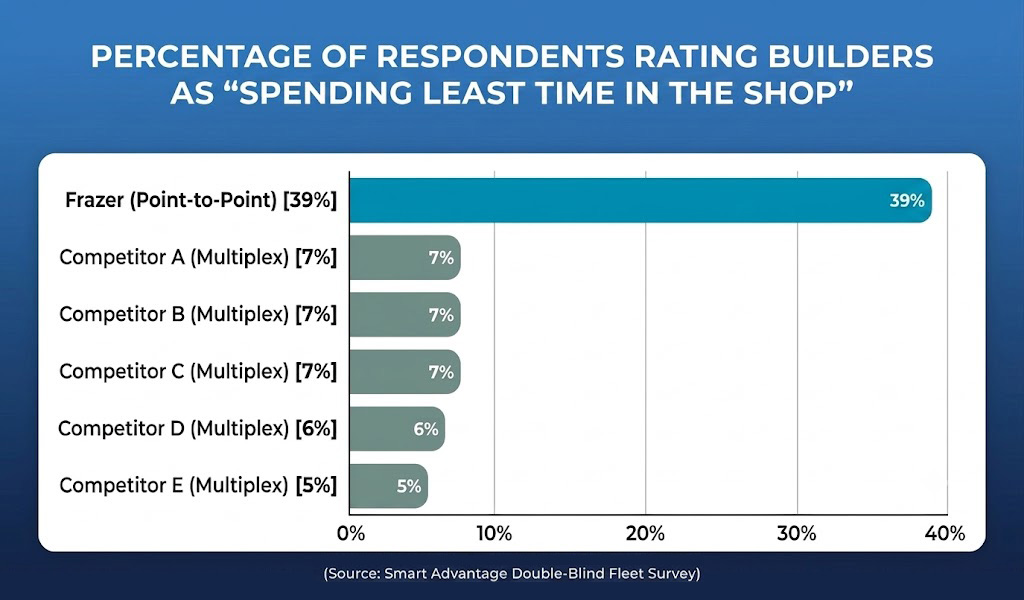
This design approach can contribute to dependency on outside service providers and longer periods of downtime. In a double-blind survey of 100 EMS professionals asking which brand spends the least amount of time in the shop, Frazer was rated at 39%, while the next closest competitor was rated at 7%.
How can departments address ambulance electrical problems more quickly?
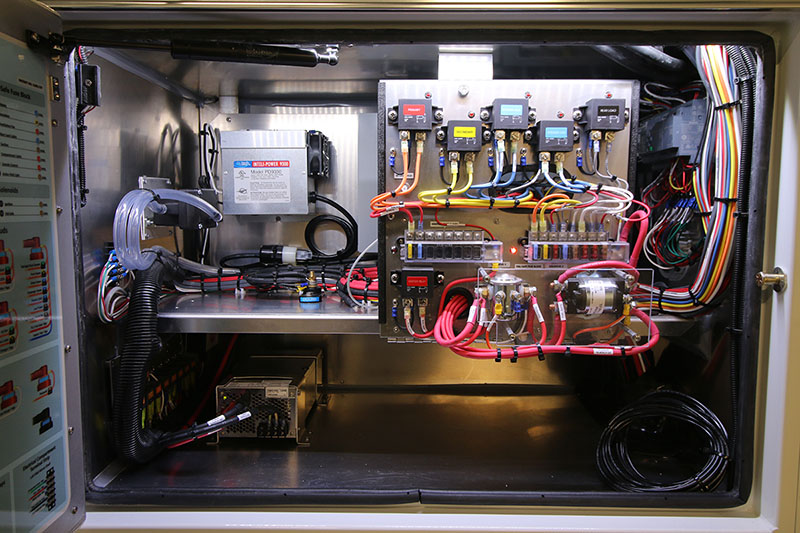
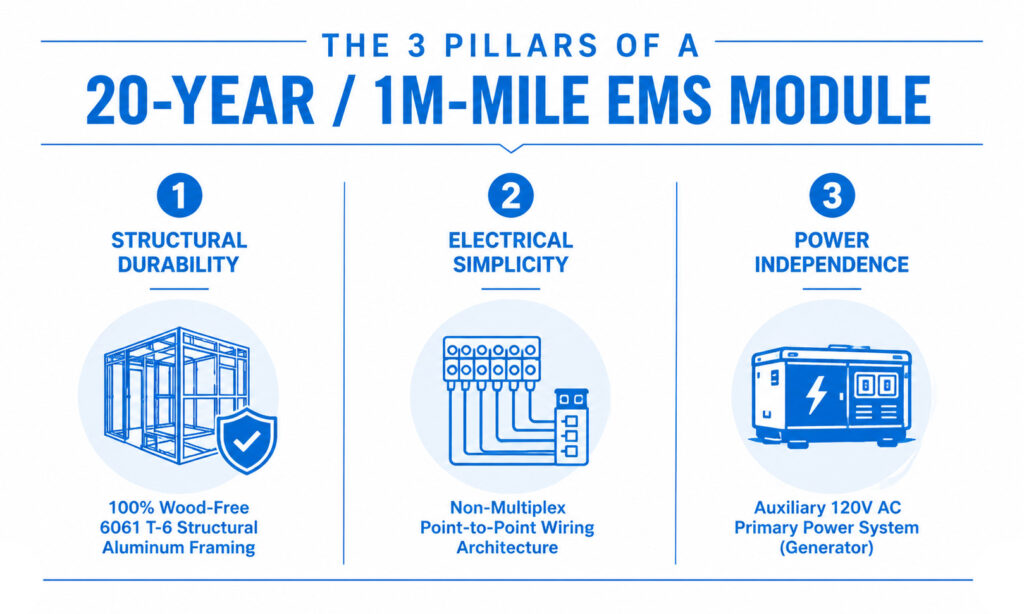
When repair speed and serviceability are priorities, departments may want to compare multiplex systems with vehicles built using simple point-to-point wiring, standard relays, and common fuses. These components can allow in-house fleet mechanics to diagnose and repair some issues without waiting for proprietary, dealer-only parts. If an electrical system develops a problem at 2:00 AM on a Saturday, a vehicle that requires dealership diagnostics may remain out of service until qualified support becomes available.
With Frazer’s point-to-point wiring, a mechanic can access the exterior electrical compartment directly, consult a clearly labeled diagram, trace the affected wire, and identify a fuse or relay that may need attention. Because Frazer uses standard, off-the-shelf components in many applications, mechanics can often purchase a replacement part from the local 24-hour auto parts store and return the vehicle to service more quickly, depending on the nature of the issue.
How Chassis-Independent Power Can Help Reduce Time in the Shop
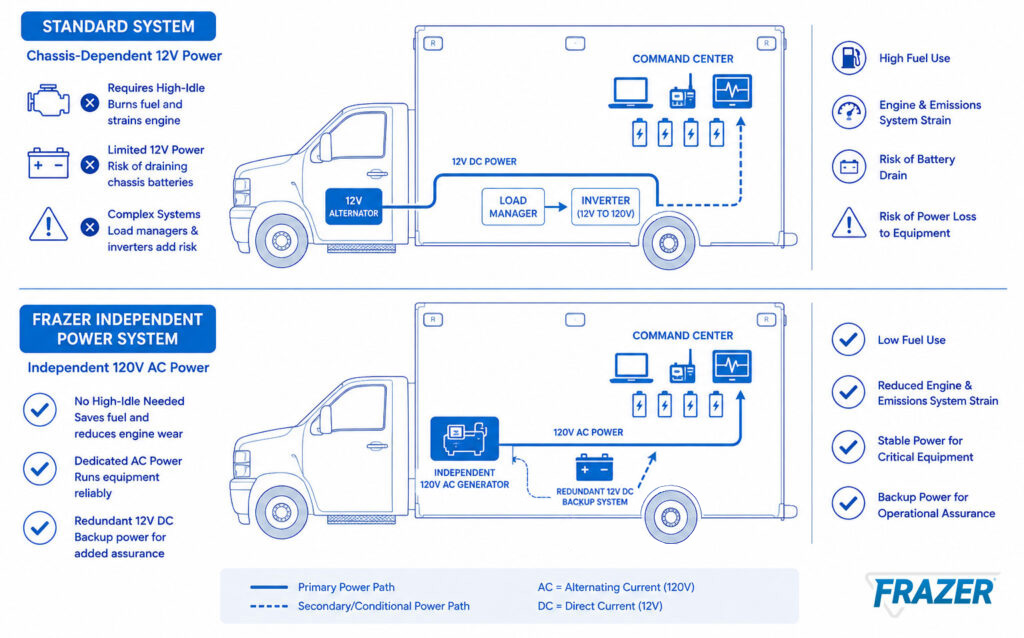
A modern medical module functions much like a mobile treatment space and requires steady electricity for lights, monitors, suction, and air conditioning. When a truck engine and alternator also supply power to that equipment, the additional electrical load may contribute to wear on chassis components. Over time, departments may encounter alternator, battery, or engine-related service needs.
If a chassis-powered system experiences an engine failure, the patient compartment may also lose power and climate control. To help combat this, Frazer uses independent power systems. The primary power source for a Frazer module is an independent 120-volt AC generator.
A dedicated generator system uses a different maintenance approach than a modern diesel truck engine. Frazer also provides free training for service technicians on generator and electrical systems to support departments as they become familiar with the equipment.
The operational benefits of this separation may include:
- Chassis Protection: The truck engine can focus primarily on moving the vehicle rather than supplying the module’s full electrical load.
- Operational Independence: If the truck engine needs to be shut off or develops a problem at a scene, the generator is designed to continue supplying power to the module. This can help keep lights, medical equipment, and climate systems operating while patient care continues.
- Climate Control: Frazer modules use a self-contained, 120V residential-grade HVAC system. It is engineered to maintain up to a 35°F temperature differential from ambient conditions, which can help support a more controlled environment for crews and patients during hot weather.
- Serviceability: Some chassis-tied AC systems require mechanics to access components behind the dashboard or ceiling, which may extend repair time. Frazer’s side-mounted HVAC unit is designed to be removed and replaced in under 1 hour.
The Remount Strategy: Separating Module Life from Chassis Life
Many departments have historically treated the ambulance as a single unit. When a truck chassis reaches 150,000 miles or becomes too costly to maintain, the department may replace the full vehicle, including a medical module that may still have useful service life.
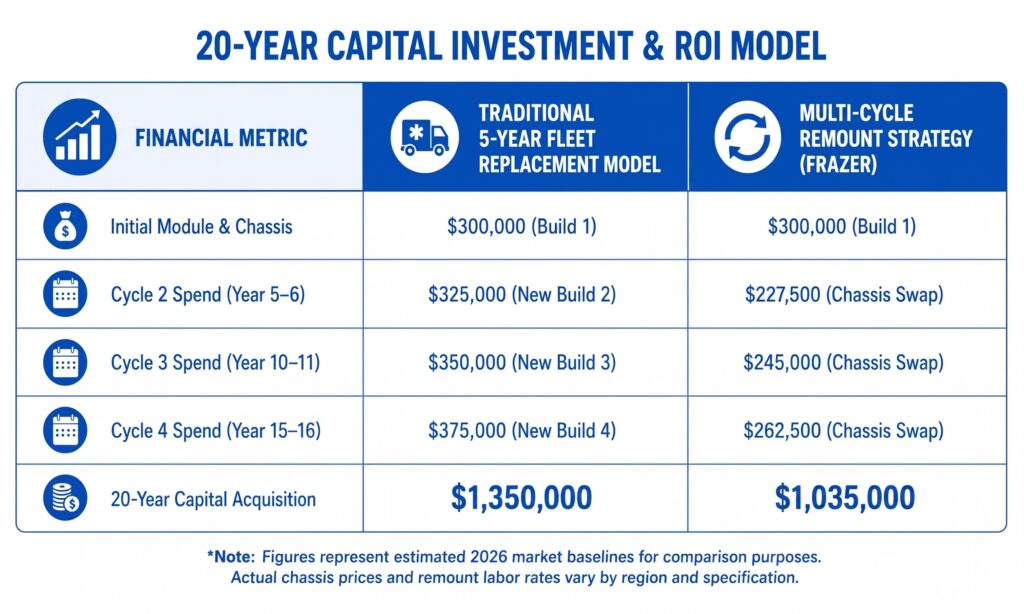
This approach can require departments to seek funding for brand-new, $300,000+ vehicles every five to seven years. One strategy for managing a 2026 fleet budget is to evaluate the module and chassis as assets with different potential lifecycles.
Because a Frazer module powers and cools itself independently, it is not as deeply integrated into the truck’s dashboard and engine wiring as some chassis-dependent designs. This separation is intended to support a more efficient remounting process. When a truck chassis reaches the end of its usable life, a department may be able to retain the medical module. The module can be removed from the existing truck and installed on a new chassis.
By planning around a long-term, 20-year module lifecycle and remounting an existing module onto a new chassis, Chiefs and EMS Directors may be able to revise their long-term capital expenditure models, reduce overall TCO, and direct available funds toward priorities such as crew compensation, stations, or medical equipment.
Building Your 2026 Fleet Lifecycle Procurement Checklist
When preparing an RFP or presenting a budget request to a procurement committee, objective criteria can help departments evaluate long-term value in addition to the initial sticker price.
Use this checklist when comparing EMS vehicle builders and considering factors that may affect Total Cost of Ownership:
- Is the electrical system point-to-point? Point-to-point wiring may help an in-house mechanic address some electrical issues using standard parts, reducing reliance on dealer-only multiplex board replacements.
- Can major components be replaced quickly? Ask specifically about the air conditioning system. If the AC fails in July, can the full unit be replaced in under 1 hour, or could the truck remain out of service for an extended period?
- Is the module powered independently of the chassis? An independent system can reduce the electrical load placed on the truck alternator and is designed to support continued power to patient-care equipment if the truck engine develops a problem.
- Does the module feature a wood-free, all-aluminum structure? Wood may rot or weaken over time. Departments planning to remount a module may want a structure designed to support 15 to 20 years of continuous use.
- What testing, documentation, and applicable safety standards are available? Ask whether the vehicle meets SAE J3043 and CAAS GVS standards. Review the manufacturer’s testing records, collision history, and available documentation when weighing initial cost against long-term operational and liability considerations.
- Does the manufacturer offer a lifetime structural warranty? Review the warranty terms to understand what structural coverage is available to the original owner, including conditions, exclusions, and the process for addressing covered repairs.
- Is direct, 24/7 factory support available? Direct access to personnel familiar with the vehicle’s design may help maintenance teams diagnose problems and identify appropriate next steps.
Take a Broader View of Your Fleet Maintenance Budget
In 2026 fleet management, lower upfront costs may be offset over time by maintenance expenses, downtime, and shorter asset lifecycles. By evaluating independent power, serviceability, and remountability, departments can make more informed budget decisions and support access to dependable tools for frontline crews.
Contact a Frazer Account Executive to discuss how a custom, generator-powered vehicle may fit into your long-term fleet budget.
What is the total cost of ownership for an ambulance?
The total cost of ownership (TCO) for an ambulance includes the initial purchase price plus the lifetime costs of maintenance, fuel, parts, and downtime. High maintenance costs and frequent fleet replacements can cause a lower initial bid to become more expensive over a ten-to-fifteen-year lifecycle.