
Critical Care Transport: Managing the Risks of Chassis-Dependent Power
You just won a hospital contract that calls for dual critical care transports. There is one problem: your current electrical system already struggles to keep a single Isolette and the air conditioning running in 100-degree heat without tripping breakers. Adding more equipment only puts more demand on a system that may already be working near its limits.
For private EMS operations directors and fleet managers, that creates two important concerns. A power interruption during a high-acuity neonatal transfer can create clinical and operational challenges. Electrical problems that are difficult to diagnose can also lead to costly downtime and keep an emergency vehicle out of service longer than expected.
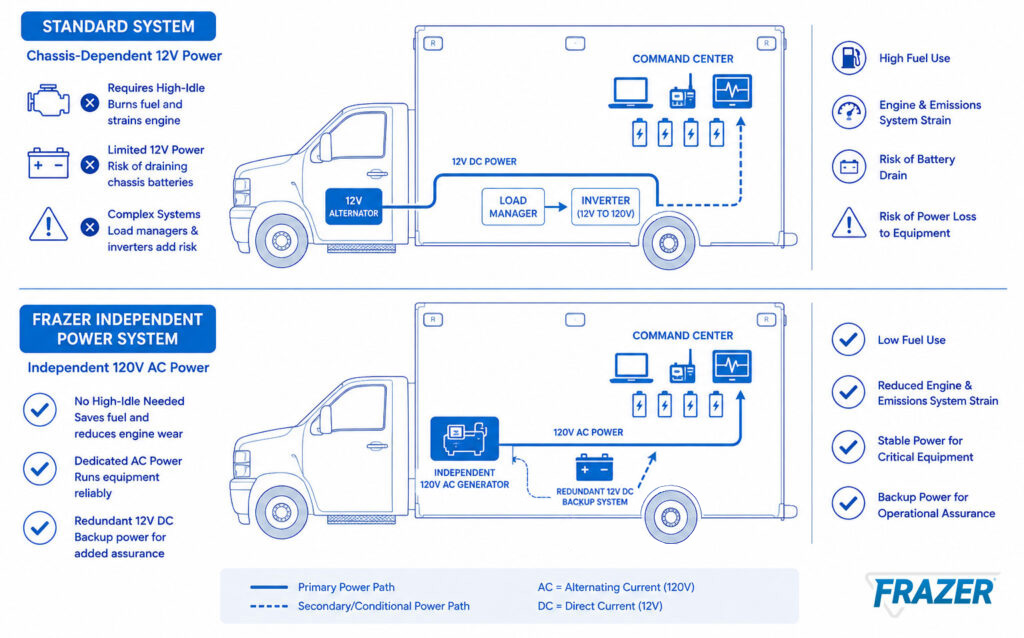
As interfacility transfers become more complex, your vehicle may need to support the demands of a mobile ICU. Multiple medical devices, climate control, and other equipment can create electrical loads beyond what some standard 911 configurations were designed to handle. Large inverters and chassis-driven HVAC systems can also place more demand on the chassis engine, increasing high-idle operation and the maintenance demands that can come with it.
This guide explains how Frazer’s independent power system and three available power sources can help keep critical equipment powered if one source becomes unavailable. We will also look at how straightforward, standardized wiring can make service easier compared with some traditional electrical systems.
The Demand of Dual Care: Reducing Dependence on a Single Power Source
During a critical care transport, your vehicle is more than transportation. It is a mobile care environment. When multiple ventilators, Isolettes, and a high-demand HVAC system all depend heavily on the chassis engine and alternator, a single mechanical problem can affect more than your ability to drive down the road.
If the chassis engine becomes unavailable, equipment that depends on chassis-supplied electrical power may lose its primary source of power as well. That makes power redundancy an important consideration for operations directors planning high-acuity transports. A larger alternator and inverter can provide another approach, but it may also place additional demand on the chassis and increase high-idle operating time.
How Can an EMS Vehicle Support Two Ventilators and an Isolette?
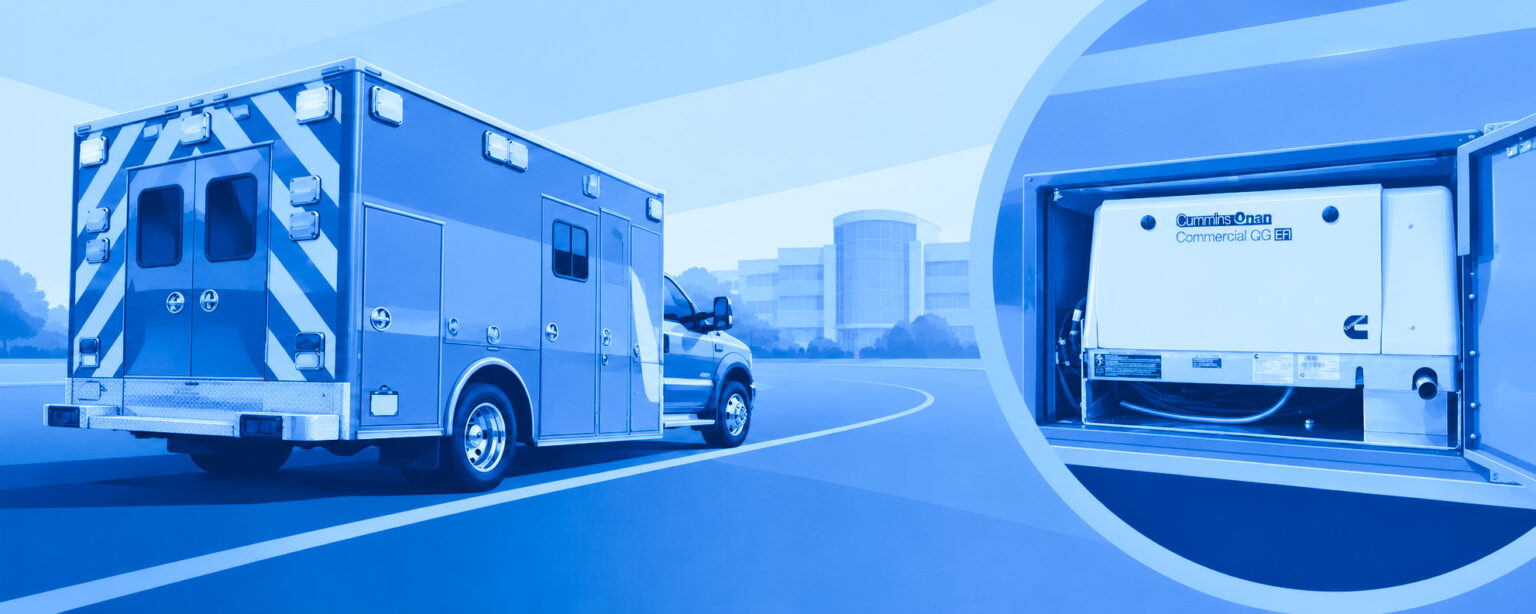
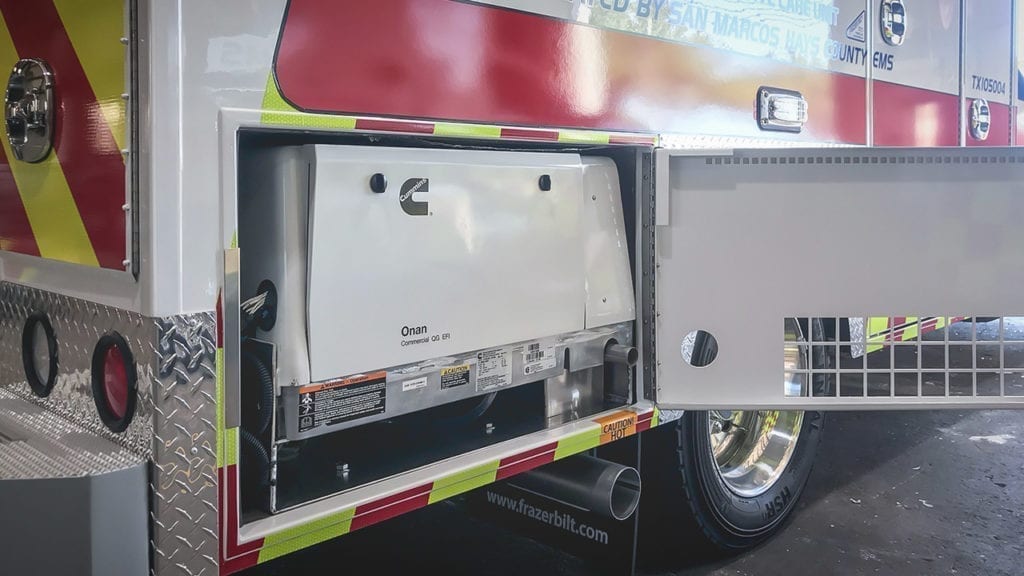
Dual critical care transports can benefit from an independent power plant, such as a Cummins Onan generator, that supplies the module’s 120V outlets and high-demand HVAC loads separately from the primary chassis electrical system. This gives the patient module a dedicated source of power while reducing demand on the chassis electrical system.
Frazer takes that concept further by providing three available sources of power. The goal is simple: give crews options if one source becomes unavailable while reducing unnecessary dependence on the chassis.
Layer 1: The Independent Generator
Fleet directors have every reason to ask whether adding another engine means adding another maintenance headache. One of the most common questions is, “Generators are another component to maintain. Why not run a large inverter off the truck?”
It is a fair question. A generator does require scheduled maintenance, but its job goes beyond supplying 120V power. Because the generator powers module electrical loads and HVAC separately, it can reduce the demand placed on the chassis engine while the vehicle is being used for patient care.
When an EMS vehicle relies primarily on the chassis for 120V power and climate control, the chassis may need to spend more time running or operating at high idle while crews are on scene. Frequent or extended idling can add operating hours and maintenance demands, particularly on modern diesel chassis and their emissions systems.
Frazer’s independent 120V AC Cummins Onan generator allows the patient module and its dedicated 15,000 BTU air conditioning system to operate from a power source separate from the chassis. In practical terms, the module has its own power plant. If the chassis engine shuts down, the generator is designed to continue supplying module power, depending on system condition, load, and configuration.
For fleet operations, that separation matters. Using an independent generator for module electrical and HVAC loads reduces reliance on the chassis for those functions and can help limit unnecessary chassis engine use over the life of the vehicle.
Layers 2 and 3: Automatic Backup Power
Even well-maintained mechanical and electrical systems can experience unexpected problems. During a neonatal or other high-acuity transfer, the last thing critical care nurses and paramedics need is another task pulling their attention away from the patient.
That is why Frazer’s electrical design includes additional available power sources. Instead of depending entirely on one system, the vehicle provides backup options when the primary source becomes unavailable.
What Happens if the Generator Stops During a Critical Transport?
If generator power becomes unavailable, Frazer’s 1500-watt inverter is designed to provide an alternate source of 120V power from the chassis for supported equipment and loads. If 120V power is unavailable, the standard automatic 12V system provides another source for compatible 12V equipment and vehicle systems.
The system is designed to transition between available power sources automatically. That can reduce the amount of manual electrical intervention required from the medical crew during a power interruption, helping clinicians stay focused on patient care instead of troubleshooting the vehicle’s electrical system.
How Can Point-to-Point Wiring Simplify EMS Vehicle Maintenance?
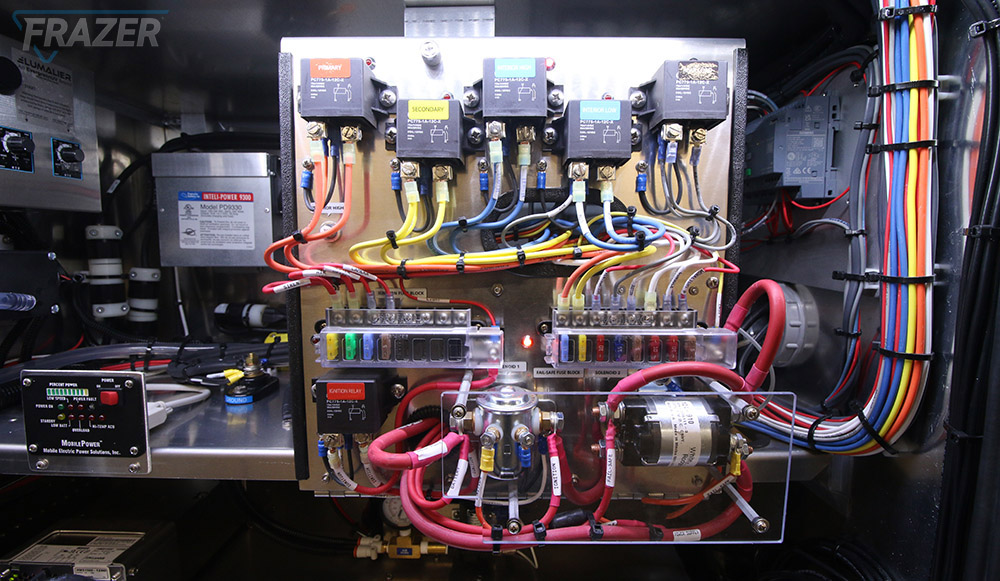
Point-to-point wiring reduces dependence on multiplex nodes and can allow in-house mechanics to diagnose many electrical issues using common tools, including test lights. Frazer also uses standard automotive relays that may be available through local auto parts suppliers. For certain repairs, that can give fleet teams the ability to solve the problem without waiting for a specialized electronic component.
This focus on serviceability has also appeared in customer research. In a double-blind, independent market research study, respondents were asked which brand spends the least amount of time in the shop. Frazer received 39% of the mentions. Source: Survey Results Presentation, 10-30-20.
For fleet technicians, familiar components and straightforward wiring provide more options for diagnosing and completing certain repairs in-house. That can reduce dependence on specialized software or proprietary components for some electrical repairs. Learn more about how complex wiring can affect your fleet maintenance budget.
Proven in the Field: The Floyd EMS Dual Stretcher Build
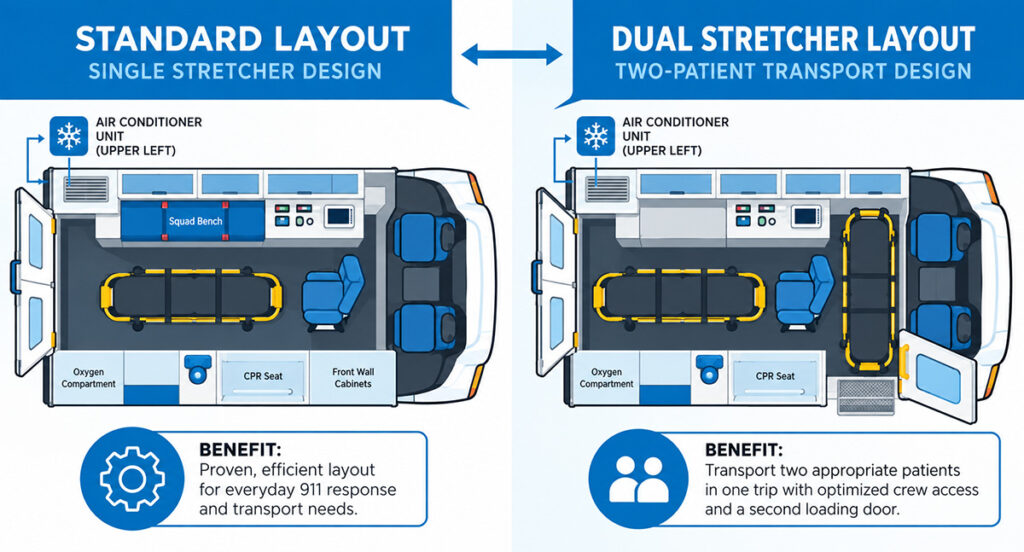
A power system matters most when it supports the real-world needs of the people using it. When Floyd EMS secured a demanding critical care contract, the organization needed a vehicle configured to transport two neonatal Isolettes at the same time.
The solution started with collaboration. For this custom 15-foot Type I unit, Frazer and Floyd EMS began evaluating the interior layout with masking tape on a conference room floor. It was a simple way to work through a complex question: where should everything go so the crew can reach what they need without getting in their own way?
To support the electrical requirements of the dual-transport configuration, Frazer designed the layout around its multiple available power sources. The team positioned 120V generator outlets, red 120V inverter backup outlets, and medical breathing air ports directly over both the primary and transverse stretcher load zones.
This gave the critical care team access to connections for two sets of ventilators and monitors while reducing the need to route cords across the patient care area. The module’s independent 15,000 BTU air conditioning system also provides dedicated climate control to help manage the demands created by additional crew members, patients, and specialized medical equipment.
Depending on patient needs, staffing, protocols, vehicle configuration, and applicable requirements, dual stretcher modules can allow an EMS provider to transport two appropriate interfacility patients in one trip. That capability may increase transport capacity while keeping other fleet resources available for additional calls.
Ready to Upgrade Your Critical Care Fleet?
Critical care transports can place serious demands on an EMS vehicle’s electrical system. An independent generator, automatic inverter backup, and straightforward point-to-point wiring give crews multiple available power sources while reducing dependence on chassis-powered module systems. Just as important, the system is designed with serviceability in mind for the fleet teams responsible for keeping the vehicle in service.
If your organization is preparing for higher-acuity hospital contracts or looking for a more serviceable approach to EMS vehicle electrical systems, Frazer can help you evaluate your requirements. Our team can work with you to understand the equipment you need to support, how your crews operate, and what configuration makes sense for your mission.
Contact our EMS specialists to discuss your power requirements, dual stretcher layouts, and how a purpose-built Frazer module can support your operational uptime goals.
What happens if an ambulance generator fails during a critical transport?
If the generator stops, Frazer’s 1500-watt inverter is designed to provide an alternate source of 120V power from the truck chassis for supported equipment and loads. If 120V power becomes unavailable, the standard automatic 12V system provides another available power source for compatible 12V equipment and vehicle systems.