The Complete Guide to Building an Emergency Vehicle Maintenance Plan
When an EMS vehicle is in the shop, your department has one less unit available to serve the community. Unplanned repairs can also put pressure on your budget and your crews. A clear maintenance plan helps you prepare for service needs and keep your fleet ready.
With tight budgets and rising chassis costs, it pays to look beyond the purchase price. A lower-priced vehicle may cost more to maintain over time, especially if repairs call for hard-to-find parts or special tools. When planning for the next 15 years, consider what each unit will cost to operate, service, and replace.
This guide covers the key parts of an emergency vehicle maintenance plan, from service schedules and wiring to module construction and support after the sale. The goal is simple: help you make informed choices that support your crews and your budget for years to come.
What should an emergency vehicle maintenance plan include?
Start with how your vehicles are actually used. Track chassis mileage and, when equipped, independent generator hours. Include regular checks of the electrical system, air conditioning, and patient module so your team can spot wear before it causes bigger problems.
Preventive maintenance (PM) works best when it happens on schedule. Missed inspections can allow small issues to grow into repairs that take a unit out of service. A written plan makes it easier to assign work, track what has been done, and prepare for upcoming service.
Schedule service by engine hours and mileage
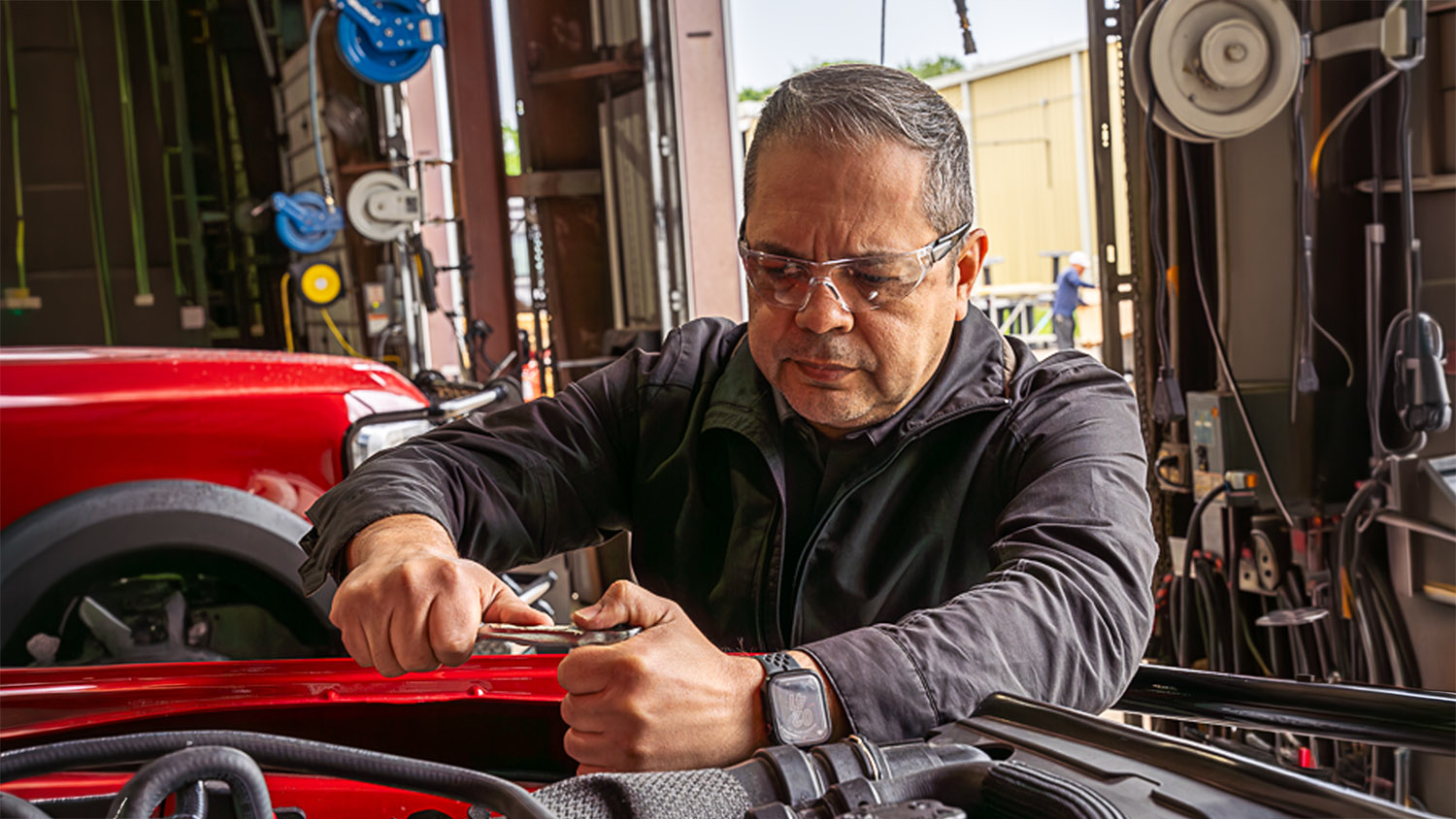
Mileage tells only part of the story. EMS vehicles may spend hours parked at hospitals or on scene while equipment continues to run. That means the chassis and power system may have very different service needs.
On vehicles with independent power systems, such as Cummins Onan or MEPS options, power system use does not always match miles driven. Track generator operating hours separately from chassis mileage and follow the maintenance guidance for each system. This helps your team avoid relying on the odometer alone.
Use those records to plan oil changes, filter replacements, and other service at the intervals recommended by the equipment maker. Keep the records in one place so your technicians can see what is due next. A little planning now can help prevent a surprise later.
The Quarterly Service Inspection (QSI) Framework
A consistent inspection routine helps you plan service and budget for it. Frazer’s Quarterly Service Inspection (QSI) approach gives departments a way to check key systems at regular intervals. The right scope depends on your equipment, its condition, and how you use it.
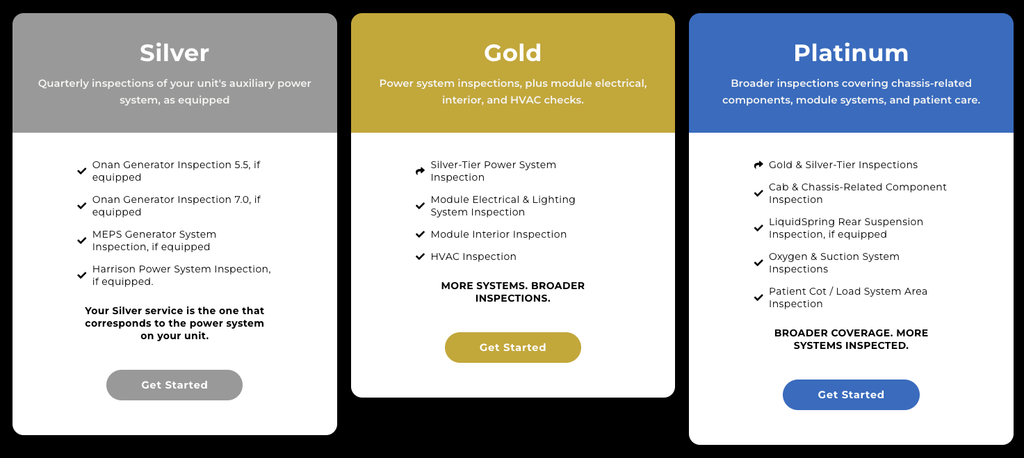
The source material describes three QSI service levels. Confirm current package names, coverage, and availability with the Frazer Service Team before choosing a plan:
- Silver (Essential Maintenance) Focuses on the power system, including Onan or MEPS generator inspections.
- Gold (Expanded Maintenance) Adds module electrical and lighting inspections, door lubrication, and basic HVAC maintenance.
- Platinum (Complete Preventive Care) Includes the services covered under Gold, along with broader inspections of suspension components, oxygen systems, and cot load areas.
Regular inspections give fleet managers a clearer picture of vehicle condition and upcoming work. They also make it easier to plan repairs around your department’s schedule rather than waiting for something to fail.
How does point-to-point wiring support emergency vehicle maintenance?
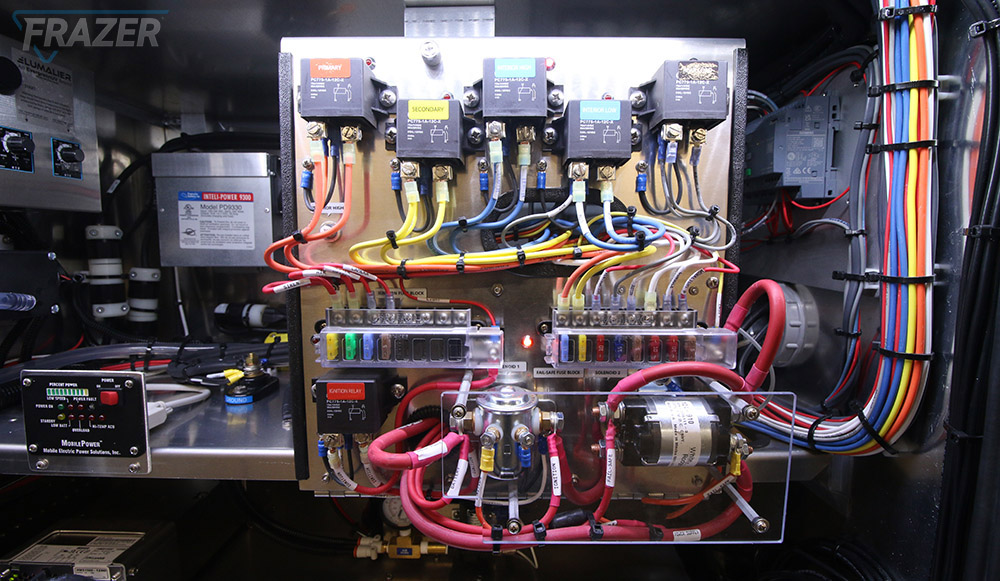
Point-to-point wiring can make many electrical repairs easier to understand. Frazer uses accessible wiring, standard automotive relays, and familiar components so technicians can trace circuits and check common problems without adding unnecessary complexity.
Not every electrical system is built the same way. Some vehicles use multiplexed controls, while others use point-to-point wiring. When comparing units, ask what tools, training, and replacement parts your shop will need to keep each system working.
Electrical systems designed for service
At Frazer, we follow a simple idea: make systems practical to service. Our point-to-point wiring uses accessible terminal strips, standard automotive relays, and fuses. This layout helps technicians find the right circuit and work through many common electrical issues.
For example, if a relay fails, a technician may be able to trace the circuit and replace it with a compatible part using familiar tools. Some repairs will still need expert support, but service-friendly design can give your team more options. That matters when every hour of downtime counts.
Before choosing a vehicle, ask whether your shop can handle routine electrical work. Look at the wiring layout, parts access, and training available. Frazer designs for service access because maintaining the unit should be part of the plan from day one.
How do construction and warranties affect long-term costs?
A bid price matters, but it does not tell you the full cost of owning a vehicle. Construction, repairs, and the option to reuse a patient module can all affect your long-term budget. These factors deserve a place in the discussion with your purchasing team, city council, or finance committee.
Ask what the module is made of and how it is built. Those choices can affect how it holds up to moisture, vibration, and years of use. They can also shape your options when the chassis is ready for replacement.
Why does wood-free construction matter?
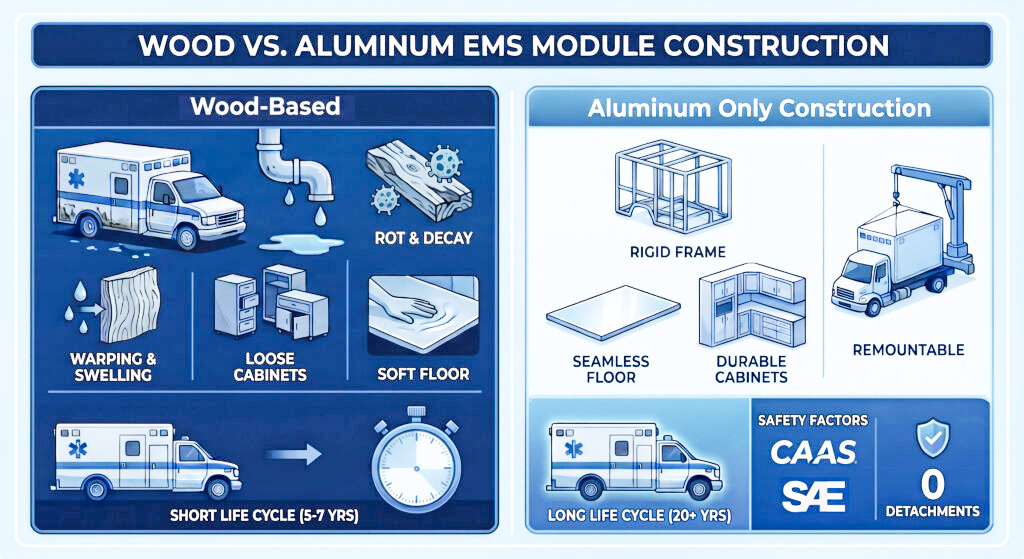
Patient modules can use wood-based panels, aluminum, and other materials. Each has different service and repair needs. Moisture and daily wear are worth considering, especially when you hope to keep a module through more than one chassis.
Frazer modules use a wood-free, all-aluminum framework with heavy-duty 6061-T6 aluminum tubing in the base frame. We build them with long-term use in mind. That construction also supports our approach to module warranty coverage.
Frazer’s lifetime module construction warranty covers qualifying failures related to design, construction, or installation for the original owner, subject to the written warranty terms. Ask our team for the full warranty details so you know exactly what is covered.
With proper care, a module may remain useful after its first chassis is ready to retire. Refurbishment and remounting can be worth exploring as part of your replacement plan. The right choice depends on the module’s condition and the work required.
How can remounting lower ownership costs?
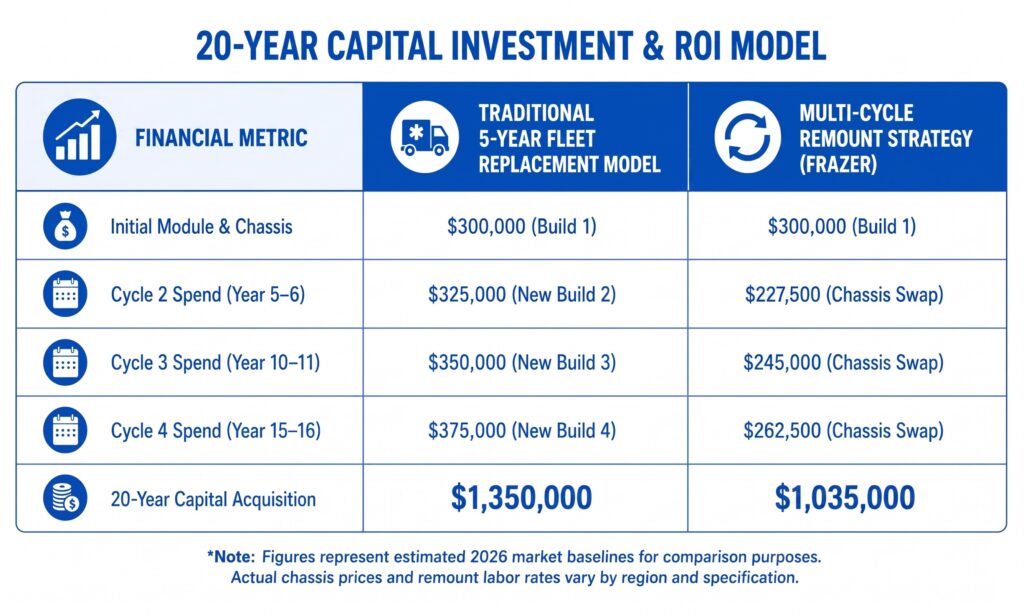
One way to manage ownership costs is to remount a usable module onto a new chassis. A heavily used chassis may need replacement after several years, while the module may still have useful life left. A careful inspection can help you decide whether remounting makes sense.
Remounting lets an eligible module stay in service on a replacement chassis instead of replacing the entire unit. It is not the right fit for every vehicle. Compare the condition of the module, chassis compatibility, required upgrades, and total project cost before making the call.
This is part of what we call Lower Overall Cost of Ownership (LOCO). The goal is to get useful life from the equipment you already own while making smart decisions about future spending.
The Houston Fire Department (HFD) has used Frazer modules across multiple chassis cycles. According to the examples in the original article, some modules have been remounted as many as four times, with more than 1 million miles of service and nearly 20 years in use. These are individual fleet examples, not a promise of how long every module will last.
For a 15-year plan, compare the cost of several new complete vehicles with the cost of replacing chassis and remounting suitable modules. Include labor, updates, downtime, and expected service needs in both estimates. That comparison can help you choose the path that fits your fleet and budget.
Can mobile service technicians perform emergency vehicle maintenance on-site?
Yes, for eligible work and service areas. Frazer’s Mobile Service team can travel to customer locations for troubleshooting, scheduled Quarterly Service Inspections, and certain light repairs. On-site service may save your department a trip and make it easier to schedule maintenance around daily operations.
Service access matters even more when your vehicle was built far from home. Before buying, ask what work can be done locally, what requires a service center visit, and who will help coordinate repairs. Those answers can make a real difference when a unit needs attention.
Choose a service option that fits your fleet
Your maintenance plan should fit the people and resources you already have. Frazer supports several ways to care for your unit, whether your team handles routine work or you need outside help:
- In-House Independence Departments with dedicated fleet maintenance teams can take advantage of complimentary factory training classes designed to help mechanics understand and service Frazer generators and electrical systems.
- Mobile Service For departments that prefer on-site support, Frazer Mobile Service technicians can travel to customer locations to perform applicable diagnostics, scheduled preventive maintenance, and certain repairs.
- Authorized Service Centers Customers can access Frazer’s full-service facilities in Houston, TX, and Marianna, FL, along with its network of authorized service partners nationwide. Service availability may vary by location and the type of work required.
In a double-blind Smart Advantage survey of 100 EMS and fire professionals, respondents ranked support after the sale as their most important manufacturer-selection attribute. The original article also reports that 39% identified Frazer as the brand spending the least time in the shop. These results reflect survey responses, not a measured fleet-wide downtime rate.
That feedback points to a question every buyer should ask: What happens after delivery? We offer factory training, mobile service, and service-center support so customers can choose an approach that works for their fleet. Availability and the work each location can perform may vary.
Plan ahead to keep your fleet ready
A good 15-year fleet plan looks past the next repair. It considers how a vehicle is built, how easily it can be serviced, and what support will be available over time. Putting those details into a written maintenance plan can help your department prepare for both routine work and major replacement decisions.
Frazer supports long-term fleet planning with wood-free aluminum module construction, accessible point-to-point wiring, and service options built around customer needs. Our job is to help you understand your options and keep your vehicles ready for the work ahead.
Want to review your current maintenance approach? Start with your service records, upcoming inspections, and replacement schedule. We can help you identify questions to ask and options worth considering.
Request a Preventive Maintenance Plan Review or call us at 888-372-9371. We’ll talk through your fleet’s needs and explain how Frazer’s Mobile Service and Quarterly Service Inspection options may help.
What should an emergency vehicle maintenance plan include?
An emergency vehicle maintenance plan should include regular inspections, preventive maintenance, and service schedules based on how each vehicle is used. Track chassis mileage and, when equipped, independent generator operating hours. Check electrical components, air conditioning systems, and the patient module for signs of wear or damage. Follow the equipment manufacturers’ service recommendations and keep accurate maintenance records to help prevent unexpected repairs and keep your fleet ready.