

How to Budget for a Type 1 Custom Ambulance Without Unexpected Costs
Buying a new emergency vehicle is a major investment. As an EMS director or fire chief, you need a vehicle that gives your crews room to work, holds up to daily use, and fits your department’s budget. Your finance team also needs a clear number to plan around.
That’s not always easy with a custom build. Changes to the layout, equipment, electrical system, or climate control can affect the final price. Without a clear understanding of what’s included, a purchase that looks affordable at first can become harder to fund.
The good news is that you can plan for these costs. Start by understanding what drives the price, which features matter most to your crews, and how the vehicle will affect your budget over time.
How Much Does a Type 1 Custom Ambulance Cost?
A fully custom ambulance can cost more than $350,000, depending on the layout, equipment, and engineering work involved. Frazer offers vehicles in 12ft, 14ft, and many other custom sizes and clinical arrangements. However, not every department needs a one-of-a-kind design.
For agencies looking for a heavy-duty Type 1 vehicle with a more predictable starting price, the Frazer Foundation Series starts at $252,000. That starting configuration includes a 12-foot module, independent power, and an independent HVAC system. Your final price will depend on the options and requirements you choose.
What Causes a Custom Ambulance to Go Over Budget?
Custom builds can cost more than expected when the scope changes. A special cabinet layout, new electrical design, added equipment, or a change requested during production may require more material, labor, and engineering time.
To reduce surprises, settle your department’s key requirements before ordering. Ask what is included in the quote, what costs extra, and how changes will be priced. A clear specification gives both your team and the builder a better plan to follow.
Custom Engineering vs. Heavy-Duty Construction: What Are You Paying For?
When a custom vehicle costs more than your department can spend, it helps to ask where that money is going. Some costs come from the materials used to build the module. Others come from designing a new layout or system for a single order.
A fully custom build makes sense when your crews have needs that a standard layout cannot meet. But if a proven configuration fits your work, you may not need to pay for engineering a new design from scratch.
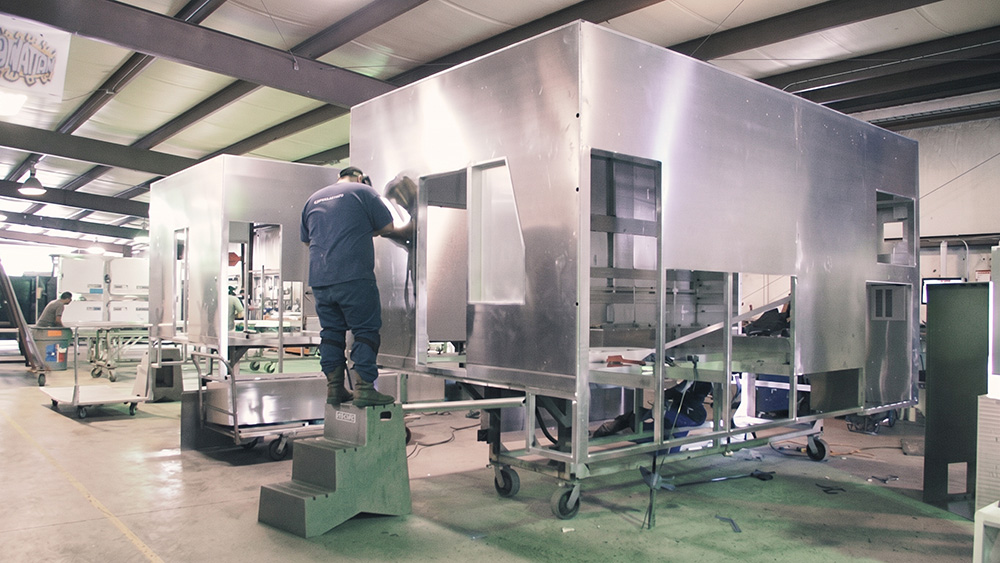
That’s the idea behind the Frazer Foundation Series. Its established 12-foot layout helps limit project-specific engineering while retaining Frazer’s all-aluminum module construction. You get a defined starting point for the build and a published starting price to support your capital request.
Does a Standard Layout Mean Less Room for Patient Care?
Not necessarily. What matters is how the space works for your crew. A good layout should make it easier to reach the patient, move through the module, and access equipment.
The Foundation Series has nearly 50 inches of open aisle space and a center-mounted cot. That gives caregivers room to approach the patient from both sides. It also includes four caregiver seating positions in the starting configuration. Those details help departments judge the clinical workspace, not just the purchase price.
Climate Control That Doesn’t Depend on the Truck Engine
In places like Texas and Florida, patient compartment cooling deserves careful attention. An HVAC system’s performance depends on the temperature outside, how the vehicle is being used, and the system itself.
The Foundation Series includes a 115VAC HVAC system that operates independently of the truck engine. The system is designed to provide at least a 25 to 30 degree cooling differential and can maintain a difference of 35°F or more from the outside temperature under applicable operating conditions. This helps support patient compartment cooling whether the vehicle is moving or parked.
Frazer’s design also separates the patient compartment’s air circulation from the cab. That separation may help support your agency’s infection-control practices by limiting airflow between the spaces. Cleaning, ventilation, and operating procedures still matter, so it should not be treated as a complete infection-control solution.
How Does Serviceability Affect Your Fleet Budget?
The price on the purchase order is only part of what a vehicle will cost. Maintenance, replacement parts, and time out of service also affect your fleet. A vehicle that’s easier to troubleshoot can make life simpler for your shop.
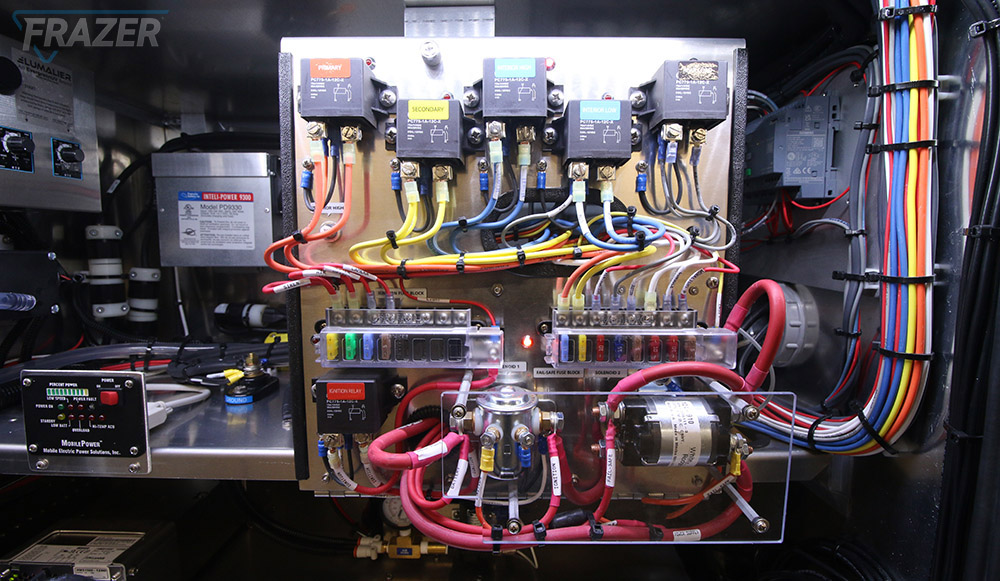
Frazer follows the KISS principle, or Keep It Super Simple, in its electrical design. The system uses point-to-point wiring, common terminal strips, and standard automotive relays. These familiar parts and straightforward layouts are intended to help fleet mechanics diagnose and repair problems without unnecessary complexity.
Serviceability also matters to buyers. In an independent, double-blind survey of 100 EMS and Fire professionals by Smart Advantage, Frazer received 39% of the mentions when respondents were asked which brand spends the least time in the shop. That’s a measure of respondents’ perceptions, not a guarantee of uptime, but it’s useful context when comparing builders.
Why Look Beyond the Purchase Price?
A lower upfront price does not tell the whole story. When you present a capital request, consider how construction materials, maintenance, service support, and future remounting may affect your costs over the life of the vehicle.
Frazer calls this the Lowest Overall Cost of Ownership, or LOCO. It means looking at what your department will spend to buy, operate, maintain, and potentially reuse the module, rather than focusing only on day-one pricing.
Materials Built for Long-Term Use
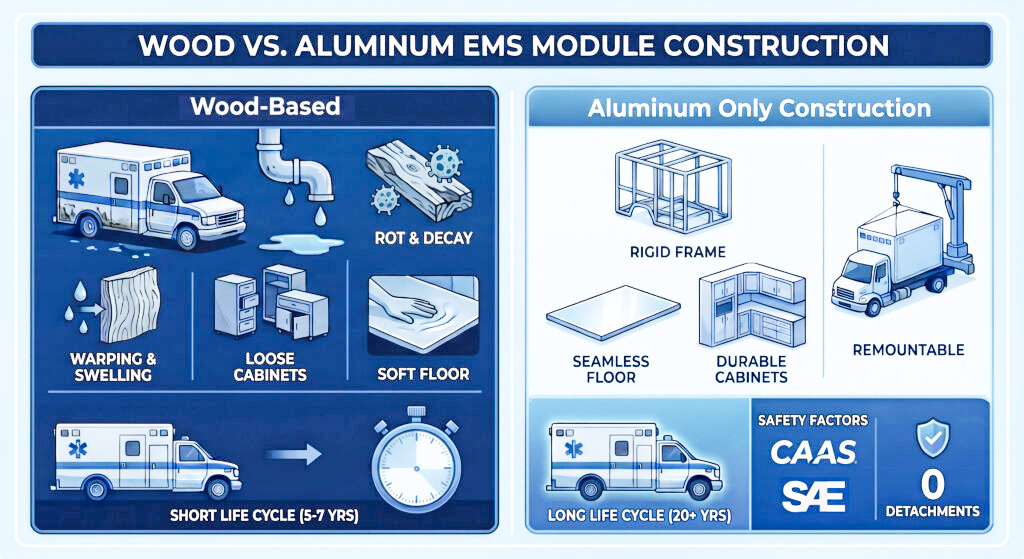
Frazer modules use an all-aluminum welded framework, formed aluminum cabinetry, and a laminated polycarbonate subfloor instead of wood-based materials such as MDF or particle board in these areas.
These materials are selected for durability, moisture resistance, and ease of cleaning in a demanding patient-care environment. Actual service life will still depend on use, cleaning practices, and maintenance.
A Consistent Approach to Module Structure
A standardized configuration does not have to mean a different approach to the module’s structure. The Foundation Series uses the same base frame and structural design approach found in Frazer’s more customized vehicles.
Frazer’s recorded history includes more than 4,500 EMS modules built since 1984, with zero recorded module detachments in collisions. That is a historical record, not a promise about what will happen in any future crash. It’s one factor your department can consider when reviewing how a module is built.
Remounting May Help Extend the Value of Your Investment
A truck chassis and a patient-care module do not always have the same useful life. When the chassis is ready for replacement, the module may still be in suitable condition for continued service.
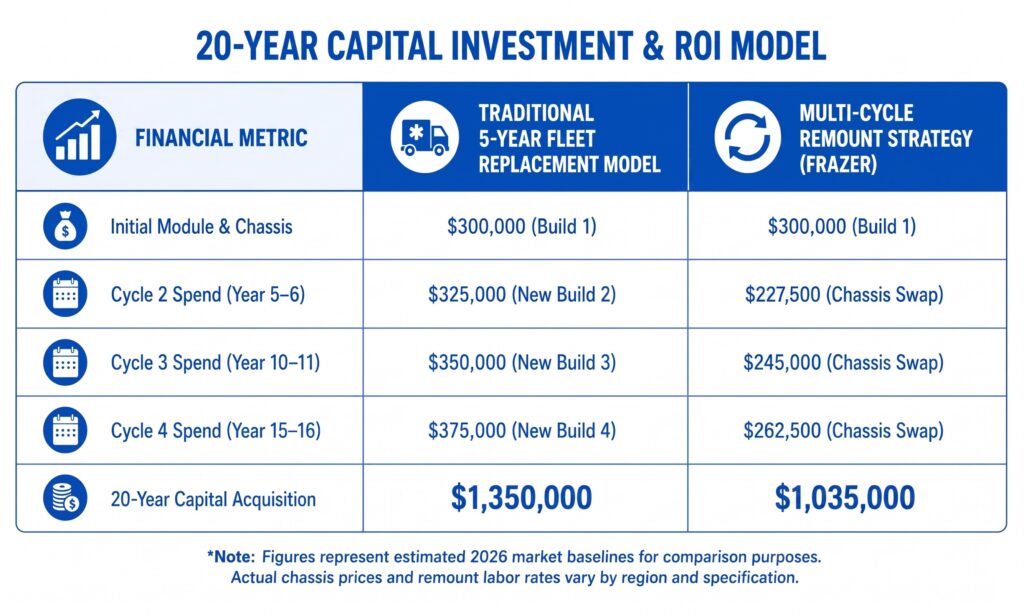
Frazer can evaluate qualifying modules for updates and remounting onto a replacement chassis. Depending on the module’s condition and the work required, remounting may cost less than buying a completely new vehicle. An inspection is needed to determine whether a particular module is a good candidate.
Houston Fire Department offers a real-world example. Some of its Frazer modules have been remounted as many as four times and have surpassed 1,000,000 miles of total service. Your department’s results may differ, but these examples show why remounting is worth discussing during long-term fleet planning.
What Should You Expect After You Place the Order?
A clear purchase price matters. So does knowing who you can call when you need a part, have a service question, or want help keeping your vehicle in operation.
In the Smart Advantage survey, support after the sale ranked as the most important attribute customers considered when choosing an ambulance builder. That finding reflects a simple reality: your relationship with the builder continues long after delivery.
Frazer works directly with its customers, connecting departments to the people who build and support their vehicles. Our team can help with replacement parts, technical information, and service guidance throughout ownership. That’s part of the Frazer Family Experience, and it’s an important consideration when you compare options.
Plan Your Next Vehicle Purchase With Clearer Numbers
If your department needs a heavy-duty Type 1 emergency vehicle, start with your crew’s requirements and a clear understanding of your total budget. Compare what’s included in each quote, ask about possible change costs, and consider service and remounting as part of your long-term plan.
The Frazer Foundation Series offers an established 12-foot layout, independent power and HVAC, all-aluminum module construction, and a published starting price of $252,000. Explore the Foundation Series or contact the Frazer team to talk through your department’s needs, available options, and budget. We’ll help you understand what fits before you make a decision.
How much does a Type 1 custom ambulance cost?
Fully customized Type 1 ambulances can cost more than $350,000, depending on the design, equipment, and engineering required. For departments looking for a heavy-duty option with a more predictable starting price, the Frazer Foundation Series starts at $252,000. It includes a 12-foot module, independent power, and an independent HVAC system. Final pricing depends on the selected chassis, equipment, and options.