
The EMS Fleet Pricing Guide: How Much Does a New Ambulance Cost?
If your department is budgeting for a new frontline emergency vehicle this year, you may have noticed that published pricing can be difficult to find, while quotes for custom vehicles may reach or exceed $375,000. For fire chiefs, EMS directors, and municipal leaders responsible for managing public funds, limited pricing transparency can make capital planning and purchasing decisions more challenging.
Across the industry, some fleets continue operating aging reserve vehicles beyond their originally planned replacement schedules. Chassis maintenance expenses can increase as vehicles age, lead times for certain custom builds can reach 24 to 36 months, and city councils often require detailed financial justification for vehicle purchases.
Price escalation clauses and mid-build change orders can create additional challenges for municipal budgets. Fleet managers benefit from clear financial data when planning 10-to-15-year vehicle replacement schedules.
This guide examines the primary cost drivers behind modern Type I emergency vehicles, outlines estimated market pricing tiers, introduces Frazer’s $252,000 Foundation Series starting price, and explores ways to make fleet budgets go further, including multi-cycle remounting, that may support fleet planning over a 20-year period.
What Drives the Cost of a New EMS Vehicle?
Understanding the cost of a new ambulance starts with examining the major components that contribute to its purchase price. Reviewing these cost drivers can help purchasing teams, risk managers, and fleet directors assess quotes, compare configurations, and determine which features support their department’s operational needs.
Chassis Costs, Availability, and Diesel Requirements
A significant portion of an emergency vehicle’s capital budget typically goes toward the commercial cab-chassis platform, such as the Ford F-450/F-550, Chevy Silverado 4500/5500, or International CV515. Modern emissions requirements, diesel exhaust aftertreatment systems, and commercial vehicle pricing changes have contributed to higher purchase costs for heavy-duty chassis compared with previous decades.
When evaluating chassis options, departments should consider gross vehicle weight rating (GVWR), payload capacity, intended equipment loads, and operational requirements. These specifications can influence vehicle configuration, carrying capacity, and the suitability of the completed vehicle for its intended service.
Module Construction and Long-Term Value
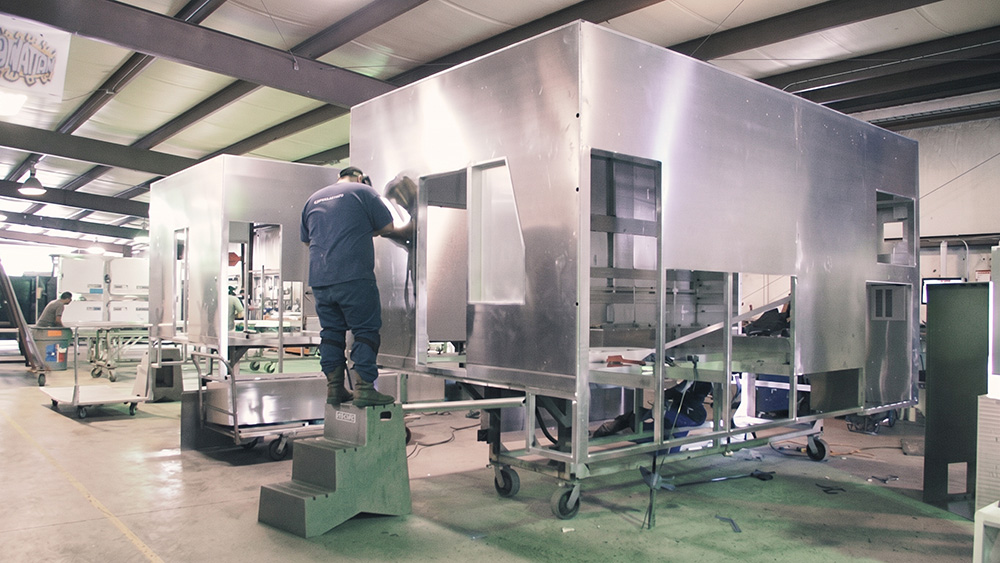
The materials and construction methods used in the rear patient compartment can influence initial purchase cost, maintenance requirements, and long-term service potential. Fully welded 6061-T6 structural aluminum tube framing may require a different initial investment than module designs that incorporate wood substrates, composite panels, or mechanical fasteners.
Frazer uses 3″ x 1.5″ x 3/16″ 6061-T6 aluminum tube and channel for its base frame, along with laminated corner construction that adds structural material at key intersections within the module. This construction approach is designed to help the module manage forces encountered during vehicle operation, support long-term durability, and provide a structural foundation for potential future chassis remounting.
Departments evaluating module construction can benefit from comparing materials, structural design, service requirements, and remounting considerations alongside initial purchase costs.
Independent Power, Climate Control, and Electrical Systems
Powering the patient compartment represents another important component of emergency vehicle cost. Some vehicle configurations use chassis-driven alternators to support electrical systems and climate control equipment, placing additional electrical demand on the truck’s primary engine.
Dedicated generators and Secondary Power Units (SPUs) involve an additional upfront investment but can provide an alternative source of power for patient compartment electrical and HVAC systems. By reducing dependence on the chassis engine for certain auxiliary loads, these systems may help departments manage engine operating hours, maintenance requirements, and long-term operating costs.
The financial impact depends on factors such as vehicle use, system configuration, maintenance practices, and local operating conditions.
Estimated EMS Vehicle Price Ranges
A new Type I emergency vehicle typically ranges from $250,000 to over $400,000, depending on configuration and customization. Standardized heavy-duty frontline platforms are available with starting prices around $252,000, while highly customized builds frequently exceed $350,000. Remounting an existing module onto a new chassis may offer capital cost reductions of approximately 30% to 50% compared with purchasing a new vehicle, depending on the scope of work.
When evaluating available vehicles, the following estimated pricing bands can provide a starting point for capital planning. Actual prices may vary based on chassis availability, vehicle specifications, equipment selections, manufacturer pricing, and contract terms.
- Base Commercial / Transport Models: $200,000 to $250,000
- First Responder / Standard Type I Rescue Platforms: $225,000 to $275,000
- Most Common Frontline Municipal Builds: $250,000 to $300,000
- Highly Customized / Bespoke Multi-Agency Apparatus: $350,000 to $450,000+
- Specialized Platforms (Mobile Stroke Units / Large Mobile Clinics): $900,000 to $1.2M+
Managing Custom Specifications and Budget Growth
Custom vehicle procurement often involves detailed requests for proposals (RFPs) that can extend to 120 pages or more. These specifications may include specialized interior brackets, compartment configurations, lighting systems, and other department-specific features.
As customization requirements expand, additional design reviews, engineering work, and component selections can increase project costs and potentially affect delivery schedules. In some cases, these changes may contribute to total vehicle purchase costs exceeding $375,000.
Departments can help manage this process by distinguishing operational requirements from optional preferences early in the planning stage. Reviewing the intended purpose, lifecycle value, and budget impact of each feature can support more informed purchasing decisions.
A Starting Price of $252,000: The Frazer Foundation Series
For budget-conscious departments, evaluating a standardized vehicle configuration often involves balancing purchase price, construction materials, workspace design, equipment, and expected service life. Frazer developed the Foundation Series Type I vehicle to provide departments with a defined configuration that combines familiar Frazer construction methods, a provider-focused workspace, and direct factory support at a more accessible starting price.
Starting at $252,000, the Foundation Series offers a practical reference point for capital planning, with a defined set of standard features and construction materials. Final pricing may vary based on chassis selection, available options, and purchasing requirements.
Wood-Free Construction and Aluminum Framing
The Foundation Series incorporates structural materials and construction methods also used in Frazer’s custom vehicle offerings. Its module features an all-welded 6061-T6 aluminum tube base frame designed to support the demands of emergency vehicle service.
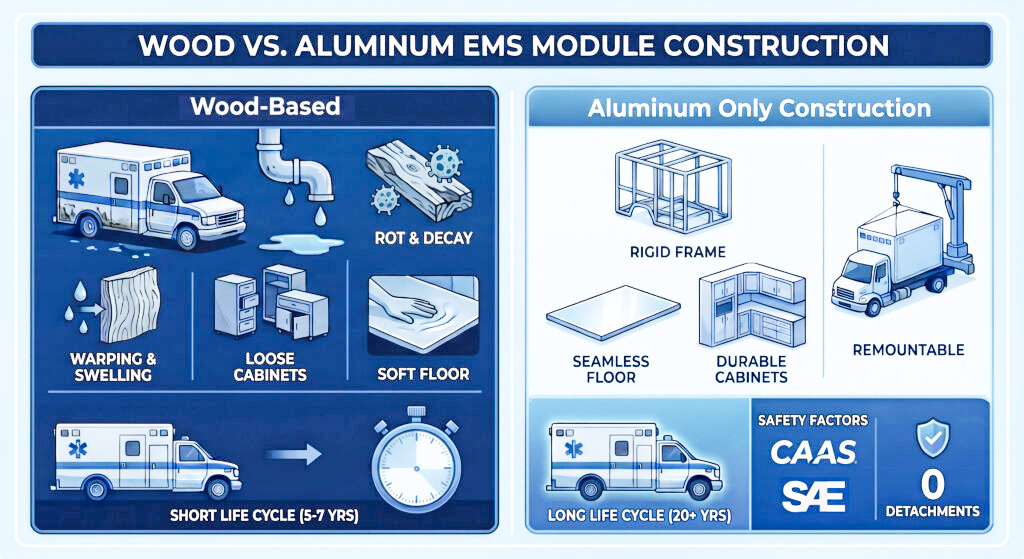
The patient compartment includes bright white powder-coated aluminum cabinetry, stainless steel work surfaces, and a laminated aluminum subfloor with a high-density polycarbonate core. According to Frazer’s Foundation Series construction specifications, the patient compartment contains zero wood, MDF, or particle board. This material selection is intended to reduce exposure to moisture-related deterioration commonly associated with wood-based materials, including swelling and rot.
When combined with appropriate cleaning practices and routine maintenance, these materials can support the long-term serviceability of the patient compartment in environments where repeated washdowns are common.
Room to Work: A Wider Aisle and Four Caregiver Seats
A well-planned emergency vehicle interior should support the personnel who use it during daily operations. The Foundation Series features a full-size 12-foot Type I module with a 96.25-inch body width.
Its center-mounted cot layout provides nearly 50 inches of unobstructed aisle walk-through space, supporting access to the patient from both sides of the cot. The interior also includes four caregiver seating positions.
These design elements are intended to provide a functional workspace for common EMS and medical transport activities while offering departments a standardized interior configuration.
Independent Power and Standard Controls
Foundation Series units include chassis-independent power and HVAC as standard features. This configuration allows the patient compartment’s climate control system to operate with reduced dependence on the truck’s primary engine.
The Foundation Series also includes Whelen CenCom Core vehicle control technology, which provides integrated control of warning lights and siren functions. Using a defined electrical and control configuration can help simplify vehicle specification, support consistent fleet equipment selections, and reduce the need for certain custom electrical design work.
Look Beyond Purchase Price to Total Ownership Costs
Municipal purchasing decisions often place considerable emphasis on initial purchase cost. However, evaluating an emergency vehicle’s long-term financial impact also involves maintenance expenses, repair time, service accessibility, and reserve fleet requirements.
The Lowest Overall Cost of Ownership (LOCO) approach encourages departments to consider these factors alongside purchase price. This broader perspective can help fleet managers assess the potential costs of a vehicle throughout its planned service life.
What Fire and EMS Leaders Value Beyond Price
How important is the initial purchase price when fire and EMS leaders evaluate emergency vehicle providers? In an independent, double-blind market research study conducted by Smart Advantage involving 100 Fire and EMS leaders and reporting a 90% confidence level, fewer than 25% of respondents initially identified purchase price as an important consideration. After participants evaluated and rated the full set of operating factors, price accounted for just 9% of the measured importance in the study.
Support After the Sale received the highest importance rating among the evaluated factors. Other highly rated considerations included the manufacturer’s willingness to customize vehicle designs and its ability to deliver vehicles with relatively few defects or punch-list items.
These findings suggest that the surveyed leaders placed substantial value on post-sale support, customization, and vehicle delivery quality in addition to acquisition price.
What Survey Respondents Said About Repair-Shop Time
When an emergency vehicle is unavailable for service, departments may need to rely on reserve apparatus, adjust deployment plans, or complete repairs before returning the vehicle to frontline operations. Unexpected maintenance, towing expenses, replacement parts, and reserve fleet requirements can contribute to operating costs over time. For this reason, maintenance planning and service availability are important factors in evaluating vehicle lifecycle costs.
In the same independent Smart Advantage study, respondents were asked which emergency vehicle brand they associated with spending the least amount of time in the repair shop. Frazer received 39% of the mentions, while certain other brands each received 7%.
These results reflect the perceptions of the surveyed Fire and EMS leaders rather than a direct measurement of actual vehicle repair hours or comparative fleet uptime. For departments reviewing their fleet replacement strategy, vehicle serviceability, maintenance support, and repair turnaround time may influence reserve apparatus requirements and long-term operating expenses.
Electrical Systems Designed with Service in Mind
Electrical system design can influence how fleet maintenance personnel diagnose faults and perform repairs. Depending on the vehicle configuration, some multiplex electrical systems may require specialized diagnostic equipment or software.
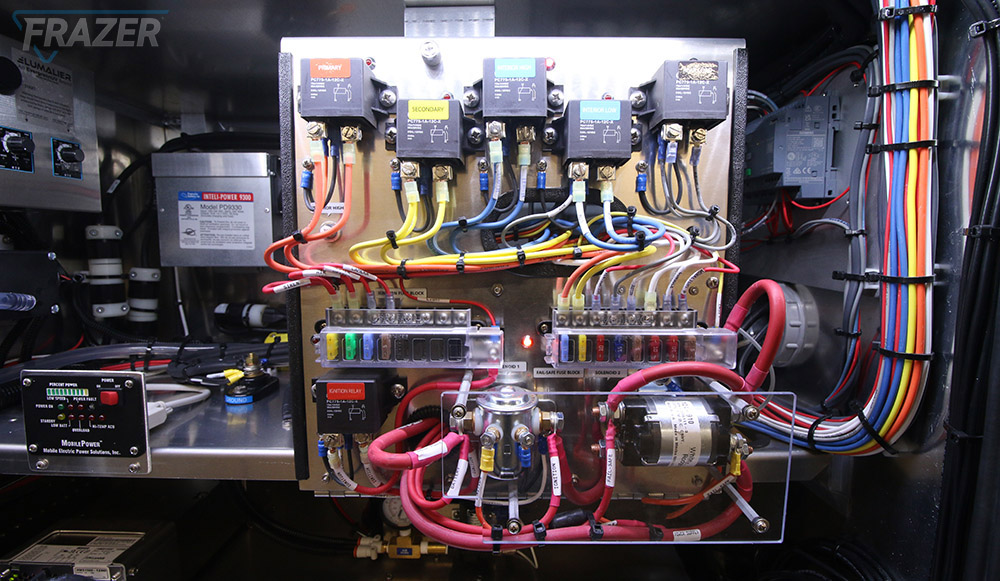
Frazer uses a straightforward electrical design philosophy that incorporates standard automotive relays, common breakers, and point-to-point wiring in applicable systems. Frazer also offers an explicit 5-year electrical system wiring warranty, subject to the applicable warranty terms and conditions.
This approach is intended to make certain electrical components easier to identify, troubleshoot, and service using familiar automotive maintenance methods. For example, a technician may be able to trace certain 12V circuits with a standard test light and replace an accessible relay using locally available components.
Accessible electrical components and familiar diagnostic methods may help fleet maintenance teams address certain repairs without specialized factory equipment, ultimately reducing service delays.
How Can Chassis-Independent Power Affect Fleet Maintenance Downtime?
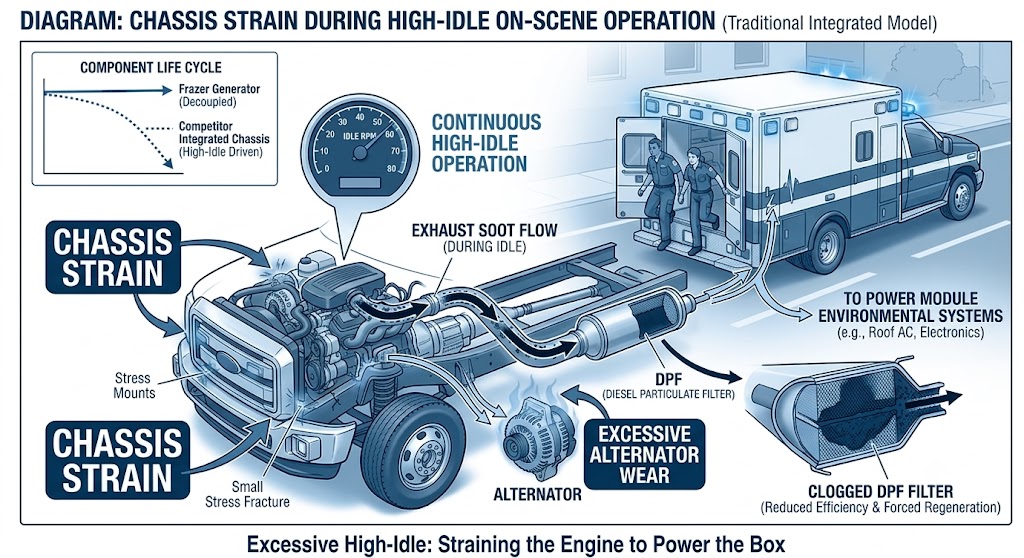
Chassis-independent power systems allow patient compartment air conditioning and electrical equipment to operate with reduced dependence on the truck’s primary engine. Dedicated generators or secondary power units can help limit stationary engine idling in certain operating conditions and may reduce associated wear on chassis components and emissions systems. Potential maintenance benefits depend on equipment configuration, operating practices, and service conditions.
Emergency vehicles may spend extended periods parked outside hospitals, at staging areas, or on standby while maintaining patient compartment climate control. In operating environments where the chassis engine would otherwise run at high idle for 10 to 12 hours a day, a chassis-independent power system can provide an alternative means of supplying electricity and air conditioning to the patient compartment.
Reducing chassis engine idle time may help departments manage engine operating hours and certain maintenance considerations involving drivetrain and emissions components, including diesel particulate filter (DPF) systems. Actual results depend on the vehicle, power system, duty cycle, and maintenance practices.
Frazer offers several independent power options, including Cummins Onan generators, Mobile Electric Power Solutions (MEPS), and Harrison Hydra-Gen hPower systems. These systems can support a dedicated 15,000 BTU self-contained HVAC unit serving the patient compartment separately from the driver’s cabin.
The climate control system is designed to provide a cooling differential of approximately 25 to 30 degrees under specified operating conditions. Maintaining suitable patient compartment temperatures may help support crew comfort and the environmental needs of certain medical equipment and supplies, subject to manufacturer storage and operating requirements.
Frazer also offers the Dometic BreatheEasy Ionizer, an active photocatalytic air purification system designed to help reduce certain airborne contaminants. Its effectiveness depends on factors such as the contaminants involved, system operation, airflow, and environmental conditions.
Together, these systems provide departments with options for managing patient compartment power, climate control, and air treatment independently of certain chassis functions.
How Can Emergency Vehicle Remounting Help Preserve Fleet Capital?
Emergency vehicle remounting may reduce capital replacement costs by approximately 30% to 50% compared with purchasing a new vehicle. The process involves transferring a suitable existing patient module onto a replacement truck chassis. Depending on module condition, maintenance history, and engineering considerations, some all-aluminum modules may support multiple remount cycles, potentially extending their service life across 15 to 20 years and, in documented applications, exceeding 1,000,000 cumulative service miles.
How Remounting May Reduce Replacement Costs
Commercial truck chassis used in emergency service may accumulate approximately 200,000 to 250,000 miles before departments evaluate replacement based on mechanical condition, maintenance costs, reliability, and operational requirements. Rather than replacing the patient module and truck chassis together, departments may be able to reuse a suitable existing module by transferring it onto a new cab-chassis.
When a module remains structurally sound and meets the department’s operational needs, this approach can reduce the amount of new equipment required for a replacement vehicle. Depending on the project, remounting may produce capital cost reductions of approximately 30% to 50%. For larger fleet replacement programs, those savings can represent a substantial reduction in planned vehicle purchases compared with purchasing entirely new vehicles.
For departments operating on a five-to-seven-year chassis replacement cycle, evaluating remounting as part of a 15-to-20-year capital strategy may provide additional flexibility in fleet budgeting. Actual savings depend on the condition of the existing module, the replacement chassis, equipment upgrades, labor requirements, and any modifications needed during the remounting process.
What Makes a Module Suitable for Remounting?
Before remounting an emergency vehicle, departments should evaluate the existing module’s structural condition, maintenance history, electrical systems, and compatibility with the replacement chassis. Moisture exposure, vibration, material deterioration, and previous repairs can affect whether an existing patient compartment remains suitable for continued service.
Some module designs incorporate wood or composite materials that may require additional inspection for moisture-related deterioration. The impact of these materials depends on construction methods, sealing, maintenance, and operating conditions.
Frazer incorporates welded aluminum structural framing, reinforced mounting areas, aluminum cabinetry, and laminated polycarbonate subfloor construction to support durability and potential future remounting. These material and engineering choices are intended to help departments evaluate the feasibility of extending module service life through multiple chassis replacement cycles.
Actual remounting suitability should be determined through an appropriate inspection of the existing module and the requirements of the replacement chassis. The Houston Fire Department (HFD) provides an example of long-term fleet operation involving Frazer vehicles. With a fleet of 129 Frazer units, HFD has operated vehicles whose modules may see 260,000+ miles per truck chassis.
Frazer modules are designed to support multiple remounting opportunities, with as many as four remount cycles possible in suitable applications. When maintained and remounted as appropriate, some modules may accumulate more than 1,000,000 total service miles across successive chassis installations.
These figures illustrate the potential service life of a remountable module. Individual results vary based on vehicle usage, condition, maintenance, and operational requirements.
Understanding Structural Warranty Coverage
Warranty coverage represents another consideration when evaluating the long-term ownership of an emergency vehicle. Frazer provides a lifetime structural warranty to the original owner of a new module, covering qualifying failure or malfunction related to design, construction, or defective workmanship, subject to the written warranty terms.
When an eligible Frazer module returns to the factory for remounting, Frazer also provides a renewed 2-year structural warranty on the remounted module, subject to applicable conditions. These conditions include continued ownership by the original owner and restrictions involving modifications performed by unauthorized third parties, as described in the applicable warranty documentation.
For departments considering multiple chassis replacement cycles, understanding the available warranty coverage can help inform maintenance planning and long-term asset management. Departments should review current written warranty terms to confirm eligibility, exclusions, coverage periods, and applicable remounting requirements.
What Collision Records and Testing Can Tell You
Emergency vehicle purchasing decisions involve both financial considerations and occupant safety. Frazer engineers the base frame, module-to-chassis attachment, and patient compartment structure as interconnected components intended to support structural integrity under demanding operating conditions.
Frazer’s historical vehicle records provide examples of how these construction methods have performed in certain real-world collision events. Across more than 4,500 EMS modules built since 1984, Frazer reports zero recorded module detachments in collisions, including documented rollover events. This figure reflects the company’s reported records and should not be interpreted as a guarantee of performance in future collisions.
In one documented incident involving a CareFlite vehicle, the unit experienced a 52 MPH front driver’s-side impact and a 90-degree rollover. According to the reported incident details, the aluminum patient module remained intact, and the crew was unharmed.
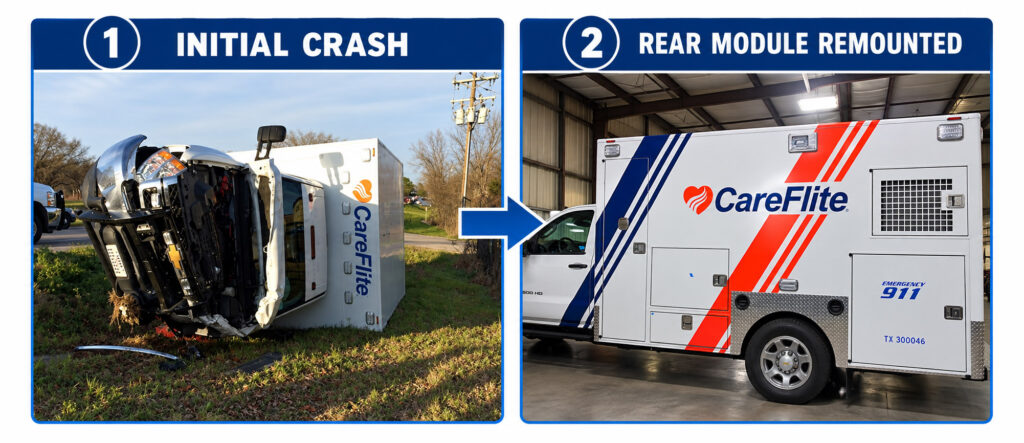
Following inspection and minor cosmetic repairs, the module was subsequently remounted onto a replacement chassis and returned to service. This example illustrates a documented collision outcome involving Frazer construction. Actual vehicle and occupant outcomes depend on factors such as impact conditions, restraint use, vehicle configuration, and other circumstances specific to an incident.
Frazer has also conducted retention system testing associated with Mobile Stroke Unit applications and the requirements of SAE J3043. For applications involving a CT scanner weighing approximately 1,000 pounds under a 26G collision-load requirement, Frazer reports testing its retention system to loads exceeding 50,000 pounds of force, with zero damage observed during the reported test.
Departments evaluating structural construction and occupant protection should consider applicable testing documentation, equipment retention requirements, vehicle configuration, and intended operating conditions.
How Cooperative Purchasing May Simplify Procurement
Developing a custom competitive RFP can involve drafting specifications, advertising opportunities, reviewing proposals, and completing purchasing approvals. Depending on the municipality and project requirements, this process may take up to nine months.
Extended procurement schedules can affect fleet replacement planning, particularly when departments are managing aging apparatus or increasing maintenance needs. Standardized vehicle configurations and cooperative purchasing options may help simplify certain steps in the acquisition process, subject to applicable purchasing policies and legal requirements.
Considering BuyBoard and HGACBuy
Cooperative purchasing programs such as BuyBoard and HGACBuy provide participating public agencies with access to contracts established through cooperative procurement processes. Depending on the purchasing entity’s jurisdiction, membership status, and applicable procurement requirements, these contracts may offer an alternative purchasing pathway for eligible emergency vehicles and equipment.
Departments interested in standardized platforms such as the Frazer Foundation Series can review available cooperative purchasing contracts with their purchasing teams and legal counsel to determine whether the contracts align with local requirements. When an applicable cooperative contract is available and approved for use, the purchasing process may involve fewer administrative steps than developing a new custom RFP.
In some circumstances, this approach may help departments reduce portions of the procurement timeline from months to weeks. Actual schedules depend on contract availability, internal approval processes, chassis supply, production capacity, and delivery requirements.
Reviewing Price Changes and Delivery Terms
Vehicle purchasing agreements may include price adjustment provisions related to chassis costs, material availability, or changes in equipment specifications. Without clearly defined terms, these provisions can create uncertainty when departments forecast project expenses or request capital funding.
Standardized configurations and established purchasing agreements can help departments evaluate pricing, available options, and potential adjustments before placing an order. Purchasing teams should review contract language carefully to understand how price changes, delivery schedules, optional equipment, and other project variables are addressed.
Clear documentation and early communication with the manufacturer can support more predictable capital planning and a smoother purchasing process.
Plan Your Next EMS Vehicle Purchase with Confidence
Emergency vehicle procurement involves balancing purchase price, operational requirements, service support, equipment selection, and long-term ownership costs. For departments responsible for public or organizational funds, a well-documented purchasing strategy can support budget discussions, equipment planning, and fleet replacement decisions.
Evaluating the Lowest Overall Cost of Ownership (LOCO), exploring appropriate remounting opportunities, and reviewing the materials and systems used in a vehicle can help departments develop a more complete understanding of potential lifecycle costs. The Frazer Foundation Series offers a standardized Type I platform starting at $252,000, providing a defined configuration for departments seeking to evaluate initial purchase costs alongside construction materials, workspace design, and support options.
For fleets considering long-term making fleet budgets go further, Frazer can also help evaluate potential remounting projects, available chassis-independent power configurations, and purchasing options through programs such as BuyBoard and HGACBuy, where applicable.
Whether your department is planning a new vehicle purchase, reviewing its existing fleet, or preparing for an upcoming budget cycle, Frazer’s direct-support team can help you explore options and develop a fleet plan that reflects your operational needs and financial priorities.
How much does a new Type I emergency vehicle cost in 2026?
In 2026, a new Type I EMS vehicle typically costs between $250,000 and $400,000 or more, depending on its configuration and features. The Frazer Foundation Series starts at $252,000, while highly customized vehicles can exceed $350,000. Departments may also save approximately 30% to 50% by remounting an eligible existing patient module onto a new chassis instead of purchasing a completely new vehicle.