
Rural EMS Grants and Cooperative Purchasing: A Practical Guide to Buying Your Next EMS Vehicle
Receiving a rural EMS grant is a big win for your department and the community you serve. But when your Fire Chief or EMS Director brings you a custom EMS vehicle specification costing $250,000 or more, along with a grant deadline, the work is far from over.
State and federal programs, including those covered in Frazer’s HB 3000 rural EMS grant overview and EMS grant funding resources, can help rural agencies replace aging fleets without relying entirely on local tax dollars. However, fixed grant budgets, lengthy bidding processes, and unexpected equipment costs can make purchasing a new vehicle more complicated than expected.
How do you get the vehicle your crews need while meeting purchasing requirements and staying within your budget? It starts with understanding your purchasing options, knowing exactly what you are buying, and looking beyond the initial purchase price.
Why Traditional Bidding Can Make Rural EMS Grant Deadlines Difficult to Meet
Traditional public bidding serves an important purpose. It helps municipalities spend public funds responsibly and gives vendors a fair opportunity to compete. But purchasing a custom EMS vehicle is not quite the same as purchasing standard office equipment.
Writing specifications, publishing a Request for Proposals (RFP), answering vendor questions, and reviewing bids can take several months. When grant funding comes with a deadline, those months matter.
Many rural EMS grants require agencies to issue a formal Purchase Order (PO) or enter into a binding contract within a set period. Questions about specifications, bid protests, and other delays can put that deadline at risk.
Rushing through the process can create another problem. Your department may not have enough time to evaluate construction materials, electrical systems, maintenance needs, and other factors that affect what the vehicle will cost to own over its lifetime.
When permitted by your purchasing policies and grant requirements, cooperative purchasing can help shorten the process without sacrificing the time needed to develop the right vehicle specifications.
How Can Cooperative Purchasing Help You Meet Rural EMS Grant Deadlines?
Cooperative purchasing allows eligible public agencies to purchase through existing competitively solicited contracts. Instead of starting a separate local bidding process, your purchasing team may be able to use an established agreement that meets applicable procurement requirements.
Purchasing cooperatives typically conduct their own competitive solicitations and vendor evaluations. Your team can review the contract documents, confirm that the agreement meets your purchasing and grant requirements, and determine whether you can issue a PO directly to an authorized vehicle upfitter.
Combining a cooperative purchasing quote with customer-approved engineering drawings can help establish the scope and price of your vehicle while giving your team a clearer picture of production scheduling.
Four Steps to Simplify Your Grant-Funded EMS Vehicle Purchase
- Confirm your grant requirements. Talk with your grant administrator early. Find out whether your rural ambulance service grant program allows cooperative purchasing and whether you need additional price comparisons or supporting documents.
- Start with a clear price. Frazer’s 12-foot Type I Foundation Series starts at $252,000 and is available from stock or as a build-to-order vehicle. It features a 96-inch-wide, all-aluminum module, nearly 50 inches of open aisle space, and a center-mounted cot. Optional equipment adds cost, but having a starting price helps your team plan around available funding.
- Connect with Frazer early. Our team can help you explore available cooperative purchasing options and provide contract documents for your purchasing department to review against your grant requirements.
- Approve your drawings before issuing the PO. Review the vehicle layout, electrical requirements, equipment mounts, and other specifications. Knowing what is included before you commit helps reduce surprises later.
Your grant administrator and purchasing team should confirm that the selected purchasing method meets all applicable requirements before moving forward.
How Can Approved Engineering Drawings Help You Avoid Unexpected Costs?
Imagine receiving your new EMS vehicle on budget, only to discover that you still need to pay someone to install radio consoles, chargers, power supplies, or medical equipment brackets. Those additional expenses can be a problem, especially if your grant funds have already been committed.
Depending on your grant terms, your department may need to cover those costs using its general operating budget. Additional installation work can also delay getting your vehicle into frontline service.
Customer-approved engineering drawings help address these issues before manufacturing begins. They establish where equipment will be mounted, how it will be powered, and how the patient compartment will be arranged.

Know What You Are Buying Before You Sign
At Frazer, customer-approved drawings guide the manufacturing process. Our team uses these specifications to install outlets, mounting plates, electrical circuits, and other agreed-upon equipment at our Sugar Land, Texas, facility before final inspection.
Section 1.0 of Frazer’s written Warranty and Service Provisions states that goods are:
“furnished in strict accordance with any drawings, designs or other requirements (including performance specifications) approved by the customer, and good industry practices.”
Having these details in writing helps your purchasing team understand what is included in the vehicle price and helps your crews prepare for delivery.
In a double-blind survey of 100 EMS and fire professionals, receiving vehicles with few defects or punch-list items ranked among the top three factors influencing purchasing decisions. It makes sense. Your crews need vehicles that are ready to work, not vehicles that require weeks of additional attention.
Monroe Township Fire Department reported putting its new Frazer unit into frontline service within seven days of leaving Houston, with zero issues. Every department’s experience will be different, but planning equipment installations before production can help simplify the transition into service.
Understand How Third-Party Modifications Affect Your Warranty
Before hiring an outside vendor to drill into your new module, install equipment, or modify its electrical system, take time to review your warranty. Unauthorized modifications can affect your coverage and leave your department responsible for repairs that might otherwise have been covered.
Section 1.0 of Frazer’s written warranty states:
“If a Frazer module is repaired, remounted, or modified by any third party not authorized by Frazer, the warranties mentioned above shall be considered void and non-binding.”
Frazer’s five-year electrical wiring warranty also excludes unauthorized radio and charger hook-ups. Including these installations in your approved drawings can help establish who is responsible for the work and reduce potential warranty issues.
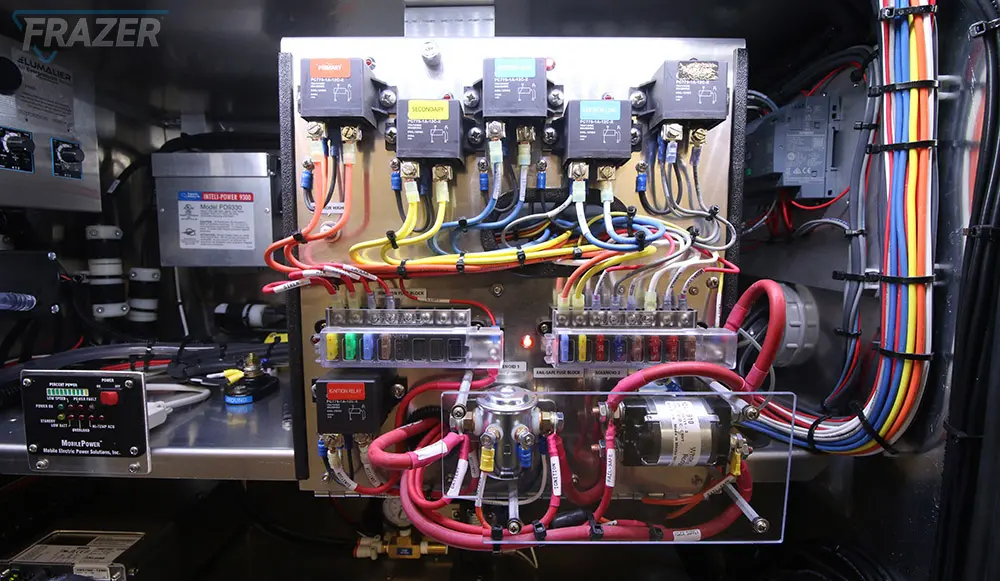
It also supports Frazer’s Keep It Simple (KISS) approach to electrical design. We use point-to-point wiring, common terminal strips, standard automotive relays, and accessible fuses instead of proprietary circuit boards. This gives qualified maintenance personnel easier access to common electrical service items.
If you are unsure whether a planned modification could affect your coverage, contact Frazer before the work begins.
What Warranties and Bonding Terms Should You Review Before Buying an EMS Vehicle?
A warranty is only as useful as the protection it provides when something goes wrong. Before committing grant funds to a new vehicle, make sure your purchasing team understands what is covered, how long the coverage lasts, and what conditions apply.
Frazer was founded in 1956 and has built more than 4,500 EMS modules since 1984. Our written warranty provisions include lifetime structural coverage on new modules for the original owner, along with coverage for electrical wiring, paint, climate control equipment, and remounts, subject to applicable terms.
The following table highlights areas your purchasing team should review before issuing a PO through a rural ambulance service grant program.
| Coverage Area | What Your Team Should Review | Frazer’s Written Provision or Standard |
|---|---|---|
| Module Structure | Long-term structural protection for the original owner. | Lifetime module warranty against design, construction, or installation failure for the original owner, subject to written terms and exclusions. |
| Approved Drawings | Whether the manufacturer is accountable for approved specifications. | Section 1.0 requires goods to be furnished in strict accordance with customer-approved drawings, designs, and performance specifications. |
| Electrical Wiring | Coverage for electrical wiring and related components. | Five-year electrical system wiring warranty for the original owner. Excludes bulbs, switches, relays, and OEM parts beyond one year, subject to written terms. |
| Paint and Graphics | Protection for the module’s exterior finish. | Five-year warranty on module paint, striping, and lettering from the in-service date. |
| Independent HVAC | Coverage for patient compartment heating and cooling equipment. | Four-year parts and labor warranty on the independent AAP-Dometic air conditioner/heater. |
| Performance Bonding | Written terms for applicable municipal performance bonds. | Section 3.0 provides for a one-year Performance Bond covering warranties for one year from acceptance. |
| Remount Coverage | Protection when transferring an existing module onto a new chassis. | Two-year remount module warranty against design, construction, or installation errors for the original owner, subject to written terms. |
| Safety Standards | Documentation required for purchasing, insurance, and grant reviews. | Frazer identifies Triple-K, CAAS GVS, and NFPA 1917 among the standards addressed by its vehicle designs. SAE J3043 retention is available for Mobile Stroke Unit CT scanners. Confirm applicable standards for your selected configuration. |
This table is a starting point, not a replacement for the full written warranty. Always review current warranty documents, bonding provisions, exclusions, and vehicle-specific standards before completing your purchase.
How Can You Make Your Rural EMS Grant Dollars Go Further?
When presenting an EMS vehicle purchase to your City Council or Commissioners Court, the initial price is likely to be one of the first things discussed. But what will that vehicle cost your community over the next 10, 15, or even 20 years?
At Frazer, we call this the Lowest Overall Cost of Ownership (LOCO). It means looking beyond the purchase price to consider maintenance, downtime, repairs, serviceability, and the ability to reuse your module when the chassis needs to be replaced.
For rural departments working with limited budgets and unpredictable grant funding, these considerations can make a meaningful difference in long-term fleet planning.
All-Aluminum Construction Built for the Long Haul
Your EMS vehicle faces daily wear, frequent cleaning, moisture, and demanding road conditions. The materials used to build the patient compartment matter.
Frazer builds its patient compartments using all-aluminum construction without wood, MDF, or particle board. This approach eliminates concerns about those wood-based materials absorbing moisture or rotting over time.
According to company records, Frazer has recorded zero module detachments in collisions, including full rollovers, across more than 4,500 EMS modules built since 1984.
In one documented incident, a CareFlite unit was struck at 52 mph and rolled 90 degrees. The crew escaped without injuries, and the module was later remounted onto a new chassis following minor cosmetic repairs.
These are documented historical outcomes, not guarantees of how a vehicle or its occupants will fare in a future collision.
Replace Your Chassis Without Starting Over
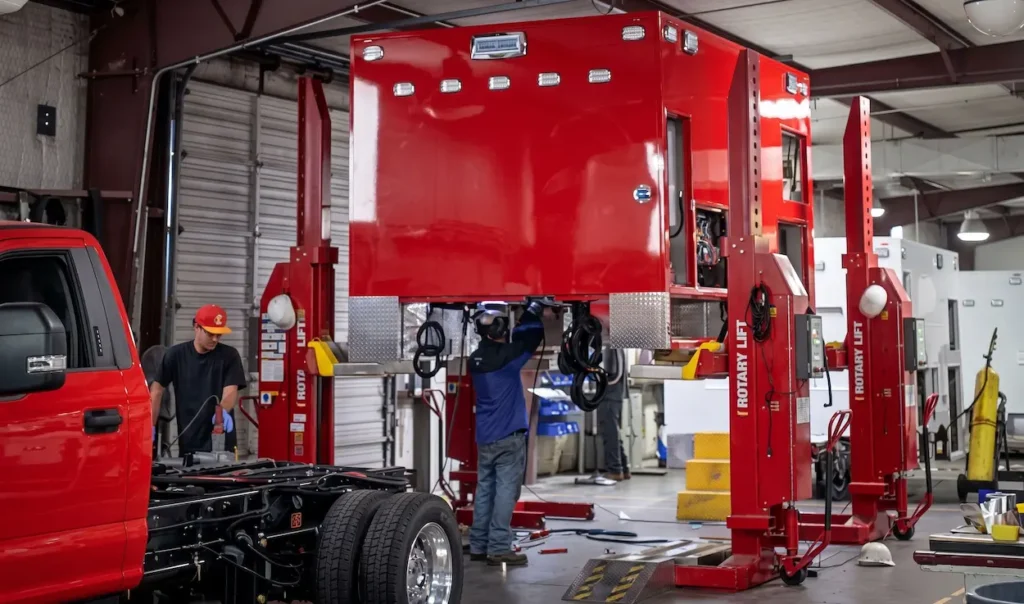
When your chassis reaches the end of its useful life, your EMS module may still have years of service left in it. Why replace the entire vehicle if you can safely reuse the patient compartment?
Depending on its condition, inspection results, and chassis compatibility, a Frazer module can be remounted up to four times over a potential 15- to 20-year service life. This allows departments to explore ways to extend the value of their original investment through multiple chassis replacement cycles.
Houston Fire Department operates 129 Frazer units, with vehicles routinely logging more than 260,000 miles per chassis and surpassing one million total miles across chassis cycles.
Marble Falls Area EMS has continued remounting a Frazer unit originally purchased in 1996. Robertson County EMS has operated four frontline 12-foot Type I Frazer units during its 15-year partnership with Frazer.
These experiences show why remounting deserves a place in your fleet planning discussions. Actual mileage, service life, remount eligibility, and ownership costs depend on vehicle condition, maintenance, and operational demands.
Spend More Time Serving Your Community and Less Time in the Shop
When you operate a small rural EMS fleet, having even one vehicle out of service can create challenges for your entire department. That makes serviceability an important part of your purchasing decision.
In a double-blind survey of 100 EMS and fire professionals, participants were asked which brand spends the least time in the shop. Frazer received 39% of mentions, compared with 7% each for competitors. These results reflect the experiences and perceptions of survey participants, rather than independently measured vehicle uptime.
One way Frazer approaches serviceability is by keeping key patient compartment systems independent of the chassis. Our design includes an independent 115 VAC/120V generator, a 12V DC chassis backup system, and a dedicated 15,000 BTU independent air conditioner.
The independent air conditioning system is designed for a minimum cooling differential of 25°F to 30°F, with the capability to achieve a difference of 35°F or more between outside and inside temperatures under applicable operating conditions. Actual performance depends on environmental conditions, vehicle configuration, and maintenance.
By separating key module systems from the chassis, Frazer reduces reliance on the cab air conditioning system and supports independent power and climate control in the patient compartment.
When you combine these features with a remountable, all-aluminum module, you can plan your fleet around more than the next grant cycle. You can start planning around the long-term needs of your department and the community you serve.
Ready to Plan Your Next Grant-Funded EMS Vehicle Purchase?
You have worked hard to secure funding for your department. Now you need to make sure those dollars go toward a vehicle that meets your crews’ needs, fits your budget, and serves your community for years to come.
If you need a starting point for your budget, explore Frazer’s 12-foot Type I Foundation Series. Starting at $252,000, it features a 96-inch-wide, all-aluminum patient compartment with independent power and HVAC. Optional equipment adds cost.
Not sure whether a new build or a remount makes more sense? Use Frazer’s EMS vehicle pricing checklist to explore your options, including new vehicles, custom EMS vehicle remounts, leasing, and financing.
Our team can also help you understand available cooperative purchasing options, review vehicle specifications, and obtain sample engineering drawings and written warranty documentation before you issue your PO.
At Frazer, our commitment to your department does not end when your vehicle is delivered. We are here to support your team throughout the life of your EMS vehicle, from your first purchasing questions to your next remount.
Can a municipality use a cooperative purchasing contract to buy an EMS vehicle funded by a rural ambulance service grant program?
Yes, when permitted by applicable purchasing laws and grant requirements. Cooperative purchasing allows eligible municipalities to purchase through existing competitively awarded contracts without conducting a separate local bidding process. Confirm the requirements with your grant administrator early. Combining a cooperative purchasing quote with customer-approved engineering drawings can help establish costs, define vehicle specifications, and meet grant deadlines.