
Florida EMS Fleet Procurement: A Guide to Extreme Weather Reliability
It is mid-August in Florida. The temperature is pushing 100°F, humidity is high, and a tropical storm is forming in the Gulf. At the same time, several frontline units may already be out of service because of electrical, air conditioning, or chassis-related repairs.
For EMS directors, fire chiefs, and fleet managers, conditions like these make Florida EMS fleet procurement about much more than replacing an aging vehicle. You also have to think about how the next vehicle will handle the same heat, severe weather, long idle periods, and coastal conditions your current fleet faces every day.
If you are approaching a new bid cycle, simply repeating an old specification may carry some of the same maintenance and operating challenges into your next fleet. A better approach is to look closely at vehicle architecture and ask how each system affects reliability, serviceability, and long-term cost.
This guide covers several design factors Florida agencies may want to consider before writing their next specification.
The Root of Many Florida Fleet Challenges: Chassis-Dependent Architecture
To understand how vehicle design can affect downtime, it helps to start with the relationship between the truck chassis and the patient module.
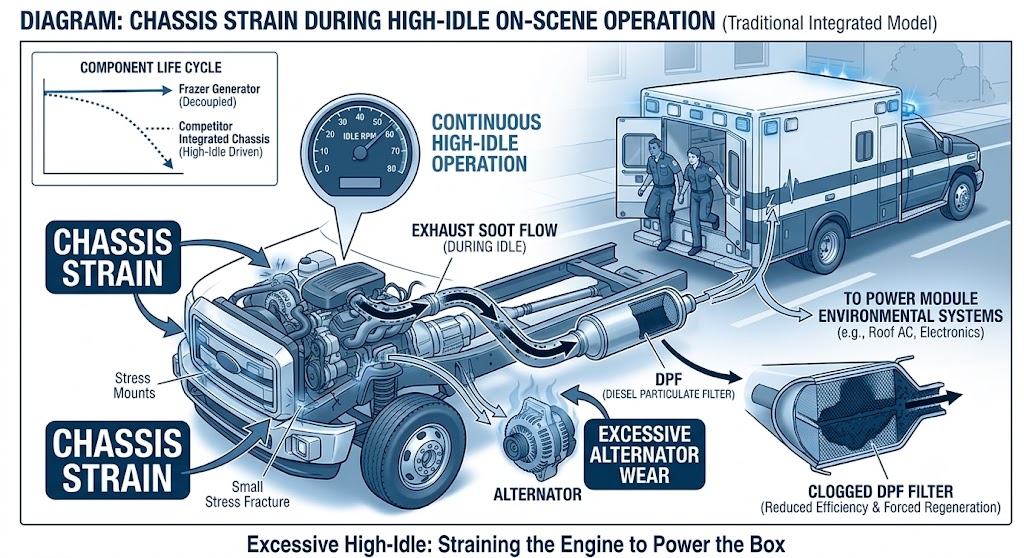
In many emergency vehicles, the OEM chassis provides power for both the truck and patient-module systems. When crews run module air conditioning, emergency lighting, suction equipment, communications equipment, and medical technology, those systems can add to the electrical demand placed on the chassis.
Supporting that demand may require extended or high-idle operation. A frontline Florida unit can spend significant time idling at a scene, outside an emergency department, or during severe-weather staging. Over time, that operating pattern can add wear to the engine, alternator, batteries, and other chassis components.
Engine hours matter here. A vehicle with relatively low mileage may still have accumulated many hours of engine operation while stationary. The actual effect depends on the vehicle, equipment configuration, duty cycle, operating conditions, and maintenance practices, but extended idling can contribute to additional chassis maintenance.
Why Can Chassis-Driven Air Conditioning Struggle During Extreme Heat?
Some chassis-dependent air-conditioning systems can face cooling challenges during long periods of stationary operation in extreme heat. These systems depend on the truck engine to drive the compressor and support cooling. At idle, performance can vary based on engine speed, system design, outside temperature, vehicle configuration, humidity, and the amount of heat entering the patient module.
That matters in Florida, where crews may need to keep a patient compartment comfortable while sitting in direct sun with high humidity and triple-digit temperatures outside.
Frazer takes a different approach by separating the patient-module air conditioning from the chassis. Frazer emergency vehicles use a self-contained 120V AC system powered independently from the truck engine. The system is designed to maintain up to a 35°F temperature difference from ambient conditions, whether the vehicle is moving or parked with the chassis engine turned off.
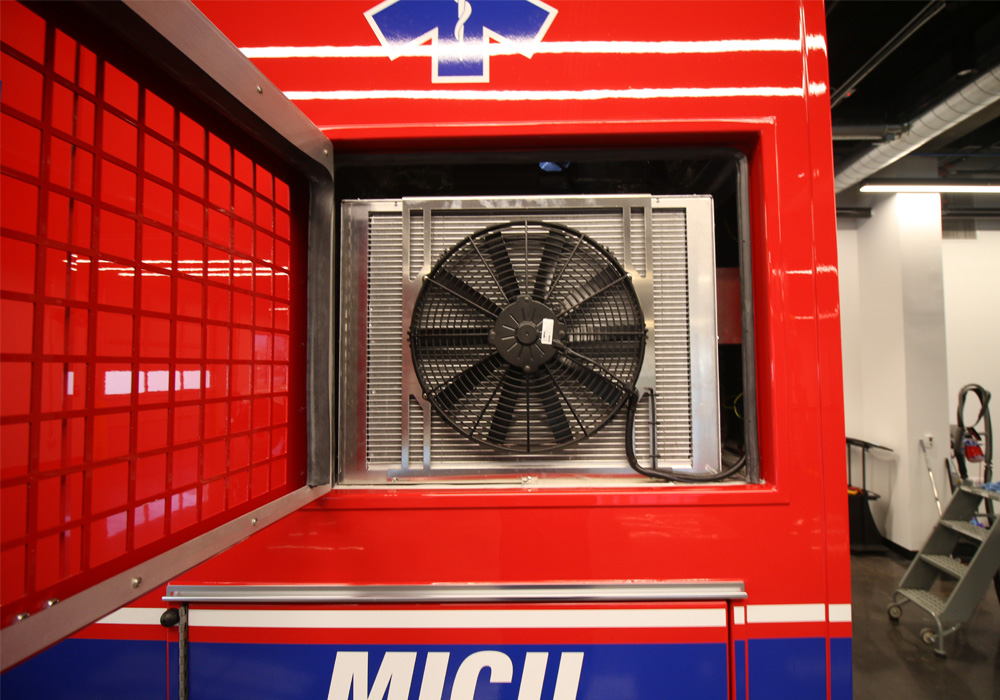
What does that mean for your crew? Independent module air conditioning can help provide more consistent cooling during long stationary operations because cooling performance is not directly tied to truck-engine RPM.
The design also gives fleet technicians another serviceability advantage. Frazer’s self-contained HVAC unit is mounted on the exterior of the module. If major service is required, a qualified in-house technician can typically remove the existing unit and install a spare from outside the module in under 45 minutes. Actual repair time will depend on the situation, but easier access can help reduce HVAC-related downtime.
How Can Independent Power Help During Severe Weather Response?
Hurricane response can put unusual demands on an EMS vehicle. Units may remain staged or operating in disaster areas for long periods while crews continue using medical equipment, lighting, communications systems, and air conditioning.
When all of those systems depend heavily on the chassis electrical system, long stationary deployments can increase the workload placed on the truck’s alternator and batteries. That makes power architecture an important part of the procurement conversation.
Frazer uses an independent 120V AC generator to handle much of the patient-module electrical load separately from the chassis. By moving significant module demand away from the truck’s electrical system, the design can reduce the load placed on certain chassis components during normal and extended operations.
Frazer also incorporates a redundant 12V DC backup system. If the primary generator becomes unavailable, the system is designed to use chassis power for designated critical lighting and communication functions. That redundancy gives crews another layer of support when operating conditions are far from normal.
Serviceability matters just as much during severe weather. Frazer uses point-to-point wiring with common terminal strips, relays, and fuses for module electrical functions instead of relying on a proprietary multiplex architecture. This layout allows technicians to trace many circuits with conventional diagnostic methods. Depending on the problem and available parts, some repairs may be completed without specialized proprietary diagnostic equipment.
Can Aluminum Module Construction Help in Coastal Environments?
Florida fleets also have to contend with moisture, humidity, salt air, and corrosion. Material choice matters when a vehicle spends years operating in those conditions.
Wood used in cabinetry or subflooring can absorb moisture if exposed, which may lead to swelling or deterioration. Steel components can also corrode depending on exposure, protective treatment, maintenance, and operating conditions.
Frazer uses 6061-T6 structural aluminum tubing and all-aluminum, wood-free module construction. The goal is straightforward: build a patient module that can hold up through demanding service and remain useful beyond the life of its first chassis.
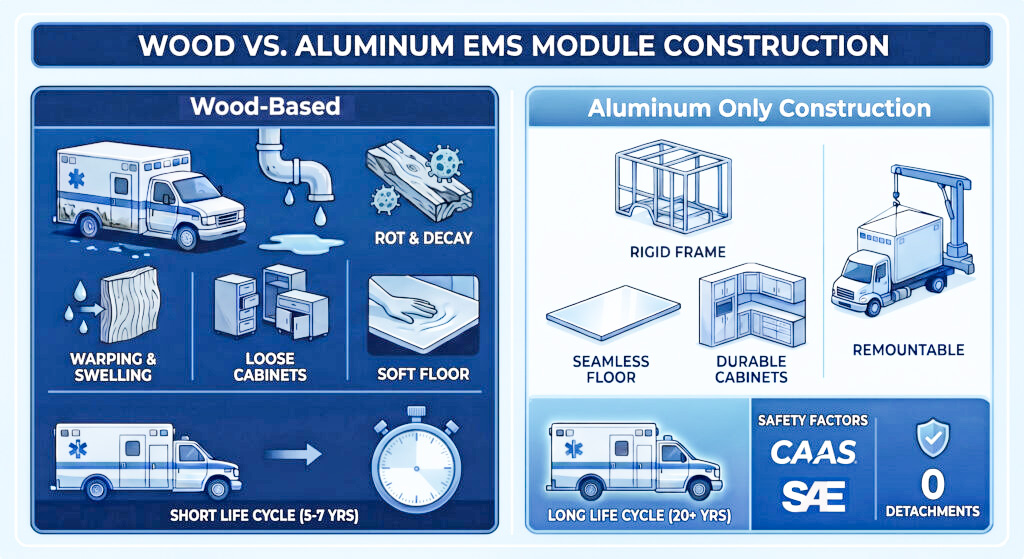
Construction is only part of the story. Frazer conducts third-party testing and certification to applicable AMD, CAAS GVS, NFPA 1917, and KKK-A-1822F specifications. Frazer also tests cabinetry and module-to-chassis mounting systems. Across nearly 2,500 EMS modules built since 1984, Frazer reports zero recorded module detachments from the chassis during a collision.
A durable aluminum module can also give fleet managers another option at replacement time. Instead of automatically replacing the complete vehicle when the chassis reaches the end of its planned service life, an eligible module may be able to move to a new chassis through a remount.
Looking Beyond Purchase Price: Overall Cost of Ownership in Florida
Initial purchase price matters. Municipal budgets are real, and procurement teams have to explain every major investment to boards, councils, commissioners, and taxpayers. But the lowest purchase price does not always tell you what a vehicle may cost to operate over its full service life.
A more complete fleet calculation considers overall cost of ownership. That can include the initial purchase, scheduled maintenance, unexpected repairs, vehicle downtime, reserve-fleet requirements, fuel use, chassis replacement, and the timing of future capital purchases.
Frazer’s independent power architecture is designed to reduce excessive high-idle demand on the chassis. Its self-contained HVAC system and point-to-point wiring are designed to make many common components easier for fleet personnel to reach, diagnose, and replace. The actual financial impact will vary by fleet, duty cycle, maintenance program, configuration, and operating conditions.
Customer-reported results have shown fleet maintenance cost reductions ranging from 42% to 60% after transitioning to a Frazer fleet. Your results may be different, so procurement teams should compare those potential savings against their own maintenance records and operating data.
The Financial Case for Remounting
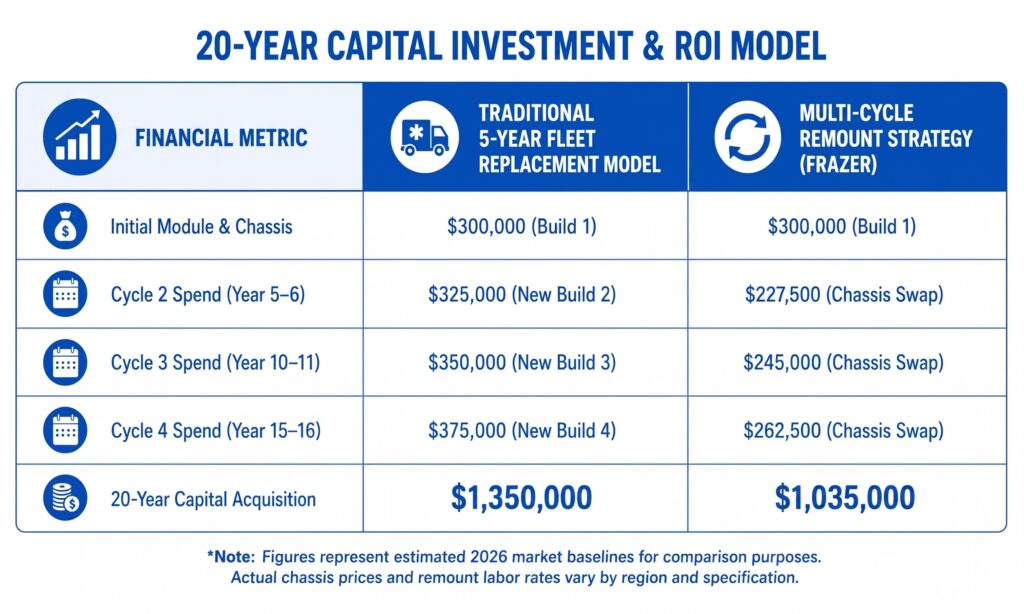
Remounting can also change the long-term fleet replacement equation. In a traditional replacement cycle, an agency may purchase a complete emergency vehicle and then face another large capital expense several years later when the chassis or complete vehicle reaches the end of its planned service life.
Frazer modules are designed with remounting in mind. When an eligible chassis reaches replacement age, an agency may be able to purchase a new bare chassis and remount its existing Frazer module instead of replacing the entire vehicle. The exact cost depends on chassis pricing, module condition, compatibility, required updates, and the scope of the remount.
Frazer customers routinely remount EMS modules more than once. Some modules have gone through as many as four remounts while accumulating more than 1 million miles of total service. For agencies with modules that remain in suitable condition, this approach can help extend capital budgets and reduce how often a complete vehicle must be replaced.
Build Your Specification Around Florida’s Operating Environment
Florida EMS fleet procurement is about more than choosing a chassis, patient compartment, and option list. It is also about deciding how the entire vehicle will work in the environment your crews face every day.
Heat, humidity, coastal exposure, long stationary operations, and severe-weather deployments can all affect reliability and maintenance. Independent 120V AC power, self-contained module cooling, serviceable electrical architecture, and structural aluminum construction are design approaches intended to help agencies manage those demands.
Before your next replacement or bid cycle, take another look at the specifications you have used in the past. Ask how much the module depends on the chassis, how quickly your technicians can reach common service items, what happens if a primary system fails, and whether the module can remain useful after the first chassis is retired.
If you want to review an upcoming specification, connect with the Frazer team. We can walk through your fleet’s operating needs and explain how independent power, serviceable systems, and remount-capable construction may fit into your long-term fleet plan.
Why do standard ambulance air conditioners fail during high idle in extreme heat?
Standard ambulance air conditioners struggle during high idle in extreme heat because they are chassis-dependent. They rely on the truck’s engine RPM to generate cooling. During long stationary idles in Florida summers, the engine cannot generate sufficient power, causing the HVAC to overtax. Frazer uses independent 120V AC power to help remediate this issue.