
Evaluating HVAC Systems for EMS Vehicles: Architecture & Uptime
For fleet managers and fire chiefs, an HVAC problem is more than a comfort issue. It can take an expensive vehicle out of service and create maintenance costs you did not plan for. That makes HVAC architecture worth considering before you choose your next EMS vehicle.
You may have seen a fleet vehicle with relatively low mileage but surprisingly high engine hours. Your mechanics may have also spent valuable shop time tracing an AC problem through an interconnected system. Long hospital wait times and hot summer conditions can make these issues even more important because crews may need climate control for hours while on an extended call.
So, what should you look for? This article explores how HVAC architecture, especially independent power, can affect chassis engine hours, maintenance, serviceability, and your overall cost of ownership.
The Hidden Costs of Chassis-Dependent Climate Control
Every AC system requires maintenance. The difference is how the system is built and what has to run to keep your patient module cool. With a chassis-dependent system, climate control may require the chassis engine to continue running even when the vehicle is parked.
“The conversation needs to shift from simply asking ‘how many BTUs does it have?’ to ‘how many engine hours is this costing us?'”
How Can Idling for Climate Control Affect EMS Chassis Engines?
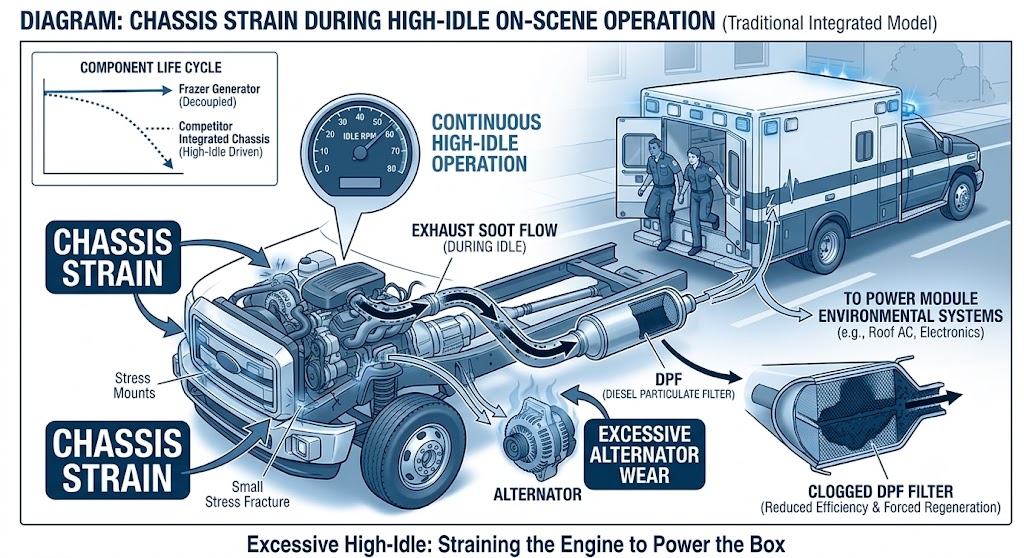
If the chassis engine has to idle to support patient-module cooling, those engine hours continue to add up even when the odometer does not. Depending on the chassis, duty cycle, operating conditions, and regeneration strategy, extended idling may contribute to diesel particulate filter loading, added maintenance, and engine wear.
Think of those extra hours as an “Idling Tax.” A vehicle may sit at a scene or outside an emergency department for hours while the engine continues to run just to support climate control. Over the life of the vehicle, those hours can become an important part of the maintenance and ownership-cost picture.
Can Shared HVAC Systems Make Service More Complicated?
When the cab and patient-module AC systems share compressors, refrigerant lines, ducting, or other components, technicians may have to inspect several areas of the vehicle to find a problem. Depending on the design and the issue, that work may include accessing components behind the cab dashboard.
That means a problem that starts with patient-module cooling may require work elsewhere in the vehicle. The more involved the diagnosis and repair become, the longer the unit may be unavailable for service.
Does Engine RPM Affect Cooling Performance?
With a chassis-driven AC system, cooling performance can depend in part on engine operating conditions. Compressor speed and available cooling capacity may be different while the vehicle is parked and idling than when the engine is operating at higher speeds. In extreme heat, that difference may matter when crews need patient-module cooling the most.
The Frazer Approach: Chassis-Independent HVAC
An independent power system comes with its own maintenance considerations. A generator, for example, still needs routine service. The question is not whether maintenance disappears. It is where that maintenance happens, how easy the system is to access, and what equipment has to run to keep the patient module comfortable.
A slide-out generator is designed to give technicians direct access for service and repair. Major chassis-engine work can be far more involved and expensive. Depending on the chassis, parts, labor, and circumstances, a chassis engine replacement can cost more than $15,000.
Frazer’s chassis-independent architecture is designed to reduce the need to operate the chassis engine solely for patient-module climate control. It is also designed to make HVAC service easier to access. In an independent double-blind market research study of EMS and fire professionals, respondents were asked, “Which brand spends the least amount of time in the shop?” Frazer received 39% of mentions.
How Can Independent Power Reduce Chassis Engine Hours?
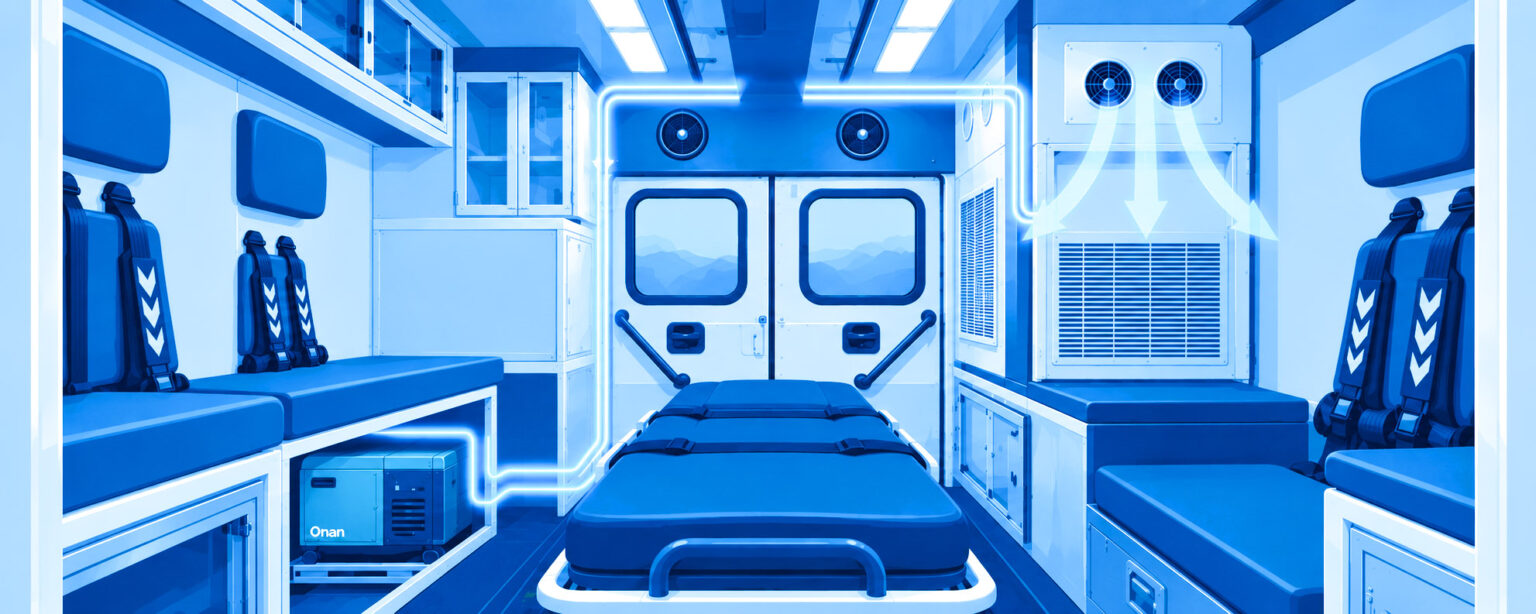
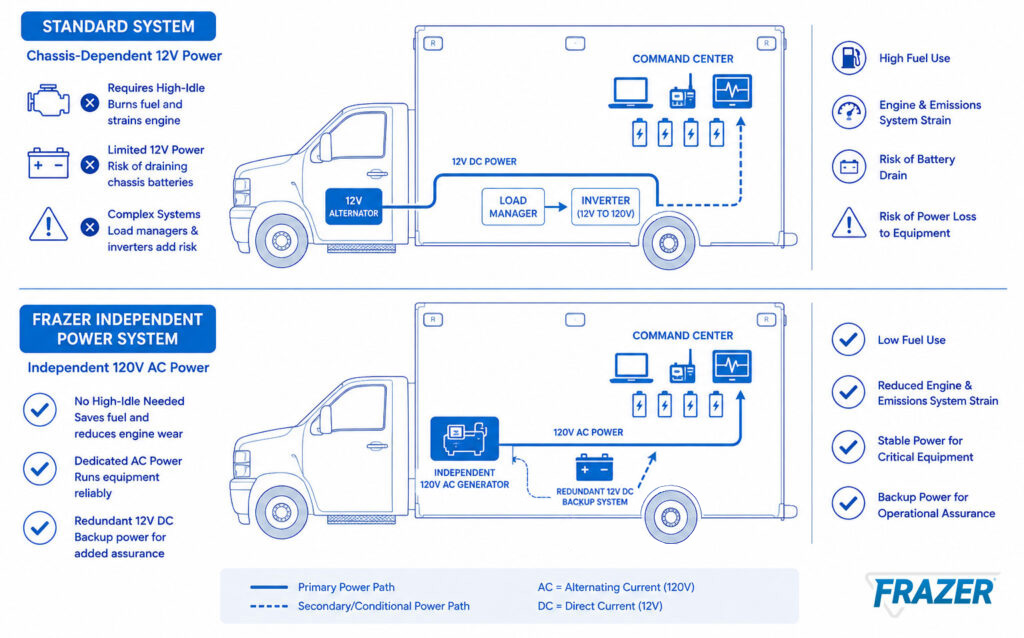
Frazer offers independent power options, including Cummins Onan generators and MEPS systems, to power the patient module’s 115VAC HVAC system. This moves the module’s climate-control load away from the chassis engine.
Depending on the vehicle configuration and operating needs, crews can shut off the chassis engine while on scene or during a long hospital wait and continue powering the patient module. Reducing the need to idle solely for module cooling can help limit unnecessary engine hours. Depending on the chassis, duty cycle, and operating conditions, it may also help reduce some maintenance associated with extended idling.
What Is Cab Isolation in an EMS Vehicle?
Cab isolation means the driver’s cab and patient module use separate HVAC systems instead of sharing compressors, ducting, or airflow. Keeping the two systems separate can make it easier to isolate certain HVAC problems and can limit direct air exchange through shared HVAC ductwork.
Frazer’s 115VAC HVAC system does not share ducting or air handling with the truck cab. If the module AC needs service, the cab HVAC can remain available as long as the chassis and its systems are operating properly. This separation can also make some diagnostic work more straightforward because technicians do not have to access shared dashboard HVAC components to service the module system.
Separate air-handling systems may also support an infection-control strategy by limiting HVAC-related air exchange between the patient module and cab. Actual exposure to airborne contaminants depends on many factors, including airflow, filtration, ventilation, vehicle configuration, operating conditions, and your organization’s infection-control practices.
How Can Point-to-Point Wiring Make Service Easier?
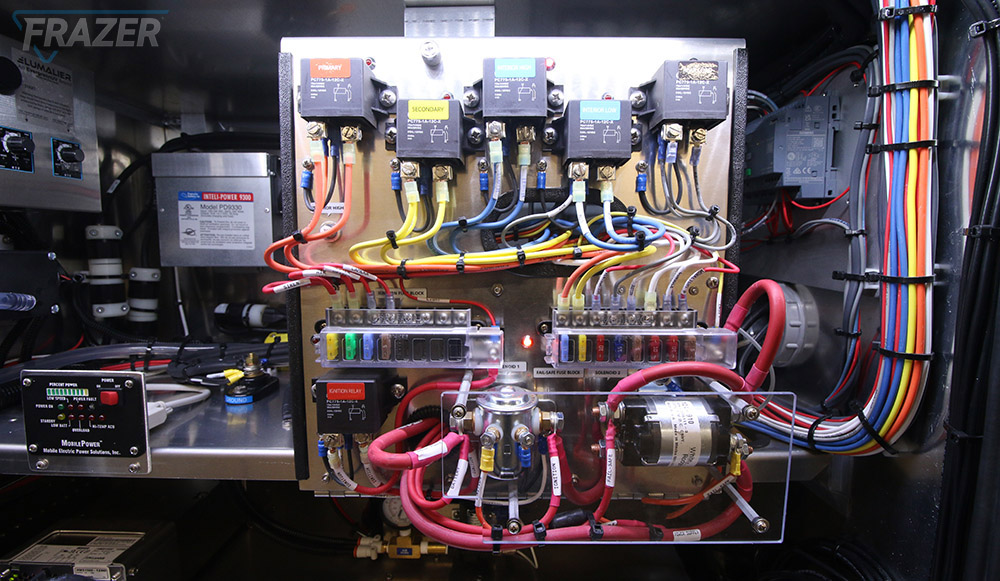
Point-to-point wiring uses standard automotive relays and terminal strips that technicians can check with common electrical testing tools. Compared with systems that depend on proprietary multiplexed components, this approach can reduce the need for specialized diagnostic software or proprietary electronic nodes for certain repairs.
It comes back to a simple idea: Keep It Simple. When an electrical or HVAC problem comes up, technicians can trace many circuits with standard tools and replace commonly available components when appropriate. The self-contained HVAC design also reduces its connection to dashboard HVAC components, which can make troubleshooting more direct.
Looking at the Complete Environmental Control System
Independent power is not just about keeping the patient module cool while the chassis engine is off. It can also provide a consistent electrical source for climate-control and air-management equipment. For fleet operators, that means patient-module HVAC and related features do not have to depend on chassis engine operation for their power.
Cooling in Demanding Conditions
Powered by an independent 120V source, the Frazer air management system is engineered to deliver a minimum cooling differential of 25 to 30 degrees and is designed to maintain a 35°F or greater difference between outside and inside temperatures. This cooling capability is designed to support patient comfort as well as the environmental needs of electronics and temperature-sensitive medical cargo during demanding conditions, including summer heat.
Air Management Beyond a Standard Filter
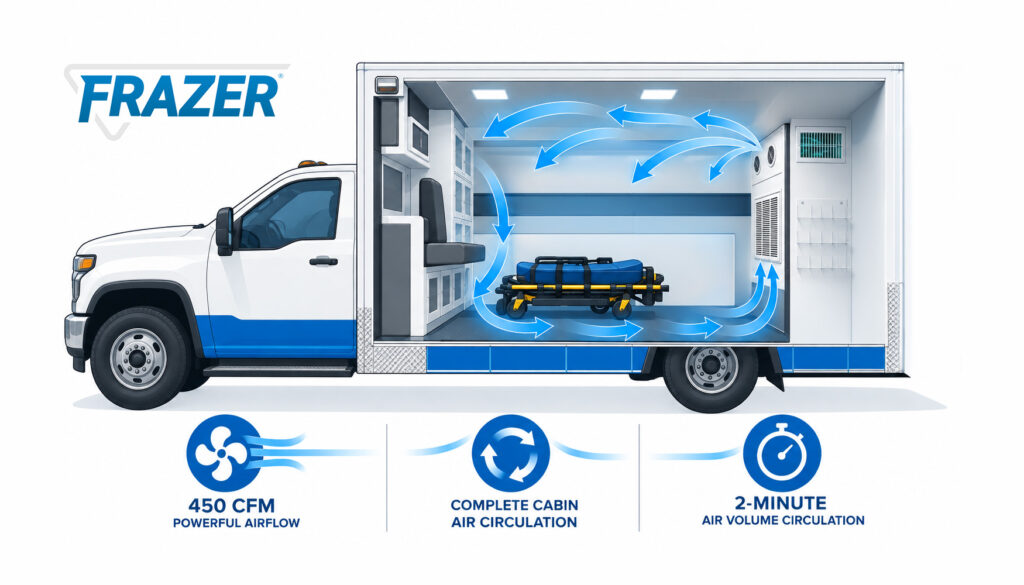
The 120V system can also support additional air-quality features. Frazer’s setup combines field-replaceable physical media filters with an active UV/ionization purification plenum. The system is designed for high-density air movement and recirculates air approximately every two minutes. These features are intended to support air management and help reduce certain airborne contaminants as air moves through the system.
Think Beyond the First Chassis
HVAC architecture is one part of a larger ownership decision. Serviceability, engine hours, maintenance access, and the useful life of the patient module can all affect what a vehicle costs your department over time.
Frazer modules can be remounted up to four times. That gives fleet operators another way to extend the useful life of the module and manage ownership costs over a potential 20-year service life. Some Frazer units have surpassed one million miles of total service.
What Should You Ask Before Choosing an EMS HVAC System?
Instead of comparing HVAC systems by BTUs alone, look at the complete system. Ask what powers the patient-module HVAC when the vehicle is parked, whether the cab and module systems share components, how technicians access the system for repairs, and what happens to chassis engine hours during long periods on scene or at the hospital.
Those questions can give you a clearer picture of how the system may affect uptime, maintenance, and long-term ownership costs. The right answer will depend on your fleet, duty cycle, climate, maintenance capabilities, and operating requirements.
Want to reduce the chassis engine hours associated with patient-module climate control? See how Frazer’s independent 120V HVAC architecture is designed to support serviceability and reduce reliance on the chassis engine for module cooling. Request a sample spec sheet or talk with our team about your fleet’s HVAC configuration and maintenance needs.
How does idling for climate control affect EMS chassis engines?
Extended idling for chassis-dependent AC adds engine hours even when the vehicle is not adding road miles. Depending on the chassis, duty cycle, operating conditions, and regeneration strategy, extended idling may contribute to DPF loading, additional maintenance, and engine wear.