How to Reduce EMS Fleet Downtime: The Role of Factory-Direct Diagnostics
When an EMS vehicle is out of service, every hour matters. Getting it back on the road often depends on how quickly your maintenance team can diagnose the problem, get technical support, find the right parts, and make the repair.
That is where the service model behind the vehicle can make a difference. Factory-direct support gives mechanics direct access to the people who know the vehicle and its systems. Combine that with independent power systems, straightforward point-to-point wiring, and commonly available components, and your maintenance team may have more options for handling repairs in-house and reducing avoidable delays.
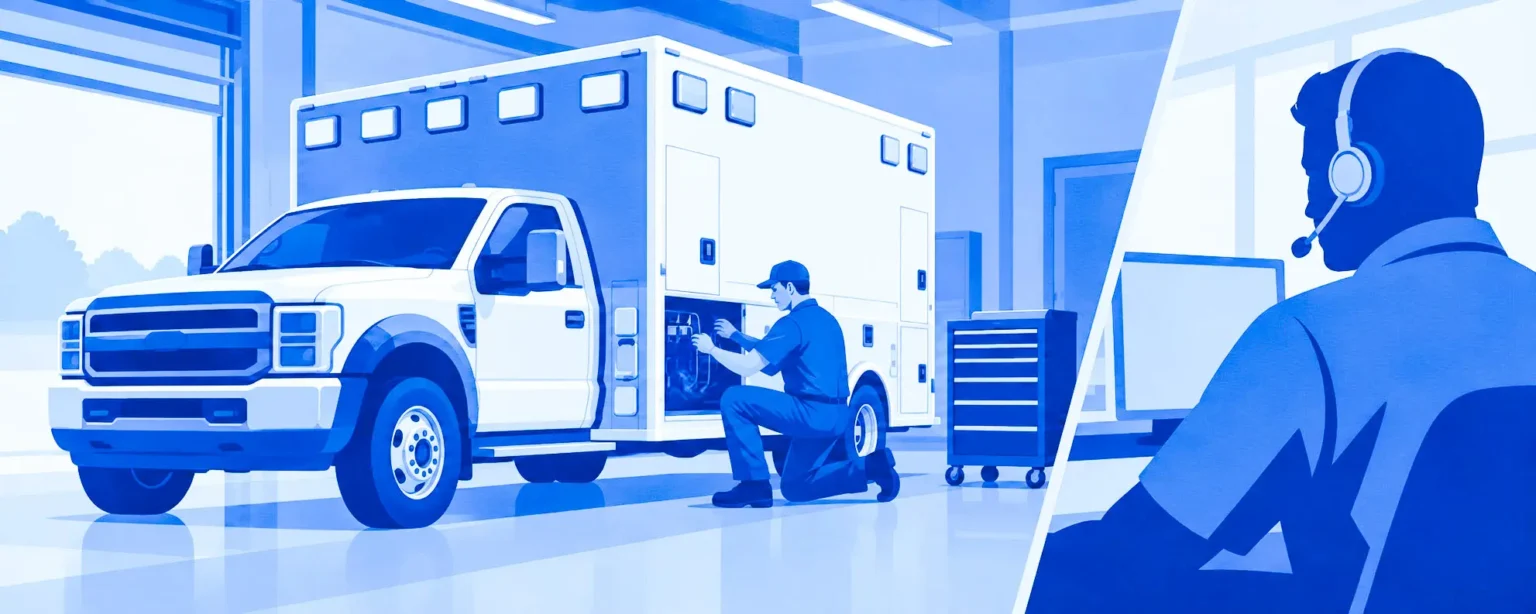
Imagine it is 2:00 AM on a Saturday. A frontline EMS vehicle is sitting in the maintenance bay with an electrical problem. If diagnosing that problem requires specialized software, proprietary tools, or several calls before reaching technical support, the vehicle may stay out of service longer than your team would like.
For a department already working with a limited reserve fleet, that delay can put additional pressure on the entire operation. This guide looks at how direct manufacturer support and simpler, serviceable systems can give maintenance teams more control over the repair process.
How Additional Service Layers Can Affect EMS Repairs
A nationwide dealer network can provide valuable local support. At the same time, some service models require information to move between the fleet, a dealer or service representative, and the manufacturer before a technical question can be resolved.
For example, a mechanic dealing with a complex problem may first contact a local dealer or service representative. If that person needs additional help, the question may then be sent to the manufacturer’s engineering or technical service team. The answer then has to make its way back to the mechanic.
Actual response and repair times vary based on the manufacturer, dealer, service arrangement, and problem. Still, every additional communication step has the potential to add time to the diagnostic process. While that is happening, the vehicle remains unavailable for frontline service.
Factory-Direct Diagnostics: 24/7 Access to Frazer Support
One question departments may have about buying factory-direct is simple: If the factory is in Texas, who helps us when something goes wrong in the middle of the night?
With Frazer, customers have 24/7 phone access to an experienced service technician or manager. Instead of requiring the first technical conversation to pass through a regional salesperson, your maintenance team can speak directly with a Frazer team member familiar with the vehicles Frazer builds.
In many cases, Frazer technicians can work directly with your mechanic over the phone to help diagnose the problem and identify possible next steps. The exact repair process depends on the issue, but direct communication can help your team begin troubleshooting sooner without adding unnecessary layers between the mechanic and Frazer.
Want to see how that relationship continues after delivery? Learn more about Frazer’s direct support after the sale.
Why can point-to-point wiring be easier to diagnose than multiplex?
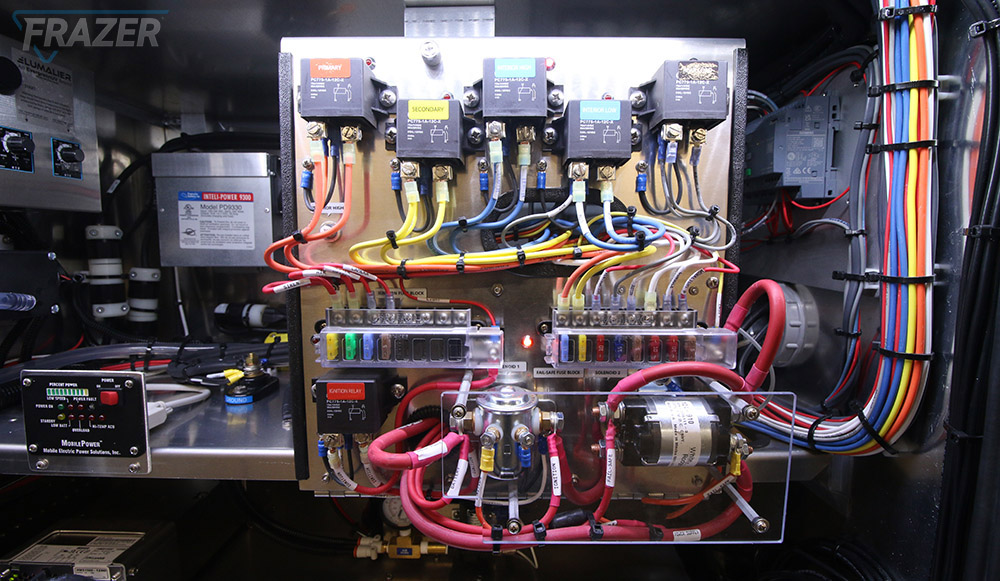
Point-to-point wiring can simplify some electrical troubleshooting because it uses standard relays, fuses, wiring, and other familiar components rather than relying primarily on proprietary computer boards. Depending on the problem, mechanics may be able to follow a wiring diagram and use common diagnostic tools to isolate the issue without specialized software.
Point-to-Point Wiring Helps Put Repairs Back in Your Hands
Multiplex electrical systems offer a different approach to managing vehicle electronics, but some problems may require specialized software or diagnostic equipment. If your maintenance team does not have those tools, additional manufacturer or dealer support may be needed before the problem can be fully diagnosed.
Frazer takes a simpler approach to its primary electrical design. Frazer vehicles use point-to-point wiring and avoid printed circuit boards for the primary electrical system. Critical electrical components are also housed in an accessible exterior compartment, making it easier for technicians to reach the components they need to inspect.
The layout includes a system diagram that helps technicians trace electrical problems using standard diagnostic tools, including a basic test light. If a light stops working, for example, a mechanic can inspect the related fuse, relay, wiring, and other components from the exterior electrical compartment. Depending on the cause, the maintenance team may be able to complete the repair without specialized computer diagnostics.
For a closer look at the two approaches, read our breakdown of point-to-point wiring vs. multiplex systems.
Can I get EMS vehicle replacement parts without a dealer?
With Frazer’s factory-direct model, customers can get many commonly used components without going through a dealer. Frazer uses common, off-the-shelf components where practical, which means your maintenance team may be able to find compatible replacement parts locally. When a specialized Frazer part is required, Frazer can ship it directly to your maintenance shop.
More Options for Sourcing Replacement Parts
A vehicle can be easy to diagnose and still sit in the shop if the maintenance team cannot get the part it needs. Some vehicle systems rely on specialized or proprietary components that must be ordered through specific manufacturer or dealer channels. If the required part is not available locally, the vehicle may remain out of service while the team waits.
Frazer uses non-proprietary components where practical. The electrical system includes common relays, fuses, and terminal strips, giving mechanics the option to source many compatible replacement components through local parts providers.
When a specialized part is needed, Frazer can work directly with the customer’s maintenance operation and ship the part to the shop. For a capable in-house service team, that means the department can continue using its own technicians and facilities instead of automatically adding another stop to the repair process.
How fast can you replace an EMS vehicle air conditioner?
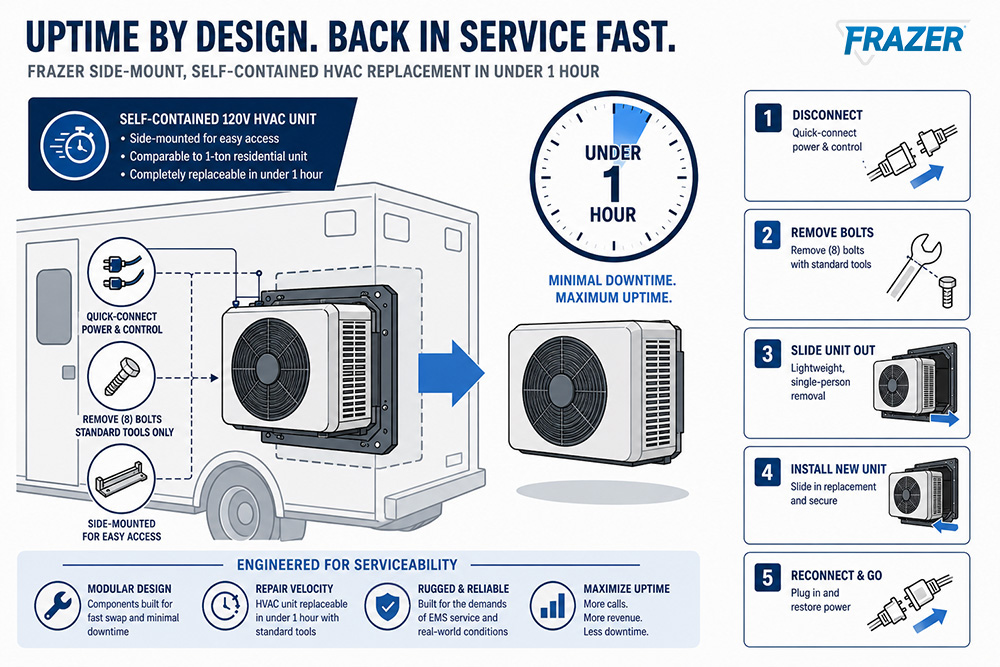
Frazer’s modular, self-contained EMS vehicle air-conditioning unit can typically be replaced in under 45 minutes under appropriate service conditions. The side-mounted 120V AC unit is designed to slide out as an assembly, allowing the maintenance team to install a replacement without completing an in-place repair of the removed unit first.
Modular Components: The Under-45-Minute AC Swap
An air-conditioning problem can take an EMS vehicle out of service, especially during hot weather. Depending on the vehicle design, HVAC repairs may involve chassis-integrated or roof-mounted components that require additional diagnostic or repair work.
Frazer uses a self-contained 120V AC system that operates independently of the chassis electrical and air-conditioning systems. The system is engineered to maintain a temperature differential of 35°F or more between the outside and inside under applicable test conditions. Its side-mounted design also allows mechanics to slide the unit out and replace it in under 45 minutes under appropriate service conditions.
Instead of keeping the entire vehicle down while the removed AC unit is evaluated or repaired, this modular approach can allow the maintenance team to install another unit and work toward returning the vehicle to service.
Independent Systems Can Make the Service Path Clearer
When chassis and module systems are closely integrated, diagnosing a problem can sometimes involve more than one service organization. Technicians may need to determine where the problem started and which company is responsible for the repair or warranty process.
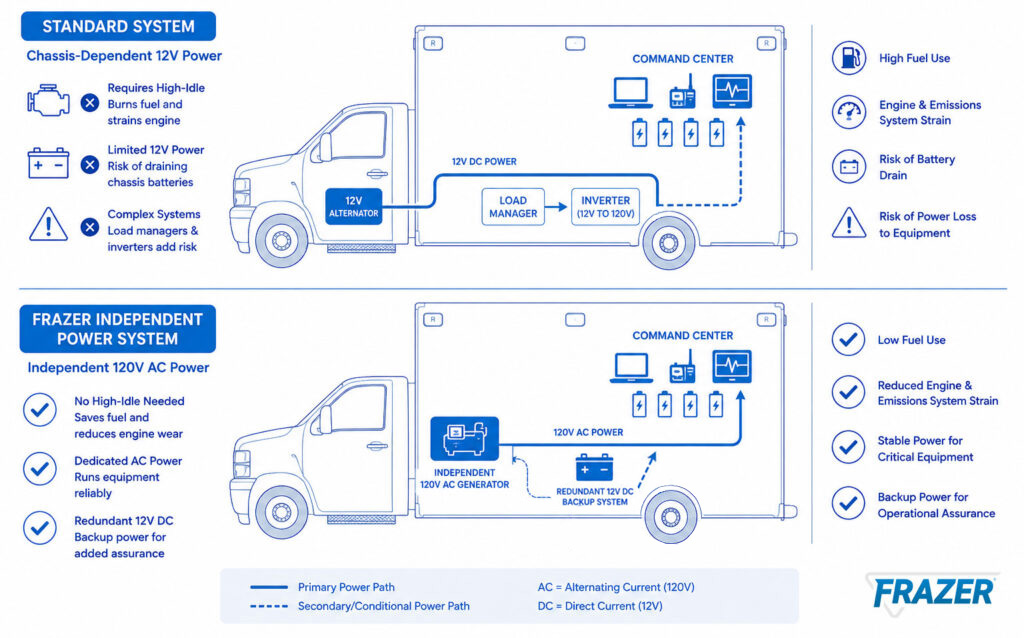
Frazer separates the module’s primary power system from the chassis electrical system. The module’s primary power source is a 120-volt AC generator that operates independently of the chassis electrical system. This design limits modifications to the OEM chassis electrical system and helps create clearer service paths for chassis and module issues.
If the problem involves the truck engine or another chassis component, the applicable Ford, Chevy, or International service provider can address it. If the issue involves the Frazer module or its primary power system, the customer can contact Frazer. That separation can make it easier for maintenance teams to determine who to call and start the right troubleshooting process.
Looking Beyond Purchase Price With Lowest Overall Cost of Ownership
Purchase price matters, but it is only one part of what an EMS vehicle can cost a department over its service life. Maintenance requirements, downtime, reserve vehicles, labor, and other operating expenses can all factor into Lowest Overall Cost of Ownership, or LOCO.
The cost of downtime can also extend well beyond the repair bill. When a frontline vehicle is unavailable, a department may need another unit ready to take its place. For example, a department operating ten frontline vehicles might determine that it needs four reserve units based on its maintenance history, operating requirements, and expected downtime.
Vehicles designed around easier diagnostics and replaceable components may help reduce maintenance labor and out-of-service time in some situations. Frazer’s modular components, including the AC unit, are designed with serviceability in mind, while factory-direct support gives maintenance teams direct access to Frazer technicians when diagnostic help is needed.
These features are designed to help departments manage downtime and evaluate reserve vehicle requirements based on their own operating experience. In customer surveys, some Frazer fleets have reported reductions ranging from 42% to 60% in overall fleet maintenance costs. Results vary based on fleet composition, vehicle use, maintenance practices, operating conditions, and other factors.
Choosing factory-direct EMS vehicles gives departments a direct relationship with Frazer for vehicle support while allowing them to continue using their own maintenance resources and applicable chassis service providers.
Give Your Maintenance Team More Options
There is no single feature that eliminates vehicle downtime. The service model, electrical design, parts availability, component accessibility, and experience of your maintenance team all play a role in how quickly a vehicle can return to service.
Frazer’s factory-direct approach is designed to give maintenance teams more options. Direct technical support, point-to-point wiring, commonly available components, modular systems, and independent power can help your technicians diagnose problems and handle appropriate repairs without unnecessary complexity.
Looking for ways to reduce avoidable maintenance delays and make your fleet easier to service? Connect with a Frazer Regional Sales Manager to discuss your fleet’s needs and specifications.
Why is point-to-point wiring faster to diagnose than multiplex?
Point-to-point wiring can make some electrical problems easier to diagnose because it uses standard relays, fuses, and wiring that mechanics are familiar with. Frazer also provides straightforward system diagrams, so technicians can trace many issues using common diagnostic tools without specialized software.