Minimizing EMS Downtime: How Modular Vehicle Parts Keep Your Fleet on the Road
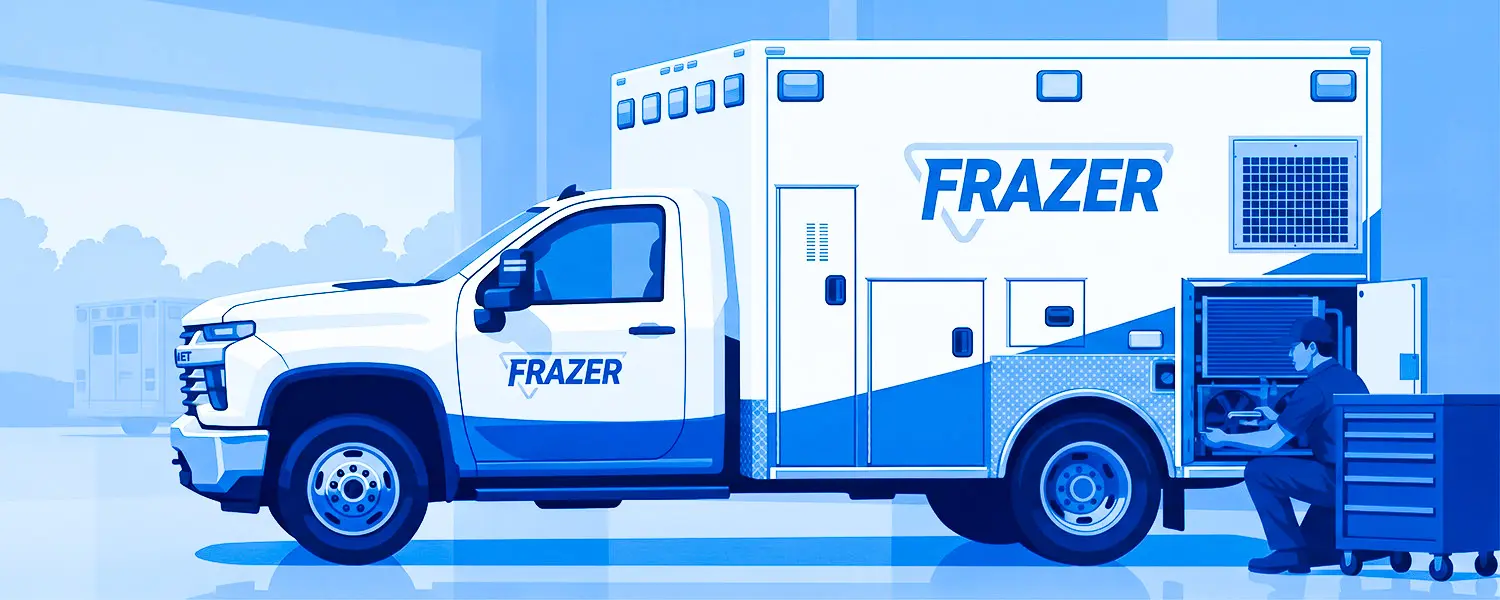
When a frontline EMS vehicle goes down on a hot July afternoon because of an electrical or A/C problem, every hour in the shop matters. That downtime can affect coverage, push crews into higher-mileage reserve vehicles, and add maintenance or overtime costs.
The design of the vehicle can also affect how long a repair takes. A simple problem can become a bigger job when technicians have to trace proprietary electronics, remove interior components, or reach equipment that is difficult to access. Parts availability and diagnostic requirements can add even more time.
That is why Frazer designs its EMS vehicles with serviceability in mind. Features such as modular components, independent 120V power, accessible equipment, and point-to-point wiring give technicians a straightforward way to diagnose and repair many common problems.
The Real Cost of EMS Vehicle Downtime
Fleet supervisors and department leaders know that downtime is about more than a repair bill. When an EMS vehicle spends extra time in the shop, the effects can spread across the fleet.
What Happens When a Frontline Vehicle Goes Out of Service?
Crews may have to move into an older reserve vehicle, adding mileage and wear to equipment the department would rather keep in reserve. At the same time, technicians can spend valuable hours diagnosing a problem instead of working through the rest of the fleet’s maintenance needs.
Keeping more reserve vehicles can provide extra capacity, but those vehicles also come with acquisition, maintenance, storage, and operating costs. A more serviceable frontline vehicle can help departments make better use of the equipment they already have.
Vehicle Design Can Make a Simple Repair More Complicated
Not every electrical or A/C problem is complicated, but getting to the problem can be. Components hidden behind cabinetry or systems that depend on proprietary electronics can turn a basic component check into a longer service job.
Some systems may also require special diagnostic tools or manufacturer-specific replacement parts. If the right tool or part is not immediately available, the vehicle may stay out of service longer.
Why Does Frazer Use Point-to-Point Wiring?
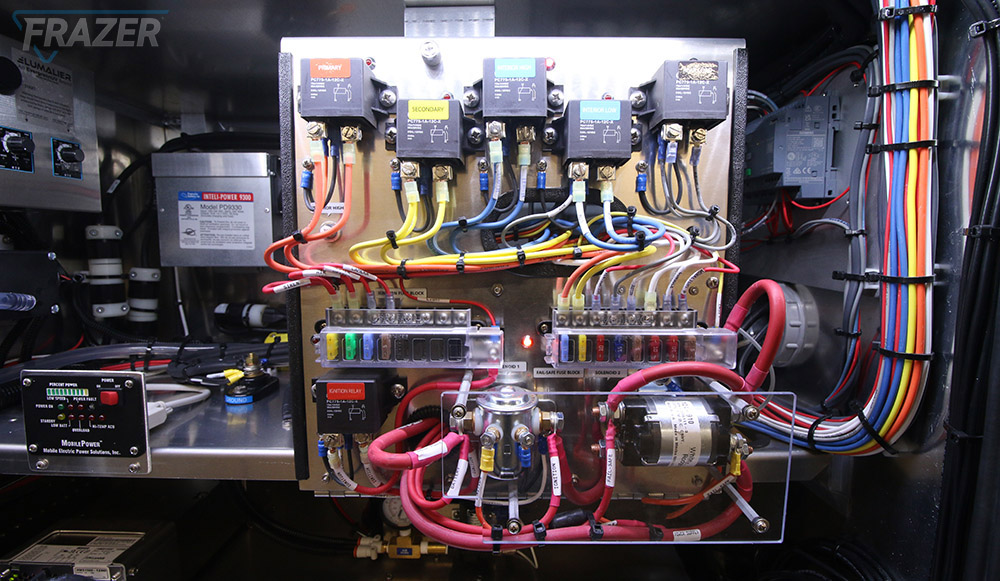
Point-to-point wiring gives technicians a straightforward way to trace many electrical problems using familiar components such as relays and fuses. Instead of depending on a proprietary multiplex node for those functions, technicians can inspect individual circuits and use standard diagnostic tools to help find the problem.
Keeping Electrical Systems Simple
Frazer follows the K.I.S.S. principle: a simple idea with a practical goal. When something needs attention, the technician working on the vehicle should have a clear path to finding it.
Frazer’s point-to-point electrical design uses standard relays, terminal strips, and automotive fuses. Technicians can trace individual circuits instead of depending on a multiplex printed circuit board for those functions.
What does that mean in the shop? If a marker light or siren stops working, a technician can use the system diagram, follow the dedicated circuit, and check power with a standard voltmeter. Depending on the issue, that can make troubleshooting more straightforward.
Put the Electrical System Where Technicians Can Reach It
Serviceability is not just about which components you use. It is also about where you put them. Frazer’s exterior electrical compartment gives technicians direct access to critical electrical components without requiring them to work in tight areas inside the module.
Built-in monitoring diodes on the main power panel provide quick feedback that can help technicians narrow down potential trouble areas. Learn more about Frazer’s approach to point-to-point wiring vs. multiplex systems in emergency vehicles.
How Side-Mounted 120V A/C Can Make Service Easier
A broken A/C system can quickly become a service problem, especially when the equipment is difficult to reach. Some roof-mounted or chassis-integrated systems may require technicians to work inside the patient compartment or remove other components before reaching the equipment that needs service.
How Long Does It Take to Replace a Frazer EMS Vehicle A/C Unit?
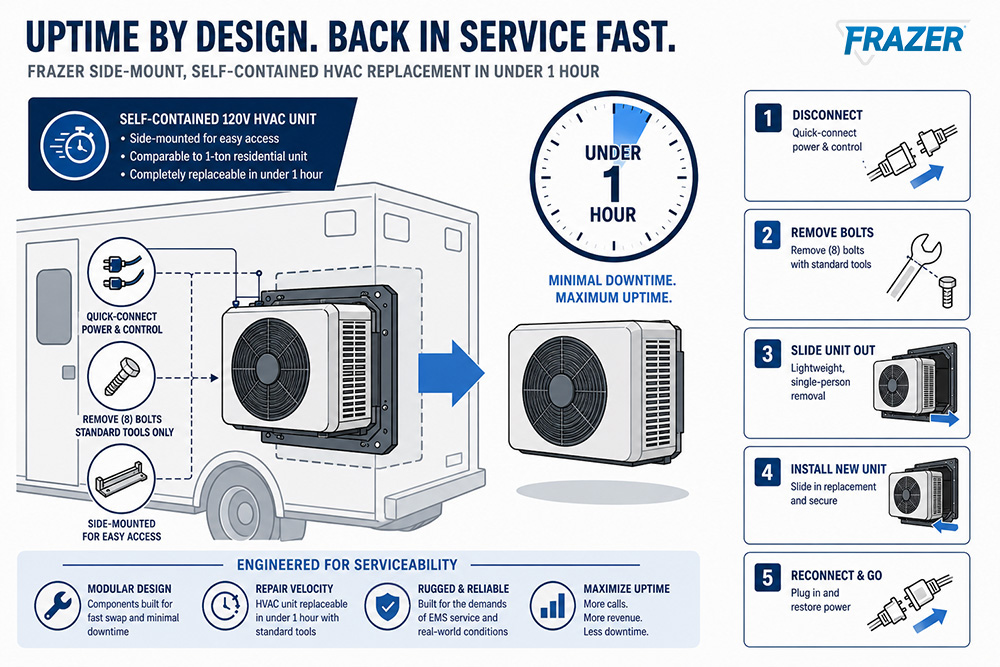
A Frazer self-contained 120V A/C unit is designed to be replaced in under 45 minutes. Because the unit is mounted in its own exterior compartment instead of on the roof, a technician can unbolt it and slide it out without dismantling patient-compartment cabinetry.
Independent Power Keeps the Module Separate From the Chassis
Frazer’s 120V A/C system operates independently from the chassis electrical and air-conditioning systems. When powered by the independent generator, the system is designed to maintain a temperature differential of 35°F or more from the outside ambient temperature.
That separation has practical benefits for service. If the A/C unit needs to be replaced, a technician can remove the self-contained unit and install another one without adding the A/C load to the chassis alternator. Its side-mounted location also helps keep the overall vehicle height lower. The AAP-Dometic unit comes with a four-year parts and labor warranty.
Modular Components Make Repairs More Straightforward
Custom EMS vehicles do not have to make every repair a custom project. Frazer uses a modular approach so technicians can access, diagnose, and replace many major components without unnecessary disassembly.
Designed With the Technician in Mind
Most major modular components in a Frazer EMS vehicle are designed to be changed out in under two hours. Frazer also uses standard, off-the-shelf parts in many applications. When available locally, items such as common relays and fuses can be sourced without waiting for a manufacturer-specific component to arrive.
Direct Support When You Need Help
Even a serviceable vehicle will eventually need troubleshooting. When that happens, getting the right person on the phone can matter just as much as getting to the right component.
Frazer customers have 24/7 telephone access to an experienced service technician or manager who knows Frazer products. In many cases, the Service Team can help diagnose an issue over the phone and guide the customer through the next steps. When hands-on help is needed, Frazer’s nationwide authorized service network provides additional options for service and parts support.
How Serviceability Can Affect the Cost of Ownership
For Fire Chiefs, EMS Directors, fleet managers, and finance teams, repair time can become real money. Labor hours, replacement parts, reserve vehicles, and lost availability can all affect what a vehicle costs to operate over its life.
How Can Modular EMS Vehicle Parts Affect Maintenance Costs?
Frazer customers have reported fleet maintenance cost reductions ranging from 42% to 60%. Results will vary by fleet, operating conditions, maintenance practices, and other factors, but serviceable components can help reduce labor and downtime. That is part of the thinking behind Frazer’s Lowest Overall Cost of Ownership, or LOCO, approach.
What Fleet Managers Said About Shop Time
A 2020 double-blind, third-party Smart Advantage study asked fleet professionals about vehicle brands and shop time. In that study, 39% of respondents identified Frazer as the brand spending the “least amount of time in the shop.” The nearest competitor was selected by 7% of respondents.
Serviceability is only one part of the ownership equation. Frazer’s Lowest Overall Cost of Ownership (LOCO) approach also considers the long-term use of the module through remounting. Frazer builds its modules with an all-aluminum 6061-T6 structure designed for long-term use. Some Frazer modules have been remounted as many as four times and have exceeded 20 years and one million miles of service.
What Should You Ask Before Specifying Your Next EMS Vehicle?
Your maintenance team will live with the vehicle long after the specification meeting is over, so bring them into the conversation early. Before you finalize your next EMS vehicle, ask how easy the major systems will be to diagnose, access, repair, and replace.
- Diagnostic access: Can technicians reach critical electrical components from an exterior compartment, or will they need to work inside the module?
- Wiring: Can technicians trace circuits with familiar tools and components, or will some problems require specialized diagnostic equipment?
- A/C service: How easy is it to access and replace the A/C system when something goes wrong?
- Component replacement: Are major components designed to be removed and replaced without extensive disassembly?
- Support: Who can your technicians call when they need help, and what service options are available after delivery?
Looking for a More Serviceable Approach to EMS Vehicle Maintenance?
Vehicle downtime will never disappear completely, but good design can make maintenance more manageable. Frazer’s modular components, independent power options, point-to-point electrical design, and direct service support are built around a simple idea: make the vehicle easier for your team to own and maintain.
Talk with a Frazer Fleet Specialist to learn more about these serviceability features, review available maintenance data from departments operating Frazer vehicles, and see how a Frazer EMS vehicle could fit your fleet’s needs.
Why does Frazer use point-to-point wiring instead of multiplexing in EMS vehicles?
Point-to-point wiring gives technicians a straightforward way to trace many electrical problems using standard relays, fuses, system diagrams, and common diagnostic tools. Depending on the issue, this approach can reduce reliance on specialized diagnostic software and proprietary electronic components, helping make troubleshooting and repairs more straightforward.