Standard vs. Door-Forward EMS Layouts: What Fleet Managers Should Know
Your frontline medics may be asking for a door-forward layout on your next EMS vehicle. At the same time, your maintenance team may be wondering what that change means for electrical service, component access, and long-term upkeep.
Those are both fair concerns. Choosing a layout is not just about where the door goes or how the patient compartment looks. You also have to consider crew workflow, fleet uptime, maintenance needs, and the systems behind the walls.
If you are looking to explore the clinical benefits and ergonomics of a door-forward module, it helps to understand what that layout may mean for the people who maintain the vehicle. Here is how Frazer approaches door-forward designs while keeping the electrical system, module power, and major service components straightforward.
The Fleet Manager’s Dilemma: Crew Preferences and Maintenance Needs
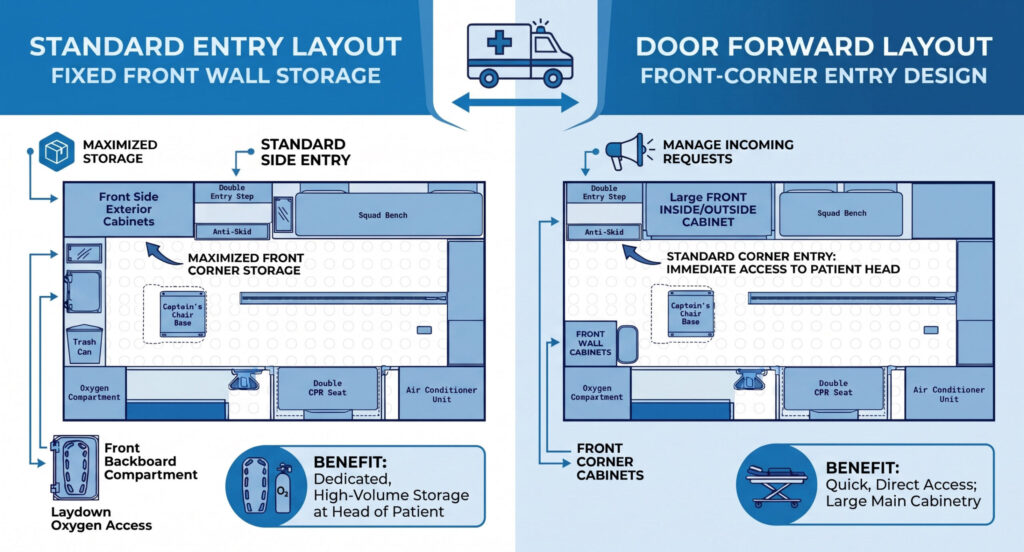
The conversation about a standard side-entry layout versus a door-forward layout often starts with the crew. Moving the primary side entry closer to the cab can change how providers move through the module and how the primary workspace is used. Depending on the configuration, it can also give crews more room for charting, medication preparation, and staging equipment near the patient’s head.
Once that request reaches the fleet manager or maintenance shop, the questions usually change. How will moving the door and cabinets affect the wiring? Will added laptops, radios, and monitors increase the demand on the vehicle’s electrical system? Will technicians still be able to reach HVAC and other serviceable components? And will the new layout create a completely different maintenance process from the rest of the fleet?
Those questions matter because customization should not make routine service harder than it needs to be. Frazer uses a consistent point-to-point electrical approach across its module configurations, including door-forward layouts.
Does a Door-Forward Layout Require More Complicated Wiring?
Not necessarily. Electrical architecture varies by builder, but Frazer uses point-to-point wiring across its module layouts, including door-forward configurations. The goal is to give technicians a familiar electrical structure even when the interior layout changes.
Some electrical systems rely on multiplex controls that may require special software, diagnostic tools, or manufacturer-specific components. That can affect how a technician approaches troubleshooting, especially when a problem happens outside normal business hours.
Frazer takes a more straightforward approach. Our point-to-point system uses common relays, fuses, and terminal strips so technicians can trace individual circuits and work with familiar components.
That same service philosophy applies whether you choose a standard module or a customized 14 ft. door-forward layout. The cabinets may move, but the basic approach to electrical troubleshooting stays familiar.
What About HVAC and Other Serviceable Components?
Changing the location of doors and cabinets can affect how technicians reach equipment, so component access should be part of the layout conversation. A good interior design still needs to make sense when something eventually needs service.
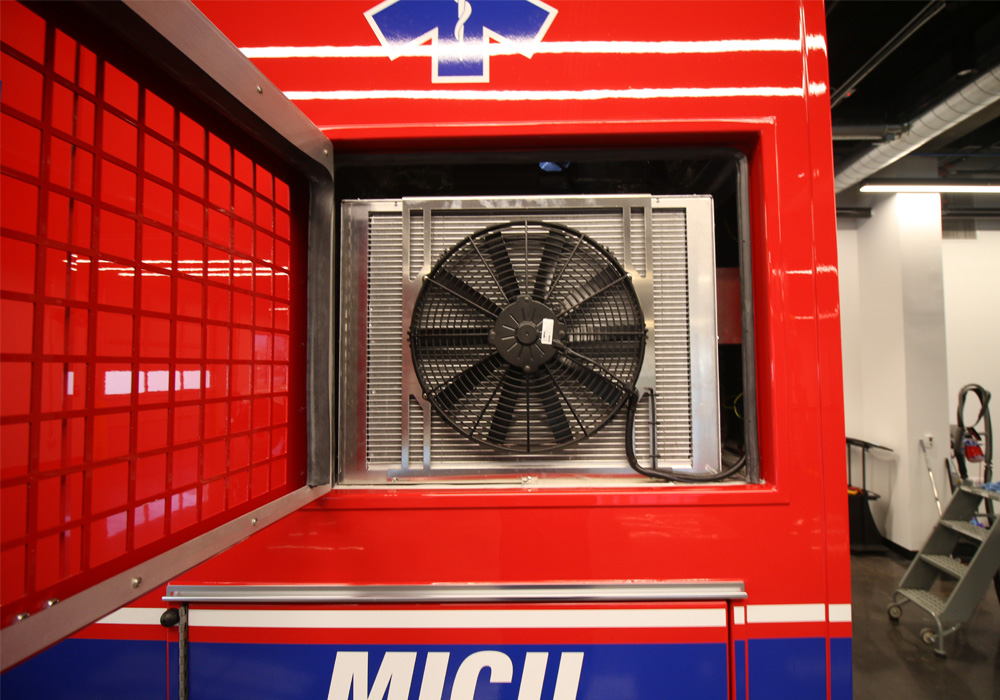
Frazer standardizes the location and service approach for key components where practical. One example is our self-contained 120V AC air-conditioning system. It is mounted on the side of the module rather than on the roof and is designed so the system can be replaced without taking apart large sections of the patient compartment.
This approach stays consistent across standard and door-forward configurations. Keeping the HVAC system accessible from the exterior can simplify service and gives fleet teams a more familiar maintenance process across vehicles with different interior layouts.
Can You Remount a Door-Forward Frazer Module?
Yes. Frazer’s all-aluminum, wood-free modules are designed with remounting in mind, including door-forward configurations. When the condition of the module and the replacement chassis make it appropriate, a department may be able to move the existing module onto a new chassis instead of replacing the entire unit.
That matters because a custom EMS vehicle is a major capital investment. If your team spends time developing a layout that works well for crews and maintenance staff, you may want to keep that configuration after the original chassis reaches the end of its service life.
Frazer modules are built with 6061-T6 structural aluminum tubing and wood-free construction. Some Frazer modules have exceeded 1 million miles of service and remained in operation for more than 20 years. Actual module life depends on use, maintenance, operating conditions, and the condition of the module over time.
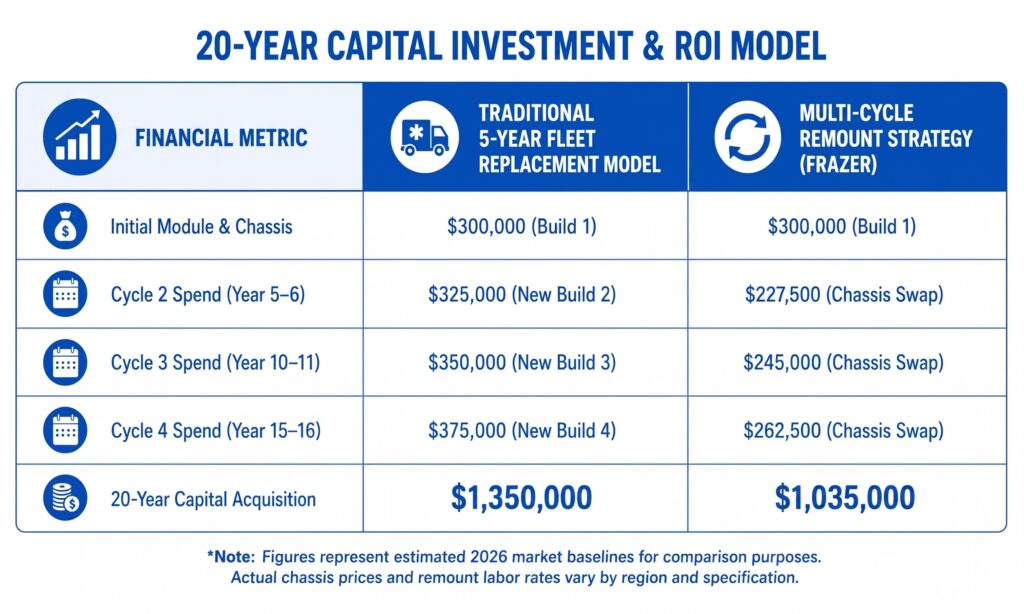
When the chassis is ready for replacement, departments may be able to remount a Frazer module onto a new chassis. This can help preserve a proven layout while giving the department another option for managing long-term capital costs.
Remounting is also one part of Frazer’s Lower Overall Cost of Ownership, or LOCO, approach. Customer-reported fleet maintenance cost reductions have ranged from 42% to 60% when adopting a Frazer fleet strategy. Results vary based on fleet size, vehicle use, maintenance practices, configuration, and other operating conditions.
Finding the Right Balance Between Crew Needs and Fleet Uptime
Choosing between a standard and door-forward layout does not have to mean choosing between crew preferences and maintenance needs. The right configuration should support patient care while still giving your technicians a vehicle they can understand, access, and service.
Frazer approaches that balance with point-to-point wiring, independent module power, accessible service components, and all-aluminum module construction designed with structural integrity and future remounting in mind. Those systems stay familiar even when the interior layout changes.
The best layout for your department comes down to how your crews work, how your maintenance team supports the fleet, and what you want the vehicle to deliver over its service life. Looking beyond cabinets and floorplans can help you make a decision that works for everyone.
Planning your next vehicle specification? Lower Overall Cost of Ownership involves more than the purchase price or interior layout. It also means looking at service access, power systems, maintenance needs, remount potential, and long-term support. Contact our module configuration experts to get your questions answered and on the road as quickly ass possible.
Does a door-forward layout require complicated multiplex wiring?
Electrical architecture varies by builder. Frazer uses point-to-point wiring across its module layouts, including door-forward configurations, to provide technicians with a consistent and straightforward electrical structure.